
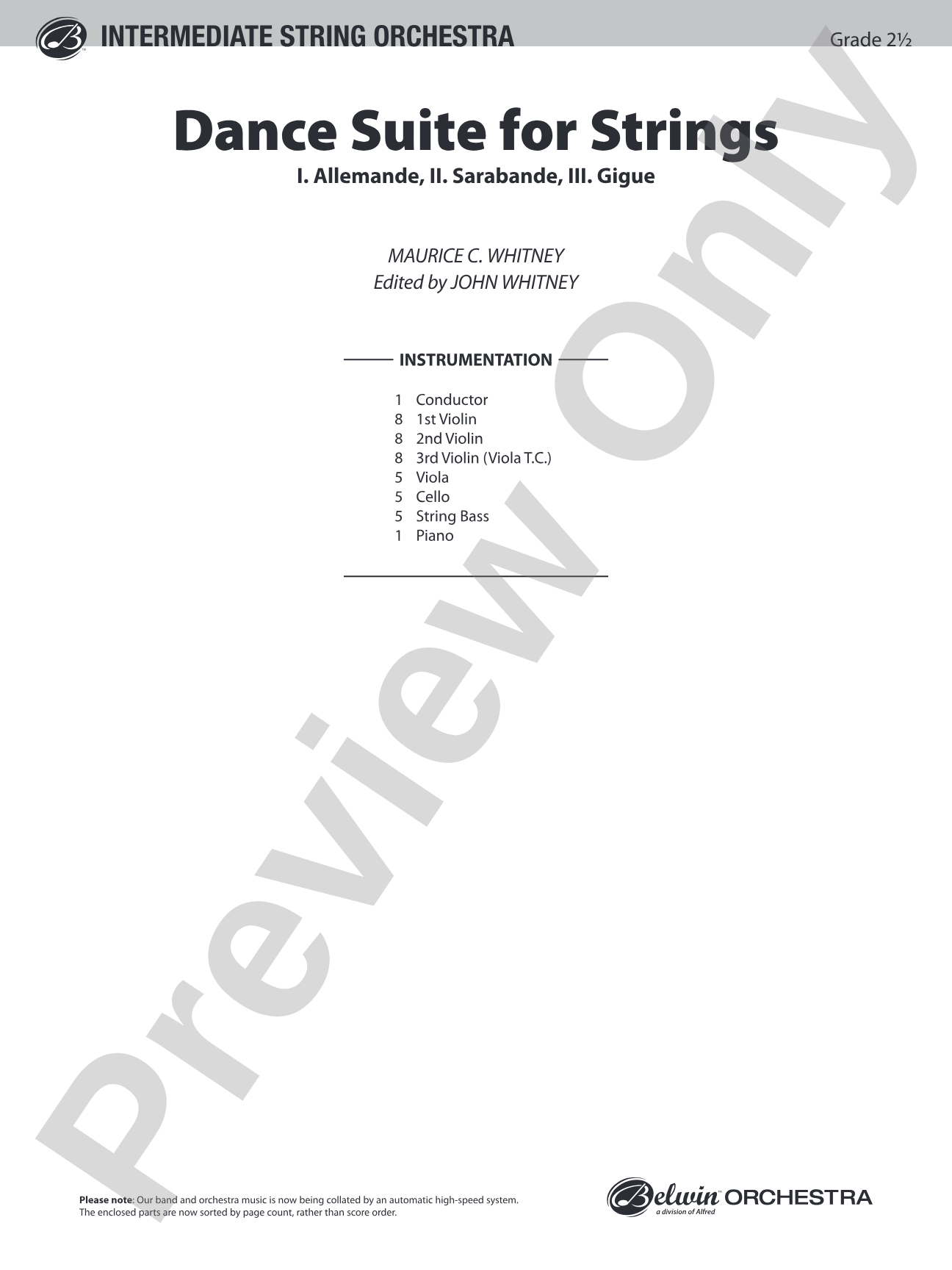
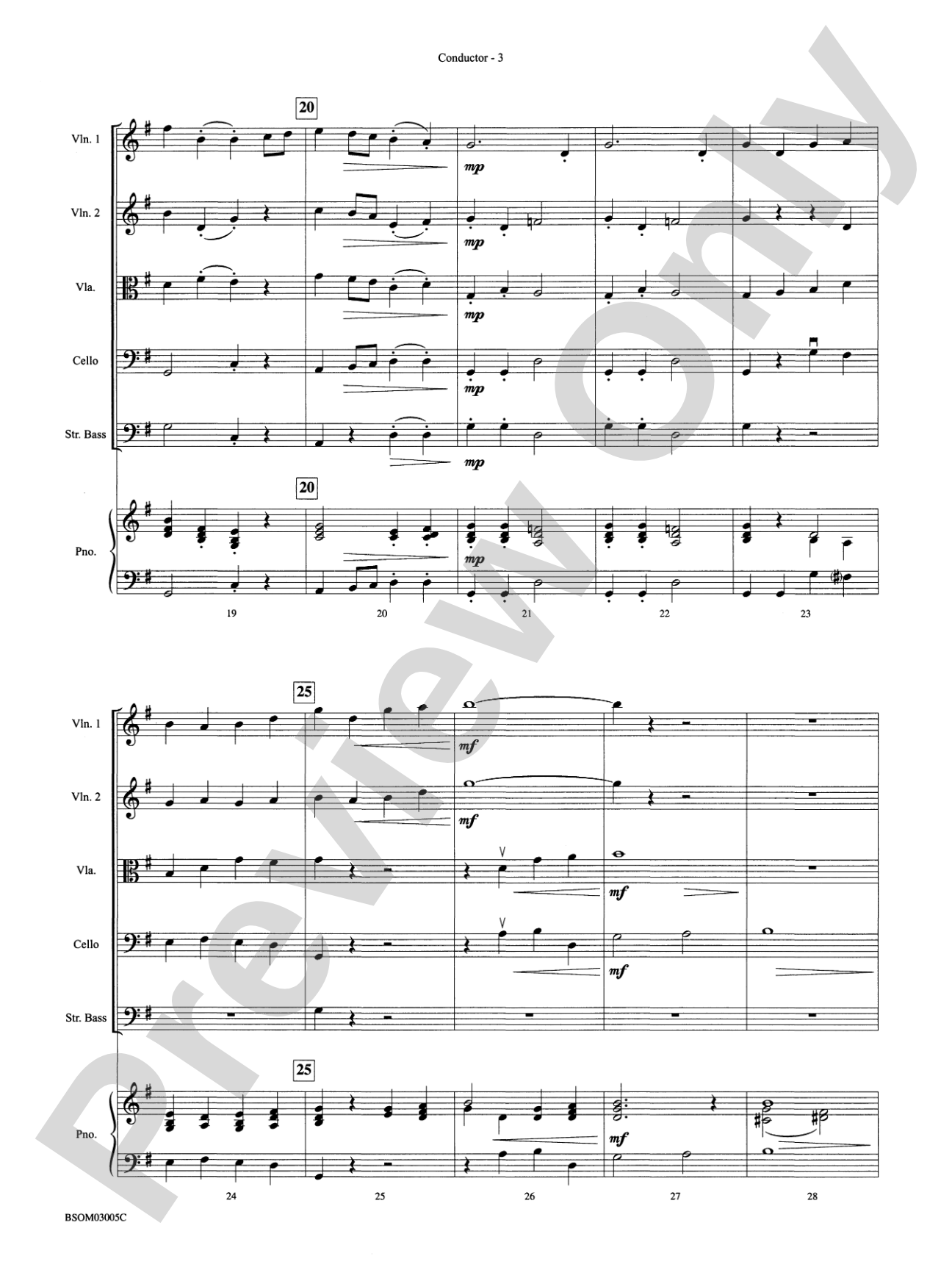
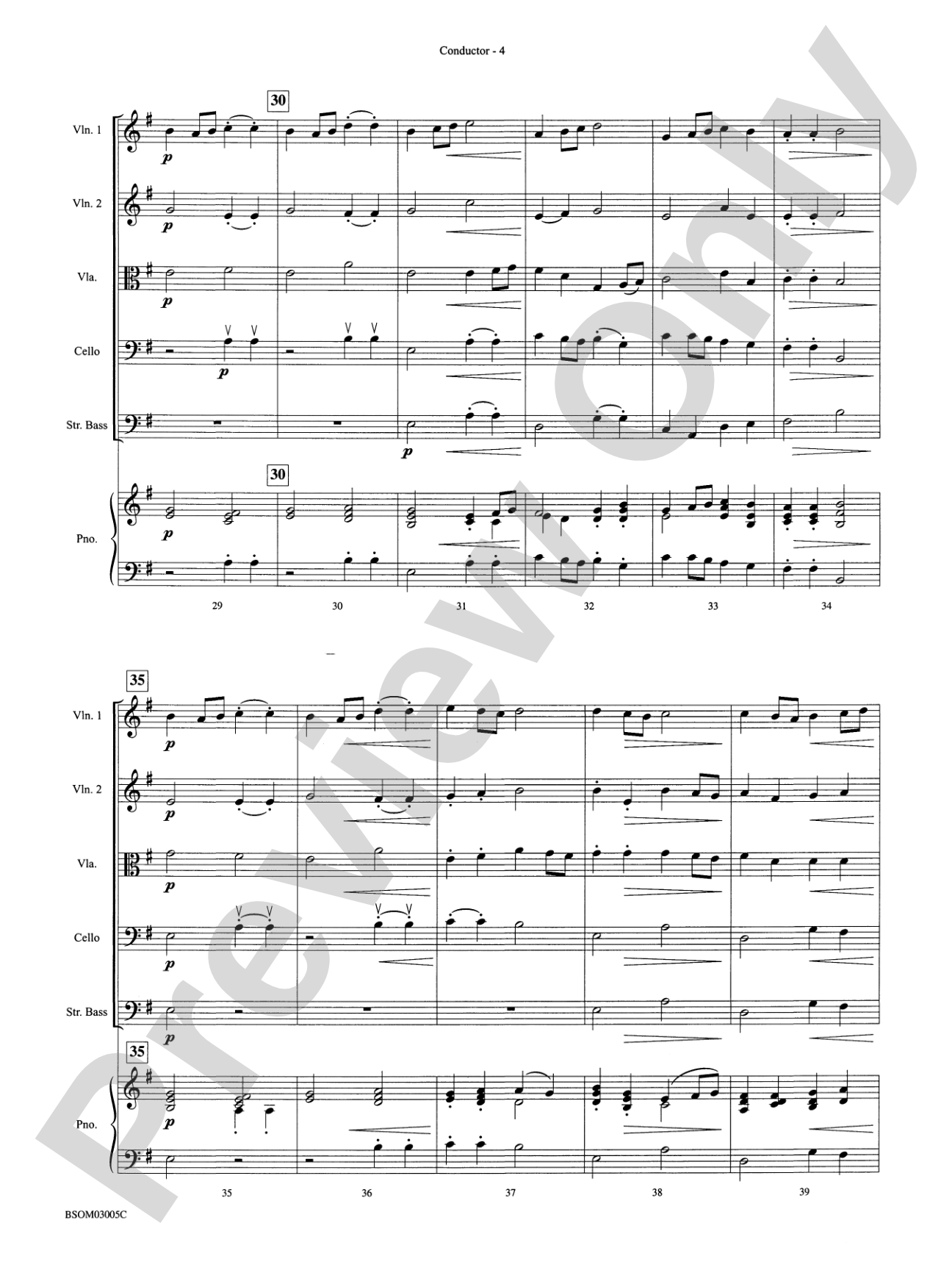
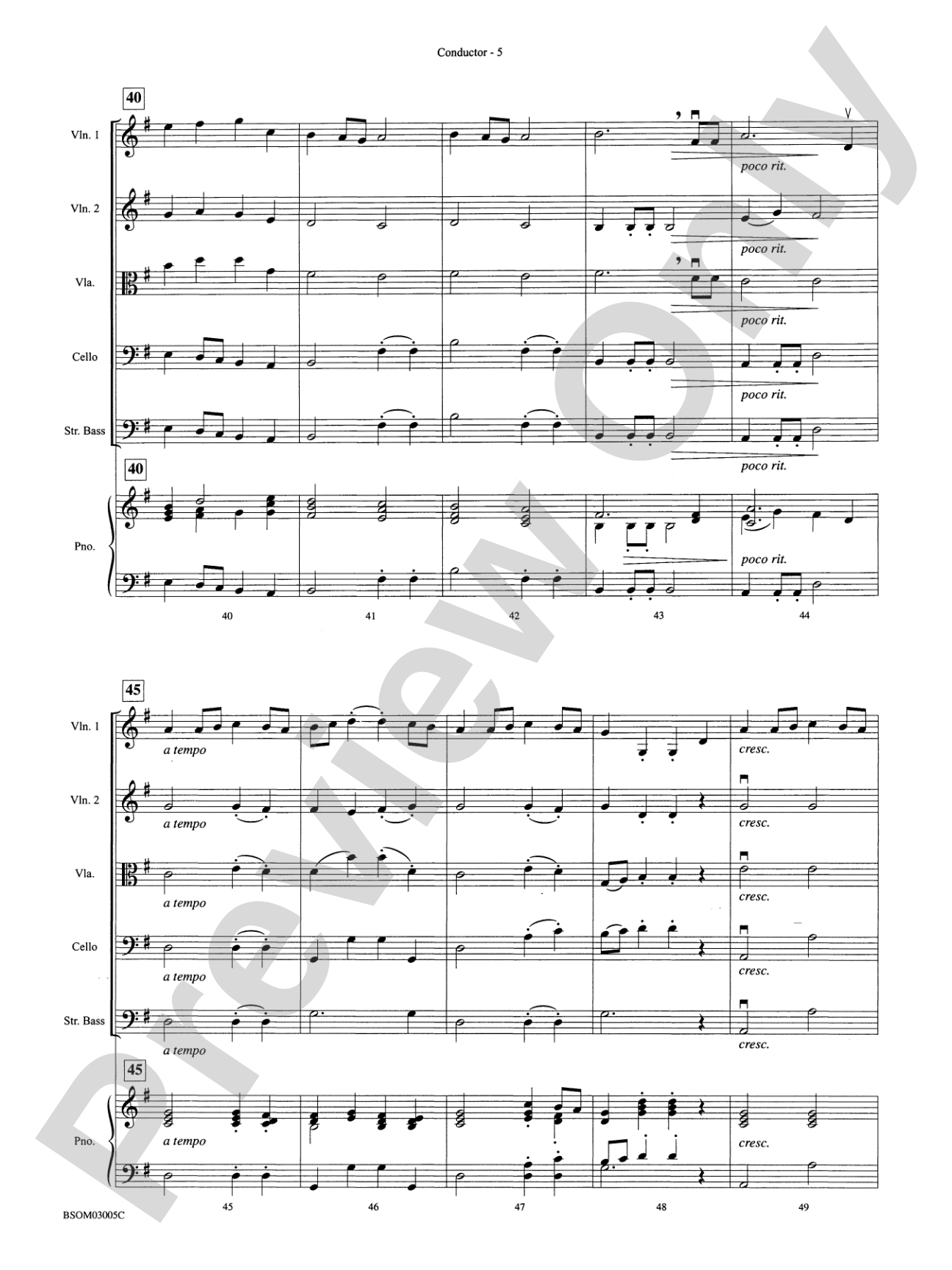
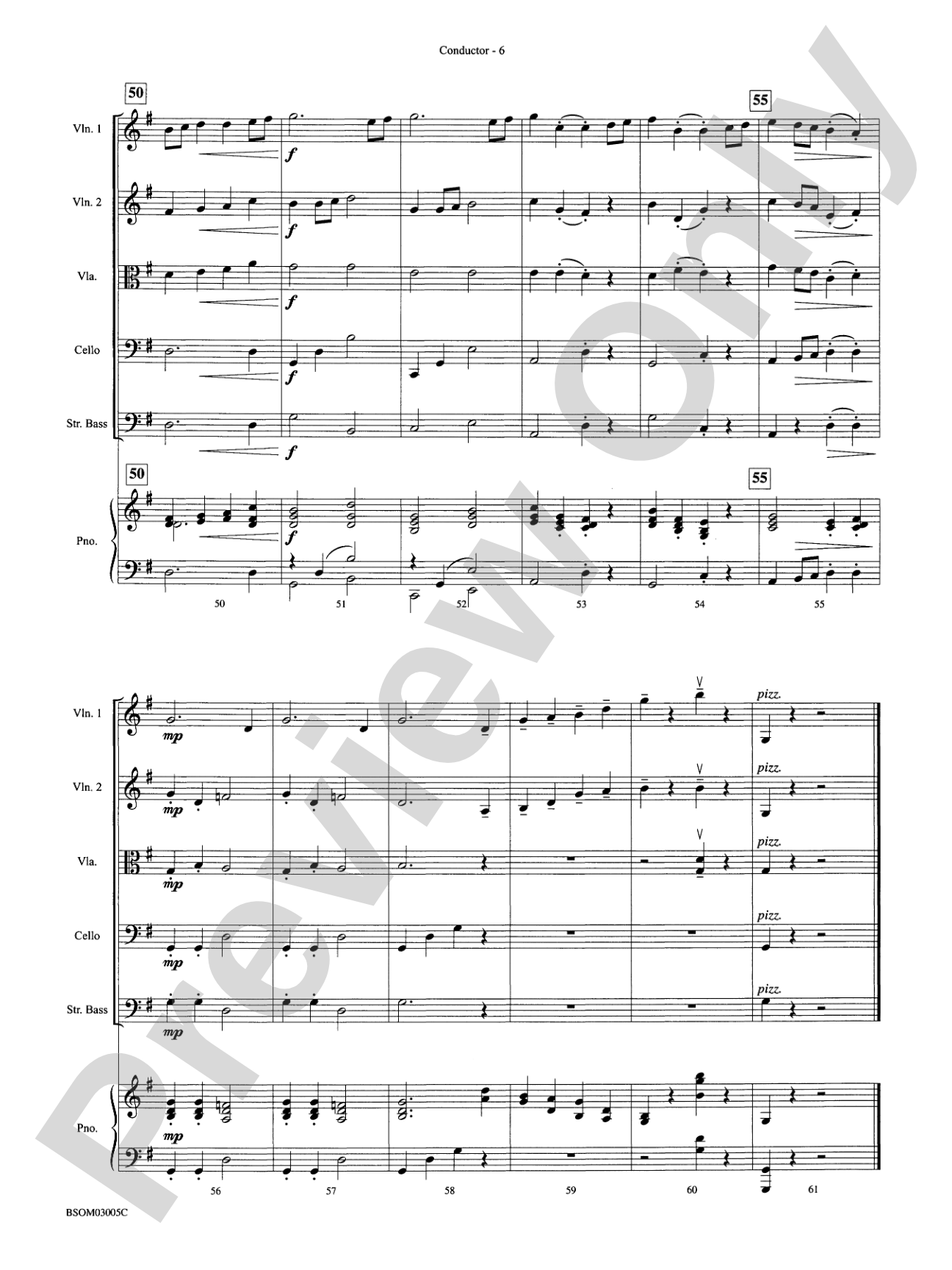
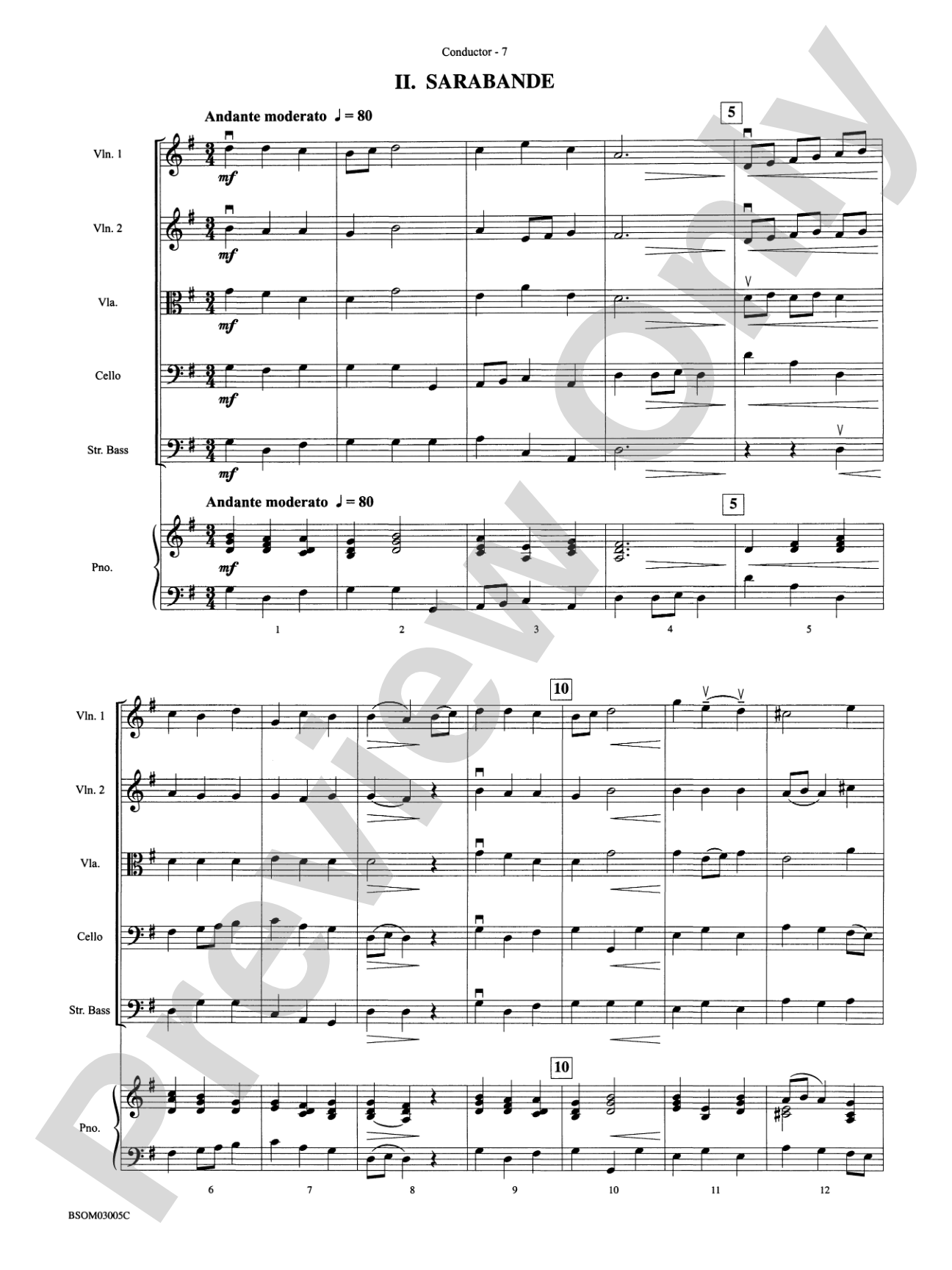
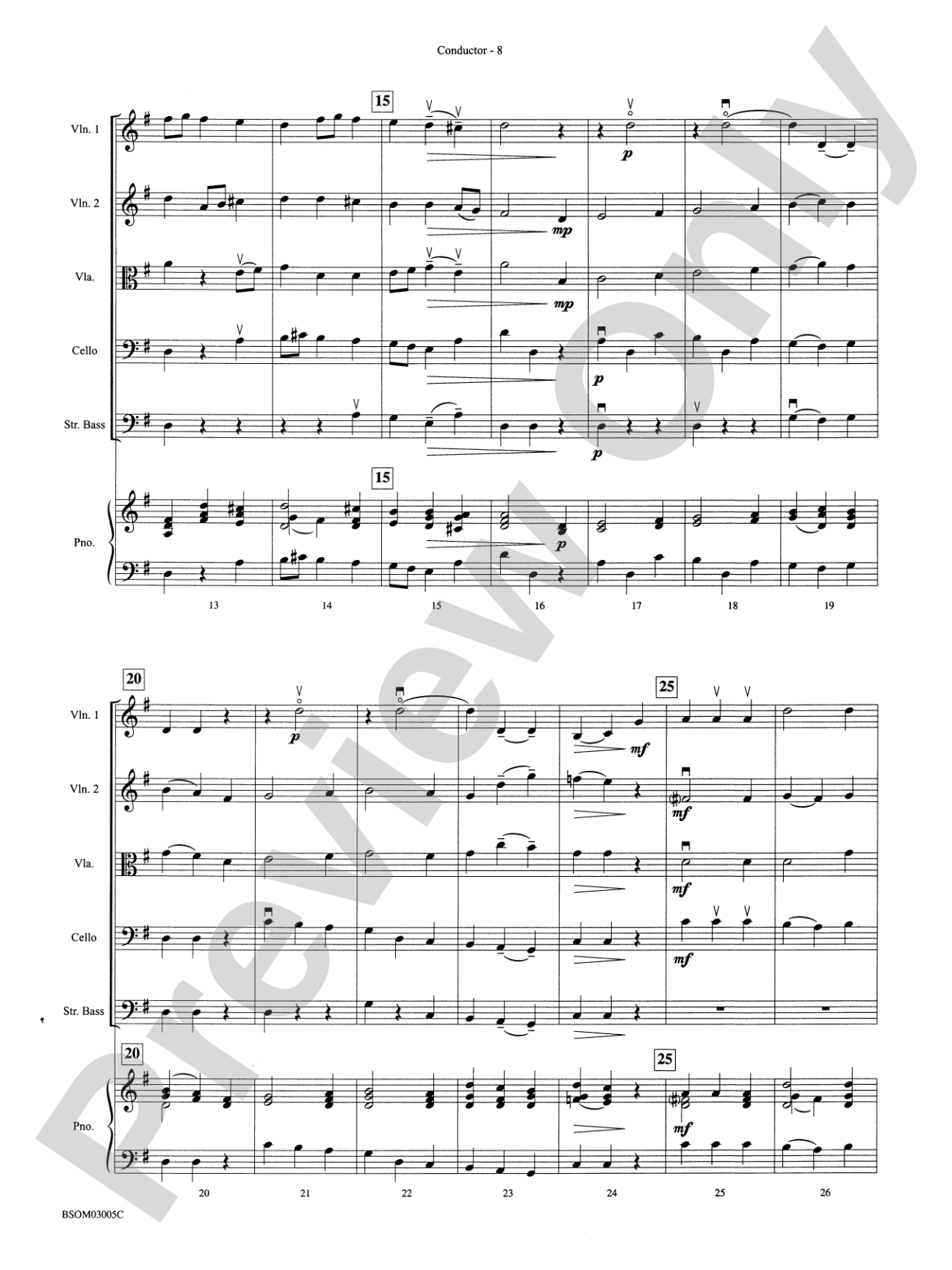
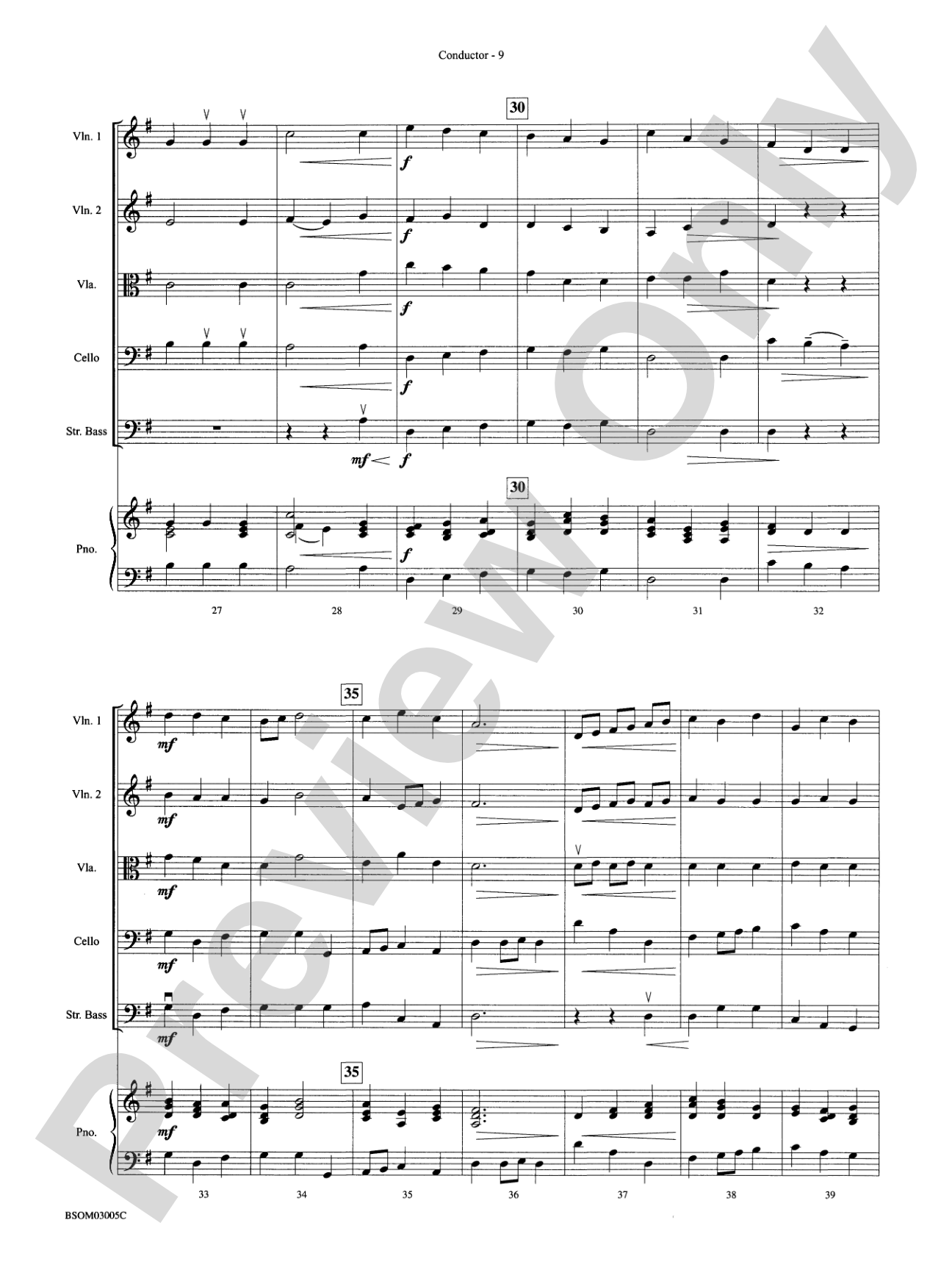
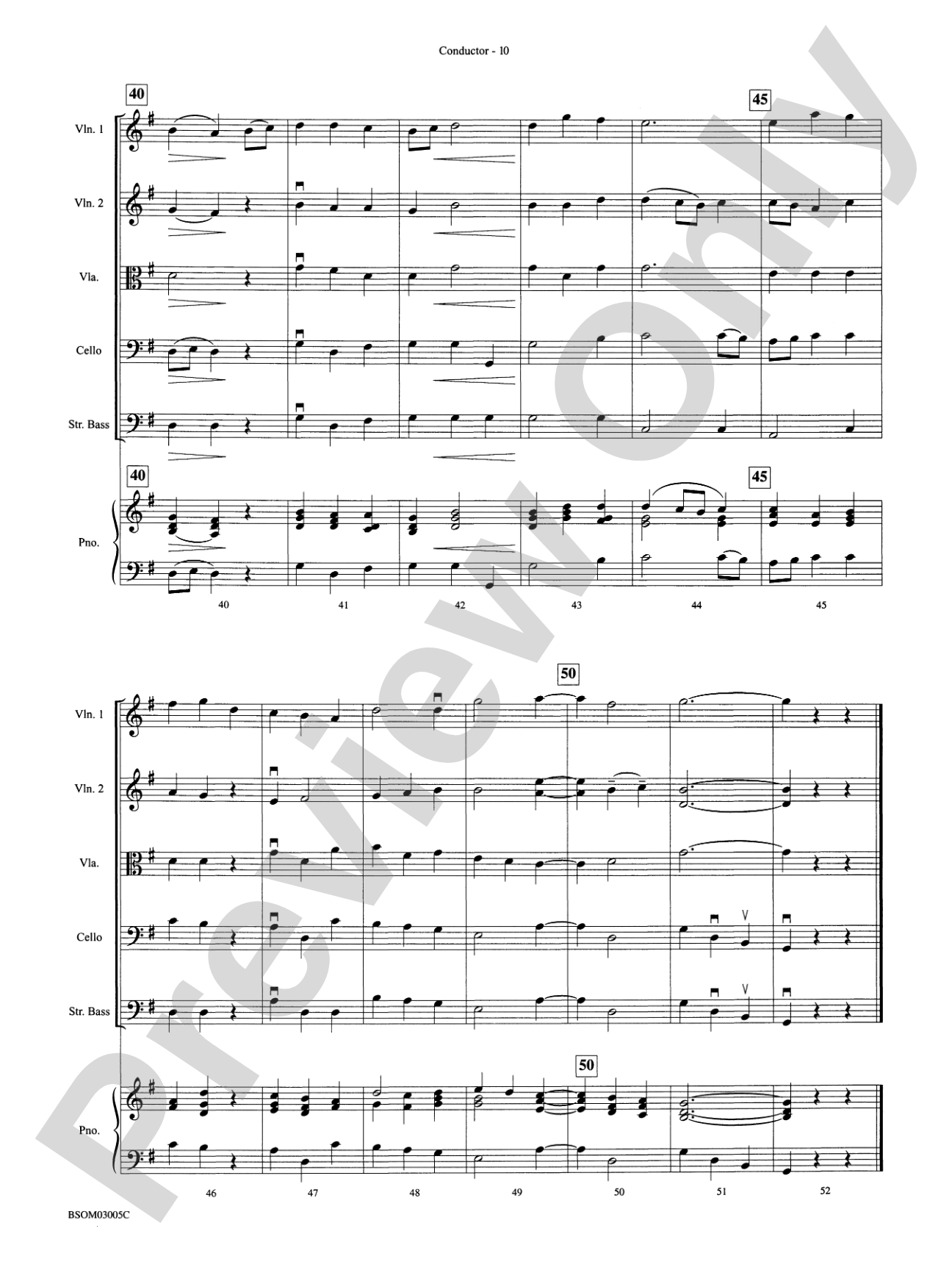
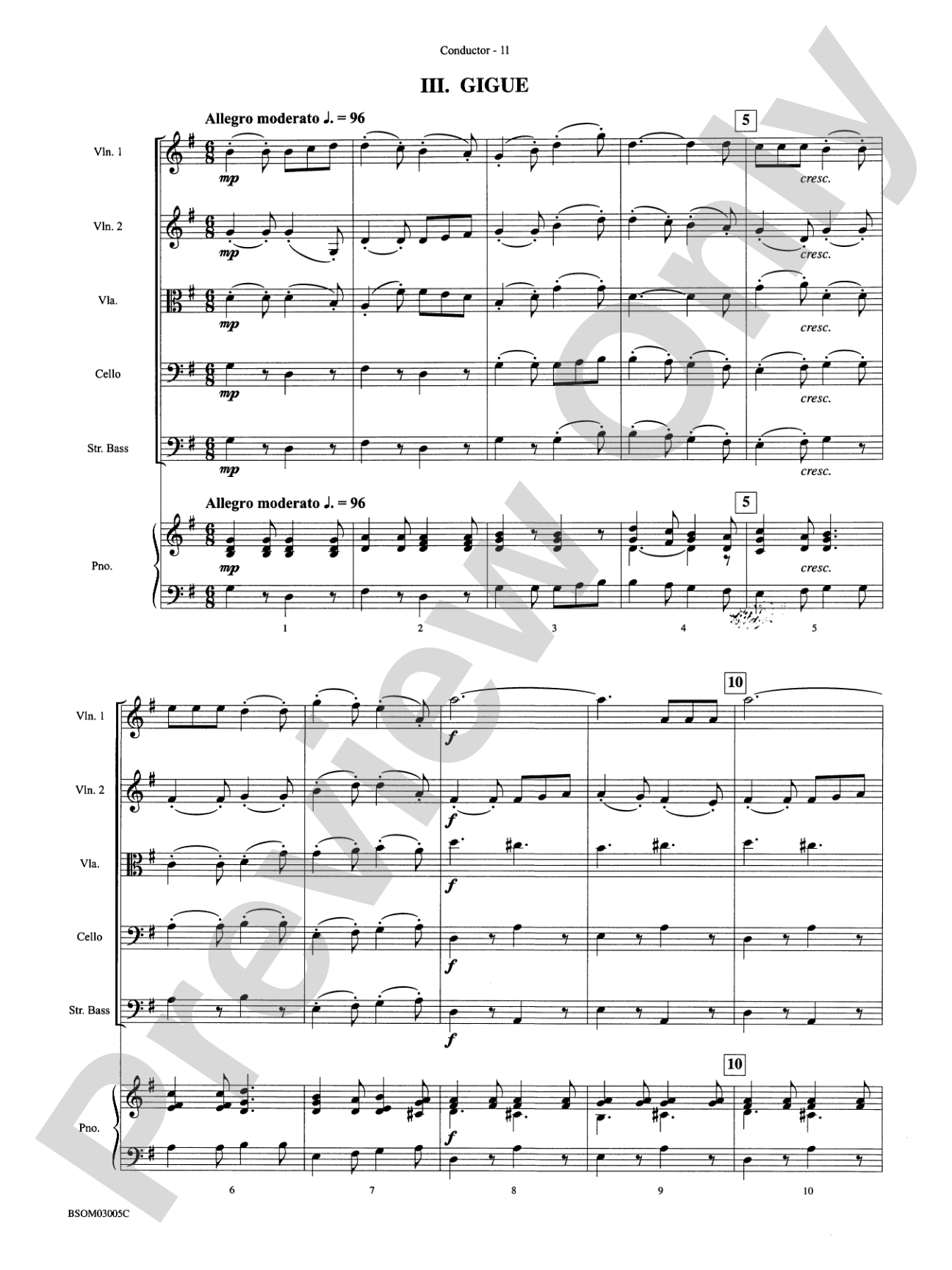
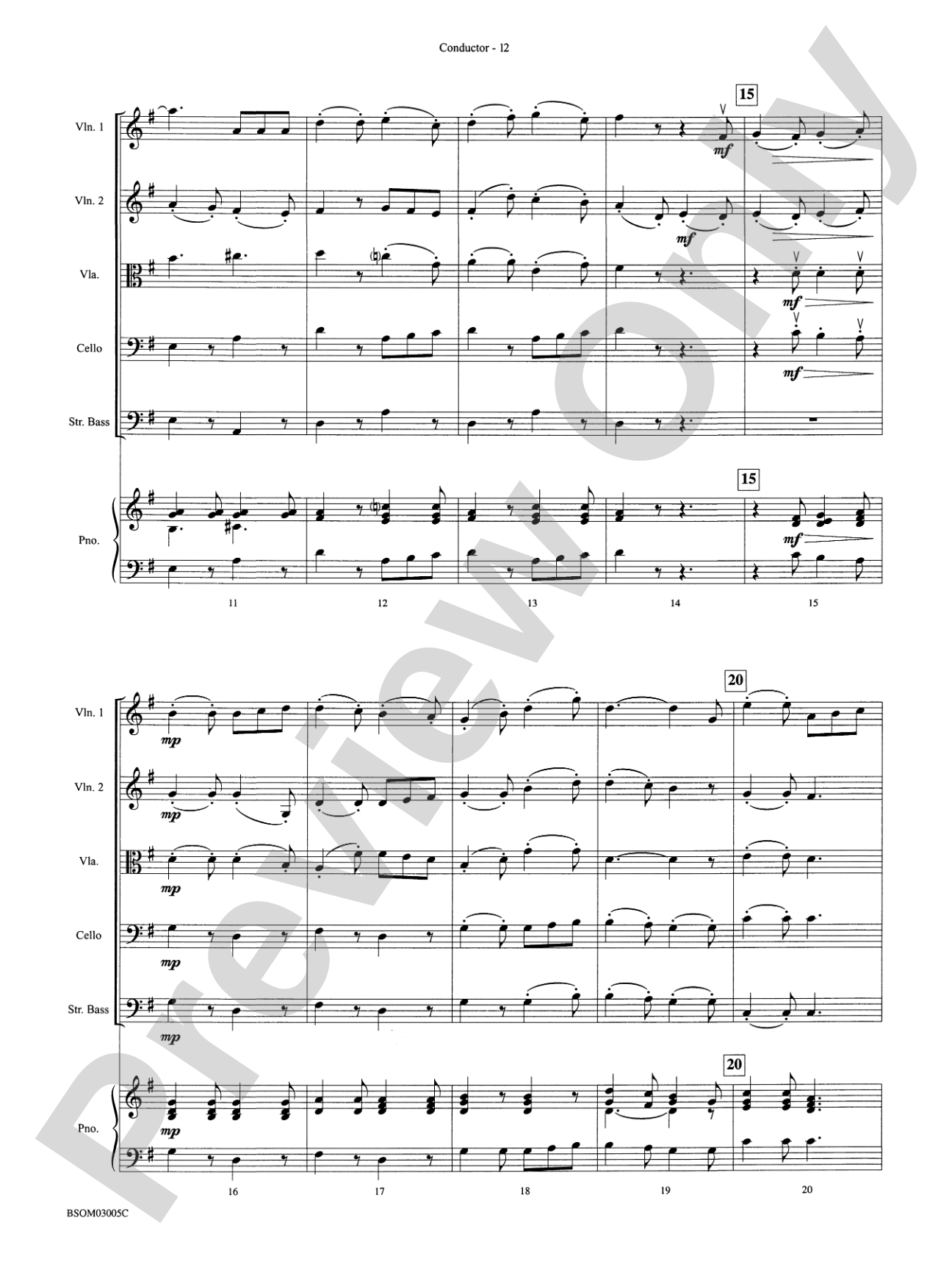
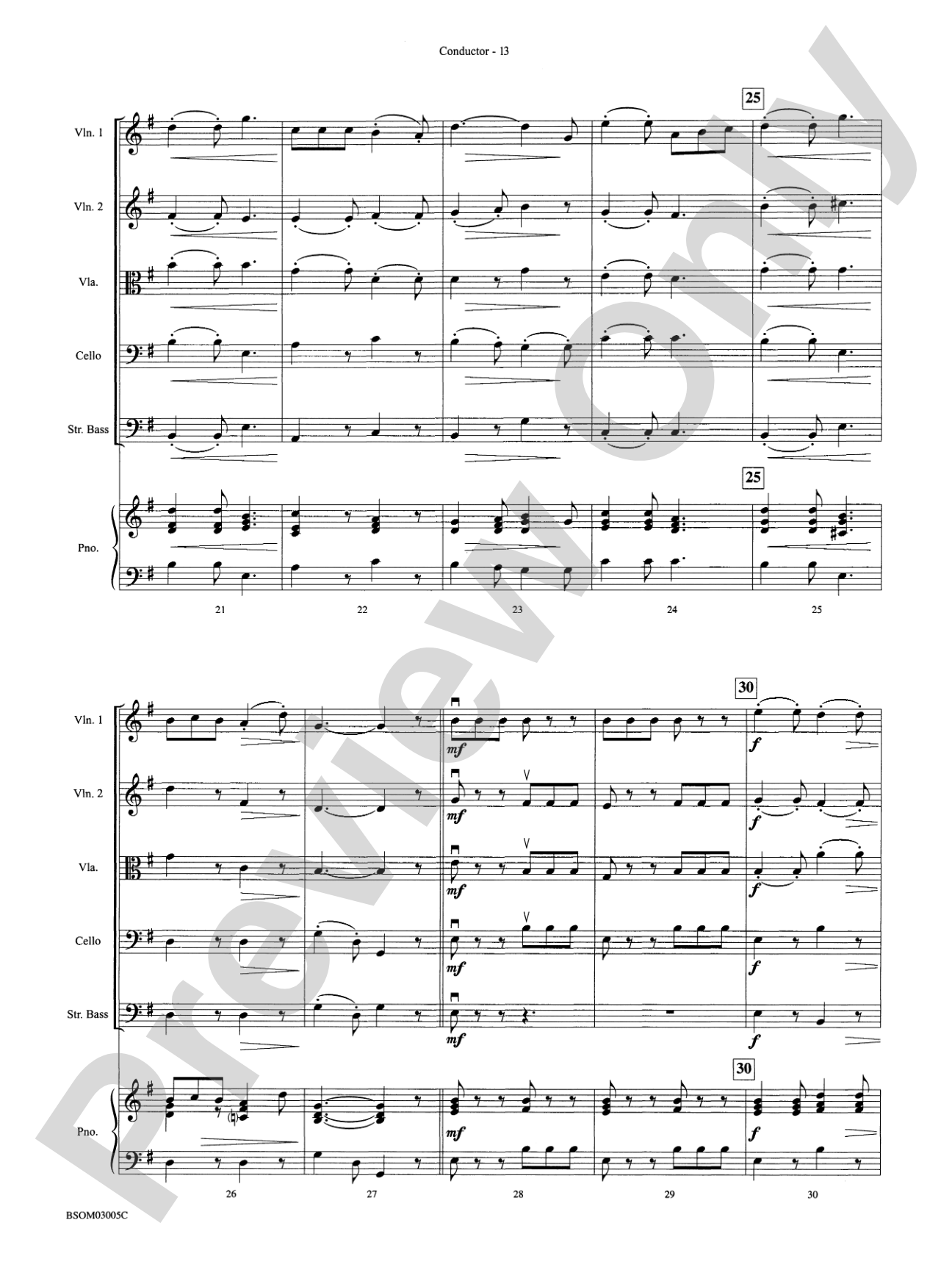
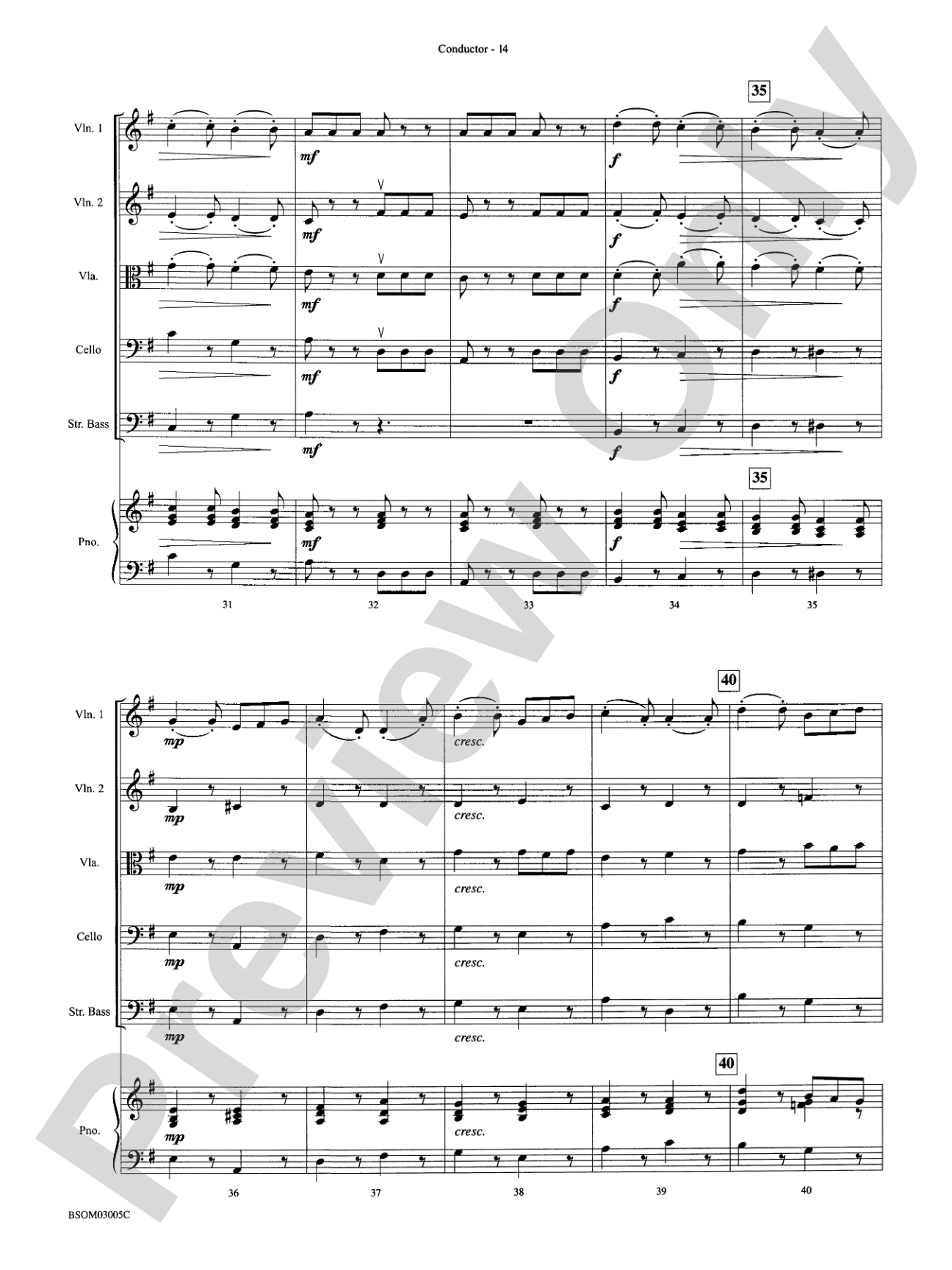
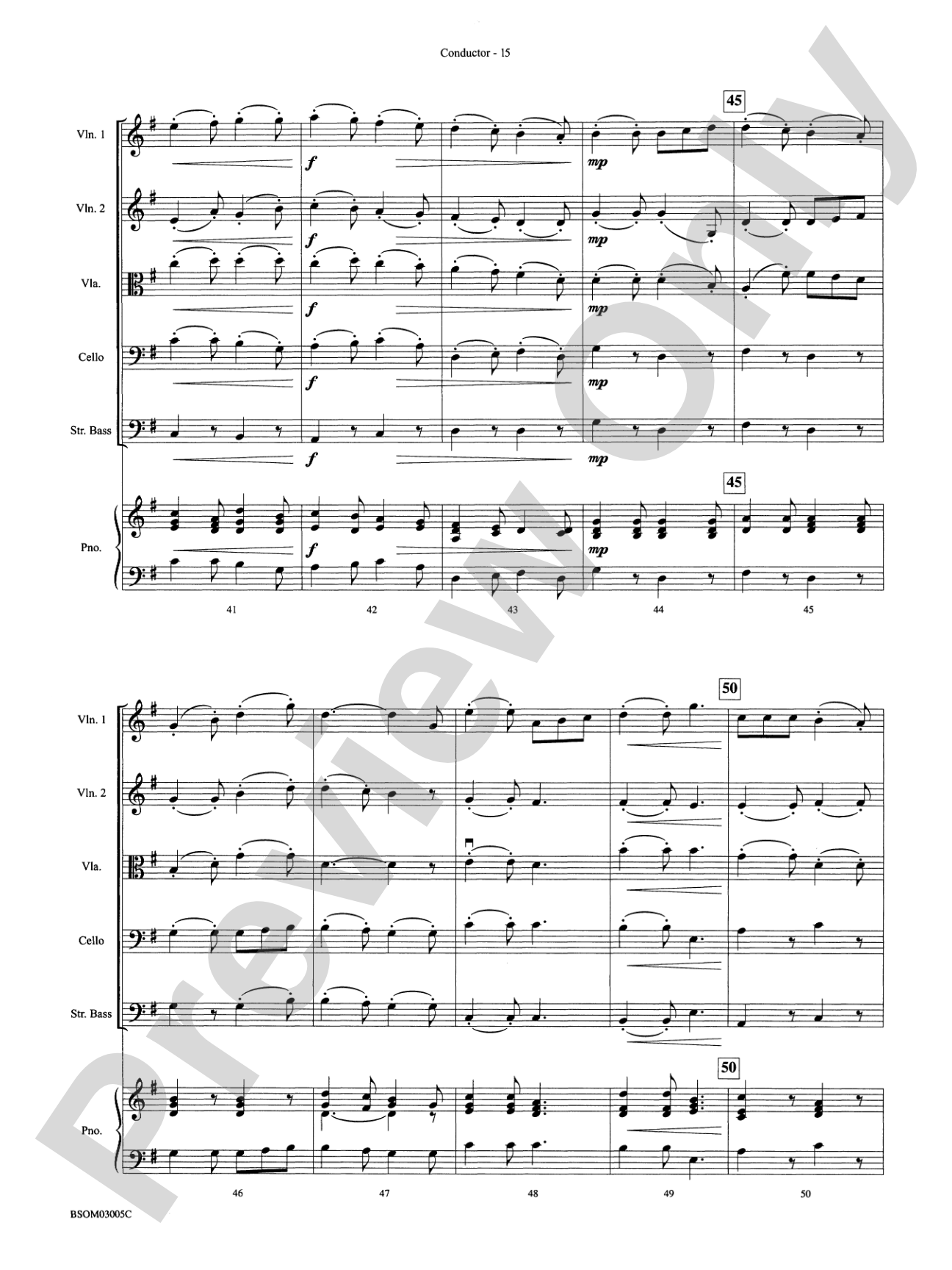
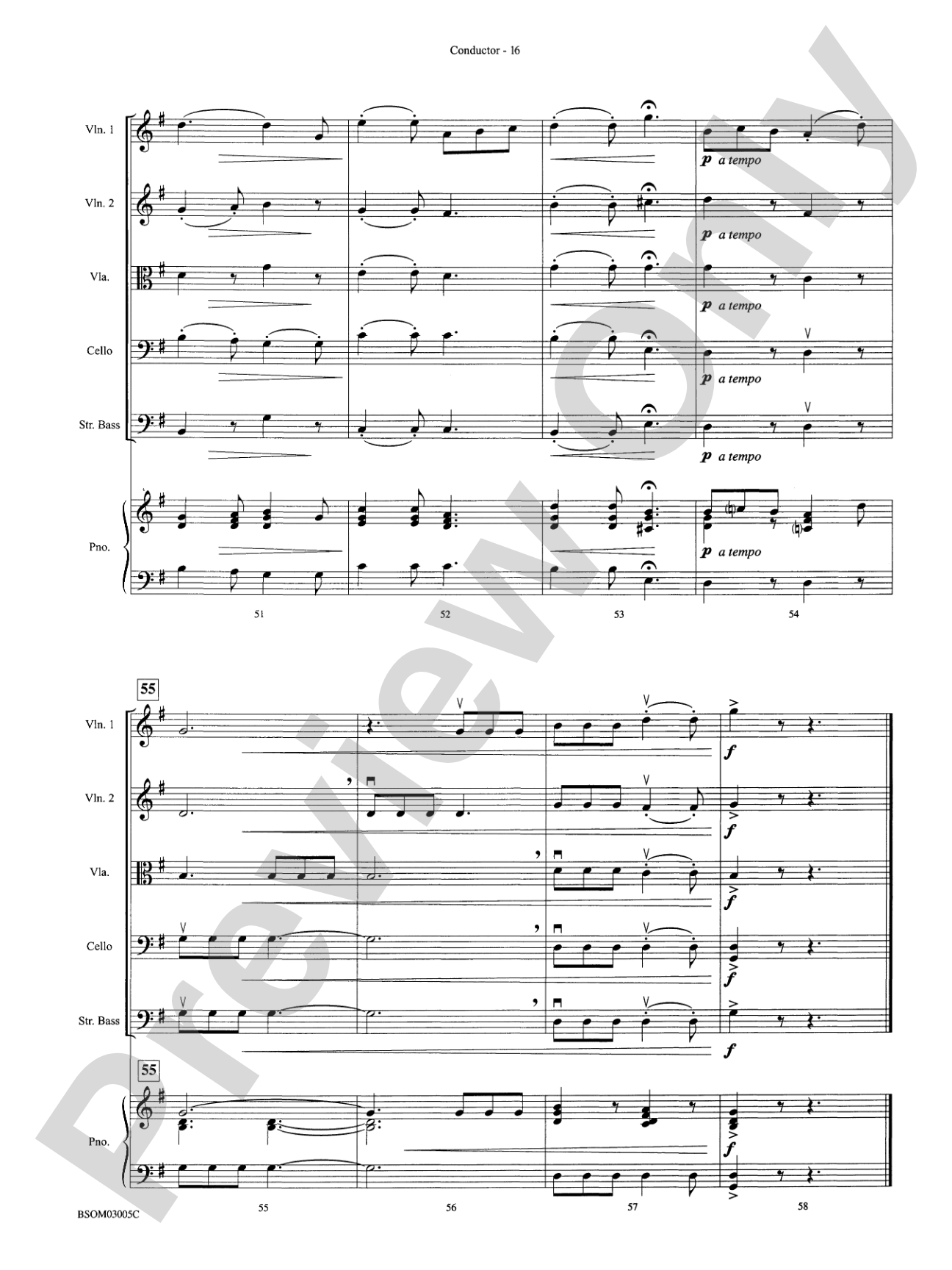



Dance Suite for Strings (I. Allemande, II. Sarabande, III. Gigue): String Orchestra Conductor Score & Parts
By Maurice C. Whitney / ed. John Whitney
Grade: 2.5
Item: 00-PK-0004943

$55.00
Pickup currently not available
Buy Extra Parts (Digital PDF Download)
Parts Added to Cart!
Description
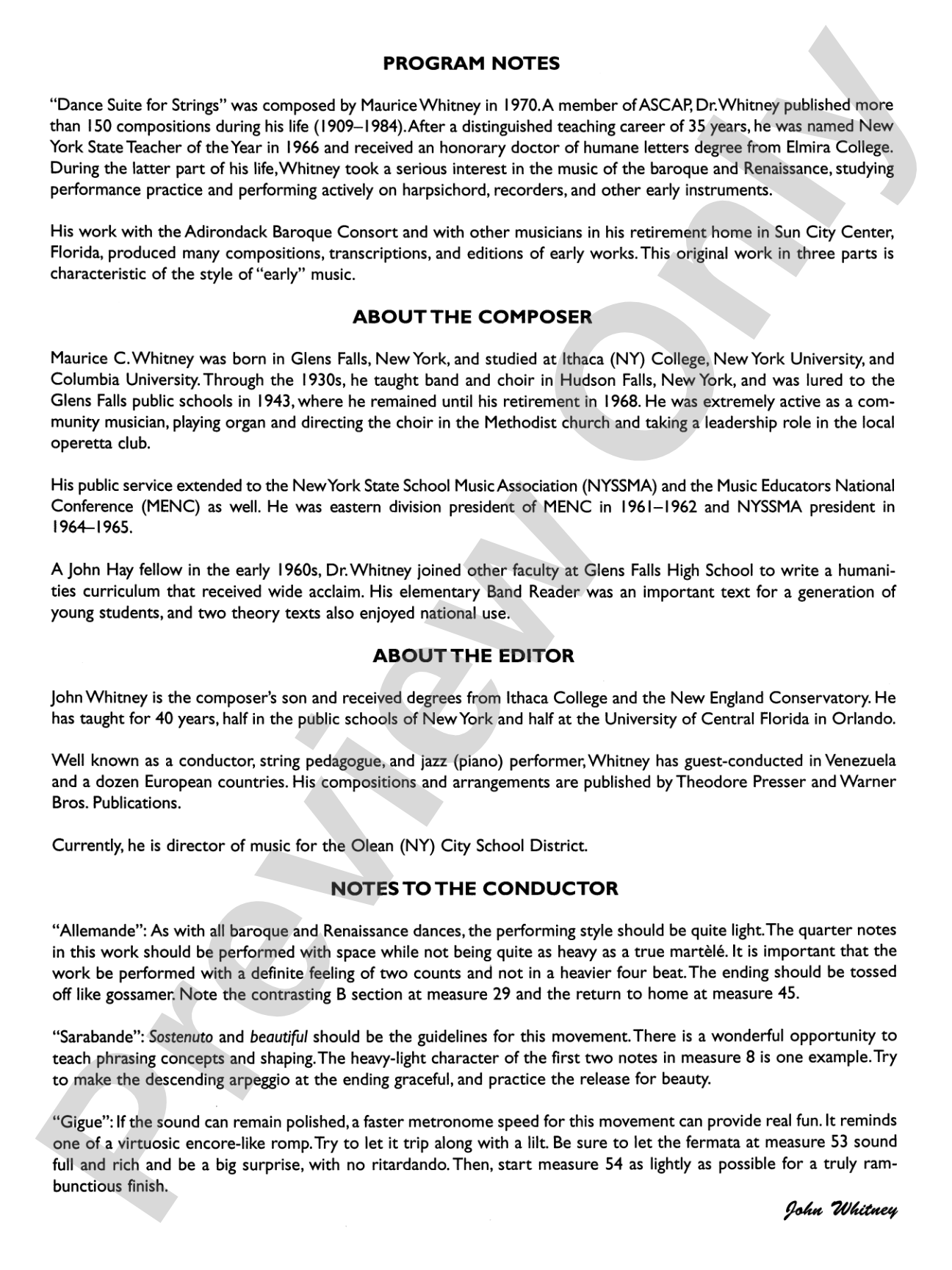
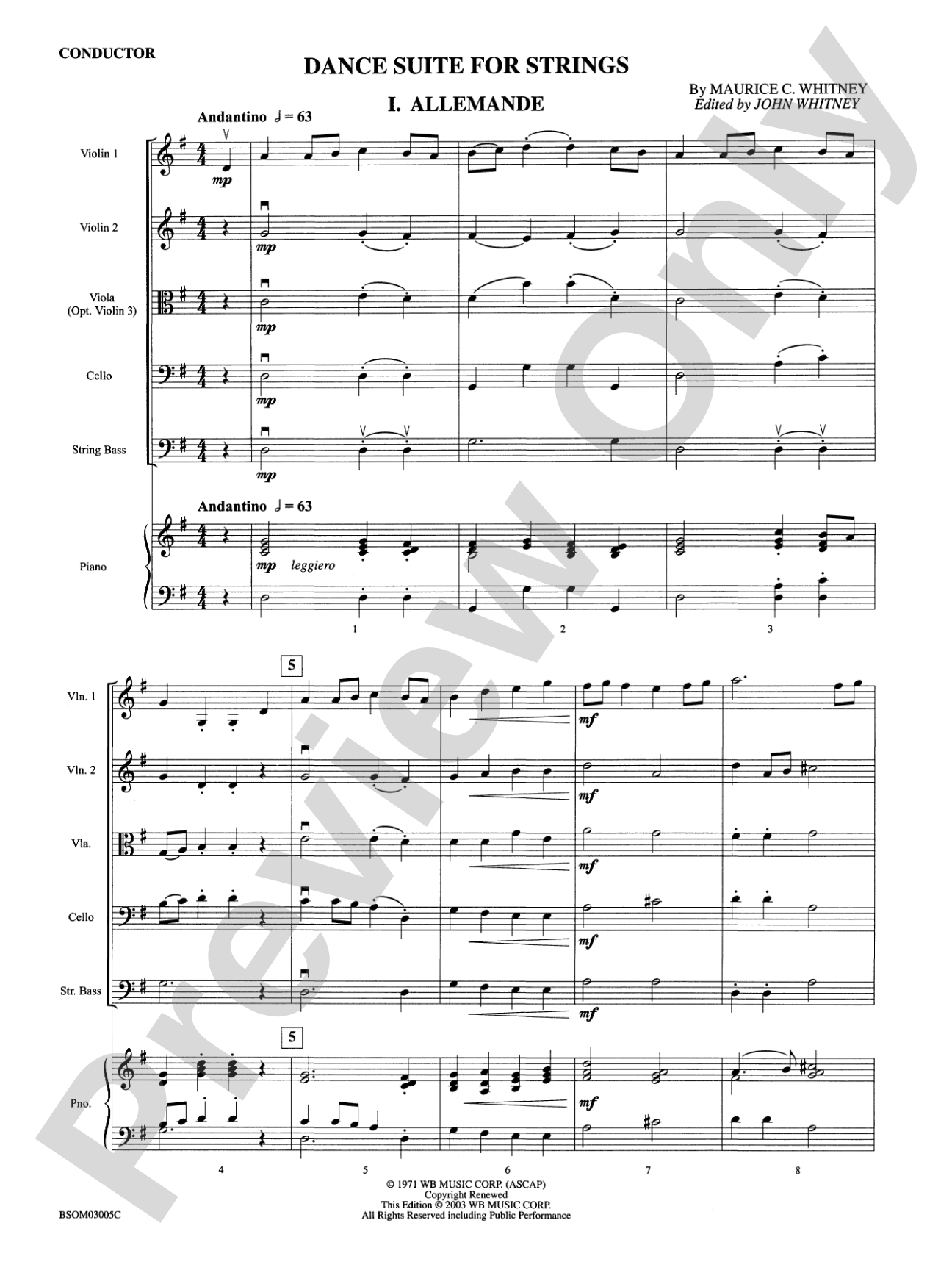
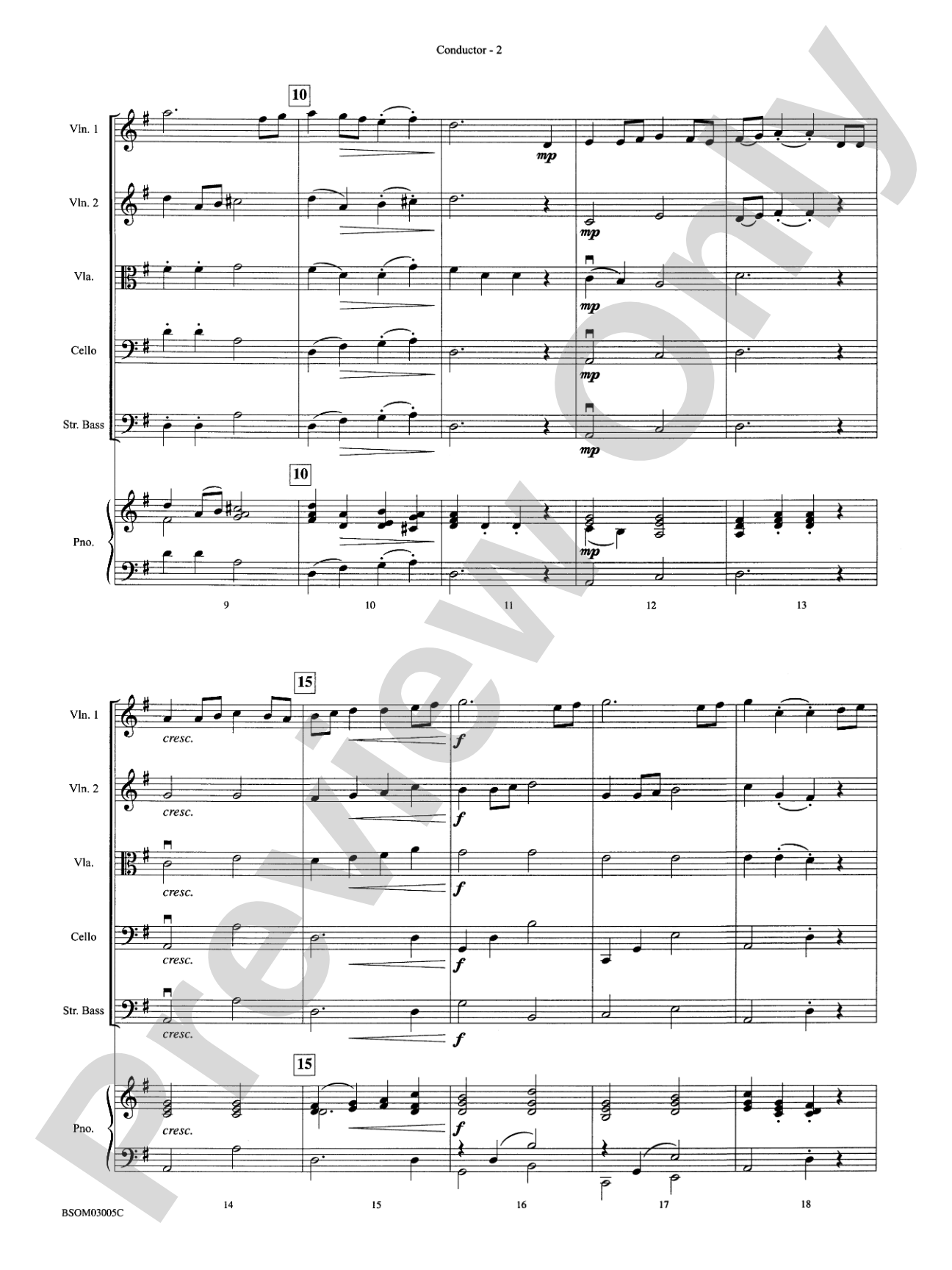
Three charming dances for string orchestra with piano, all with a flavor of the Baroque era. The first, "Allemande," is dainty and endearing. Second is the more regal "Sarabande." The concluding movement is a rapid dance entitled "Gigue." A nice array of dance styles that is pleasant to rehearse and a joy to perform. (5:15)


Don't just read it, hear it, play along with it, and watch your students grow with it. In MakeMusic Cloud, Dance Suite for Strings (I. Allemande, II. Sarabande, III. Gigue): String Orchestra Conductor Score & Parts comes alive with professional accompaniment, adjustable tempo, and built-in practice tools that turn solo practice into real progress.
Open in the Player
Jump straight in and assign it today.
Start Your Free Trial
Open this title and explore the full library in minutes.
Sample Audio
1
Audio File
--:--
0:00
0:00
Sample Video
Additional Details
Series:
Belwin Intermediate String Orchestra
Publisher:
Alfred Music
Page Count:
164
SKU:
00-PK-0004943
More about this title
Why we love this
This suite gives your orchestra three distinct dance characters to explore without overloading rehearsal time or requiring advanced technique. The Baroque styling keeps the writing clear and idiomatic for strings, while the inclusion of piano adds textural warmth and reduces the burden on younger orchestras to carry every phrase entirely alone.
What to expect
You move through an elegant progression of moods: first a bright, courtly dance full of ornamental delicacy; then a stately, measured procession; and finally a spirited romp that sends your ensemble home energized. The whole arc takes just over five minutes and feels genuinely complete, not like an excerpt.
Who it's for
String orchestras at the early intermediate level who are ready to explore Baroque dance forms with confidence. Conductors seeking a three-movement work that works equally well on concerts and festivals without requiring soloists or unusual instrumentation.
How to get the most out of it
- Shape the Allemande's gentle character through careful dynamic control; this movement rewards clarity over volume, so balance your first and second violins so both lines breathe together rather than compete.
- Allow the Sarabande's regal quality to emerge from stillness; focus your ensemble on matching vibrato width and sustain length so the longer note values feel stately rather than hollow.
- Drive the Gigue's momentum by locking in the rhythmic pulse with your piano accompanist before rehearsal; rapid passagework in the upper strings will sit cleanly only if the underlying beat is rock solid.
How to use it
Program this as the centerpiece of a Baroque or dance-themed concert, where it can anchor a set alongside lighter works or contrast with Romantic repertoire. It also fits naturally in festival programs where you want to demonstrate ensemble unity and style awareness without pushing into Grade 3 territory.
Skills your students will build
- Identifying and performing Baroque dance rhythms and phrasing conventions
- Matching vibrato and tone quality across a large ensemble
- Balancing multiple independent melodic lines in polyphonic writing
- Responding to a piano accompanist and maintaining clarity in a reduced texture
- Sustaining long note values with consistent intonation across string sections