Dance of the Tumblers (from the Opera Snow Maiden): Viola Sheet Music Preview

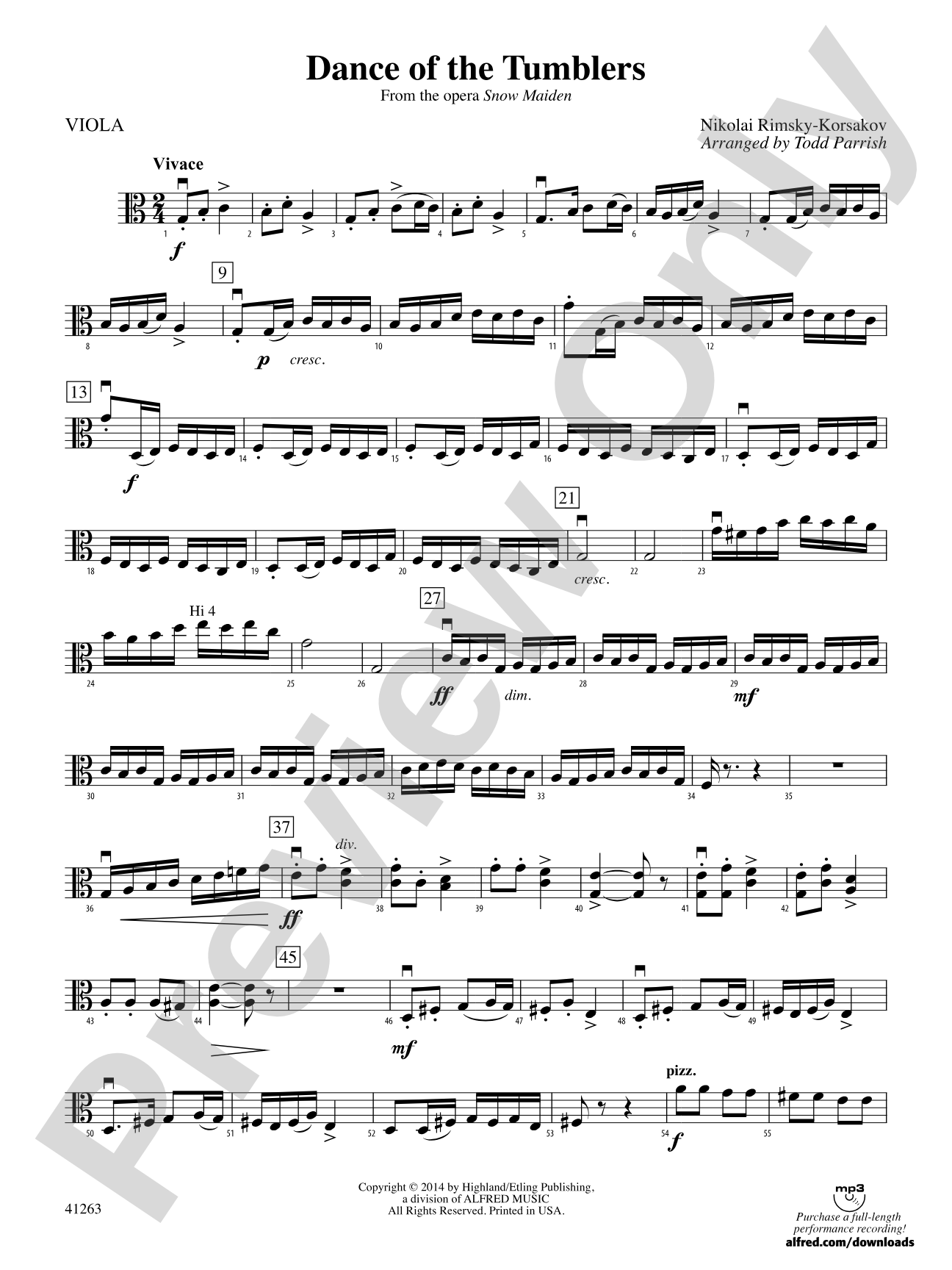
Dance of the Tumblers (from the Opera Snow Maiden): Viola

From the Opera Snow Maiden

By Nikolai Rimsky-Korsakov / arr. Todd Parrish

Grade: 4

Item: 00-PC-0016380_VA1

Digital Download
$5.99
Description
Perfect for advanced players and very true to the original. Shifting is required for 1st violins, cellos, and basses, while 2nd violins and violas get exceptionally rich parts of 16th notes and melody throughout. This short but energetic dance will make an excellent closer for any concert. (4:00) This title is available in MakeMusic Cloud.

Don't just read it, hear it, play along with it, and watch your students grow with it. In MakeMusic Cloud, Dance of the Tumblers (from the Opera Snow Maiden): Viola comes alive with professional accompaniment, adjustable tempo, and built-in practice tools that turn solo practice into real progress.

Sample Audio
0:00
0:00
Sample Video
Additional Details
Series: Highland/Etling String Orchestra
Publisher: Alfred Music
Page Count: 124
SKU: 00-PC-0016380_VA1

More about this title

About the Composer: Nickolay Rimsky-Korsakov

Nickolay Rimsky-Korsakov (1844-1908) was a Russian composer and orchestrator of exceptional skill, known for his brilliant instrumental writing and mastery of orchestral color. His operas and orchestral works draw from Russian folk traditions and fairy tales, blending lyrical melody with vivid harmonic language. Rimsky-Korsakov spent much of his career as a teacher and conductor, profoundly shaping Russian musical education and the compositional techniques of the next generation.

Why we love this

Todd Parrish's arrangement captures the kinetic energy and orchestral sparkle of this Russian masterwork while keeping the writing accessible for Grade 4 players. The 16th-note passages in second violins and violas sit naturally under the fingers, and the strategic shifting requirements for first violins and lower strings challenge without overwhelming. It's the kind of closer that leaves an audience energized and reminds them why orchestral color matters.

What to expect

Breathless and exuberant, like watching acrobats in rapid sequence. The piece tumbles forward with folk melody and glittering accompaniment, mixing mischief and virtuosity in equal measure. By the end, your audience will feel the whirlwind energy that made this opera scene unforgettable.

Who it's for

Advanced string orchestras ready to tackle both technical demands and authentic Russian orchestral writing. Players need secure shifting ability and the capacity to sustain fast rhythmic figures with musical intention rather than mechanical accuracy.

How to get the most out of it

  • Shape the 16th-note figuration in second violins and violas as a propulsive backdrop rather than filler; those notes carry melodic weight and need clear articulation to support the first violin line above them.
  • Let the shifting in the first violin part inform your overall tempo choice. Players will need enough space in the measure to execute the shifts cleanly without losing momentum.
  • Balance the cello and bass parts carefully during the rapid passages. They articulate the harmonic foundation that makes the dancers' energy feel grounded rather than chaotic.
  • Build the final measures with precision. The piece's close happens at full tilt, so coordinate the exact moment of release with your ensemble to land the ending with control and clarity.

How to use it

Reserve this for a concert slot where you need momentum and brilliance. The four-minute duration makes it an ideal final piece before intermission or as the concert closer, especially after longer or more introspective works. It also serves well in festival contexts where adjudicators value clarity of ensemble sound and articulation under tempo.

Skills your students will build

  • Shifting technique (1st violins, cellos, and basses) at performance tempo
  • Rapid 16th-note passage work in upper-middle voices with rhythmic precision
  • Sustaining ensemble cohesion through quick harmonic shifts
  • Balancing multiple simultaneous rhythmic and melodic layers
  • Executing Russian Romantic-era orchestration and style conventions

You May Also Like