Dance of the Toy Flutes: String Bass Sheet Music Preview

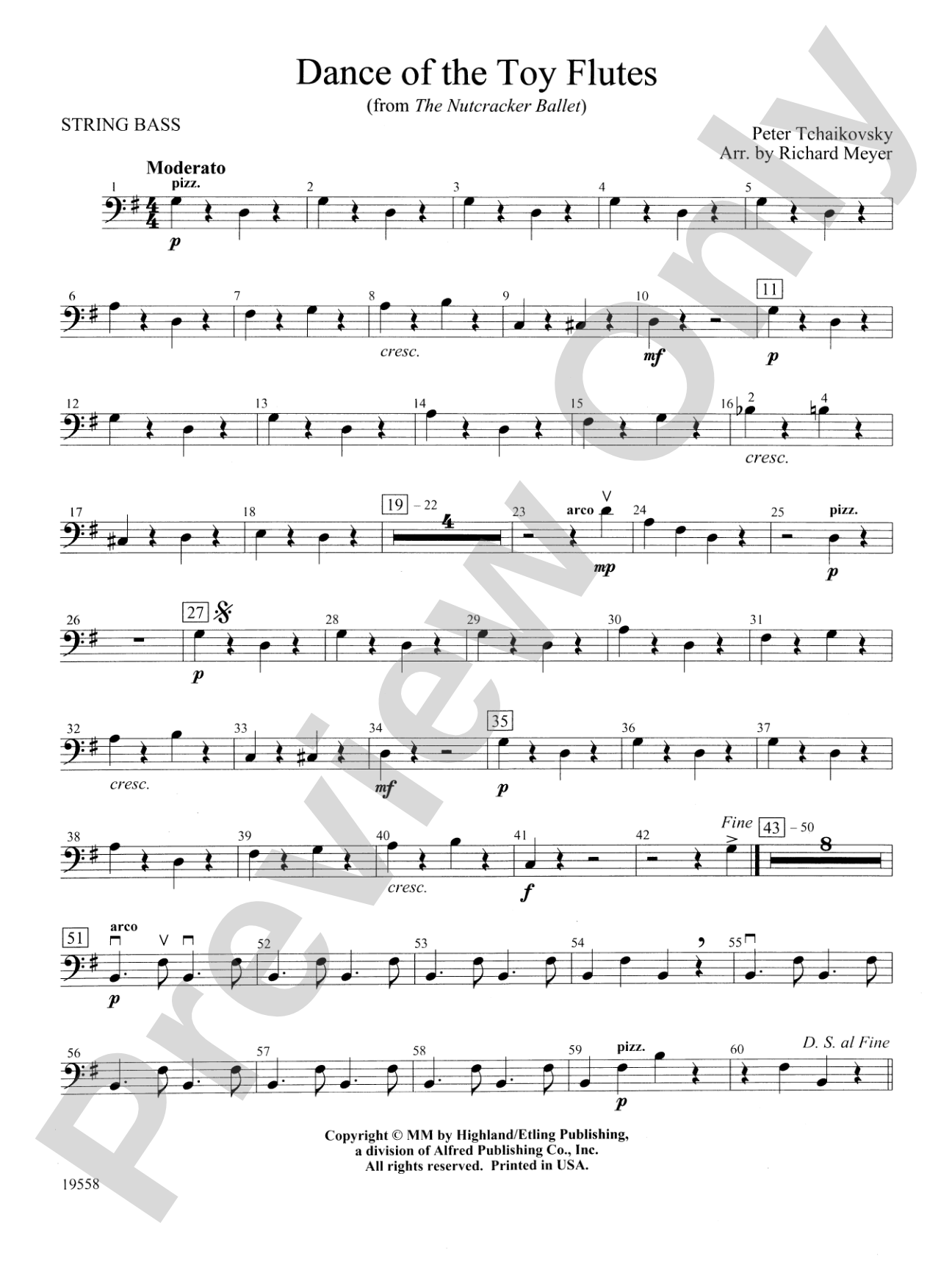
Dance of the Toy Flutes: String Bass

By Peter Ilyich Tchaikovsky / arr. Richard Meyer

Grade: 2

Item: 00-PC-0000340_SB

Digital Download
$5.99
Description
This charming dance from Tchaikovsky's best-loved ballet, is a great way to introduce your young orchestra to staccato bow style and simple accidentals (C-sharp, D-sharp, and B-flat). All new concepts are very clearly marked, making this a super teaching piece as well as a great change-of-pace selection for your winter concert. A very simple percussion part adds to the overall texture.

Don't just read it, hear it, play along with it, and watch your students grow with it. In MakeMusic Cloud, Dance of the Toy Flutes: String Bass comes alive with professional accompaniment, adjustable tempo, and built-in practice tools that turn solo practice into real progress.

Sample Audio
0:00
0:00
Sample Video
Additional Details
Series: Highland/Etling Strictly Strings
Publisher: Alfred Music
Page Count: 74
SKU: 00-PC-0000340_SB

More about this title

About the Composer: Peter Ilyich Tchaikovsky

Peter Ilyich Tchaikovsky (1840-1893) stands as one of the most performed composers in the concert hall, his gift for melody and orchestration making his music immediately accessible to listeners of all ages. His ballets—Swan Lake, The Sleeping Beauty, and The Nutcracker—remain cornerstones of both the ballet and orchestral repertoires, treasured for their direct emotional appeal and brilliant instrumental writing.

Why we love this

This arrangement captures one of Tchaikovsky's most delightful orchestral moments while remaining genuinely playable for developing musicians. The staccato bowing and chromatic touches feel fresh and intentional rather than overwhelming, and the simple percussion part gives every student a stake in the performance.

What to expect

Delicate and playful, with a spring-like rhythmic energy that captures the whimsy of toy flutes coming to life. The staccato articulation gives the piece its characteristic lightness, while the orchestration allows each string section a moment to shine.

Who it's for

String orchestras in grades 2-3 seeking a work that builds technical foundation while delivering genuine musical satisfaction. This piece works especially well for groups ready to move beyond open-string rhythmic drills but still consolidating bow control and basic accidentals.

How to get the most out of it

  • Define the staccato articulation early in rehearsal by isolating short passages and demonstrating the crisp bow lift; ask students to match the exact release length across all parts so the texture stays unified.
  • Mark the chromatic pitches (C-sharp, D-sharp, B-flat) with highlighter or pencil annotations in your parts during the first read-through to prevent intonation stumbles.
  • Balance the percussion entrance carefully so it enhances the dance character without overwhelming the strings; a light touch from timpani and triangle keeps the charm intact.

How to use it

Ideal as a contrasting selection on a winter concert, paired with a slower, legato piece to showcase the orchestra's range of bow technique. Its ballet origins and festive character make it a natural fit for December programming.

Skills your students will build

  • Staccato bow articulation and control
  • Reading and performing accidentals (C-sharp, D-sharp, B-flat) with secure intonation
  • Ensemble balance and rhythmic precision in a quick-moving orchestral texture
  • Independence within a section while maintaining vertical alignment with other parts

You May Also Like