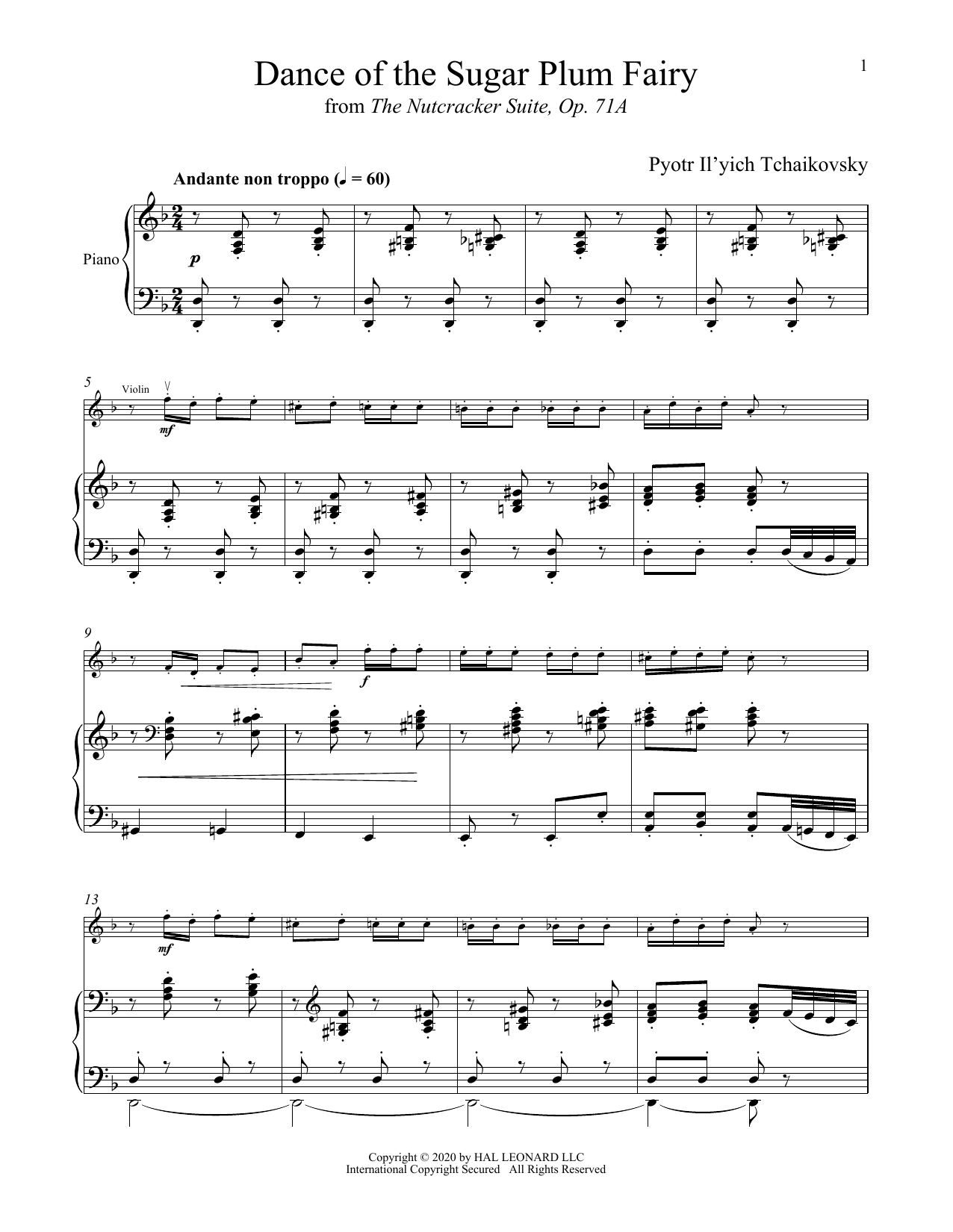
Dance Of The Sugar Plum Fairy, Op. 71a (from The Nutcracker) Sheet Music Preview

Dance Of The Sugar Plum Fairy, Op. 71a (from The Nutcracker): Violin and Piano

By Pyotr Il'yich Tchaikovsky

Item: 35-DS00472425

Digital Download
$5.99
Description

Discover MakeMusic Cloud: thousands of interactive titles your students can play along with today.

Sample Audio
No sample audio found.
Sample Video
Additional Details
Publisher: Hal Leonard
Page Count: 4
SKU: 35-DS00472425

More about this title

About the Composer: Pyotr Il'yich Tchaikovsky

Pyotr Il'yich Tchaikovsky (1840-1893) stands as one of the most performed composers in the concert hall, and for good reason: he possessed an instinctive gift for melody and an acute sense of orchestral color. His ballets represent some of the most enduring works in the entire classical repertoire, combining technical demands with emotional directness that speaks across centuries.

Tchaikovsky's The Nutcracker, premiered in 1892, has become synonymous with the Christmas season worldwide. The Sugar Plum Fairy's dance showcases his genius for creating character through music: a seemingly simple melody gains sophistication through harmonic movement and the famous celesta accompaniment that defines its sound.

Why we love this

This arrangement preserves the essential magic of the original without requiring an orchestra. The violin carries the famous melody with the grace it deserves, while the piano part captures enough of Tchaikovsky's harmonic language to feel complete and pianistically interesting. It's a piece that students genuinely want to play and audiences genuinely want to hear.

What to expect

Delicate but never precious, this music dances with a gossamer quality. The familiar melody floats over the supporting harmony like the Sugar Plum herself moving across the stage, catching light and attention with each gesture. It's intricate enough to reward attention, memorable enough to delight any listener.

Who it's for

This arrangement suits violinists who have moved beyond early repertoire and are ready for a piece that demands musical maturity alongside technical control. It works equally well for church musicians seeking tasteful holiday repertoire, chamber musicians adding seasonal color to a program, or students building a recital that spans centuries.

How to get the most out of it

  • Shape the opening phrase with a gentle arch rather than playing it straight; the melody gains elegance from subtle dynamic tapering.
  • Coordinate with your pianist on the accompaniment pattern so the triplet feel (characteristic of this piece) sits solidly beneath your line without rushing.
  • Listen for opportunities to breathe between phrases that match the piano's harmonic rhythm, not just the violin's line.
  • Reserve expressive vibrato for the longer note values; lighter passages benefit from a cleaner, more delicate sound.

How to use it

Pair this with other shorter Tchaikovsky movements or Russian character pieces to build a thematic concert segment. It also serves as an ideal intermission opener or encore that bridges classical and contemporary programming, offering audiences a moment of clarity and beauty during the holiday season. The four-page length makes it manageable to rehearse thoroughly without dominating rehearsal time.

Skills your students will build

  • Sustaining lyrical lines across phrase boundaries without loss of tone quality
  • Executing elegant articulation choices within a single melodic style
  • Coordinating with piano accompaniment on complex rhythmic patterns (triplet figures)
  • Interpreting Romantic-era melody with appropriate ornamentation and expressive shaping
  • Reading and performing in transposition for standard violin and piano settings

You May Also Like