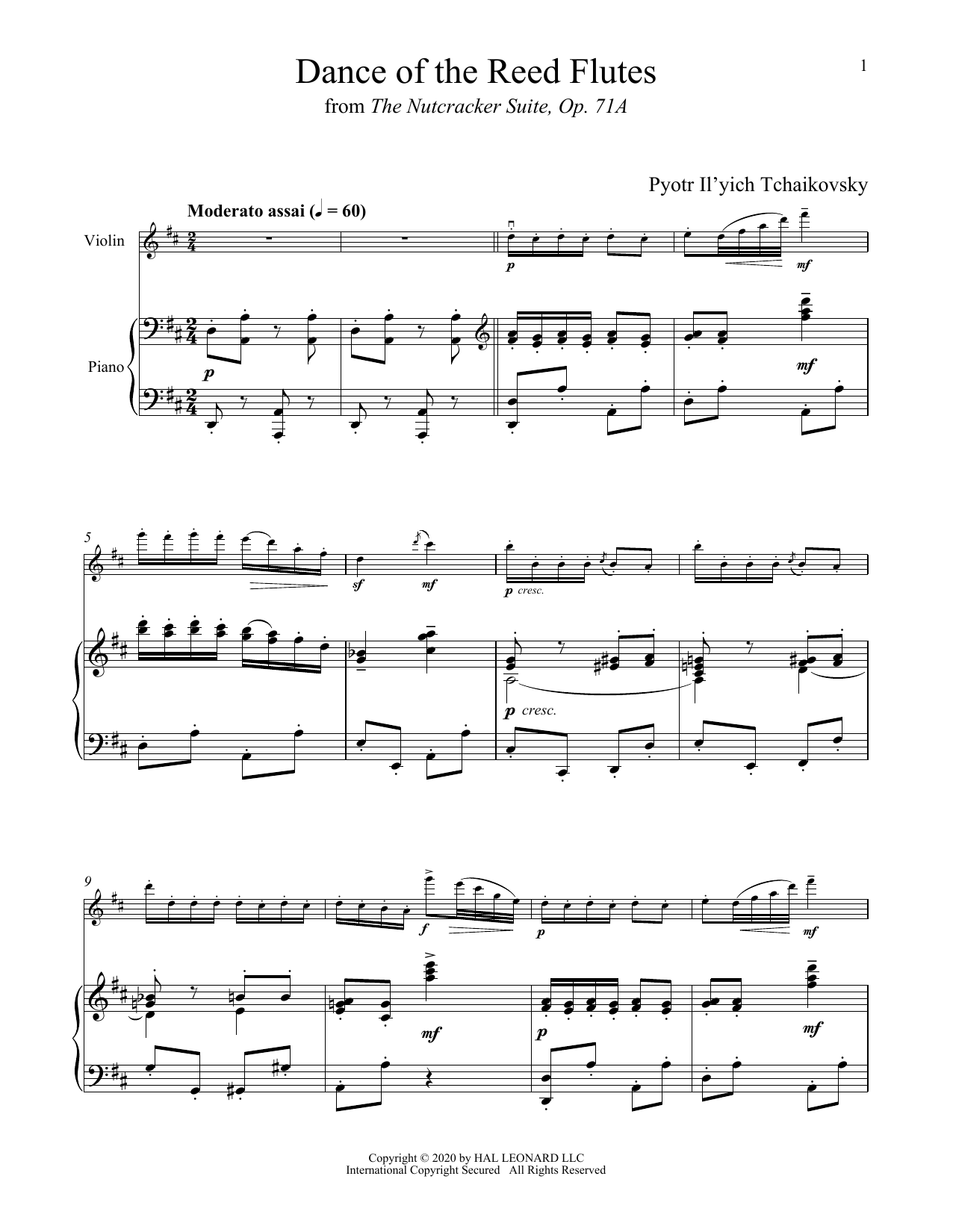
Dance Of The Reed Flutes, Op. 71a (from The Nutcracker) Sheet Music Preview

Dance Of The Reed Flutes, Op. 71a (from The Nutcracker): Violin and Piano

By Pyotr Il'yich Tchaikovsky

Item: 35-DS00472427

Digital Download
$5.99
Description

Discover MakeMusic Cloud: thousands of interactive titles your students can play along with today.

Sample Audio
No sample audio found.
Sample Video
Additional Details
Publisher: Hal Leonard
Page Count: 5
SKU: 35-DS00472427

More about this title

About the Composer: Pyotr Il'yich Tchaikovsky

Pyotr Il'yich Tchaikovsky (1840–1893) stands as one of the most performed composers in the concert hall, celebrated for his gift for memorable melody and orchestral color. A Russian Romantic who bridged European and Russian traditions, Tchaikovsky wrote ballets, symphonies, concertos, and chamber works with equal mastery. His music combines emotional directness with sophisticated harmonic language, making his scores both immediately engaging and endlessly rewarding to study.

The Nutcracker ballet (1892) represents Tchaikovsky at his most inventive. Commissioned as entertainment for the Imperial Theatre, it became one of the world's most beloved ballets precisely because Tchaikovsky elevated functional ballet music into genuine art. The "Dance of the Reed Flutes" exemplifies this approach: a delicate, flute-driven tableau that requires orchestral players to execute simple material with unusual refinement and control.

Why we love this

This arrangement captures the piece's signature lightness and crystalline texture in an accessible format that doesn't sacrifice character. The violin and piano pairing lets both players breathe and listen to each other, and the five pages keep rehearsal time reasonable while delivering a recognizable, crowd-pleasing holiday selection.

What to expect

Ethereal and childlike, with an almost underwater quality. The piece floats on delicate rhythmic impulses and spare harmonies, creating an impression of dancers moving through mist rather than across a solid stage. It rewards sensitivity and restraint; the effect depends on what you don't play as much as what you do.

Who it's for

Intermediate violinists with solid intonation and a comfortable left hand are the primary audience here. Pianists at a similar or slightly advancing level will manage the accompanying parts readily. Teachers often use this for holiday concerts, student recitals, or chamber ensemble showcases.

How to get the most out of it

  • Shape the melody in gentle two-bar phrases rather than playing it as one long line; this mirrors the staccato articulation of the original flute writing and keeps the listener's ear engaged.
  • Balance tone production so the piano accompaniment (its flowing sixteenth-note patterns) stays translucent behind the violin melody; if the piano overwhelms, the effect becomes muddy instead of whimsical.
  • Treat the tempo as steady but unhurried; resist the urge to rush through the delicate passages, which demand space to bloom.
  • Pay attention to any dynamic markings that shift the color between sections; small reductions in volume or rubato moments can highlight structural shifts without disrupting the overall flow.

How to use it

Slot this into December recitals as a graceful interlude between more substantial works, or pair it with other Nutcracker movements for a thematic holiday segment. It also works as an opening to a concert, establishing a refined mood before heavier repertoire follows.

Skills your students will build

  • Sustaining lyrical lines with consistent vibrato control
  • Accompanying awareness and dynamic balance in duo settings
  • Playing staccato articulation that conveys lightness without sacrificing tone
  • Structural listening and phrase shaping in a familiar work

You May Also Like