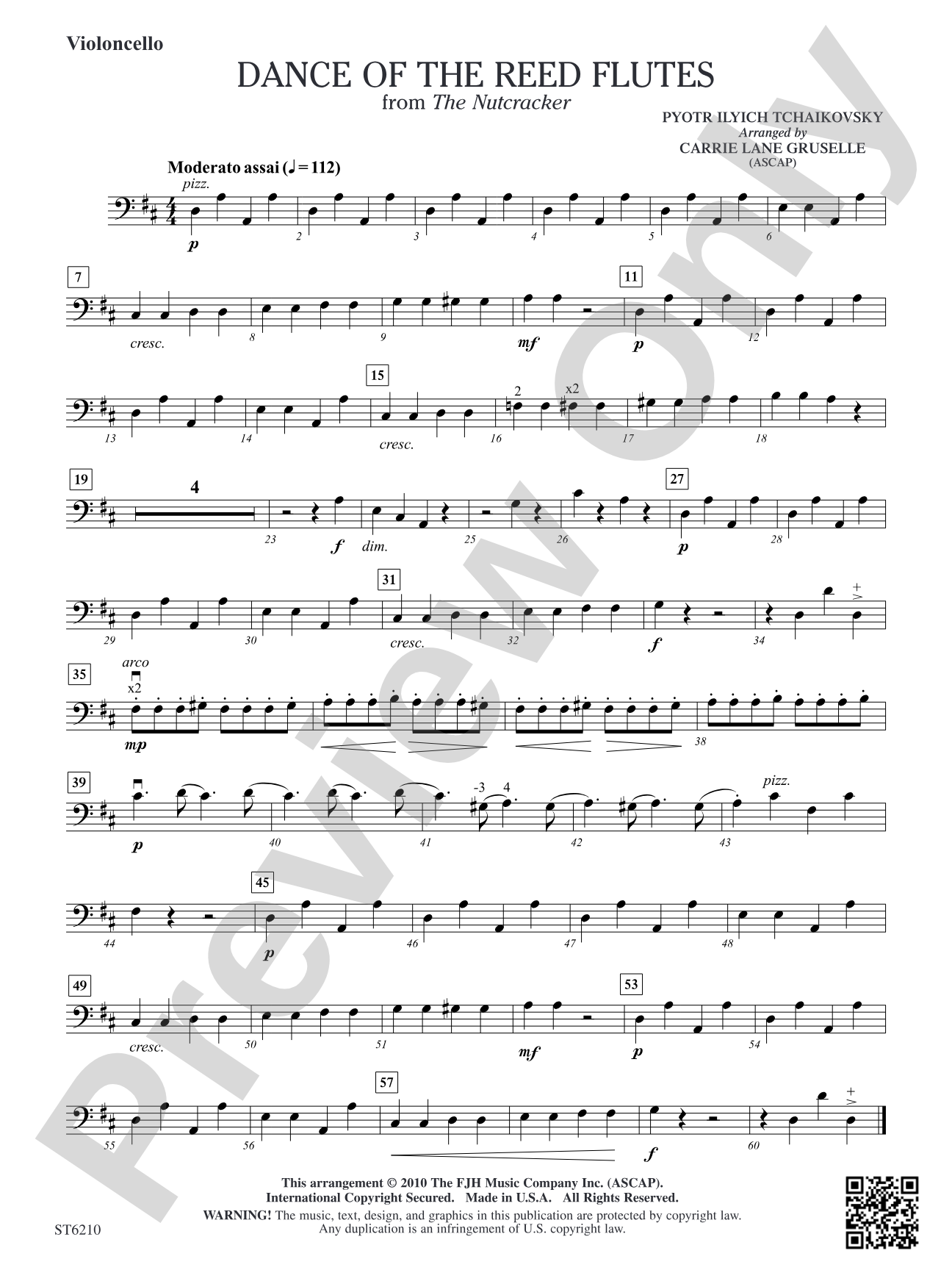
Dance of the Reed Flutes from The Nutcracker: Violoncello Sheet Music Preview

Dance of the Reed Flutes from The Nutcracker: Violoncello

By Pyotr Illyich Tchaikovsky / arr. Carrie Lane Gruselle

Grade: 2.5

Item: 98-PC-DST6210_VC1

Digital Download
$7.00
Description
This incredible adaptation for younger orchestras showcases one of the most famous melodies from Tchaikovsky's masterpiece, The Nutcracker. Highlighting all the themes used in this part of the ballet, students will learn how all the themes fit together as they follow the form of the original. Absolutely fantastic and extremely authentic sounding!

Dance of the Reed Flutes from The Nutcracker: Violoncello isn't in MakeMusic Cloud just yet...but it could be. Let us know you'd like to see it, and you'll help shape what comes next. In the meantime, start a free trial and dive into thousands of interactive titles your students can play along with today.

Sample Audio
0:00
0:00
Sample Video
Additional Details
Series: FJH Developing Strings
Publisher: The FJH Music Company, Inc.
SKU: 98-PC-DST6210_VC1

More about this title

About the Composer: Pyotr Illyich Tchaikovsky

Pyotr Ilyich Tchaikovsky (1840-1893) shaped Russian classical music through his gift for melody and orchestral color. His ballets, including Swan Lake, Sleeping Beauty, and The Nutcracker, remain cornerstones of the repertoire and introduced millions of listeners to classical music through their accessibility and emotional directness.

For young musicians, Tchaikovsky's music offers an ideal entry point into the Romantic era. His melodies are memorable and singable, his orchestration teaches through demonstration, and his forms reward careful listening. The Nutcracker in particular has become a rite of passage for many student orchestras, connecting young players to one of the world's most beloved musical traditions.

Why we love this

Carrie Lane Gruselle's arrangement respects the original while scaling it wisely for developing players. Rather than simplifying the music into unrecognizable fragments, she preserves Tchaikovsky's actual themes and the way they interact, letting students experience genuine orchestral writing at their level. Programming this score teaches form through live performance rather than theory worksheets.

What to expect

Nimble and transparent, with a fairy-tale quality that emerges from the interplay of simple, elegant melodic lines. The orchestration sparkles without becoming overly busy; there's room to hear each voice, which gives younger players a sense of contributing to something larger than themselves. It captures the whimsy and lightness of Tchaikovsky's original without the technical demands that usually come with that territory.

Who it's for

String orchestras in grades 2.5 and up that want to tackle a recognizable masterwork without oversimplifying. This works for groups with solid intonation and basic rhythmic security but limited experience with complex textures or extended techniques. It suits programs looking for repertoire that feels substantial to both student musicians and audiences.

How to get the most out of it

  • Bring out the dialogue between first and second violins in the main theme; their interplay is essential to how the piece breathes.
  • Balance the woodwind colors against the strings rather than burying them. Each instrument family has material worth hearing.
  • Let the tempo breathe slightly at phrase endings without coming to a stop. This maintains the dancelike character Tchaikovsky intended.
  • Establish a clear rhythmic pulse from the beginning. Young string players often follow the bow instead of the beat when the tempo is relaxed.

How to use it

This is an ideal centerpiece for a holiday pops concert or winter program, offering a piece of genuine classical substance that audiences recognize and enjoy. Pair it with other Nutcracker excerpts arranged for different ensembles, or use it as the anchor for a concert celebrating Russian composers. It also serves well as a milestone repertoire choice mid-year, giving students a sense of accomplishment before the spring concert season.

Skills your students will build

  • Balancing multiple independent melodic lines within the string section
  • Maintaining rhythmic precision in dance-like patterns across ensemble changes
  • Interpreting phrasing and articulation to reflect the original orchestral intent
  • Listening for and reinforcing harmonic structure while playing a single part
  • Understanding form and theme through performance of an extended classical movement

You May Also Like