
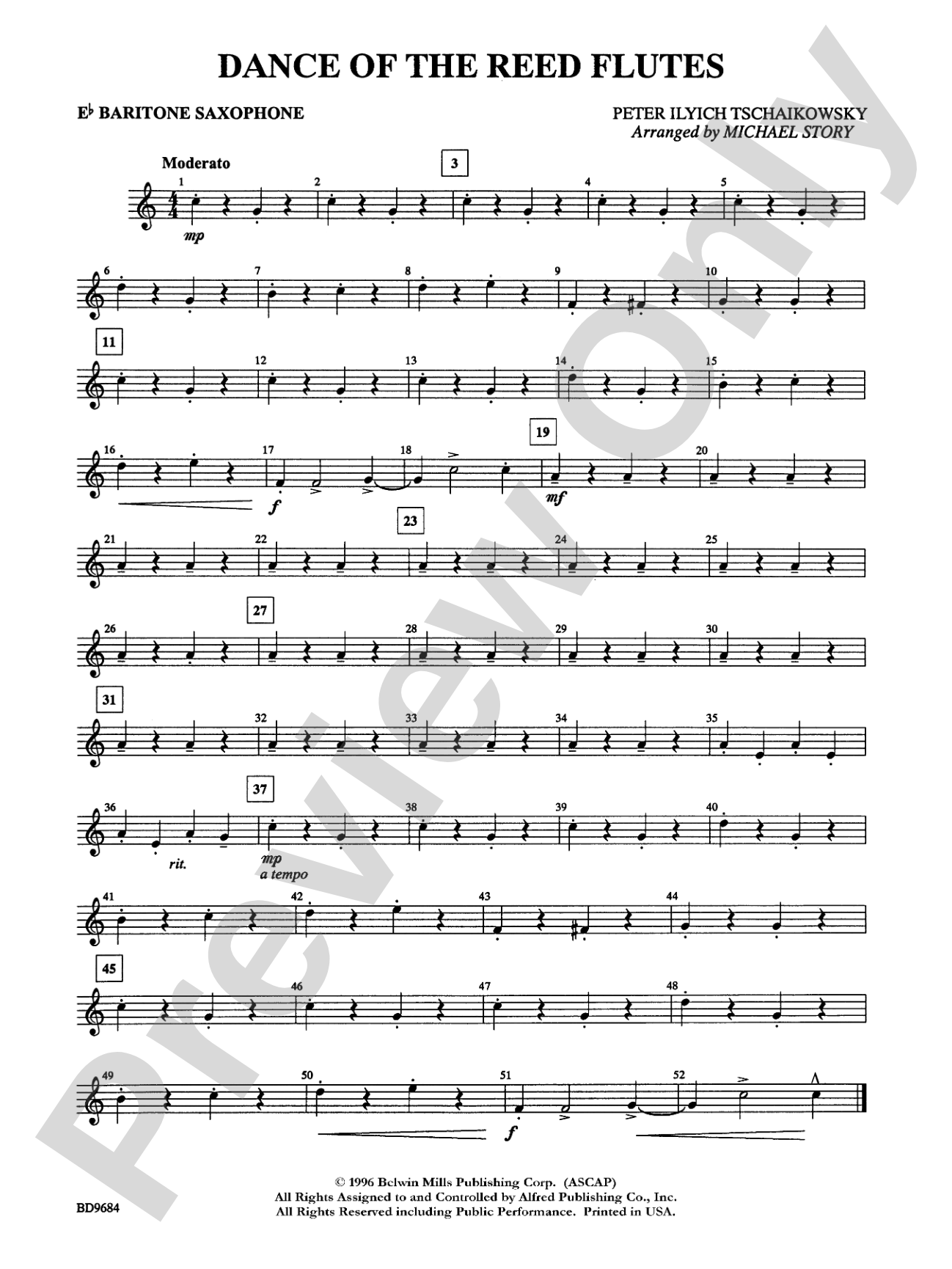

Dance of the Reed Flutes: E-flat Baritone Saxophone
By Peter Ilyich Tchaikovsky / arr. Michael Story
Grade: 1 (Very Easy)
Item: 00-PC-0002046_BTX
$3.00
Pickup currently not available
Description
Tchaikovsky's delightful ballet The Nutcracker is the source of this ageless favorite. Although it is scored 'down to the very basics,' the flavor and charm of the original is more than evident. Marked with comfortable ranges and rhythms (making it easy to rehearse), and arranged for a full and complete sound, this work will deliver real pleasure to your holiday concert audience. (1:45)


Don't just read it, hear it, play along with it, and watch your students grow with it. In MakeMusic Cloud, Dance of the Reed Flutes: E-flat Baritone Saxophone comes alive with professional accompaniment, adjustable tempo, and built-in practice tools that turn solo practice into real progress.
Open in the Player
Jump straight in and assign it today.
Start Your Free Trial
Open this title and explore the full library in minutes.
Sample Audio
1
Audio File
--:--
0:00
0:00
Sample Video
Additional Details
Series:
Belwin Beginning Band
Publisher:
Alfred Music
Page Count:
120
SKU:
00-PC-0002046_BTX
More about this title
About the Composer: Peter Ilyich Tchaikovsky
Peter Ilyich Tchaikovsky (1840–1893) stands among the most performed composers in concert halls worldwide, and for good reason. His gift for melody, orchestration, and emotional directness shaped the landscape of 19th-century music. The Nutcracker, premiered in 1892, emerged near the end of his life as one of his most enduring creations, beloved equally by concert audiences and ballet dancers.
For music educators, Tchaikovsky's work offers a gateway to Romantic-era composition without requiring advanced technical skill from students. His orchestrations are transparent and singable, making him an ideal choice for young ensembles encountering canonical masterworks for the first time.
Why we love this
Michael Story's arrangement respects the integrity of Tchaikovsky's original melody while making it genuinely playable for Grade 1 bands. Beginning ensembles rarely get access to recognizable, beloved literature at their level, and this release bridges that gap without sacrificing musical satisfaction. Your audience will hear the charm they know, and your students will experience the pride of performing a masterwork.
What to expect
Delicate and shimmering, like watching dancers in porcelain costumes move across a stage. The writing sparkles without fussiness; it's charming in a straightforward way that young musicians can embrace and audiences can savor. The arrangement captures the miniature quality of the original without ever feeling slight.
Who it's for
Beginning concert bands looking for repertoire that sounds professional and feels celebratory without demanding virtuosity. This arrangement works equally well for young high school ensembles with mixed experience levels or middle school bands aiming for a holiday concert with genuine musical substance. Teachers seeking pieces that build student confidence through recognizable material will find this essential.
How to get the most out of it
- Balance the melody between flutes and clarinets; support it with steady, unobtrusive accompaniment from the lower voices so the familiar tune remains crystal clear.
- Keep the tempo conversational and unhurried. At 1:45, there's room to breathe between phrases without dragging.
- Attend to articulation consistency across sections. Clean, uniform tonguing on repeated rhythmic figures (especially in accompaniment parts) creates a polished ensemble sound.
- Bring out the personality of individual instrumental colors without letting anyone overpower the whole. These Grade 1 ranges are designed so every voice can contribute meaningfully.
How to use it
This is an obvious choice for December concerts, but consider programming it early in your winter set as an opener that establishes a festive, accomplished mood. It pairs well alongside other holiday favorites or seasonal arrangements, and its brief length (1:45) makes it useful as a breathing space between heavier works. For ensembles new to performance, leading with something this recognizable settles both student nerves and audience attention.
Skills your students will build
- Playing balanced ensemble textures in Grade 1 ranges
- Maintaining steady tempo across a complete piece
- Articulation clarity and consistency within sections
- Melodic prominence versus accompaniment accompaniment awareness