
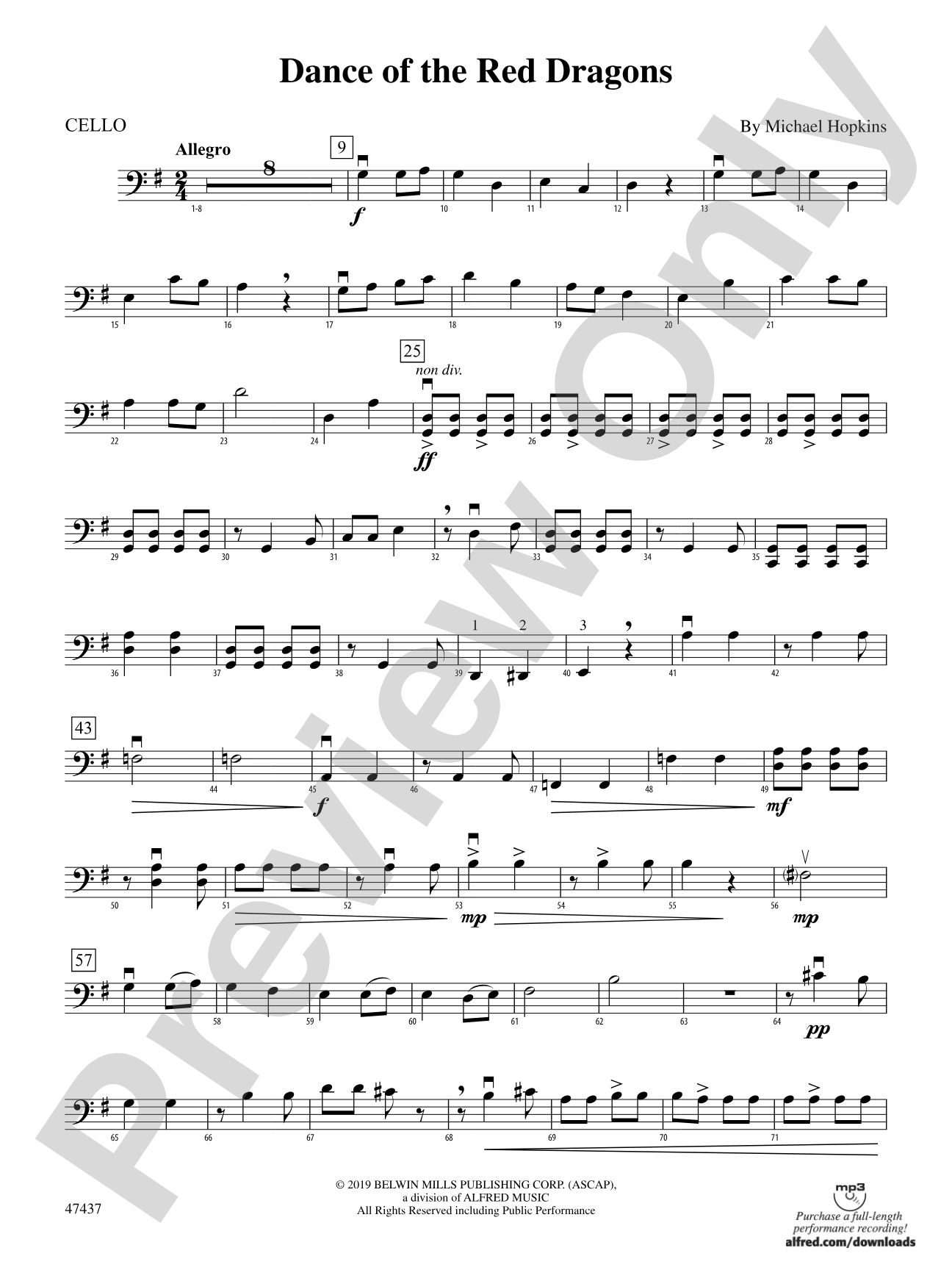

Dance of the Red Dragons: Cello
By Michael Hopkins
Grade: 2.5
Item: 00-PC-0017968_VC1
$5.99
Pickup currently not available
Description
This energetic and beautiful original work is a lively 2/4 meter piece set in the keys of G major and E minor. All sections pass around the melody while energetic rhythms highlight the countermelody and accompaniment parts. This great festival or concert closer will make your orchestra sound rich and mature.


Don't just read it, hear it, play along with it, and watch your students grow with it. In MakeMusic Cloud, Dance of the Red Dragons: Cello comes alive with professional accompaniment, adjustable tempo, and built-in practice tools that turn solo practice into real progress.
Open in the Player
Jump straight in and assign it today.
Start Your Free Trial
Open this title and explore the full library in minutes.
Sample Audio
1
Audio File
--:--
0:00
0:00
Sample Video
Additional Details
Series:
Belwin Intermediate String Orchestra
Publisher:
Alfred Music
Page Count:
144
SKU:
00-PC-0017968_VC1
More about this title
About the Composer: Michael Hopkins

Michael Hopkins directs the music education program at the University of Michigan, where he teaches string techniques, orchestra methods, and courses in music psychology and research. His career spans conducting university orchestras, leading secondary ensembles across multiple states, and founding the Burlington Chamber Orchestra; he has also guest conducted at over 100 orchestra festivals and clinics nationwide.
Hopkins brings deep expertise in string pedagogy to his composition and arrangement work, having published more than 70 pieces for orchestra. His research and writing appear regularly in journals including the Journal of Research in Music Education, American String Teacher, and Music Educators Journal. He authored The Art of String Teaching, a comprehensive pedagogical resource published by GIA Publications that serves teachers across private studios, group string classes, and university programs.
Why we love this
This piece gives every section the spotlight while maintaining forward momentum from start to finish. The interplay between melody and energetic countermelody creates texture and maturity that will impress adjudicators and audiences alike, and the alternating G major and E minor tonalities add harmonic interest without requiring advanced sight-reading skills.
What to expect
A vibrant, rhythmically driven journey that never loses its lyrical core. The dance-like energy of the 2/4 meter combines with elegant melodic lines that wind through all sections, creating a piece that feels both spirited and refined.
Who it's for
Intermediate string orchestras at the middle and high school level seeking a concert or festival piece that sounds polished and mature. This work works equally well as a closing number for a full concert or as a festival entry where adjudicators expect strong ensemble balance and clean intonation across both major and minor tonalities.
How to get the most out of it
- Balance the countermelody against the melody line. Since all sections share both roles, rehearse these passages in isolation so players understand when they're propelling the piece forward versus supporting the primary tune.
- Lock the ensemble's rhythmic energy in the 2/4 meter through consistent downbeat placement. A slight forward lean in pulse (rather than a rushed tempo) will keep the piece feeling dance-like rather than breathless.
- Use the key shift between G major and E minor as a rehearsal landmark. These sections often surprise orchestras the first time through, so flag the transition during score study and drill it in sectionals.
How to use it
Program this as a concert finale to send audiences out energized and satisfied. The combination of technical accessibility and musical maturity also makes it an excellent festival choice, where it will represent your orchestra's sound at an advanced level without overshooting the ensemble's capabilities.
Skills your students will build
- Executing 2/4 meter with rhythmic precision and forward momentum
- Trading melody and countermelody lines between sections
- Shifting between parallel keys (G major and E minor) with secure intonation
- Balancing primary and supporting musical roles within the same passage
- Reading and sustaining energetic accompaniment figures that frame the melody