
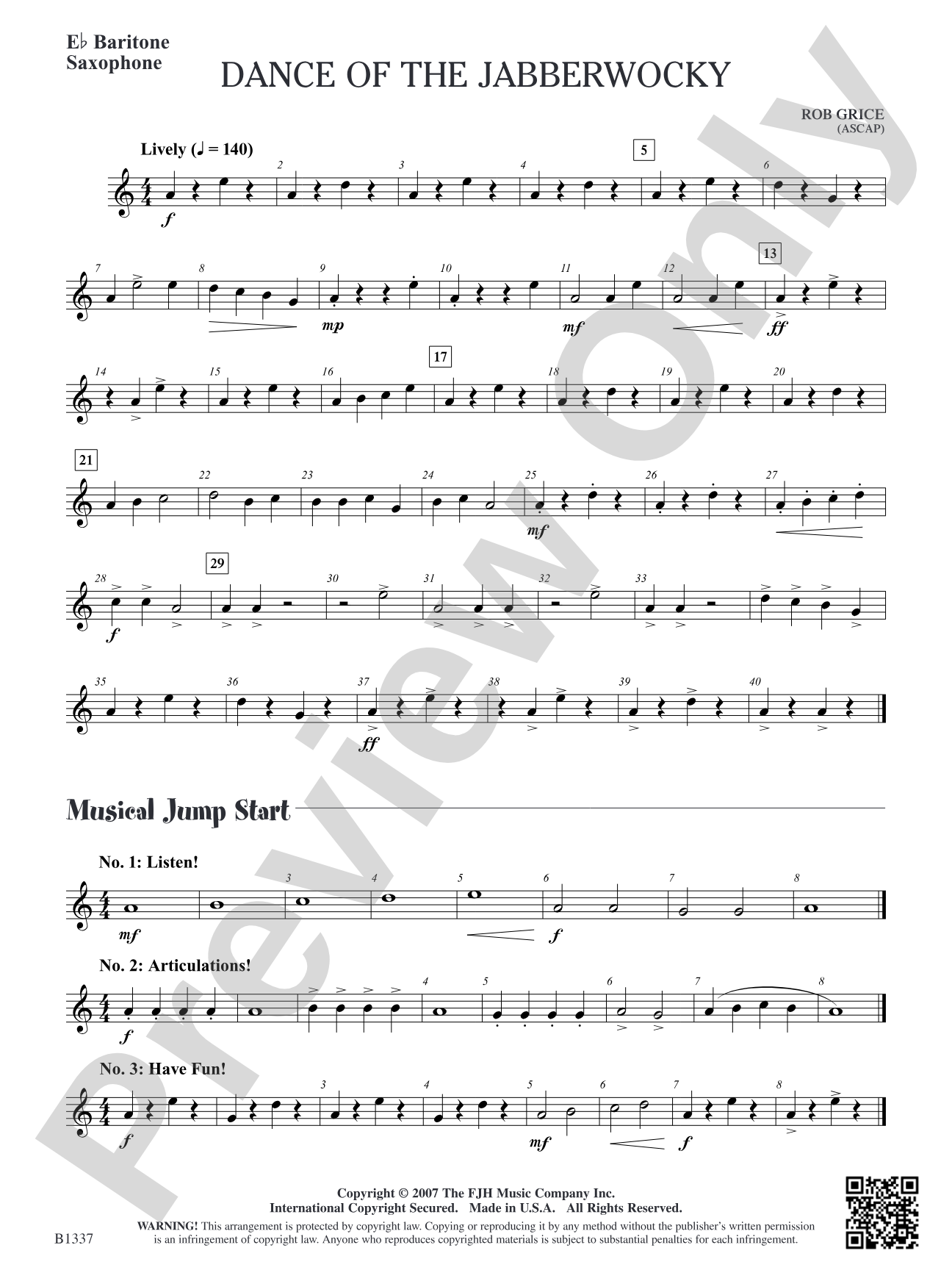

Dance of the Jabberwocky: E-flat Baritone Saxophone
By Rob Grice
Level:.5
Item: 98-PC-DB1337_BTX
$7.00
Pickup currently not available
Description
Inspired by a fictional character in one of the greatest of all nonsense poems by Lewis Carroll, this humorous depiction of the Jabberwocky includes trombone glissandi and a ratchet to add to the mayhem. A wonderful way to lighten your program with a work that is easy to put together and full of imagination!


Don't just read it, hear it, play along with it, and watch your students grow with it. In MakeMusic Cloud, Dance of the Jabberwocky: E-flat Baritone Saxophone comes alive with professional accompaniment, adjustable tempo, and built-in practice tools that turn solo practice into real progress.
Open in the Player
Jump straight in and assign it today.
Start Your Free Trial
Open this title and explore the full library in minutes.
Sample Audio
1
Audio File
--:--
0:00
0:00
Sample Video
No sample videos found.
Additional Details
Series:
FJH Starter Series
Publisher:
The FJH Music Company, Inc.
SKU:
98-PC-DB1337_BTX
More about this title
About the Composer: Rob Grice

Rob Grice's compositions and arrangements have reached audiences across the United States, Australia, Canada, Europe, and Japan, earning performances at prestigious venues including Carnegie Hall, the Midwest Clinic, and the Society of Wind Instruments in Germany. His works regularly appear on state, national, and international contest lists. Grice's success in writing for young musicians stems from his extensive classroom experience at elementary, secondary, and community college levels, combined with his active work as a guest conductor, clinician, and adjudicator. In recognition of his contributions to music education, he received the "Secondary Teacher of the Year" award from the Enterprise City School System in Enterprise, Alabama, and was honored with WDHN-TV18's Golden Apple Award.
Why we love this
Grice has a gift for writing pieces that sound far more sophisticated than their technical demands suggest. The Jabberwocky concept gives you legitimate permission to be playful and theatrical with your ensemble, while trombone glissandi and the ratchet effect add character and intrigue that students genuinely enjoy executing. At this accessible level, it's refreshing to find something that doesn't feel juvenile yet remains genuinely fun to rehearse and perform.
What to expect
The Jabberwocky springs to life on the page with quirky rhythmic gestures and unexpected harmonic turns that evoke the nonsense and playfulness of Carroll's original poem. Trombone slides and the clatter of the ratchet punctuate the proceedings like sound effects from a theatrical production, creating a piece that is genuinely witty rather than trying too hard to be cute.
Who it's for
Concert bands at the middle school level and developing high school ensembles will find this piece perfectly suited to their abilities and energy. Directors seeking repertoire that challenges students to balance musicality with humor, and that appeals equally to younger audiences and fellow musicians, will return to this piece year after year.
How to get the most out of it
- Bring out the character of the glissandi in the trombone section by having those players practice the slides at slow tempos first, emphasizing control over speed. Once they're comfortable, let them add just a touch of theatrical flair without losing musical shape.
- Time the ratchet entrance carefully with the conductor so it lands as a surprise punctuation mark rather than a distraction. A brief rehearsal focusing on that specific cue will pay off in performance.
- Encourage your wind players to listen for the harmonic movement beneath the humorous surface; the piece works best when the ensemble locks together rhythmically and harmonically, giving the novelty elements room to shine.
How to use it
Use this as your program lightener in a concert built around a thematic structure or as a palate cleanser between heavier works. It pairs well with other whimsical repertoire or can anchor a "Music and Literature" concert alongside excerpts from or readings of Carroll's poetry.
Skills your students will build
- Executing glissandi with control and clear articulation
- Maintaining ensemble cohesion during rhythmically syncopated passages
- Balancing dynamic contrast and articulation to clarify comedic intent
- Responding to theatrical and expressive conducting cues
- Coordinating with auxiliary percussion effects in context