
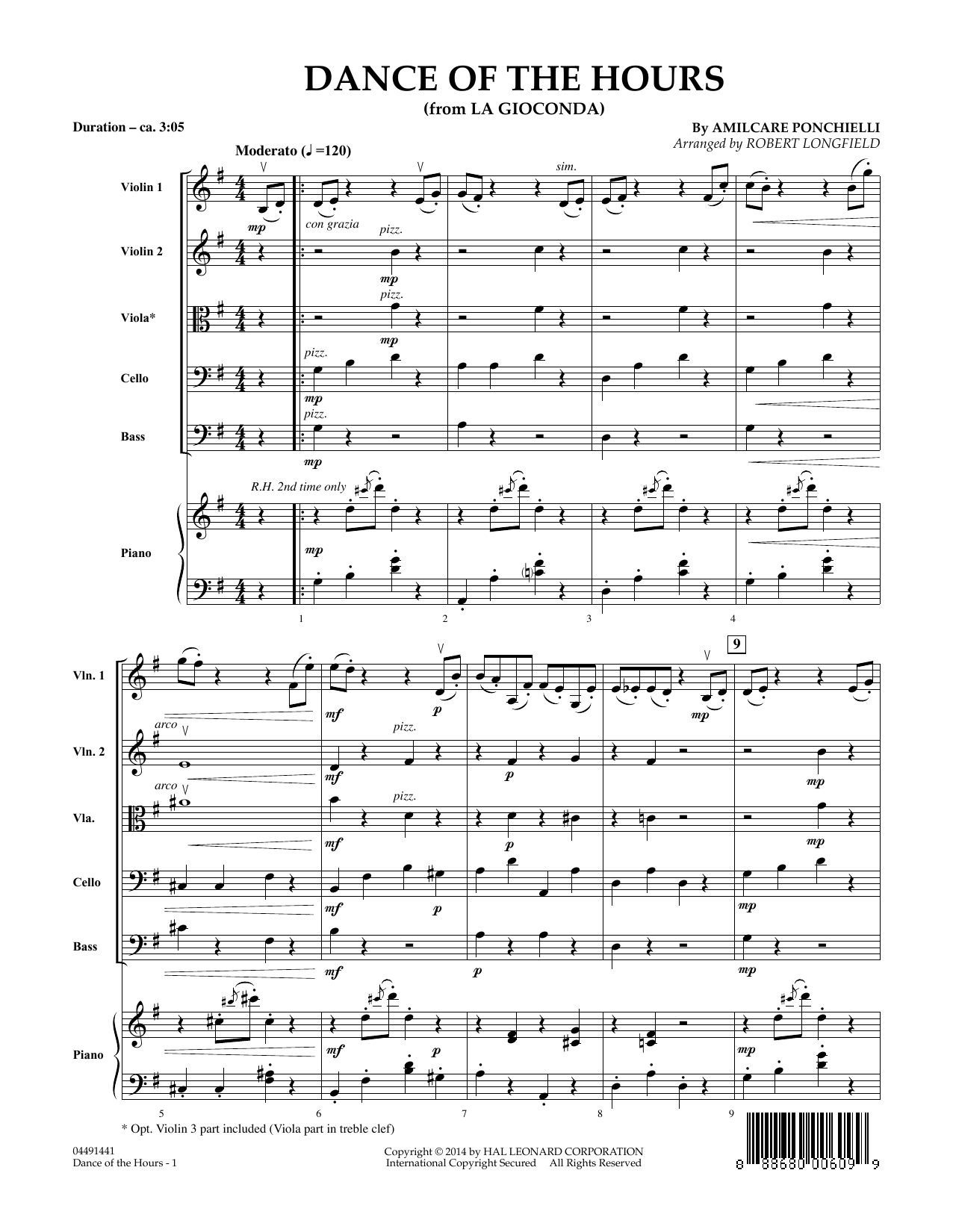

Dance of the Hours (arr. Robert Longfield): String Orchestra Conductor Score & Parts
By Amilcare Ponchielli / Arranged by Robert Longfield
Grade: 2
Item: 35-PK00420739
$45.00
Pickup currently not available
Buy Extra Parts (Digital PDF Download)
Parts Added to Cart!
Description
As heard in the Disney classic "Fantasia" where it served as accompaniment for ostriches, hippos, elephants, and alligators, "Dance of the Hours" continues as a staple of the of light classical repertoire taken from both opera and ballet. Now available in this superb, accessible version from string orchestra by Robert Longfield. Dur: 3:05


Dance of the Hours (arr. Robert Longfield): String Orchestra Conductor Score & Parts isn't in MakeMusic Cloud just yet...but it could be. Let us know you'd like to see it, and you'll help shape what comes next. In the meantime, start a free trial and dive into thousands of interactive titles your students can play along with today.
Request This Title
Tell us you want it.
Start Your Free Trial
Explore everything that's ready to play right now.
Sample Audio
No sample audio found.
Sample Video
No sample videos found.
Additional Details
Publisher:
Hal Leonard
SKU:
35-PK00420739
More about this title
About the Composer: Amilcare Ponchielli
Amilcare Ponchielli (1834-1886) was an Italian composer whose gift for melody and theatrical drama made him a fixture of 19th-century opera houses. Best known for "La Gioconda," he wrote works that balanced lyrical beauty with genuine orchestral color, earning respect from both audiences and fellow composers. "Dance of the Hours" exemplifies his skill at writing music that entertains without sacrificing craft, which is precisely why it has endured for over a century.
For music educators, Ponchielli's work offers a direct line to how classical composition captures character and movement. His melodies are memorable enough to engage young musicians immediately, yet harmonically sophisticated enough to sustain their interest as they dig deeper into the score.
Why we love this
Longfield's arrangement lands this perennial favorite squarely within reach for developing string orchestras without oversimplifying the harmonic sophistication that makes the original sing. The Grade 2 setting preserves the lilting character and clear sectional architecture that made "Fantasia" audiences smile, while the digital format means you can access parts immediately for rehearsals that start next week.
What to expect
Buoyant and theatrical, with the sense of elegant movement frozen in time. The melody dances above gently swaying accompaniment, creating an almost choreographic quality that invites physical response. There is lightness throughout, yet the writing respects the string orchestra's capacity for warmth and sustained tone.
Who it's for
String orchestras in grades 3-5 who want genuine classical repertoire that connects to Disney's "Fantasia" or simply need a spirited, accessible piece for a spring concert. Teachers new to light classical literature will find this a confidence-builder; students hear a recognizable tune and gain exposure to orchestral writing from the lyric tradition.
How to get the most out of it
- Establish a steady, dance-like pulse from the first measure. The "hours" need consistent forward motion, so lock in your tempo and resist the urge to slow during phrase endings.
- Balance the melody across sections rather than spotlighting first violins alone. Trading the theme between violas and violins, or bringing cellos into the conversation, reveals the orchestration's warmth.
- Shape the dynamic contours with intention. Each phrase builds slightly and releases; minor adjustments in volume will make the light articulation sparkle without sounding choppy.
- Listen for the dialogue between upper and lower strings during the transitions. These moments create lift and prevent the middle section from feeling static.
How to use it
Pair this with a contemporary piece or folk arrangement for contrast, or open a concert with it to set a relaxed, accessible tone. Works equally well as a spring program finale or as a palate-cleanser between heavier works. The 3:05 duration makes it a natural fit for chamber concert formats or full orchestra concerts where it won't overshadow the main event.
Skills your students will build
- Maintaining a steady dance-like pulse while shaping dynamic contours
- Balancing thematic material across multiple string sections
- Sustaining tone while articulating rhythmically on staccato passages
- Listening for sectional interplay and voicing clarity in dialogue-driven writing