Dance of the Hours Sheet Music Preview

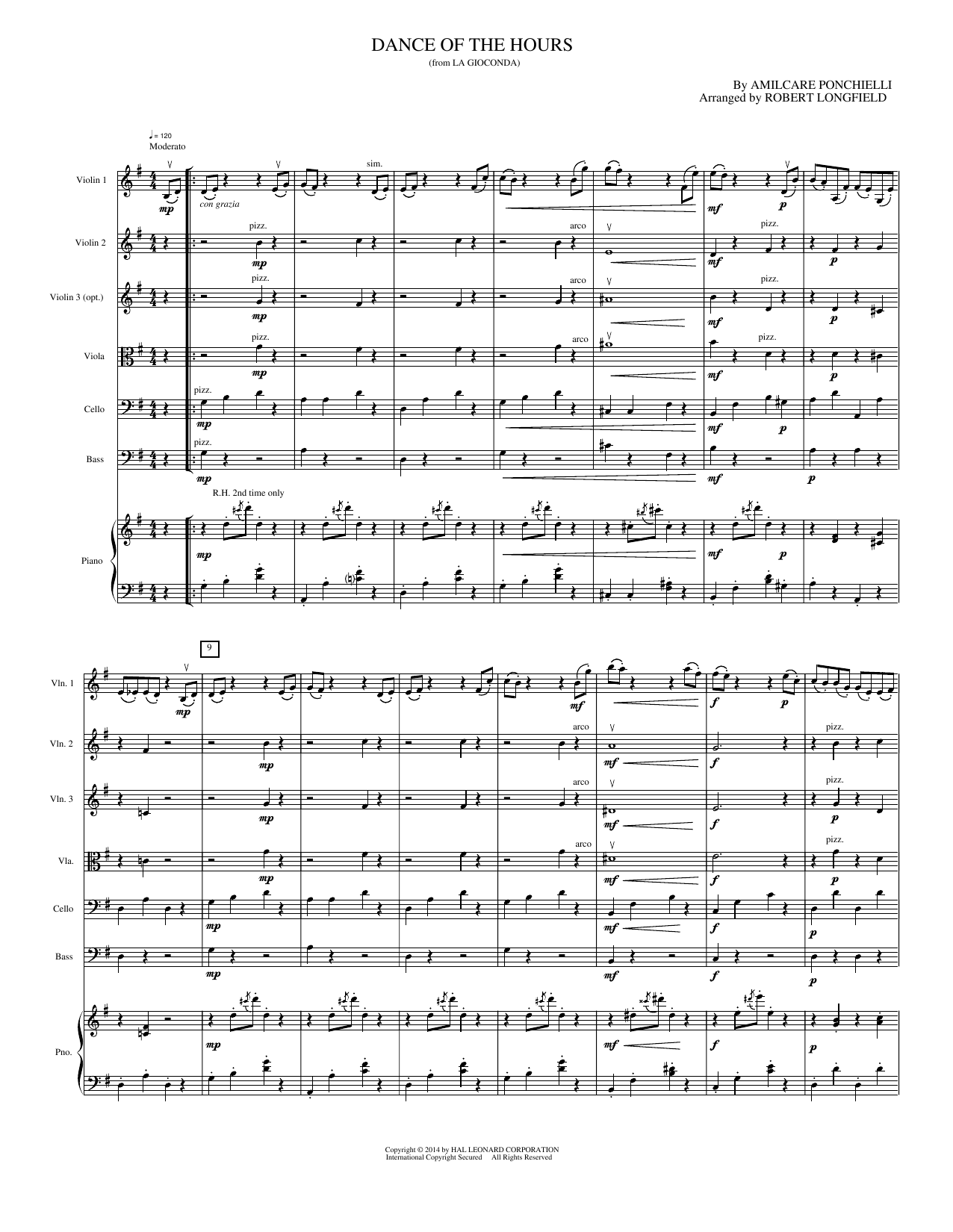
Dance of the Hours: String Orchestra Conductor Score & Parts

By Amilcare Ponchielli / Arranged by Robert Longfield

Grade: 2

Item: 35-PK00426744

Digital Download
$40.00

Buy Extra Parts (Digital PDF Download)

Product Price Quantity
Dance of the Hours - Full Score $40.00

Parts Added to Cart!

Description
Dance of the Hours

Dance of the Hours: String Orchestra Conductor Score & Parts isn't in MakeMusic Cloud just yet...but it could be. Let us know you'd like to see it, and you'll help shape what comes next. In the meantime, start a free trial and dive into thousands of interactive titles your students can play along with today.

Sample Audio
No sample audio found.
Sample Video
Additional Details
Publisher: Hal Leonard
SKU: 35-PK00426744

More about this title

About the Composer: Amilcare Ponchielli

Amilcare Ponchielli (1834–1886) was an Italian composer whose operas dominated European stages in the late 19th century. His gift for orchestral color and memorable melody made him a contemporary of Verdi, though his operatic legacy has been overshadowed by time.

Today, Ponchielli is best known to music students through "Dance of the Hours," a concert showpiece extracted from his opera La Gioconda. This excerpt exemplifies his mastery of orchestration and his ability to craft music that energizes performers and audiences alike. String musicians encounter his work frequently because the piece translates brilliantly across instrumental combinations and skill levels.

Why we love this

Robert Longfield's arrangement strikes the rare balance of preserving Ponchielli's orchestral flair while keeping the texture transparent enough for a developing string section. The piece generates instant momentum in rehearsal and delivers immediate gratification in performance, making it an excellent choice when you need to build ensemble confidence or prove to your program what your students can accomplish.

What to expect

The music bounces with playful energy and spectacle, conjuring images of movement and celebration. Sweeping lines rise and fall with theatrical flair, creating a sense of forward motion that carries both conductor and ensemble through from start to finish.

Who it's for

String orchestra directors teaching Grade 2 players who are ready to tackle a piece with genuine musical substance and historical weight. Students at this level benefit from working with familiar classical material that challenges their rhythmic precision and sustaining tone without overwhelming their technical capacity.

How to get the most out of it

  • Establish a clear pulse from the opening; the rhythmic energy of this piece depends entirely on ensemble agreement about where beat one lives in each measure.
  • Shape the melodic lines with long-range phrasing rather than punctuating every phrase ending. Let the violins sing through their statements so the architecture of the music becomes clear.
  • Balance the inner voices carefully during the busier passages. Second violins and violas often carry harmonic material that gets buried; remind them their lines frame the melody.
  • Prepare your string players for quick meter or tempo shifts if present in this arrangement; conductor cues become essential for maintaining ensemble unity through transitions.

How to use it

This arrangement works beautifully as a concert opener or closer when you want to launch a program with momentum or leave the audience smiling. It pairs well in a classical or "music through the centuries" concert alongside other arranged orchestral favorites, and it makes an excellent spring recital selection that showcases growth without requiring advanced technical virtuosity.

Skills your students will build

  • Maintaining rhythmic precision in energetic, driving tempos
  • Sustaining melodic phrases across multiple measures with even tone
  • Balance between solo lines and harmonic accompaniment
  • Responsiveness to conductor direction during tempo and dynamic changes
  • Reading and executing the technical demands of arrangement-specific notation

You May Also Like