
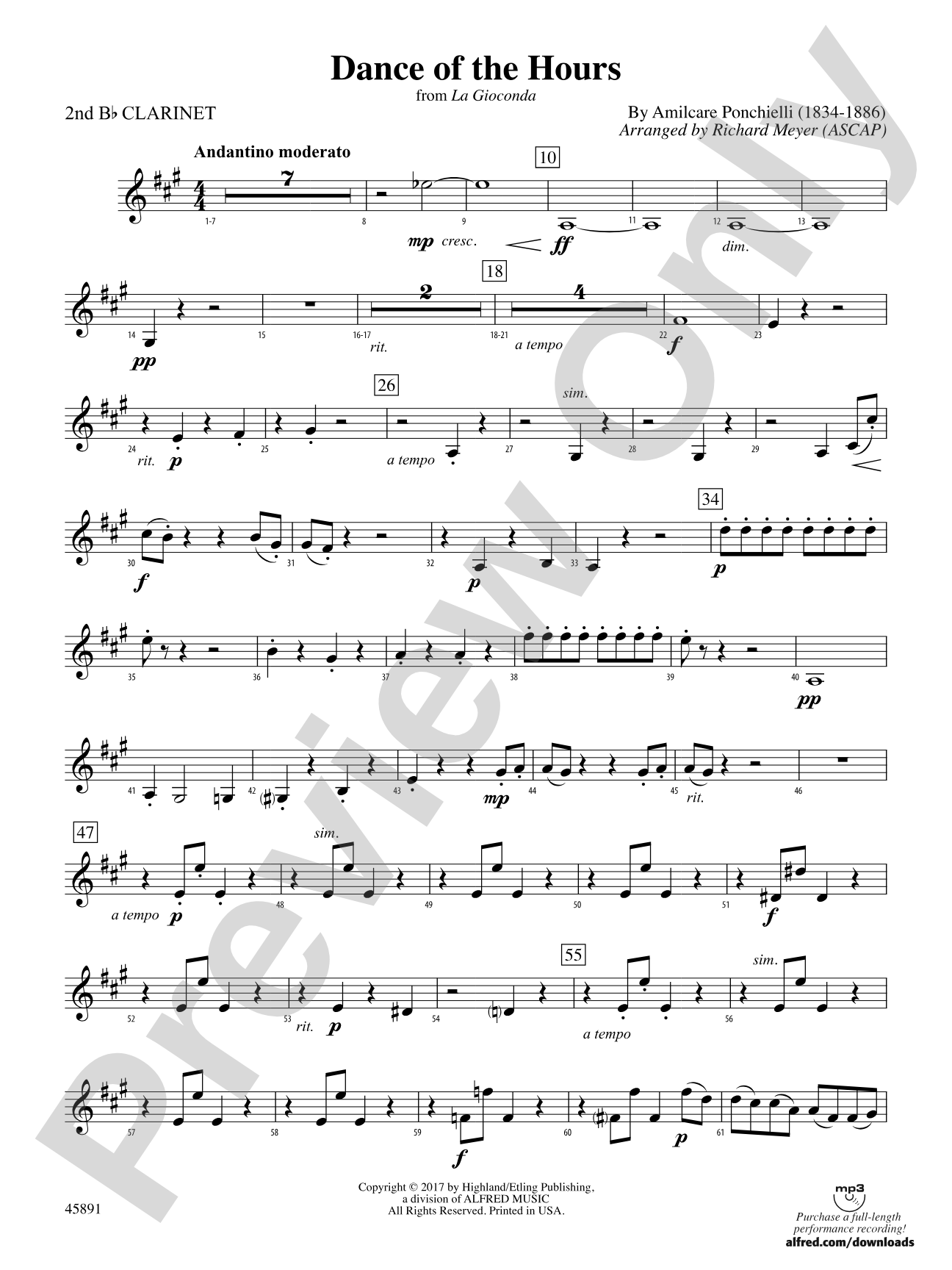

Dance of the Hours: 2nd B-flat Clarinet
From La Guiconda
By Amilcare Ponchielli / arr. Richard Meyer
Grade: 2.5
Item: 00-PC-0017689_C2
$3.00
Pickup currently not available
Description
Your orchestra will love the chance to play these ever-popular tunes from Ponchielli's opera La Gioconda, as arranged by Richard Meyer. Instantly recognizable to any audience, this arrangement retains the sound of the original and gives students a chance to develop the variety of techniques needed to perform two very different styles of dance music. The key has been changed (from E major to G major) and the time signature simplified (from 4/8 to 4/4), but none of the fun is missing! (3:20)


Don't just read it, hear it, play along with it, and watch your students grow with it. In MakeMusic Cloud, Dance of the Hours: 2nd B-flat Clarinet comes alive with professional accompaniment, adjustable tempo, and built-in practice tools that turn solo practice into real progress.
Open in the Player
Jump straight in and assign it today.
Start Your Free Trial
Open this title and explore the full library in minutes.
Sample Audio
1
Audio File
--:--
0:00
0:00
Sample Video
Additional Details
Series:
Highland/Etling First Philharmonic
Publisher:
Alfred Music
Page Count:
208
SKU:
00-PC-0017689_C2
More about this title
About the Composer: Amilcare Ponchielli
Amilcare Ponchielli (1834-1886) was an Italian composer whose operas secured a lasting place in the Romantic repertoire. Though overshadowed by his contemporaries Verdi and Puccini, Ponchielli possessed a gift for memorable melody and dramatic orchestration that earned him respect throughout Europe. His most celebrated work, the opera La Gioconda (1876), remains a fixture in opera houses worldwide.
Ponchielli spent much of his career in Milan, where he taught composition and served as maestro di cappella at the cathedral. His influence on Italian musical education was substantial, and his operas demonstrate the craftsmanship of a composer who understood both the orchestra and the human voice intimately. The "Dance of the Hours" from La Gioconda has transcended its operatic origins to become an audience favorite at every level of performance.
Why we love this
This arrangement preserves everything audiences adore about the "Dance of the Hours" while making it genuinely playable for a developing orchestra. Richard Meyer's choice to shift the key from E major to G major and simplify the meter from 4/8 to 4/4 removes notational obstacles without sacrificing the music's elegance or character. The contrast between the two dance styles gives your students real work to do: they'll navigate the delicate, lyrical opening and then tackle a more spirited section, building stamina and stylistic range in a single, highly rewarding piece.
What to expect
The opening unfolds with the elegant poise of a Venetian carnival, all liquid string passages and delicate winds painting scenes of refined celebration. The second dance shifts the mood entirely, trading grace for exuberance, with rhythmic vitality that propels the ensemble forward. Throughout, the music carries that unmistakable Romantic opulence that makes students feel like they're making real art, not just playing exercises.
Who it's for
This score works beautifully for orchestras at the beginning intermediate level (grades 2-3) who are ready for standard orchestral repertoire but still building technical consistency. The arrangement is ideal for groups performing at festivals or in concert programs where instant audience recognition adds appeal. Directors seeking a manageable masterwork that develops musicianship without overwhelming rehearsal time will find this an excellent choice.
How to get the most out of it
- Balance the transparent orchestration in the opening measures by encouraging players to listen across sections rather than rely solely on their own part. The arrangement's clarity depends on restraint from all players.
- Shape the melodic lines with long, singing phrases rather than chopping them into individual measures. Even in the faster passages, the music should breathe as a cohesive line.
- Establish a clear distinction between the two dance sections. The first moves with grace and refinement; the second should feel more driven and playful. This contrast will keep the piece engaging for both performers and listeners.
- Let the timpani part anchor the rhythm during transitions, especially where the meter or phrasing might feel ambiguous. A solid, confident timpani gives the entire ensemble confidence.
How to use it
Program this as a concert centerpiece where audience familiarity becomes an asset. It pairs well alongside other Romantic orchestral favorites or lighter classical arrangements in a family concert or young people's concert format. The 3-minute-20-second duration fits neatly into festival programs or concert rotations where you want a crowd-pleaser that doesn't monopolize rehearsal time.
Skills your students will build
- Contrasting articulation and phrasing across two distinct musical characters
- Transparent ensemble balance in lightly scored passages
- Performing in both 4/8 and 4/4 meters (understanding the relationship between them)
- Stylistic navigation of Romantic opera orchestration
- Sustained melodic shaping across phrase lines