
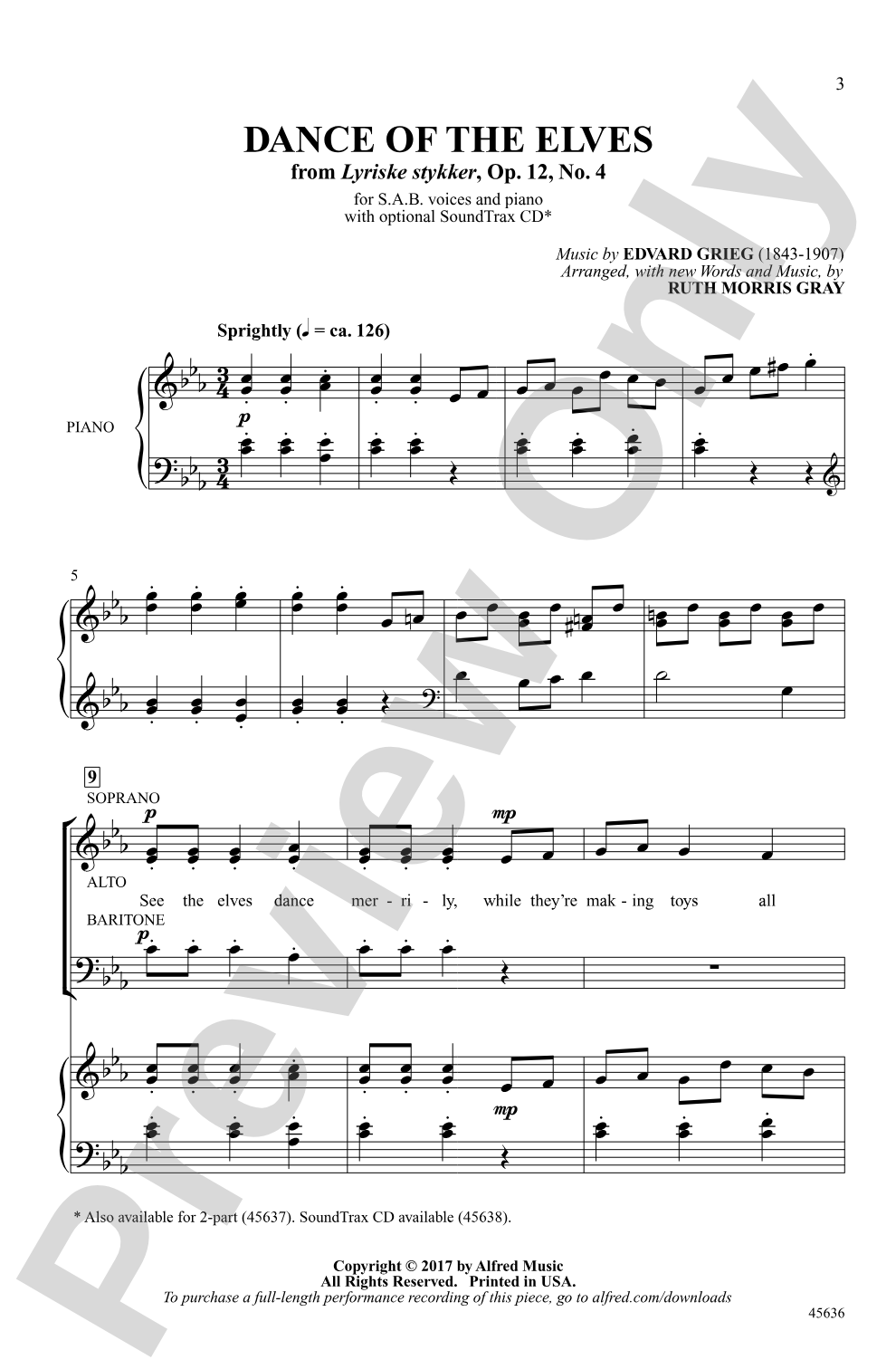

Dance of the Elves: SAB Choral Octavo
from Lyriske stykker, Op. 12, No. 4
Music by Edvard Grieg / arr., with new words and music, by Ruth Morris Gray
Item: 00-PO-0005522
$1.90
Minimum order quantity: 20 copies
Pickup currently not available
Description
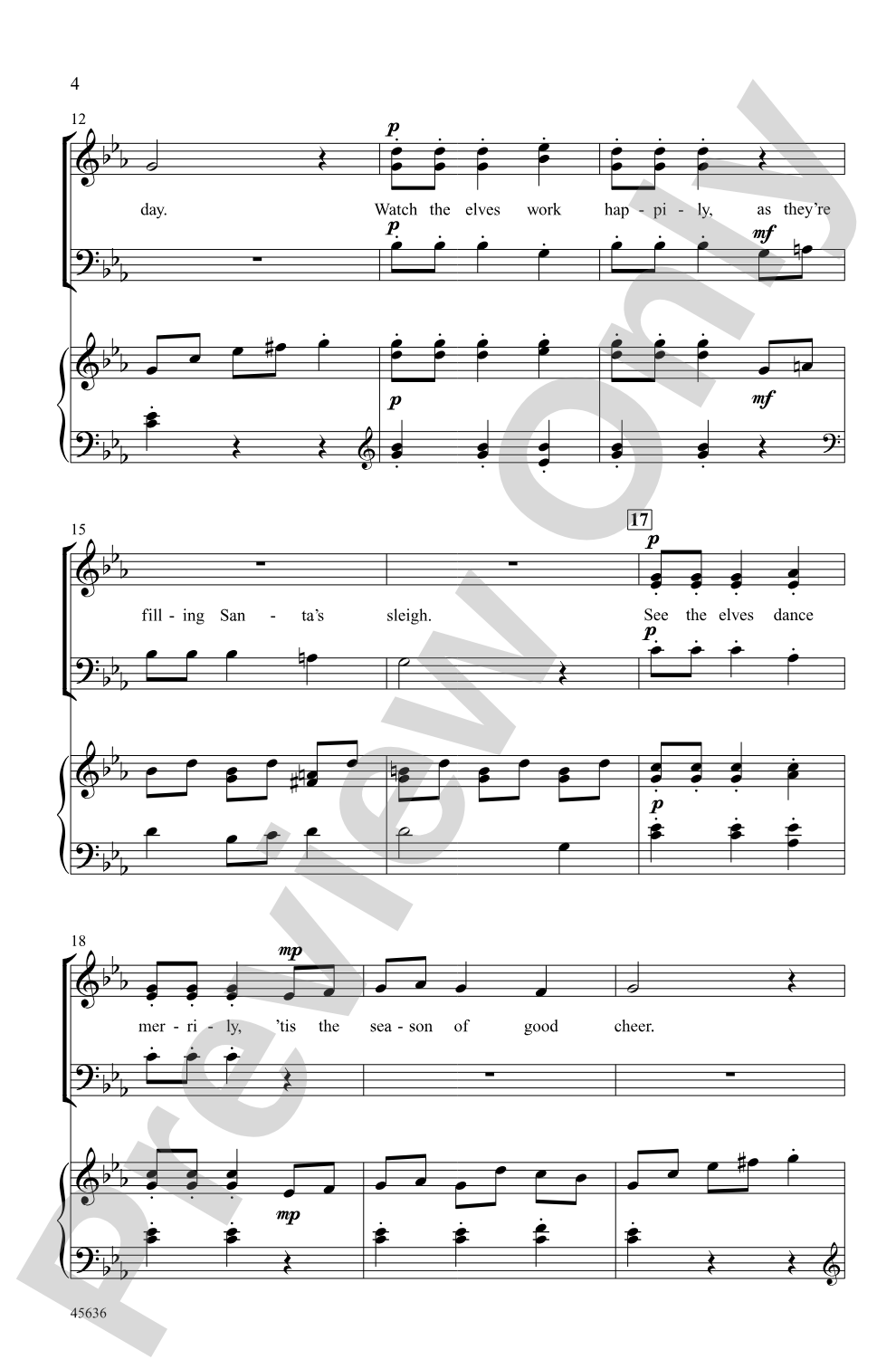
A spry and enchanting adaptation of Edvard Grieg's magical piano solo, this choral arrangement conjures up heaps of holiday cheer with its clever lyrics and jaunty classical feel. Festive and fun!


Dance of the Elves: SAB Choral Octavo isn't in MakeMusic Cloud just yet...but it could be. Let us know you'd like to see it, and you'll help shape what comes next. In the meantime, start a free trial and dive into thousands of interactive titles your students can play along with today.
Request This Title
Tell us you want it.
Start Your Free Trial
Explore everything that's ready to play right now.
Sample Audio
1
Audio File
--:--
0:00
0:00
Sample Video
Additional Details
Series:
Alfred Choral Designs
Publisher:
Alfred Music
Page Count:
12
SKU:
00-PO-0005522
More about this title
About the Composer: Edvard Grieg
Edvard Grieg (1843-1907) stands as Norway's most celebrated composer, crafting a musical language that drew from Scandinavian folk traditions while engaging deeply with Romantic harmony and form. His piano works, particularly the Lyric Pieces and Peer Gynt suites, introduced audiences worldwide to the distinctive sound of Nordic music and remain cornerstones of the classical piano repertoire.
Grieg's genius lay in his ability to compress profound emotional content into compact, memorable forms. His melodies sing with natural grace, and his harmonic choices (often unexpected, always purposeful) invite performers and listeners alike into a world of poetic refinement. For music educators, his work offers students a bridge between familiar classical structures and the exploratory harmonies that defined the late Romantic era.
Why we love this
Ruth Morris Gray's arrangement strips away none of Grieg's charm while making the work genuinely singable for mixed voices. The added lyrics feel organic rather than imposed, and the piece delivers instant festive energy without sacrificing the musical integrity of the source material. Directors will appreciate how effectively it fills the holiday program slot that calls for something classical, sophisticated, and unmistakably fun.
What to expect
Imagine a Christmas party held in a Victorian drawing room where the piano sparkles with melodic wit and unexpected harmonic turns. The piece dances lightly, conjuring images of movement and merriment without ever slipping into saccharine sentiment. There's an impish quality to the whole thing, as if the elves themselves are orchestrating the celebration.
Who it's for
This arrangement works beautifully for mixed choirs of any age or ability level seeking holiday repertoire that sounds polished without requiring advanced vocal technique. It suits school choirs, community choirs, and adult ensembles equally well, and the modest range and straightforward voicing make it accessible to singers who are still building their skills.
How to get the most out of it
- Lean into the rhythmic lift of the original piano accompaniment; the jaunty feel comes from clarity and forward motion, not rubato. Recorded accompaniment tracks help singers lock into this groove.
- Balance the three parts carefully so no single voice dominates. In SAB writing, the alto line often carries harmonic interest that can easily disappear if not given attention.
- Shape phrases around the lyrical content rather than mechanical phrase boundaries. The text should guide your phrasing choices and keep the piece feeling conversational.
- Articulate consonants crisply, especially in faster passages. This arrangement's playfulness depends on clarity and precision in diction.
How to use it
Position this as a contrast piece in a holiday concert, particularly after a reverent carol or serious choral work. Its classical roots and festive character make it an excellent bridge between sacred and secular programming, and the manageable page count allows singers to learn it quickly, freeing rehearsal time for more demanding repertoire.
Skills your students will build
- Reading SAB voicing and balancing three independent melodic lines
- Maintaining rhythmic precision in syncopated and dance-like passages
- Singing text with clarity and character while tracking harmonic movement
- Interpreting rubato-free classical material in a choral context