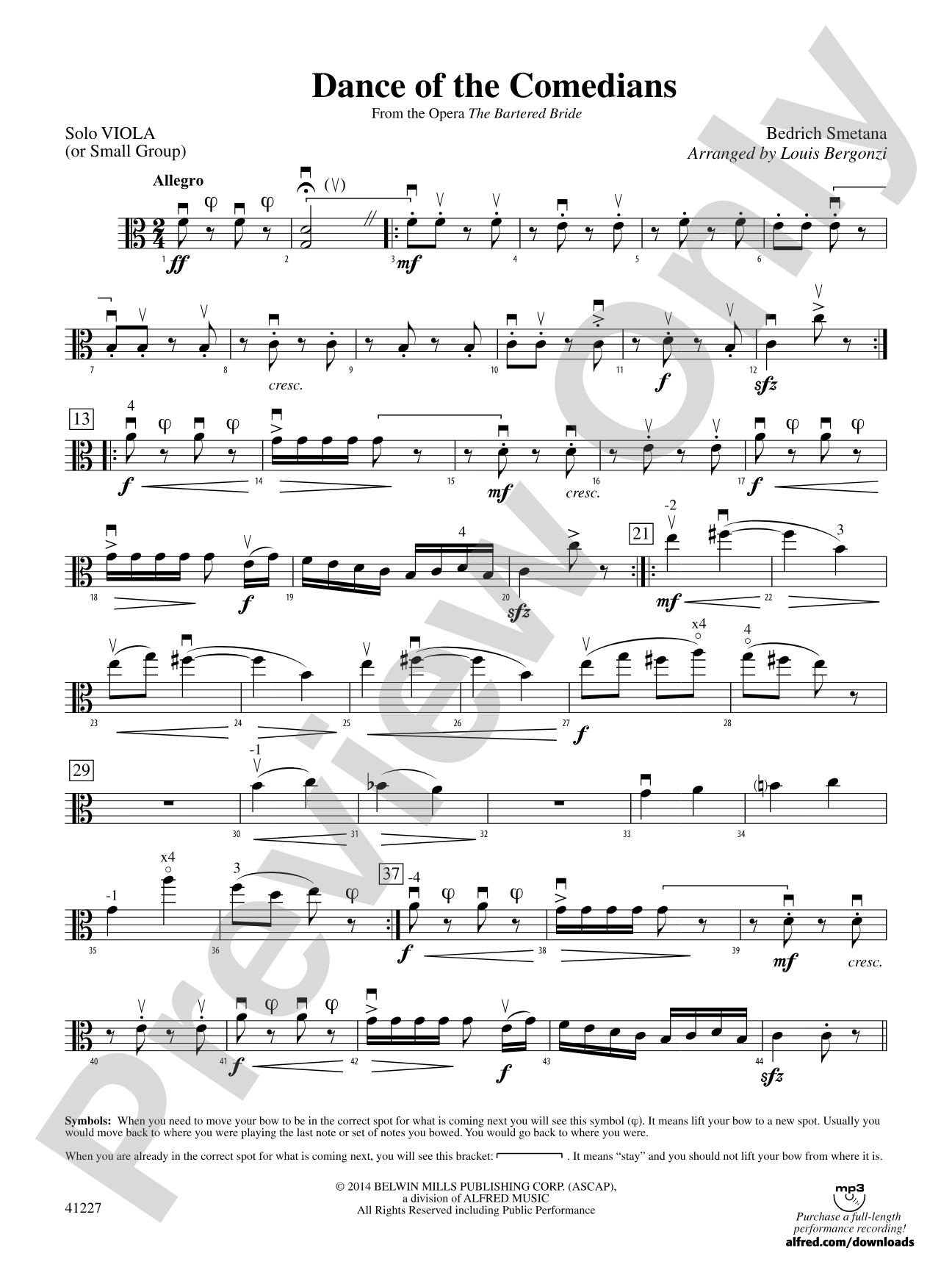
Dance of the Comedians (from the opera The Bartered Bride): Solo Viola (or Small Group) Sheet Music Preview

Dance of the Comedians (from the opera The Bartered Bride): Solo Viola (or Small Group)

From the Opera The Bartered Bride

By Bedrich Smetana / arr. Louis Bergonzi

Grade: 3.5

Item: 00-PC-0016351_VA1A

Digital Download
$5.99
Description
From Czech composer Bedrich Smetana. With its tuneful and contrasting sections, lively tempo, syncopated rhythms in 2/4, and big finish, this is a great piece to close or open a concert. Flexible parts are included allowing this piece to be performed by an ensemble containing students of varied skill levels. (5:25) This title is available in MakeMusic Cloud.

Don't just read it, hear it, play along with it, and watch your students grow with it. In MakeMusic Cloud, Dance of the Comedians (from the opera The Bartered Bride): Solo Viola (or Small Group) comes alive with professional accompaniment, adjustable tempo, and built-in practice tools that turn solo practice into real progress.

Sample Audio
0:00
0:00
Sample Video
Additional Details
Series: Belwin Concert String Orchestra
Publisher: Alfred Music
Page Count: 172
SKU: 00-PC-0016351_VA1A

More about this title

About the Composer: Bedrich Smetana

Bedrich Smetana (1824-1884) stands as the founding figure of Czech classical music. His operas, symphonic poems, and chamber works established a distinctly national voice at a time when Bohemia had no independent concert tradition of its own. The Bartered Bride, from which this piece originates, remains one of the most performed operas worldwide and showcases Smetana's gift for melody, orchestral color, and theatrical vitality.

Smetana's music pulses with the rhythms and character of Czech folk traditions while maintaining full command of European compositional craft. For string orchestras, his works offer immediate appeal and genuine musical substance, allowing students to engage with a master of the Romantic era through accessible, energetic repertoire.

Why we love this

This arrangement captures the swagger and humor of the original without requiring a full opera orchestra. The syncopated rhythms and contrasting sections keep players engaged, the flexible parts genuinely allow mixed-level ensembles to perform together convincingly, and the big finish delivers the concert impact you need without overshooting your group's technical ceiling.

What to expect

Bright, theatrical, and full of character. The music bounds along with infectious energy, shifting moods between lyrical passages and rhythmic comedy with the confidence of a seasoned operatic composer. You hear the stage action unfolding without needing a singer in sight.

Who it's for

String orchestras at the Grade 3.5 level looking for genuine concert repertoire with proven appeal. The flexible parts make this accessible to mixed-ability ensembles while the quality of the writing keeps stronger players engaged. Directors seeking a piece that works equally well as an opener or closer will find immediate value here.

How to get the most out of it

  • Balance the syncopated rhythms in 2/4 so the lively sections stay buoyant rather than plodding; think forward motion, not heavy emphasis on downbeats.
  • Shape the contrasting sections as distinct scenes from the operatic source material; let the dramatic color shifts breathe between sections.
  • Use the final build deliberately, adding layers and intensity as the score calls for it so the closing has genuine weight and exuberance.

How to use it

Save this for a concert finale if your ensemble can handle the technical finish and the musical exuberance it demands. Alternatively, pair it with lighter romantic-era pieces to build a program centered on character and humor rather than virtuosity alone. Its five-and-a-half-minute length makes it a natural anchor piece without demanding extended rehearsal time.

Skills your students will build

  • Maintaining rhythmic precision and forward motion in syncopated 2/4 time
  • Responding to dynamic shifts and dramatic color changes within a single piece
  • Balancing ensemble texture across multiple independent string parts
  • Interpreting contrasting sections as related musical narratives
  • Building intensity through layering and graduated crescendo to a theatrical climax

You May Also Like