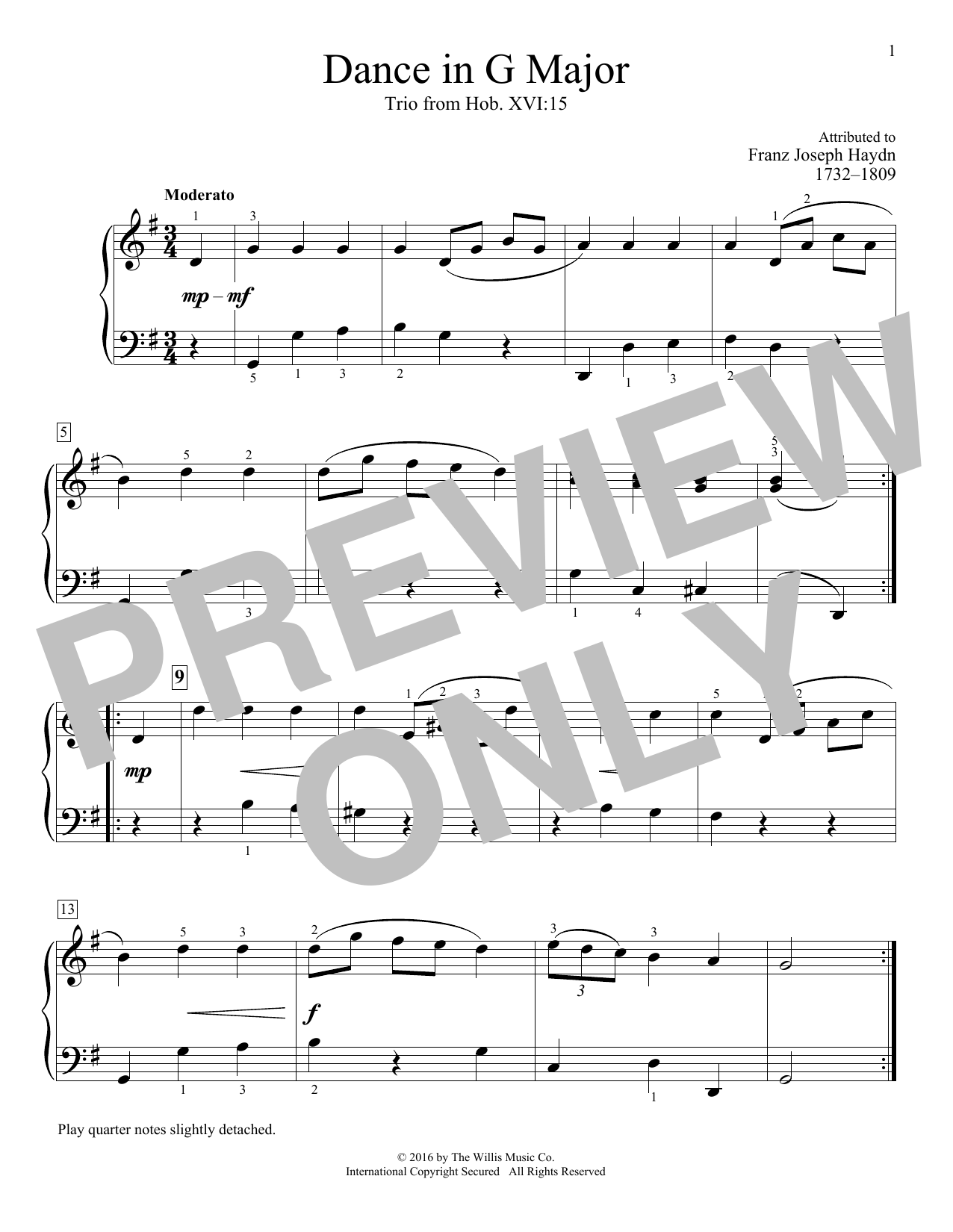
Dance In G Major, Trio from Hob. XVI:15 Sheet Music Preview

Dance In G Major, Trio from Hob. XVI:15: Educational Piano

By Franz Joseph Haydn

Item: 35-DS00398815

Digital Download
$4.99
One moment…
Description

Discover MakeMusic Cloud: thousands of interactive titles your students can play along with today.

Sample Audio
No sample audio found.
Sample Video
Additional Details
Publisher: Hal Leonard
Page Count: 1
SKU: 35-DS00398815

More about this title

About the Composer: Franz Joseph Haydn

Haydn spent nearly thirty years as court composer for the Esterházy family, a position that demanded constant productivity and stylistic innovation. His chamber works for keyboard reveal a composer deeply engaged with the emerging Classical language, balancing formal clarity with genuine melodic charm and harmonic sophistication.

As a pedagogue, Haydn understood the piano as both a concert instrument and a teaching tool. His keyboard works span from simple dance forms to complex sonatas, reflecting his belief that students learn best when musical substance never compromises accessibility.

Why we love this

Haydn's trio dances stand apart for their rhythmic vitality and transparent voicing. Students encounter genuine Classical counterpoint without the structural complexity of a full sonata movement, and pianists benefit from the clear separation between melodic ideas and accompaniment patterns.

What to expect

Courtly elegance meets genuine playfulness. The work radiates the lightness of a minuet while maintaining a steady pulse that invites dancers to move without hesitation.

Who it's for

Intermediate pianists exploring the Classical era beyond Alberti patterns will find this trio engaging and purposeful. Teachers seeking material that demonstrates formal grace within a manageable technical scope will appreciate Haydn's direct approach to dance design.

How to get the most out of it

  • Maintain textural clarity by keeping the trio's inner lines audible; resist the temptation to fill out the texture beyond what Haydn wrote.
  • Shape each phrase with a gentle lift at its conclusion rather than using dynamic swells; this honors Classical phrasing conventions.
  • Observe the harmonic rhythm closely; the stability of certain cadential moments depends on precise timing and articulation.

How to use it

Pair this with other Haydnesque keyboard works in a recital celebrating the rise of the pianoforte in chamber repertoire. Its brevity and clarity make it excellent as a palate cleanser between weightier Romantic era pieces.

Skills your students will build

  • Voicing trio textures (melody, inner line, bass) with appropriate independence
  • Articulating Alberti-based accompaniment patterns with rhythmic precision
  • Reading and performing Classical phrase structures and cadences
  • Understanding dance form conventions in keyboard music

You May Also Like