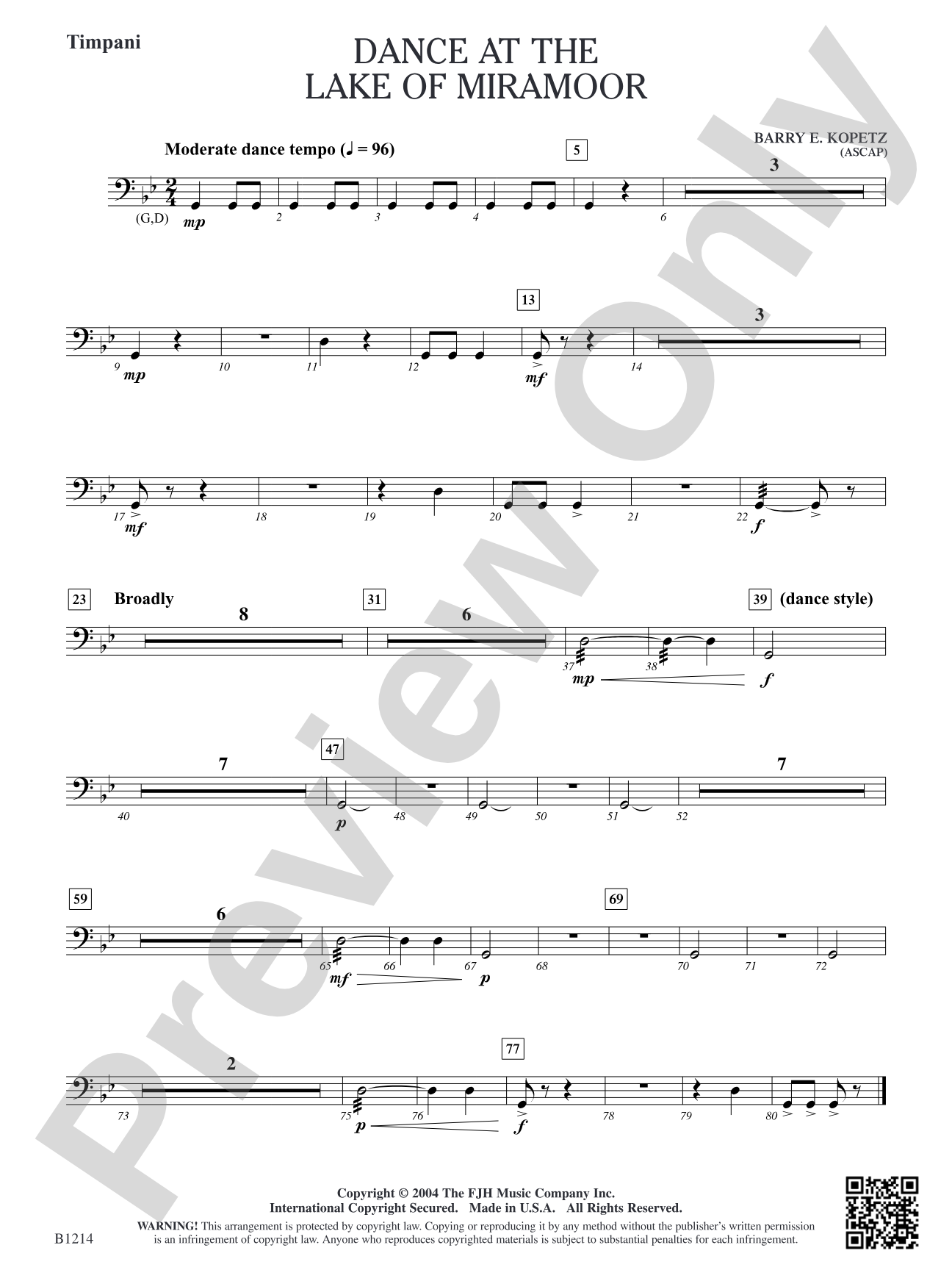
Dance at the Lake of Miramoor: Timpani Sheet Music Preview

Dance at the Lake of Miramoor: Timpani

By Barry E. Kopetz

Grade: 2

Item: 98-PC-DB1214_TMP

Digital Download
$7.00
Description
This programmatic work tells the story of a lake that never reflects sunlight and instead shows images of the past, present, and future. The music portrays the inhabitants of a mystic land as they dance around this enchanting lake, waiting to see what images will next appear in its waters. Easy to put together and wonderful for stimulating the imagination!

Dance at the Lake of Miramoor: Timpani isn't in MakeMusic Cloud just yet...but it could be. Let us know you'd like to see it, and you'll help shape what comes next. In the meantime, start a free trial and dive into thousands of interactive titles your students can play along with today.

Sample Audio
0:00
0:00
Sample Video
Additional Details
Series: FJH Young Band
Publisher: The FJH Music Company, Inc.
SKU: 98-PC-DB1214_TMP

More about this title

About the Composer: Barry E. Kopetz

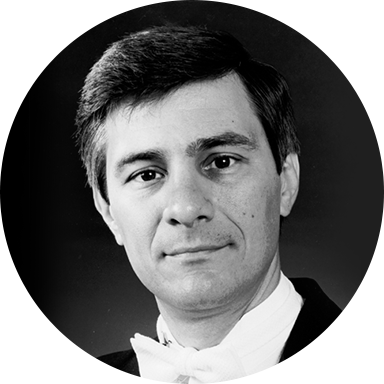
Barry E. Kopetz

Barry E. Kopetz has taught conducting and wind band literature at several universities, including Capital University, where he serves as Director of Bands. He holds degrees from Ohio State University and Indiana University, where he earned his doctorate with distinction. His studies in conducting included work with Frederick Fennell in Tokyo and mentorship from respected pedagogues including Ray Cramer and Donald McGinnis.

Kopetz maintains an active career as a composer, arranger, and guest conductor across the United States and Australia. His published works for band number over 50, and he regularly contributes analyses of standard band repertoire to Instrumentalist magazine. Beyond education, he has extended his arranging expertise into television and film orchestration, and he holds membership in the American Bandmasters Association.

Why we love this

Kopetz crafts a narrative that sparks genuine curiosity without requiring elaborate staging or extra-musical production. The Grade 2 orchestration sits perfectly at the level where bands can execute the musical storytelling cleanly, making it an ideal choice for early-season programming when technical demands need to stay manageable but artistic intent runs high.

What to expect

The music evokes wonder and mystery, with a sense of waiting and watching that feels both serene and subtly tense. Colors shift like reflections on water; the band moves through moments of stillness and gentle motion, conjuring the magical atmosphere of a place where time itself becomes visible in ripples and light.

Who it's for

Grade 2 concert bands ready to tackle a piece with dramatic intent and narrative depth. This work rewards ensembles that can execute clean articulation and control dynamics expressively, making it especially valuable for middle school programs or early high school bands seeking accessible repertoire with genuine artistic substance.

How to get the most out of it

  • Let the imagery guide your interpretation. The lake's reflections of past, present, and future suggest textural and timbral shifts; highlight these transitions by adjusting dynamics and clarity between sections so each temporal moment feels distinct.
  • Shape the opening and closing gestures with deliberate care. These moments anchor the narrative and give young players something concrete to aim for, making the entire performance feel purposeful rather than aimless.
  • Encourage your band to think about the inhabitants' anticipation as they wait for new visions. This internal tension translates into phrasing and breath control that feels alive, even at a modest technical level.

How to use it

Program this as a centerpiece for a concert exploring imagination or storytelling in music, pairing it with other programmatic works at accessible levels. Its Grade 2 difficulty and compelling narrative make it an excellent choice for spring festival seasons when you want to showcase musicianship and interpretation without excessive technical hurdles.

Skills your students will build

  • Shaping long phrases with consistent breath support
  • Executing clear articulation within legato passages
  • Balancing independent lines while maintaining ensemble blend
  • Responding to textural and dynamic shifts that support narrative intent
  • Sustaining focus through quiet, contemplative sections

You May Also Like