
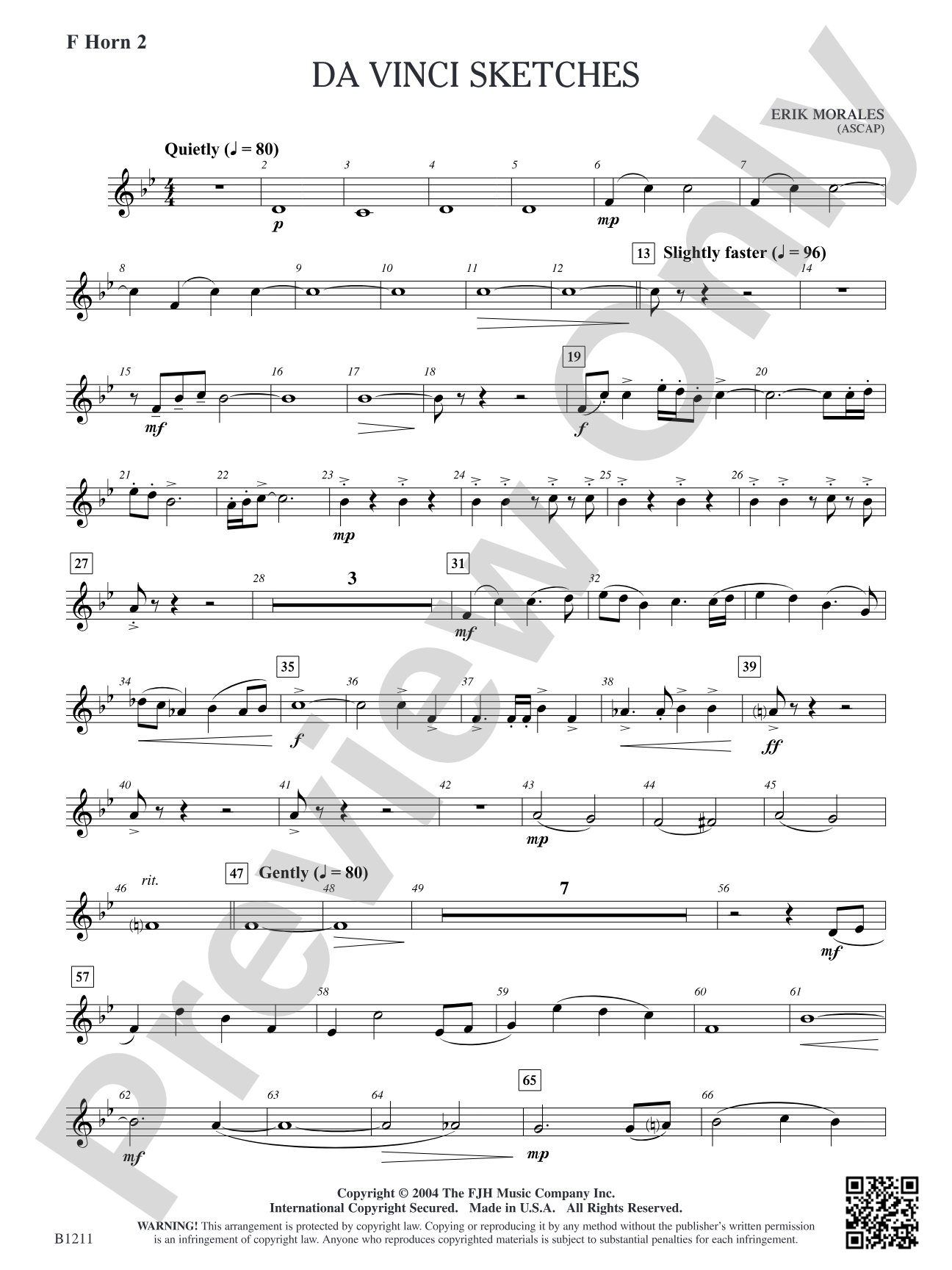

Da Vinci Sketches: F Horn 2
By Erik Morales
Grade: 3
Item: 98-PC-DB1211_H2
$7.00
Pickup currently not available
Description
Drawing inspiration from the sketches of Leonardo da Vinci, Erik Morales offers this composition based on da Vinci's sketches relating to art, architecture, industry, and human flight. After an ethereal opening with a beautiful flute solo, the main theme is stated in its entirety. This theme builds through ever-changing textures as it climaxes in a massive percussion break before moving to the lyrical second theme, representing the Mona Lisa. The opening theme returns in a new setting as the piece comes to a stunning conclusion. Consider this one strongly!


Da Vinci Sketches: F Horn 2 isn't in MakeMusic Cloud just yet...but it could be. Let us know you'd like to see it, and you'll help shape what comes next. In the meantime, start a free trial and dive into thousands of interactive titles your students can play along with today.
Request This Title
Tell us you want it.
Start Your Free Trial
Explore everything that's ready to play right now.
Sample Audio
1
Audio File
--:--
0:00
0:00
Sample Video
No sample videos found.
Additional Details
Series:
FJH Concert Band
Publisher:
The FJH Music Company, Inc.
SKU:
98-PC-DB1211_H2
More about this title
About the Composer: Erik Morales

Erik Morales was born in New York City in 1966 and has become one of the most prolific composers for wind ensembles, with more than 150 published works spanning classical, jazz, and commercial idioms. His career began immediately after high school, when a former band director commissioned him to arrange for a marching band in south Florida in 1985; this early opportunity led directly to his work in educational music publishing, which began in earnest in 2002.
A accomplished trumpet player himself, Morales has made significant contributions to the trumpet repertoire. His trumpet ensemble works have earned recognition at the 2006 and 2008 National Trumpet Competitions, and his Concerto for Trumpet in C and Piano premiered at the 2009 International Trumpet Guild conference. He studied composition at Florida International University and earned his bachelor's degree from the University of Louisiana, Lafayette in 1989. In 2016, he was inducted into the Louisiana Association for Jazz Education's Hall of Fame. His compositional philosophy centers on balancing artistic merit with educational accessibility, a commitment reflected in commissions from schools and organizations throughout the country.
Why we love this
Morales crafts the thematic development here with remarkable clarity and purpose. Each section transforms the main idea through texture and orchestration rather than melody manipulation, giving your students a masterclass in how concert band color can reshape and deepen a single idea.
What to expect
The piece opens with quiet wonder and artistic contemplation, inviting listeners into da Vinci's creative mind. It builds from intimate flute solos into grand architectural gestures, with a moment of percussive spectacle that feels almost industrial before returning to the quieter, more mysterious character of its close.
Who it's for
Grade 3 concert bands preparing for festival, contest, or concert programming. This score works well for ensembles ready to balance lyrical playing with rhythmic precision and for groups interested in exploring programmatic music grounded in cultural and historical imagery.
How to get the most out of it
- Establish the flute soloist's ethereal opening as the tonal anchor for the entire piece. Emphasize the quiet and space around that solo so the main theme statement lands with full impact when the band enters.
- Shape the percussion break with architectural precision. The massive sound should feel like a climax earned through building intensity, not a sudden crash. Balance the parts so melodic material remains audible even at full dynamic.
- Allow the lyrical second theme time to breathe. This section representing the Mona Lisa benefits from legit phrasing and a slower harmonic rhythm than the driven opening material.
- In the final return of the opening theme, highlight how the new orchestration changes the character despite familiar melody. This transformation demonstrates sophisticated compositional craft to your audience.
How to use it
This works as an opening or closing selection for a thematic concert exploring visual arts and history. The manageable grade level paired with programmatic sophistication makes it an excellent bridge between lighter warm-up repertoire and more challenging concert selections.
Skills your students will build
- Balancing sustained melodic lines with textural accompaniment figures
- Executing dynamic contrasts across sections (ethereal to massive and back)
- Responding to thematic transformation through orchestration changes
- Maintaining ensemble precision during layered, complex rhythmic passages