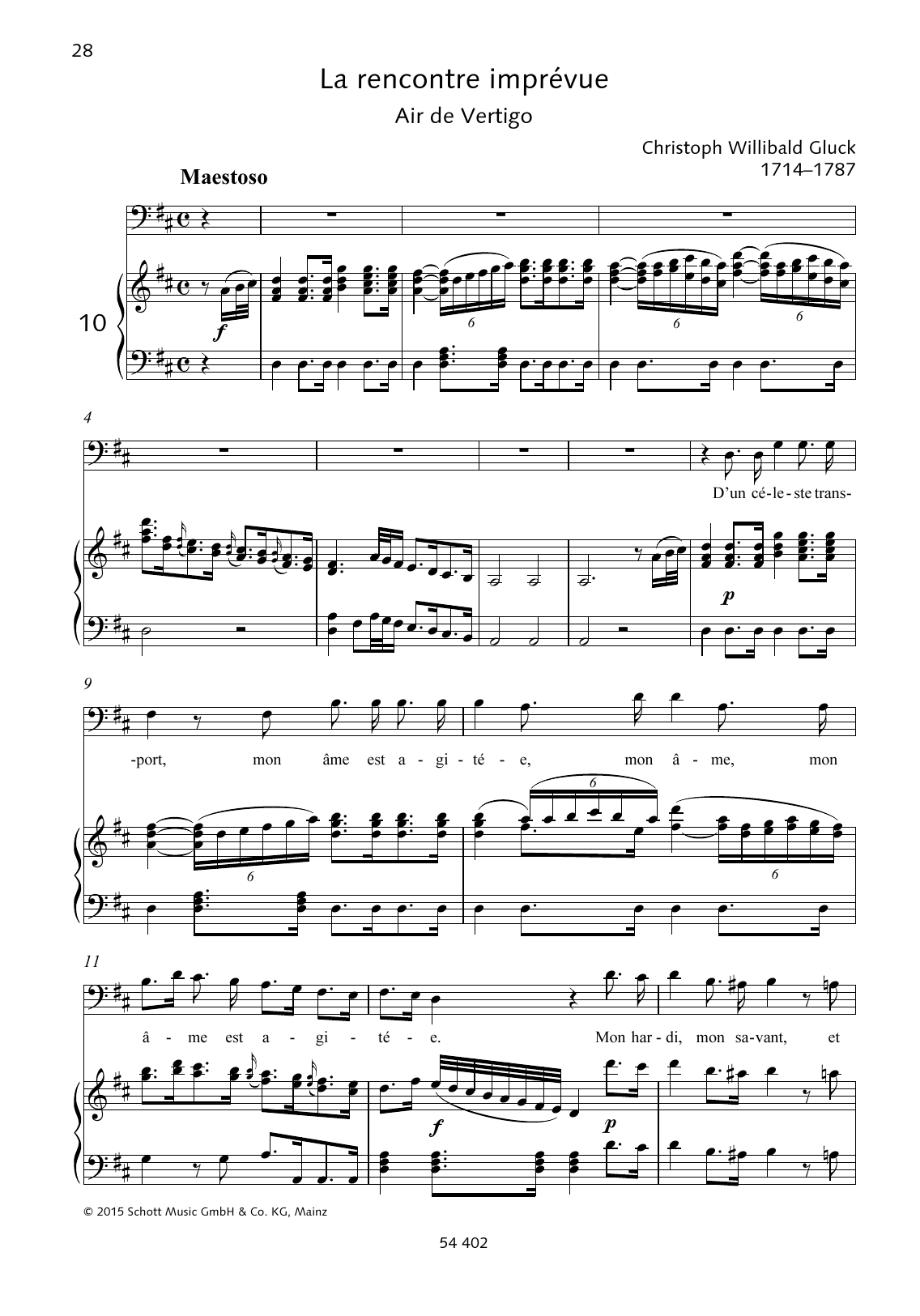
D'un céleste transport Sheet Music Preview

D'un céleste transport: Piano Vocal

By Christoph Willibald Gluck / Edited by Claudia Eder / Edited by Wolfgang Birtel

Item: 35-DS00371232

Digital Download
$4.99
Description

D'un céleste transport: Piano Vocal isn't in MakeMusic Cloud just yet...but it could be. Let us know you'd like to see it, and you'll help shape what comes next. In the meantime, start a free trial and dive into thousands of interactive titles your students can play along with today.

Sample Audio
No sample audio found.
Sample Video
Additional Details
Publisher: Hal Leonard
Page Count: 5
SKU: 35-DS00371232

More about this title

About the Composer: Christoph Willibald Gluck

Christoph Willuck Gluck (1714–1787) was a reformer of opera who fundamentally changed how composers thought about setting words to music. Rather than viewing the voice as an instrument for display, he insisted that music serve the drama and the clarity of the text. His operas, including Orfeo ed Euridice and Alceste, stripped away the elaborate coloratura passages that had dominated Italian opera seria and replaced them with directness, emotional depth, and orchestral sophistication.

Gluck's influence on vocal writing extends far beyond opera houses. His solo songs and arias became foundational teaching material for singers learning to blend technical control with expressive communication. D'un céleste transport exemplifies his approach: the vocal line is elegant and singable, the accompaniment supports without overwhelming, and every phrase serves the text.

Why we love this

This aria sits in that rare pedagogical sweet spot where students encounter genuine Classical restraint without sacrificing musicality. The piece demands singers develop control over legit tone and clean phrasing rather than hiding behind technical display, making it invaluable for anyone serious about diction and line. The piano part remains genuinely musical and conversational rather than reduced to accompaniment filler.

What to expect

The piece opens with a sense of serene contemplation, a soul transported by something celestial and beyond the everyday. The vocal writing floats with grace but never feels weightless; instead it carries genuine dignity and repose. There is longing without desperation, beauty without artifice.

Who it's for

Intermediate to advanced classical singers preparing audition repertoire, high school and university vocal students building their art song foundation, and coaches seeking material that teaches both stylistic awareness and musical storytelling. This works equally well for lessons and recital contexts.

How to get the most out of it

  • Shape the vocal line in natural speech rhythm rather than pushing toward bel canto extremes; Gluck's clarity depends on listeners understanding every syllable without strain
  • Balance the piano texture so it breathes with the voice instead of competing; this era rewards transparency over warmth
  • Locate the emotional weight of the text first, then let that inform your phrasing choices in the melody

How to use it

Include this in a recital exploring the Classical art song, pairing it with similar-length arias by Pergolesi or Handel to show students how different composers handled restraint and expression. It also works beautifully as a solo feature in a concert featuring Italian texts sung in the original language, or as a bridge piece connecting Baroque and Romantic vocal repertoire for an educated audience.

Skills your students will build

  • Legit Classical tone production with forward resonance
  • Sustaining long phrases without vibrato excess
  • Clarity of French text at moderate tempi
  • Musical communication of emotional content without oversinging
  • Collaborative listening between voice and piano

You May Also Like