D String Boogie Sheet Music Preview

D String Boogie: String Orchestra Conductor Score & Parts

By Michael Sweeney

Grade: 1

Item: 35-PK00426738

Digital Download
$30.00

Buy Extra Parts (Digital PDF Download)

Product Price Quantity
D String Boogie - Full Score $30.00

Parts Added to Cart!

Description
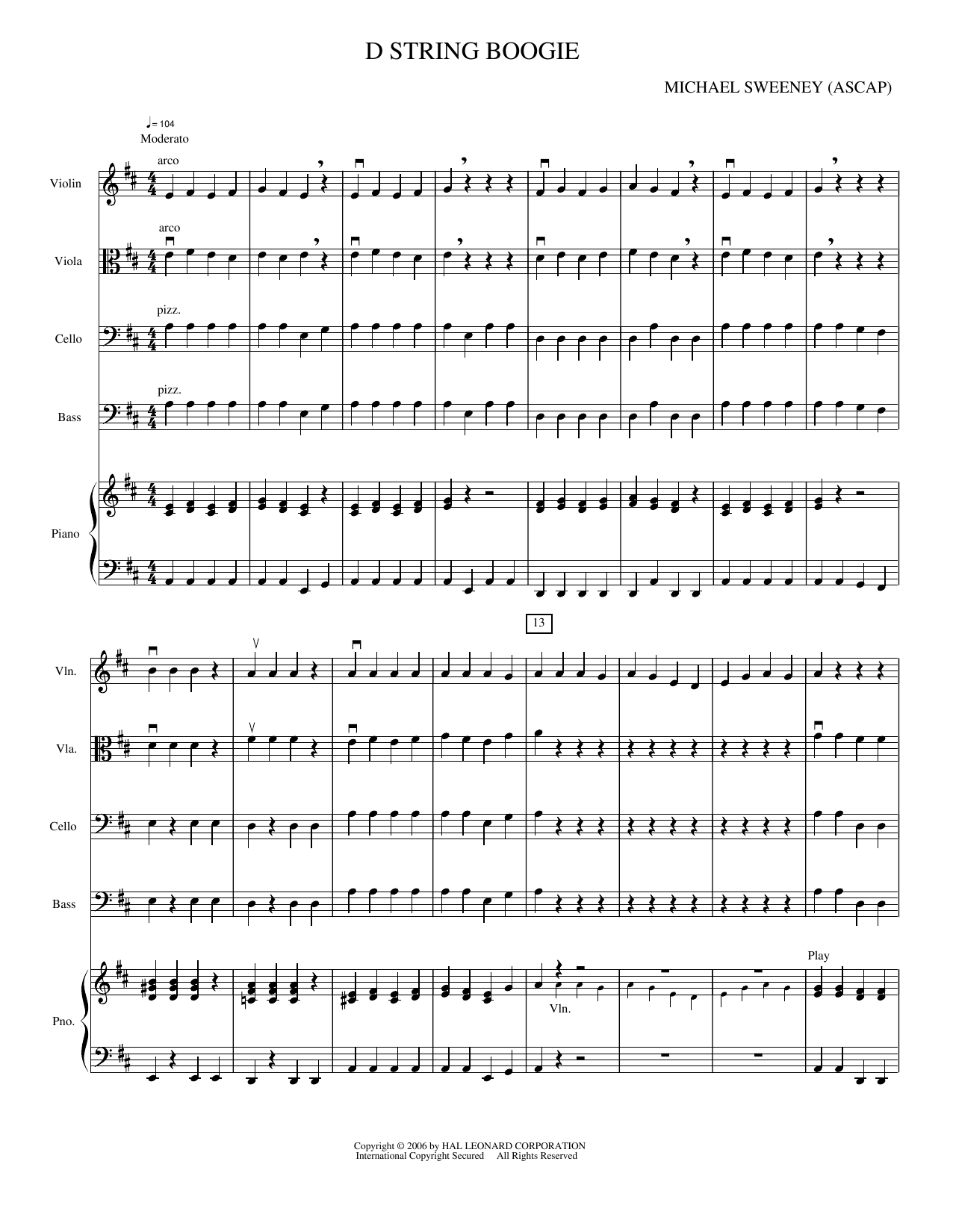
D String Boogie

D String Boogie: String Orchestra Conductor Score & Parts isn't in MakeMusic Cloud just yet...but it could be. Let us know you'd like to see it, and you'll help shape what comes next. In the meantime, start a free trial and dive into thousands of interactive titles your students can play along with today.

Sample Audio
No sample audio found.
Sample Video
Additional Details
Publisher: Hal Leonard
SKU: 35-PK00426738

More about this title

About the Composer: Michael Sweeney

Michael Sweeney has spent decades composing and arranging music that speaks directly to student musicians. His work across band, orchestra, and wind ensemble settings demonstrates a gift for writing idiomatically for young players while maintaining genuine musical substance.

Why we love this

Sweeney understands that Grade 1 orchestras need repertoire with personality, not just technical exercises. This piece delivers swagger and contemporary groove without sacrificing musical integrity, giving young string players something they actually want to perform.

What to expect

Energetic and modern, with a blues-rock attitude that feels more like a jam session than classical training. The D string writing gives the piece its identity, creating a bright, slightly funky character that keeps players engaged.

Who it's for

Beginning string orchestras looking for Grade 1 repertoire with contemporary appeal. This works equally well for schools seeking a single-rehearsal crowd pleaser or programs building a concert of varied styles.

How to get the most out of it

  • Establish the groove with your rhythm section first. Lock the pizzicato pulse before adding the melodic voices so the ensemble has a solid foundation to build from.
  • Keep the tempo consistent and slightly bouncy. The piece thrives on a steady, energetic feel rather than dragging or rushing through the syncopation.
  • Balance the D string melody so it cuts through the accompaniment. Young violins and violas often overshadow the cello and bass lines in unison passages; use dynamics judiciously.

How to use it

Pair this with a classical centerpiece for a concert that demonstrates your orchestra's range. It also works as a natural opener, setting an upbeat tone before moving into more formal repertoire, or as the finale if you want audiences leaving with a smile.

Skills your students will build

  • Maintaining groove and steady pulse in contemporary idioms
  • Balancing unison melodic lines with accompaniment textures
  • Reading and executing pizzicato rhythms cleanly
  • Responding to syncopated phrasing within a Pop genre context

You May Also Like