
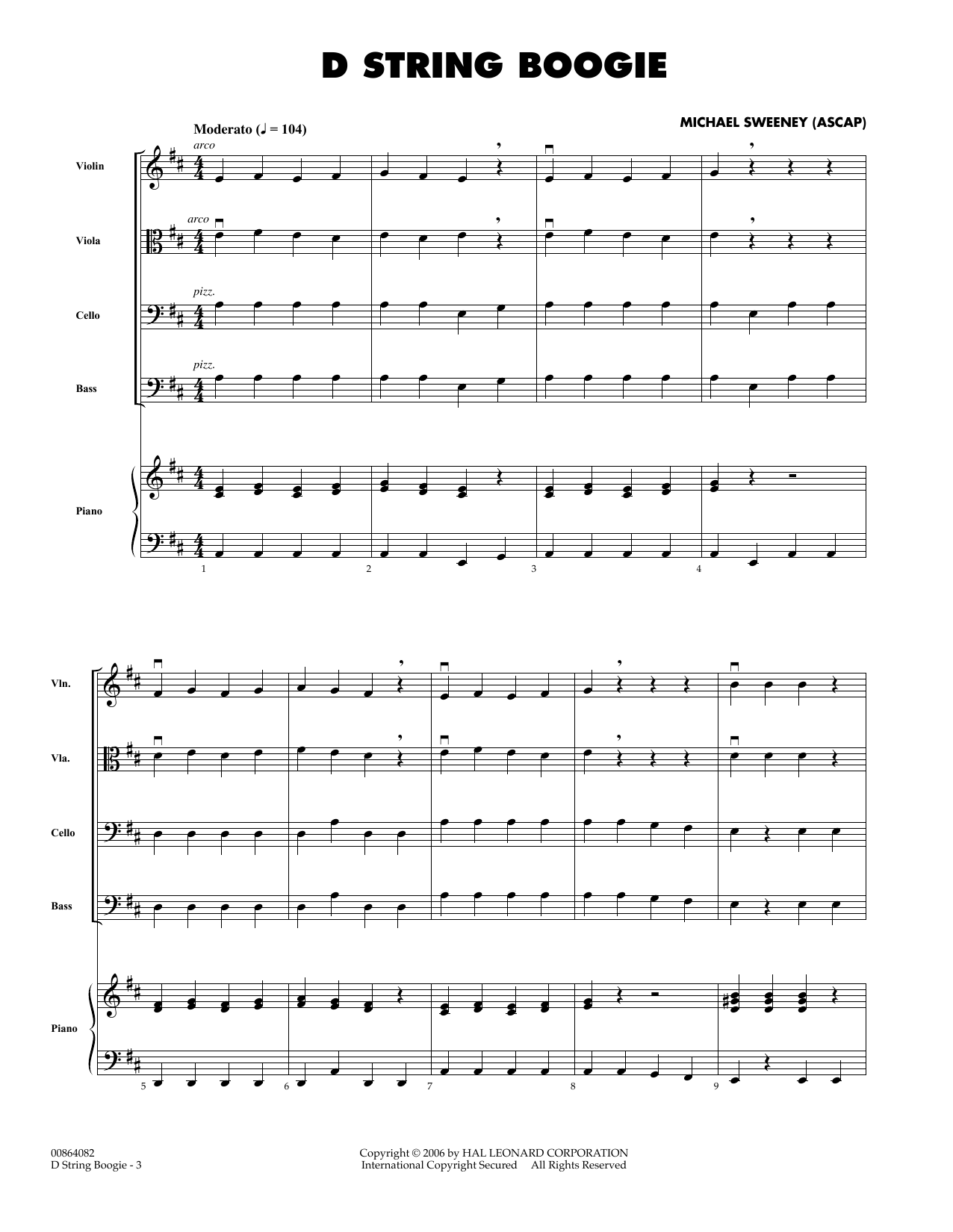

D String Boogie: String Orchestra Conductor Score & Parts
By Michael Sweeney
Grade: 0.5
Item: 35-PK00319807
$35.00
Pickup currently not available
Buy Extra Parts (Digital PDF Download)
| Product | Price | Quantity |
|---|---|---|
| D String Boogie - Full Score | $6.00 | |
| D String Boogie - Violin | $7.00 | |
| D String Boogie - Viola | $7.00 | |
| D String Boogie - Cello | $7.00 | |
| D String Boogie - Bass | $7.00 | |
| D String Boogie - Piano | $7.00 |
Parts Added to Cart!
Description
D String Boogie


D String Boogie: String Orchestra Conductor Score & Parts isn't in MakeMusic Cloud just yet...but it could be. Let us know you'd like to see it, and you'll help shape what comes next. In the meantime, start a free trial and dive into thousands of interactive titles your students can play along with today.
Request This Title
Tell us you want it.
Start Your Free Trial
Explore everything that's ready to play right now.
Sample Audio
No sample audio found.
Sample Video
No sample videos found.
Additional Details
Publisher:
Hal Leonard
SKU:
35-PK00319807
More about this title
About the Composer: Michael Sweeney
Michael Sweeney is a prolific composer and arranger whose output spans wind band, brass band, and string orchestra literature. His work is known for combining accessibility with genuine musical substance, making him a trusted voice for educators building repertoire at all levels.
Sweeney's compositions for developing ensembles prioritize clarity of orchestration and reasonable technical demands without sacrificing character. His ability to write idiomatically for young players has made his scores staples in school music programs across North America.
Why we love this
Sweeney delivers pure musicality at the earliest grade levels. This piece proves that a boogie-based concept doesn't require complex passagework or stretched ranges; instead, he builds groove through smart part writing and rhythmic vitality that keeps young players engaged without overwhelming them.
What to expect
A relaxed, grooving energy. The boogie idiom brings a laid-back swagger to the string section, with clean rhythmic motion that feels more like jamming than formal concert music. It's approachable and fun without sounding juvenile.
Who it's for
String orchestras in their first or second year of study benefit most from this piece. Beginners developing rhythmic confidence and ensemble awareness will find the part writing manageable while the musical payoff feels immediate.
How to get the most out of it
- Lock the D string parts (violin II, viola, cello, bass) into a unified rhythmic pocket before layering in the melody. A solid rhythmic foundation makes the boogie feel propulsive.
- Balance the violin I melody so it sits above the texture without drowning out the harmonic conversation underneath. This is a full ensemble sound, not a solo feature.
- Mark articulations clearly in rehearsal. Consistent tonguing and bow direction across the ensemble will sharpen the rhythmic feel.
- Take advantage of any dynamic markings to shape phrases. Even simple pieces breathe better when students understand where the music rises and falls.
How to use it
Open a concert with this to set a warm, accessible tone before moving into more formal repertoire. Alternatively, program it mid-concert as a palate cleanser between contrasting pieces, letting the audience reset with something infectious and straightforward.
Skills your students will build
- Ensemble rhythm and groove fundamentals
- Balancing melody and harmonic parts
- Consistent articulation and bowing coordination
- Reading D major tonality across all string voices
- Responding to phrase shaping and dynamic direction