
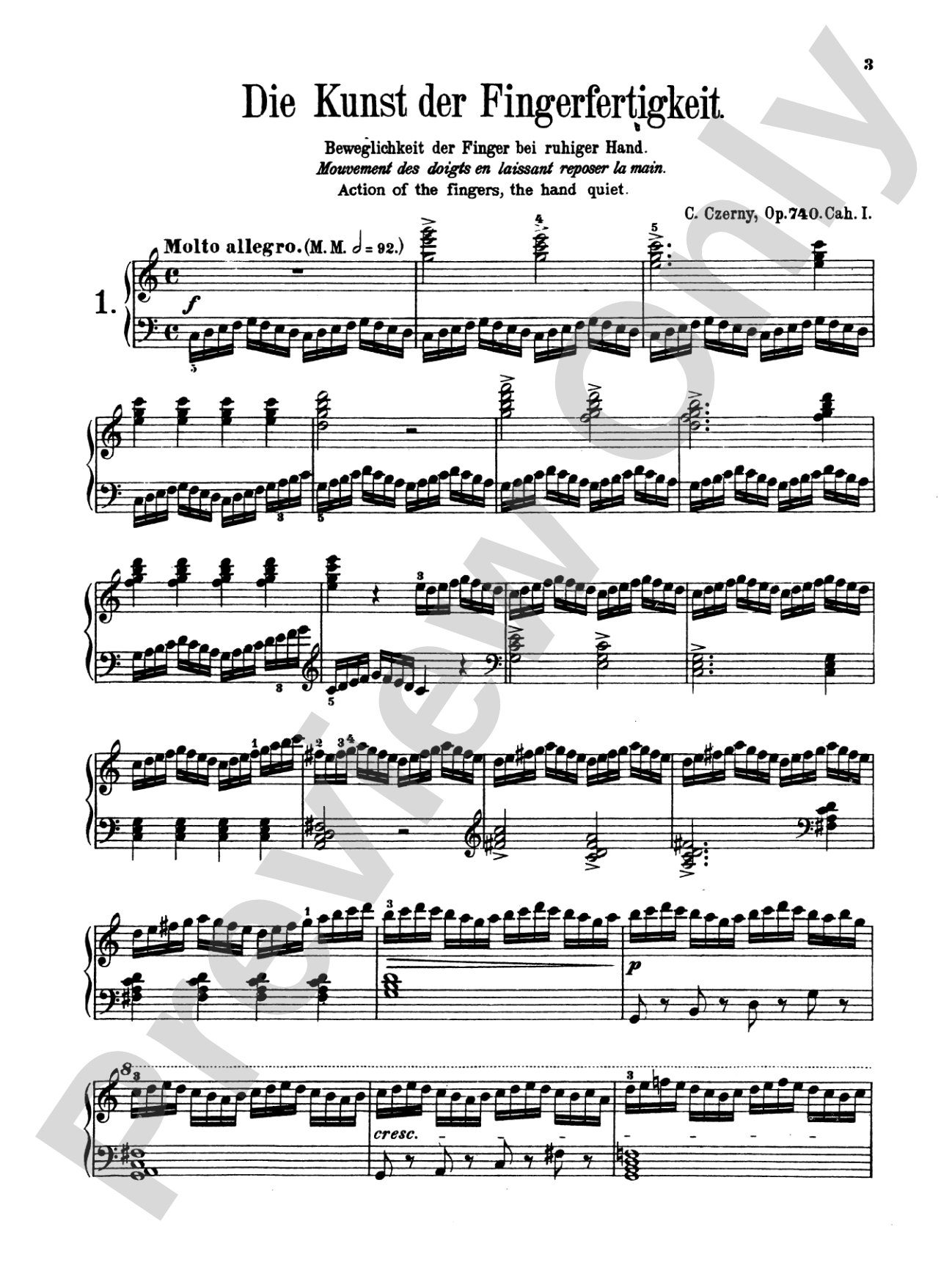
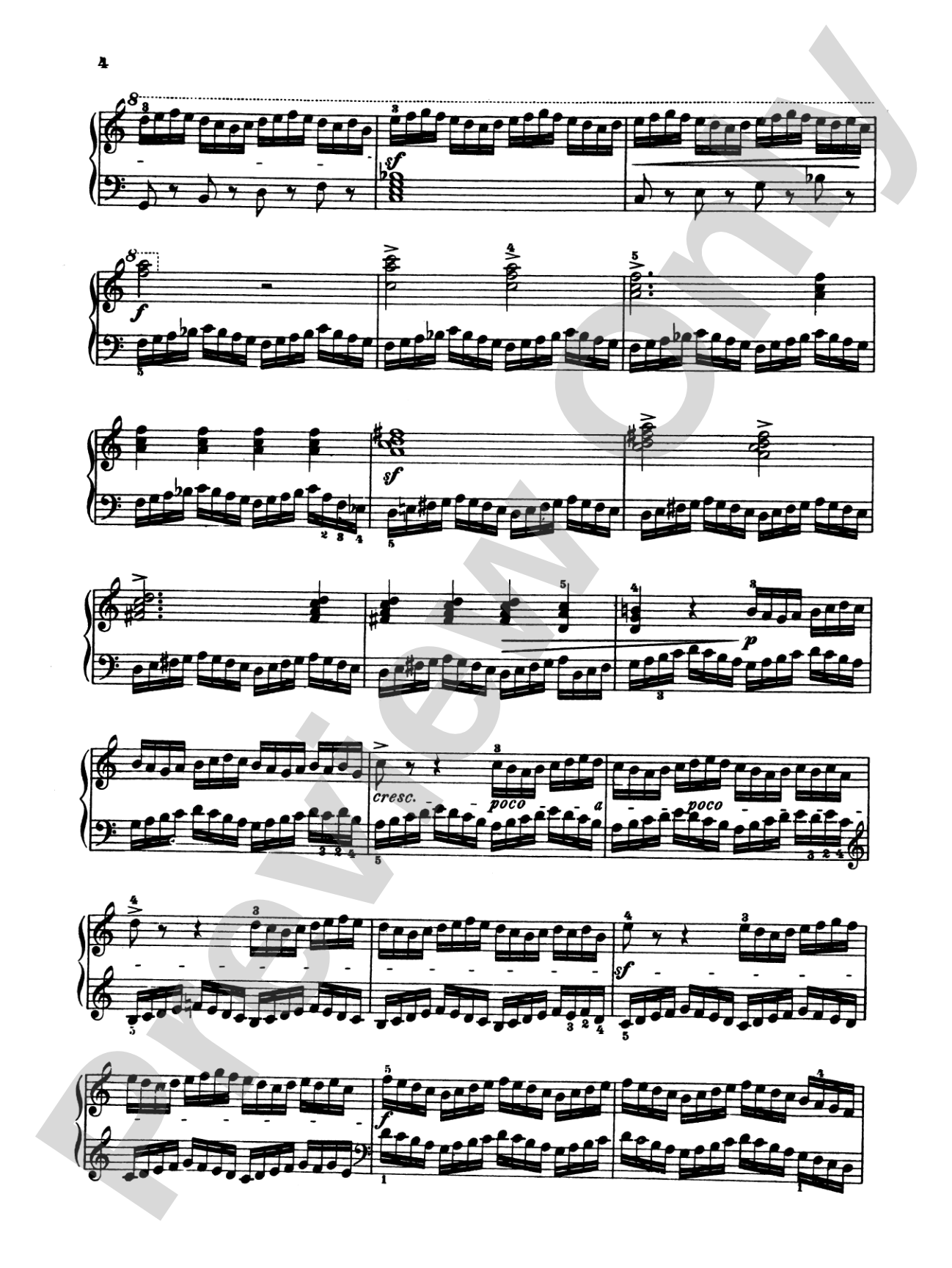
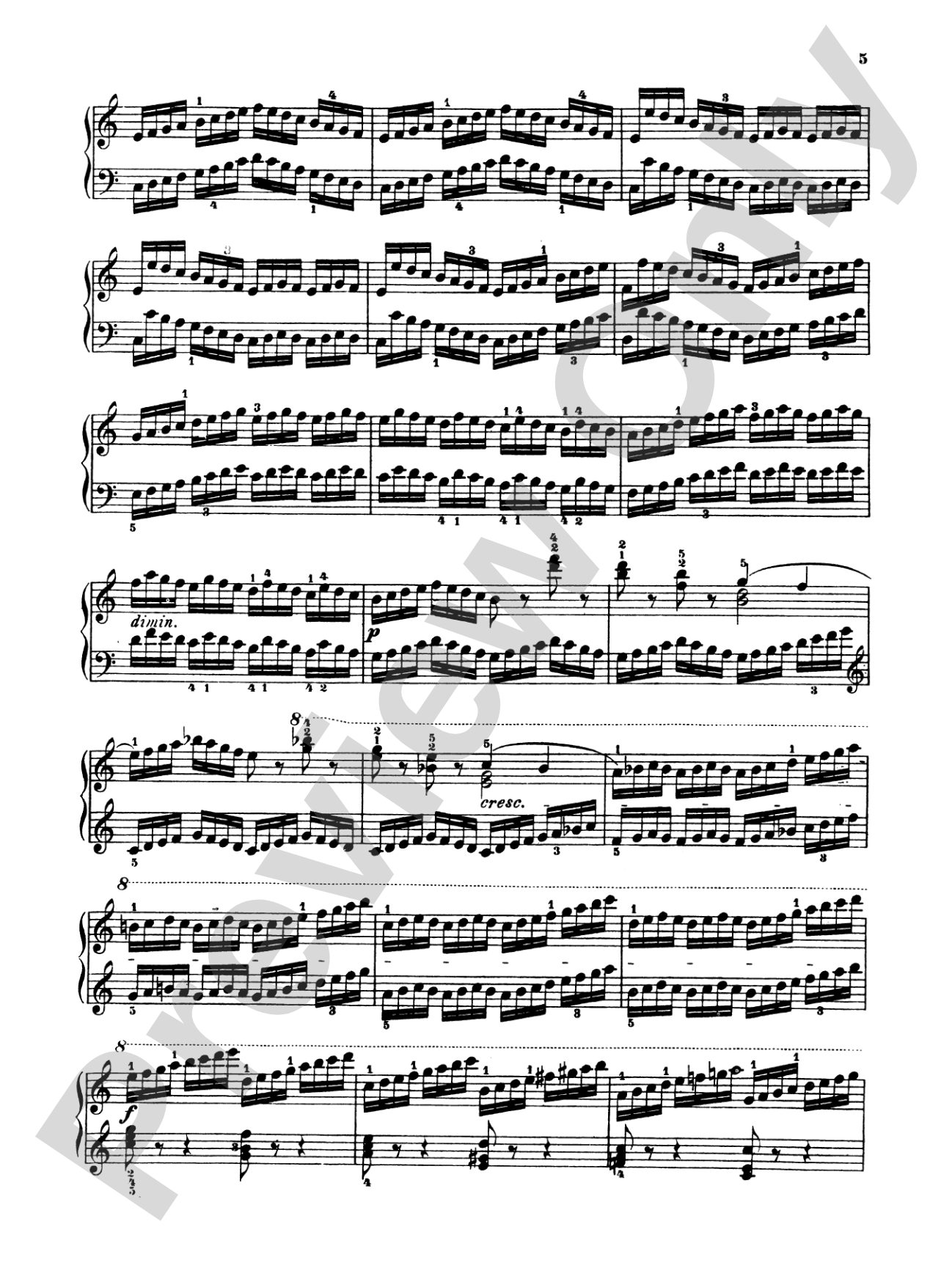
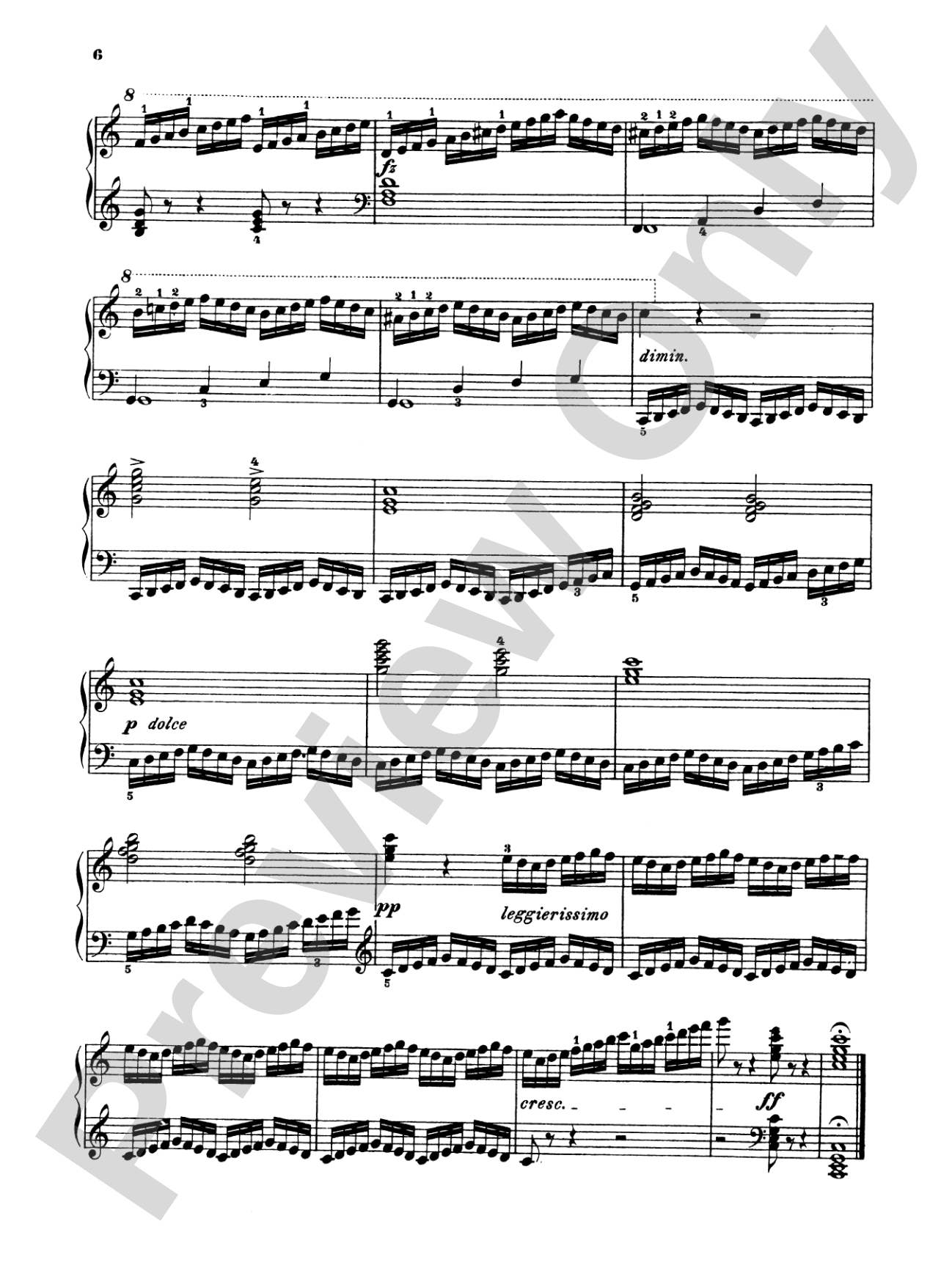

Czerny: Art of Finger Dexterity, Op. 740 (Book I): Piano Book
By Carl Czerny
Item: 00-PK-0003031

$7.99
Pickup currently not available
Buy Extra Parts (Digital PDF Download)
Parts Added to Cart!
Related Items
The Art of Finger Dexterity, Opus 740, Book I: Piano Book |
$7.95
|
View |
Description
Carl Czerny (1791--1857) was an Austrian pianist, composer and teacher. Today he is best remembered for his volumes of études for the piano. Czerny's music was greatly influenced by his teachers, Clementi, Hummel, Salieri and Beethoven. This book contains Czerny's Opus 740 (Book 1), "The Art of Finger Dexterity," Exercises 1-8.


Don't just read it, hear it, play along with it, and watch your students grow with it. In MakeMusic Cloud, Czerny: Art of Finger Dexterity, Op. 740 (Book I): Piano Book comes alive with professional accompaniment, adjustable tempo, and built-in practice tools that turn solo practice into real progress.
Open in the Player
Jump straight in and assign it today.
Start Your Free Trial
Open this title and explore the full library in minutes.
Sample Audio
No sample audio found.
Sample Video
No sample videos found.
Additional Details
Series:
Kalmus Edition
Publisher:
Alfred Music
Page Count:
32
SKU:
00-PK-0003031
More about this title
About the Composer: Carl Czerny
Carl Czerny (1791, 1857) bridged the Classical and Romantic eras as a pianist, composer, and one of the nineteenth century's most influential pedagogues. A student of Beethoven, Hummel, Salieri, and Clementi, he absorbed the technical demands and artistic sensibilities of each master before developing his own approach to instrumental training. His hundreds of études remain the backbone of piano pedagogy because they isolate specific technical challenges without sacrificing musicality.
Czerny's gift was understanding what students actually needed to practice. Rather than abstract finger gymnastics, his exercises embed technique within short, memorable pieces. This approach transformed how generations of teachers structured their curricula, and Op. 740 exemplifies why his work endures: it makes difficult things manageable and engaging.
Why we love this
Czerny's Op. 740 stands out among finger dexterity studies because the exercises never feel abstract or mechanical. Each etude is genuinely musical, with harmonic substance and melodic shape that makes them rewarding to play rather than merely tolerate. For teachers, this means students actually hear what their technical work accomplishes, which transforms practice from obligation into genuine musical engagement.
What to expect
Czerny's finger studies shimmer with Classical elegance. The writing is transparent enough that you hear every note clearly, yet sophisticated enough to keep both student and listener engaged. There's a sense of purposeful architecture in each exercise: patterns build, harmonic motion unfolds, and the technical challenge feels like a natural outgrowth of musical thought rather than an imposed mechanical drill.
Who it's for
This collection serves late elementary and intermediate pianists (roughly grades 4-6) who have mastered basic technique and are ready for systematic work on finger independence and velocity. It's equally valuable for adult students returning to piano, as the études provide structured, purposeful practice with clear musical direction. Private teachers and conservatory instructors use these exercises as standard repertoire for bridging from foundational technique to more advanced classical repertoire.
How to get the most out of it
- Start at a tempo where you can execute every note with absolute clarity and independence; only after weeks of secure, slow practice should you gradually increase speed.
- Listen for the harmonic progression beneath the figuration. These exercises contain real chord changes and modulations, so tracking the underlying harmony prevents the fingers from operating on autopilot.
- Maintain consistent weight distribution across all five fingers rather than favoring stronger fingers. Czerny's design forces each finger to carry equal responsibility, which is precisely why they build true dexterity.
- Shape the melodic line even when it spans rapid passagework. A sense of phrasing (however brief) transforms finger studies into actual music and develops stylistic awareness alongside technique.
How to use it
These exercises function best as daily practice material rather than recital repertoire, though Book I's early studies can occasionally appear on student recitals as evidence of technical advancement. Pair them with Czerny's own Sonatinas or with Classical sonatas at a similar level to show how the technical work translates into actual repertoire performance. Their disciplined, elegant character makes them a natural complement to Baroque and early Classical music study.
Skills your students will build
- Finger independence across all five digits
- Even velocity and articulation in rapid passagework
- Scalar and arpeggiated figuration at increasing tempos
- Hand position stability during extended finger work
- Recognition of harmonic progressions within technical patterns
- Sight-reading fluency in Classical keyboard textures