
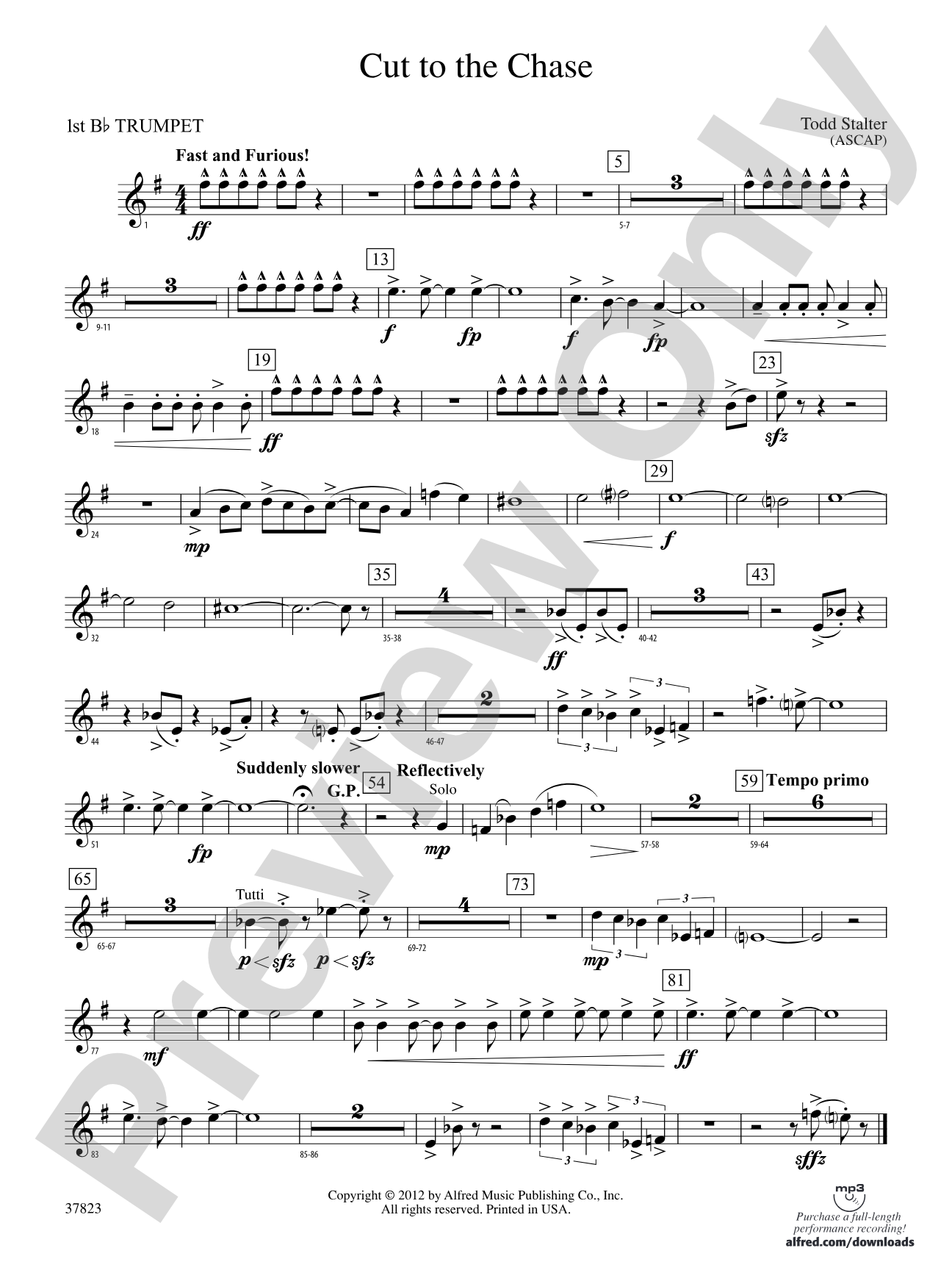

Cut to the Chase: 1st B-flat Trumpet
By Todd Stalter
Grade: 2.5 (Medium Easy)
Item: 00-PC-0015353_T1
$3.00
Pickup currently not available
Description
In popular jargon, the phrase "cut to the chase" means to get to the really interesting or important point, and leave out all that is unnecessary. It originated from early cinematic lore when silent films were full of romantic storylines that inevitably led to much more exciting and memorable chase sequences. In this work, the melodic fragments are tossed around the band to give the impression that everyone is being chased or chasing something. To pay homage to the phrase's past, the frantic atmosphere stops for an obligatory inclusion of a slow, romantic chord progression with a soaring melody, and then the chase resumes, building to a rousing conclusion. (2:25) This title is available in MakeMusic Cloud.


Don't just read it, hear it, play along with it, and watch your students grow with it. In MakeMusic Cloud, Cut to the Chase: 1st B-flat Trumpet comes alive with professional accompaniment, adjustable tempo, and built-in practice tools that turn solo practice into real progress.
Open in the Player
Jump straight in and assign it today.
Start Your Free Trial
Open this title and explore the full library in minutes.
Sample Audio
1
Audio File
--:--
0:00
0:00
Sample Video
No sample videos found.
Additional Details
Series:
Young Symphonic
Publisher:
Alfred Music
Page Count:
134
SKU:
00-PC-0015353_T1
More about this title
About the Composer: Todd Stalter

Todd Stalter built his reputation over 34 years as Director of Bands at Eureka High School in Illinois, where his ensembles earned 16 state marching championships, consistent superior ratings at IHSA contests, and invitations to perform at Orchestra Hall in Chicago and Walt Disney World. His programs achieved festival championships at the Cotton and Liberty Bowls, and he was inducted into the Illinois State Marching Band Championships Hall of Fame. Beyond the high school setting, he has conducted All-State Bands in Georgia and Delaware, led numerous district honor bands, and appeared regularly with community ensembles including the Rockford Wind Ensemble and Prairie Winds.
As a composer and arranger, Stalter's band and string orchestra works circulate nationally and appear on state contest lists across the United States. His compositions are featured in the GIA publication "Teaching Music Through Performance in Band," a standard resource in music education. He holds degrees in music education and trumpet performance from Illinois State University, where he studied conducting with Dr. Stephen K. Steele. He remains active as an adjudicator, clinician, and presenter at state music educator conferences.
Why we love this
Stalter captures the energy and playfulness inherent in the phrase "cut to the chase" without sacrificing musicality or structural coherence. The contrast between the frantic passing of melodic fragments and the contrasting slow, romantic section gives your band genuine dramatic shape, and students respond to music that tells a clear story. At Grade 2.5, this piece sits in the sweet spot where it's approachable for developing ensembles but offers enough textural and harmonic interest to keep more experienced musicians engaged.
What to expect
Picture a silent film scenario where excitement builds through rapid scene changes and quick cuts. The music darts between instruments with kinetic energy, creating a sense of pursuit and playfulness. Then the moment shifts entirely: the frantic editing stops, and we sink into a warm, unhurried chord progression with a soaring melody that reminds us why the chase matters in the first place. Energy surges back for a breathless, triumphant finish.
Who it's for
This work suits bands at the upper end of Grade 2 through early Grade 3, making it ideal for developing ensembles working toward contest readiness or seeking engaging concert material. It appeals to directors who want their students to experience contrast, character, and structural variety without excessive difficulty.
How to get the most out of it
- Shape the opening melodic fragments with clear phrase direction even though they move quickly between sections. The impression of chasing depends on listeners following the line, not just hearing fast notes.
- Bring out the soloists during the slow, romantic section with warm dynamics and a slightly broader tempo than the surrounding material. This provides genuine contrast and lets that melody sing.
- Build the final chase gradually by controlling your crescendo through the last section rather than jumping to full volume immediately. The rousing conclusion lands harder when you've managed the energy arc from the romantic passage.
- Balance clarity with momentum in the opening. These fragments move from player to player with specific intention, so clean attacks and releases matter as much as keeping the pulse moving forward.
How to use it
This piece works beautifully as a standalone concert opener that sets an upbeat, theatrical tone for your program. Alternatively, position it before or after a contrasting slow work to highlight the drama in both pieces. Its two-minute-twenty-five-second length makes it useful for contest festivals where time slots are tight, and the programmatic concept engages audiences who might otherwise tune out instrumental music.
Skills your students will build
- Passing melodic lines between sections with rhythmic precision and clean articulation
- Contrasting articulation, tempo, and dynamics between fast and slow sections
- Sustaining balance and blend during sustained harmonic passages
- Building and releasing dynamic energy across an extended musical arc
- Following conductor cues through frequent textural and timbral changes