Curacao Blue: 2nd B-flat Trumpet Sheet Music Preview

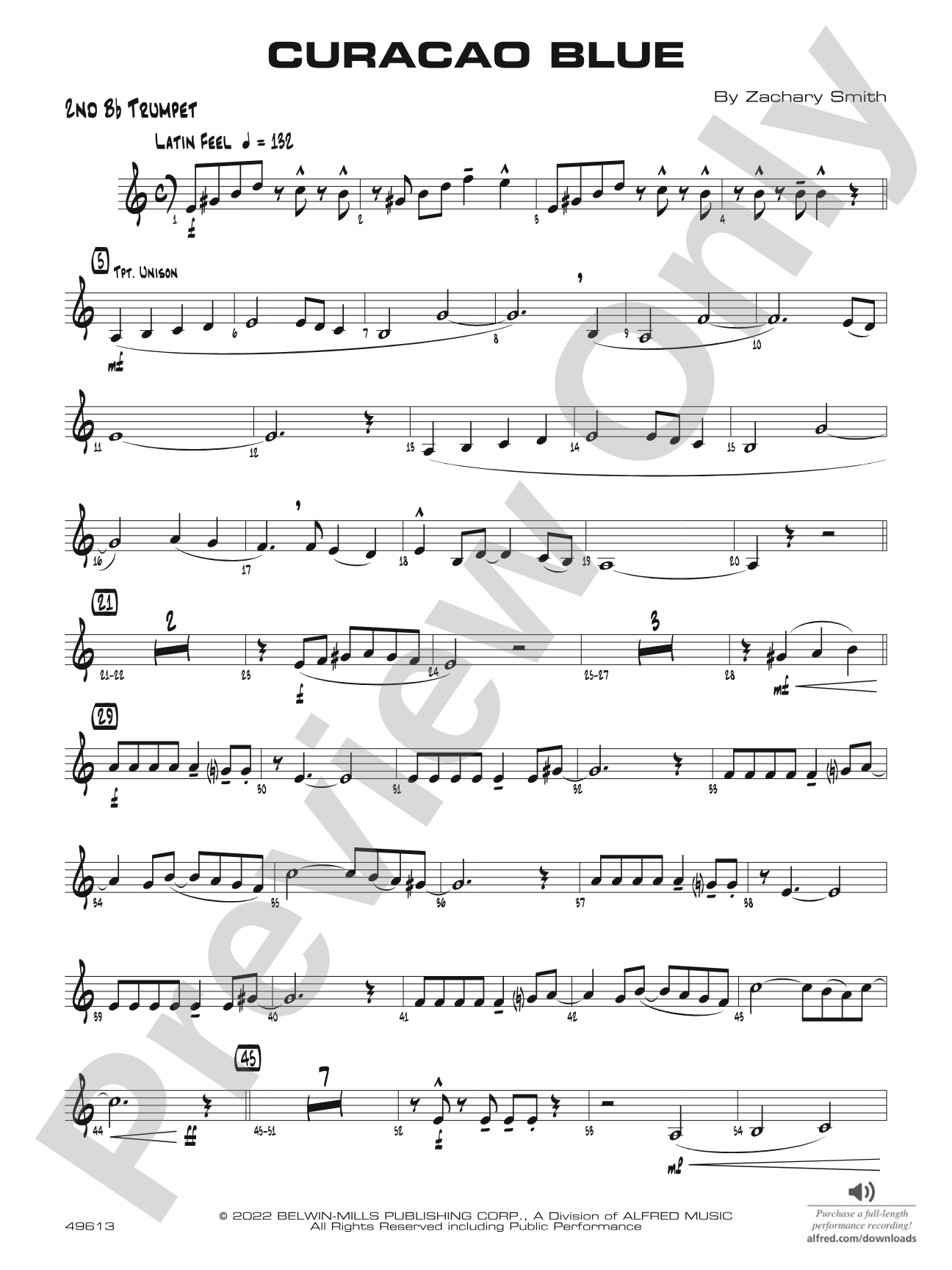
Curacao Blue: 2nd B-flat Trumpet

By Zachary Smith

Grade: 1

Item: 00-PC-0018841_T2

Digital Download
$3.00
Description
Curacao Blue by Zachary Smith has a Latin groove with an easy bossa rhythmic pattern. Features a tempo around 134 BPM, trumpet 1 range to written E top space, a written tenor solo, clear articulation with complete rhythm section notation, and optional instrument parts with vibes. This accessible chart will transport everyone to the islands! (3:10) This title is available in MakeMusic Cloud.

Don't just read it, hear it, play along with it, and watch your students grow with it. In MakeMusic Cloud, Curacao Blue: 2nd B-flat Trumpet comes alive with professional accompaniment, adjustable tempo, and built-in practice tools that turn solo practice into real progress.

Sample Audio
0:00
0:00
Sample Video
Additional Details
Series: First Year Charts for Jazz Ensemble
Publisher: Alfred Music
SKU: 00-PC-0018841_T2

More about this title

Why we love this

Smith writes with first-year players in mind, and it shows. The bossa groove sits naturally under the ensemble without requiring complicated subdivision work, yet the Latin feel is genuine and infectious. A tenor solo at this level usually means either too easy or too exposed; here it lands perfectly in the middle, giving your soloists a real moment without leaving them stranded.

What to expect

Warm and unhurried, like an afternoon breeze carrying steel drum echoes. The bossa rhythm invites dancers even as it asks the ensemble to lock in together, creating that satisfying moment when a young band first realizes what groove really means.

Who it's for

First-year jazz ensembles and groups just beginning to tackle Latin repertoire. This works equally well for younger high school programs and community college jazz bands looking for accessible, performance-ready material that doesn't sacrifice authenticity.

How to get the most out of it

  • Keep the rhythm section locked on the bossa clave. The groove falls apart if the cymbal and bass don't settle into the pattern together, so rehearse them as a unit before bringing in the horns.
  • Balance the vibes carefully if you're using them. At 134 BPM they should shimmer beneath the ensemble, not compete with the trumpet voices.
  • Let the tenor soloist breathe during the solo section. First-year soloists often rush; give them space to feel the pulse underneath without the full ensemble pressing forward.
  • Articulation matters on the written parts. Clear tonguing on the trumpet and saxophone lines will make the Latin feel pop without sounding choppy.

How to use it

A natural fit for early-season programming, before you've taught complex meters or intricate Latin clave variations. Its three-minute runtime makes it ideal for concert variety or contest situations where you need something engaging that doesn't demand extended rehearsal time.

Skills your students will build

  • Understanding bossa rhythmic feel and clave patterns
  • Balancing written rhythmic unity with relaxed phrasing
  • Supporting a featured soloist in a Latin context
  • Ensemble balance between melodic and rhythmic roles

You May Also Like