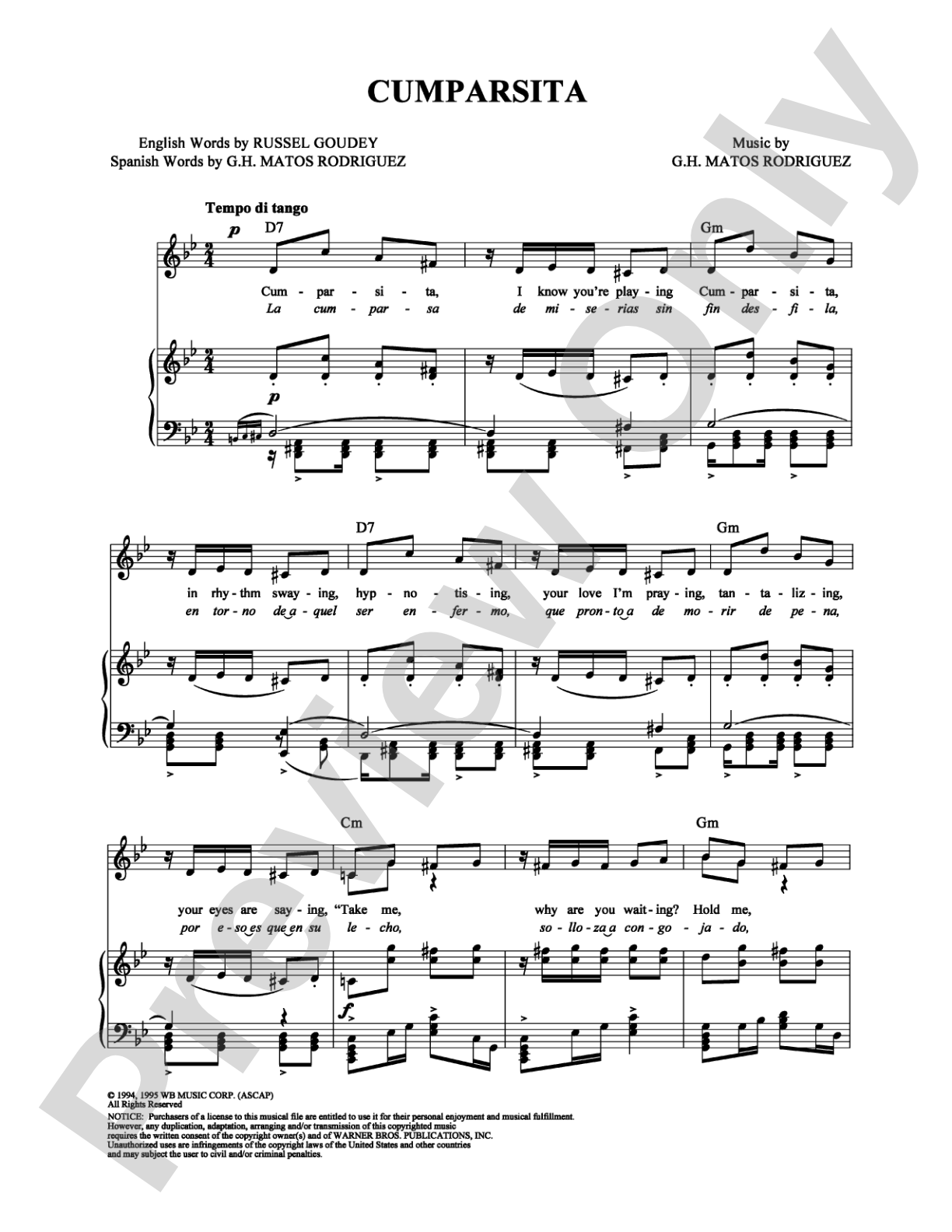
Cumparsita: Piano/Vocal/Chords Digital Sheet Music

Cumparsita: Piano/Vocal/Chords Digital Sheet Music

G. H. Matos Rodriguez

Item: 00-PS-0004164

Digital Download
$3.99
Description

Cumparsita: Piano/Vocal/Chords Digital Sheet Music isn't in MakeMusic Cloud just yet...but it could be. Let us know you'd like to see it, and you'll help shape what comes next. In the meantime, start a free trial and dive into thousands of interactive titles your students can play along with today.

Sample Audio
No sample audio found.
Sample Video
Additional Details
SKU: 00-PS-0004164

More about this title

About the Creator: Gerardo Matos Rodríguez

Gerardo Matos Rodríguez composed "Cumparsita" in 1916 as a tango for a carnival parade in Montevideo, Uruguay. The piece became one of the most recorded tangos in history, transcending its national origins to become a global standard that defined the sound of the genre for generations.

Rodríguez's gift lay in creating melodies that sit perfectly in the voice and burn themselves into memory. "Cumparsita" exemplifies this gift; its opening phrase is instantly recognizable, and the harmonic language beneath it rewards both straightforward interpretation and sophisticated reharmonization.

Why we love this

Cumparsita belongs in every jazz and standards repertoire collection because it bridges classical elegance with improvisational possibility. The chord chart gives pianists room to reharmonize and interpret while the vocal line remains instantly recognizable, making it equally useful for a standards night, a jazz combo rehearsal, or a cabaret context.

What to expect

Cumparsita carries the melancholy sophistication of the tango with an accessible, almost nostalgic quality that draws listeners in immediately. The familiar melody pairs with rich harmonic possibilities beneath it, creating space for both intimacy and ensemble warmth.

Who it's for

Pianists and vocalists working together on jazz standards, cabaret singers building a classic repertoire, and musicians looking to expand beyond written arrangements into chord-based interpretation. This format works well for singers who want the security of a prepared chart alongside pianists who want harmonic flexibility.

How to get the most out of it

  • Shape the melody with rubato in the vocal line; this tango standard rewards expressive phrasing over metronomic precision.
  • Explore the chord changes on piano during rehearsal to find comping patterns that complement your vocalist's interpretation rather than copying the chart literally.
  • Balance the piano's harmonic role with space for the voice; resist filling every beat and listen for where your accompaniment can breathe.
  • Settle on a tempo early that gives both performer and pianist room to emphasize the tango's characteristic rhythmic feel without rushing.

How to use it

Feature this as a transitional moment in a jazz or standards-themed concert, or pair it with other Latin-influenced pieces to create a thematic segment. It also serves as an excellent vehicle for introducing vocalists to lead sheet reading and chord changes in an accessible, recognized context.

Skills your students will build

  • Reading and interpreting lead sheets with chord symbols
  • Collaborative listening between vocalist and pianist
  • Tasteful comping and harmonic support on piano
  • Expressive phrasing and interpretation within a structured melody
  • Jazz and tango style conventions

You May Also Like