
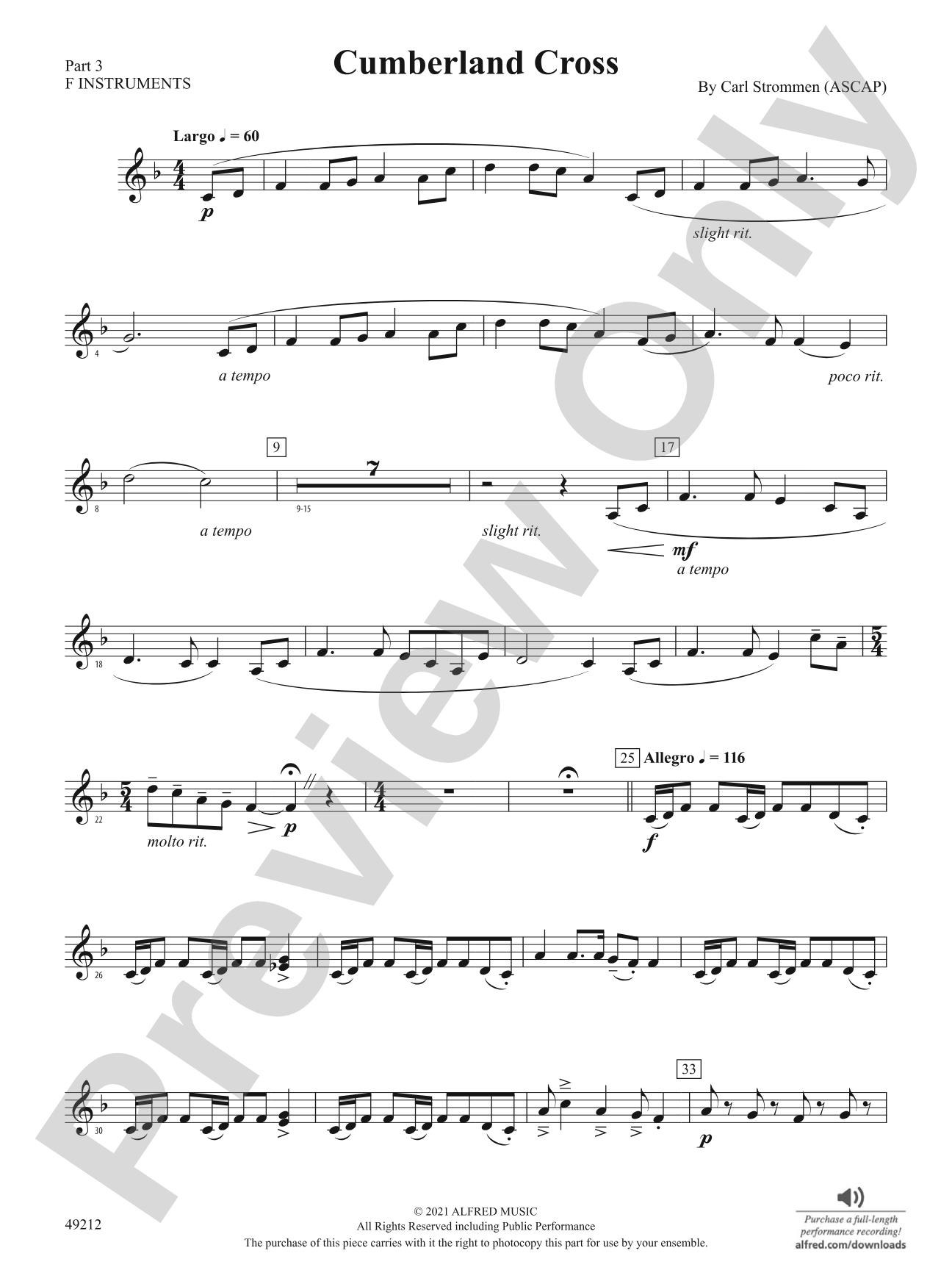

Cumberland Cross: Part 3 - F Instruments
By Carl Strommen
Grade: 4 (Medium Advanced / Difficult)
Item: 00-PC-0018753_PART3_F
$3.00
Pickup currently not available
Description
This version of Cumberland Cross by Carl Strommen is part of our Alfred FLEX offerings and is designed with maximum flexibility for use by any mix of instruments---wind, strings, and percussion, including like- or mixed-ensembles with as few as 5 players. The suggested instrumentation and a customizable Teacher Map will help you plan out how to best assign parts to suit your ensemble's needs. It also comes with supplemental parts for maximum flexibility. With the purchase of this piece, permission is granted to photocopy the parts as needed for your ensemble. A percussion accompaniment track is also available as a free download. String parts have been carefully edited with extra fingerings and appropriate bowings to support students in mixed ensembles playing in less familiar keys.
Your band will sound great with Carl Strommen's classic original piece. Cumberland Cross explores the rich American folk style in two sections. The first has broad, moving harmonies under a Shenandoah-like melody, and the second a lively dance reminiscent of Copland. It is not too difficult, yet very impressive!
- Percussion Accompaniment Track Download. (3:30)


Your band will sound great with Carl Strommen's classic original piece. Cumberland Cross explores the rich American folk style in two sections. The first has broad, moving harmonies under a Shenandoah-like melody, and the second a lively dance reminiscent of Copland. It is not too difficult, yet very impressive!
- Percussion Accompaniment Track Download. (3:30)
Don't just read it, hear it, play along with it, and watch your students grow with it. In MakeMusic Cloud, Cumberland Cross: Part 3 - F Instruments comes alive with professional accompaniment, adjustable tempo, and built-in practice tools that turn solo practice into real progress.
Open in the Player
Jump straight in and assign it today.
Start Your Free Trial
Open this title and explore the full library in minutes.
Sample Audio
1
Audio File
--:--
0:00
0:00
Sample Video
No sample videos found.
Additional Details
Series:
Alfred Concert Band
Publisher:
Alfred Music
SKU:
00-PC-0018753_PART3_F
More about this title
About the Composer: Carl Strommen
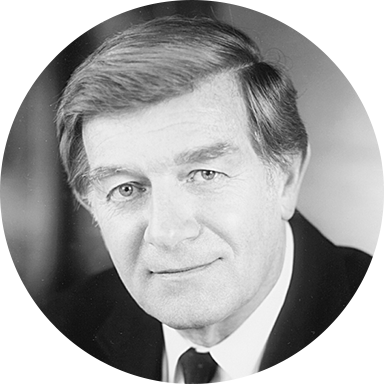
Carl Strommen ranks among the most frequently performed composer/arrangers working across band, orchestra, jazz ensemble, and vocal literature today. His music appears regularly on concert stages, in broadcast media, and in film scores, and his work has earned him the ASCAP Standard Writers Award year after year. Strommen holds a degree from City College of New York and currently serves as an adjunct professor of orchestration and composition at the C.W. Post Campus of Long Island University. A sought-after clinician and commission composer, he divides his time between Long Island and extended stays in the Denver and Boulder areas with his family.
Why we love this
Cumberland Cross gives mixed ensembles real substance without demanding a specialized lineup. The authentic American folk voice—rooted in Shenandoah's broad harmony and Copland's spirited energy—sits comfortably at Grade 4 while delivering genuine impact, making it equally at home in festival sight-reading contests and polished concert programs. The built-in flexibility through suggested instrumentation, the customizable Teacher Map, and the carefully edited string fingerings transform a potential logistical challenge into an advantage, letting you feature exactly the players you have.
What to expect
Cumberland Cross opens with unhurried dignity, its melody floating over rich, rolling harmonies that evoke the Shenandoah River itself. The second section snaps into life with irrepressible rhythmic energy, built on the syncopated character of American frontier dance music.
Who it's for
Mixed ensembles of five or more players where fixed instrumentation isn't possible; bands incorporating string players, or string groups adding winds and percussion. This arrangement works equally well for festival programming, classroom concerts, or chamber ensemble contexts where flexibility and pedagogical support are priorities.
How to get the most out of it
- Balance the lyrical opening by supporting the Shenandoah-like melody with sustained harmonic layers; the broad moving harmonies need time to breathe and register with the audience.
- In the lively second section, anchor the dance rhythm in your percussion foundation and clarify the rhythmic articulation across all parts so the Copland-inspired energy feels propulsive rather than scattered.
- Use the Teacher Map to assign parts strategically based on your ensemble's strengths; doubling or reassigning parts mid-rehearsal costs nothing when photocopying is permitted, so experiment to find the best voice leading for your instrumentation.
- Reference the free percussion accompaniment track during sectional rehearsals to help string and wind players lock the meter and tempo, especially if your ensemble is new to working as a mixed group.
How to use it
Program this as an opener or closer to a concert featuring American repertoire, or use it as a bridge piece between a formal first half and something more spirited. Its moderate difficulty and broad accessibility also make it ideal for festival or invitational concert settings where sight-reading or limited rehearsal time is the reality.
Skills your students will build
- Playing in less familiar keys with harmonic awareness (supported by edited fingerings for strings)
- Blending mixed instrumentation and maintaining part independence in flexible voicing
- Balancing lyrical ensemble singing with rhythmic precision in contrasting sections
- Responding to folk melody and stylistic imitation of American composers