
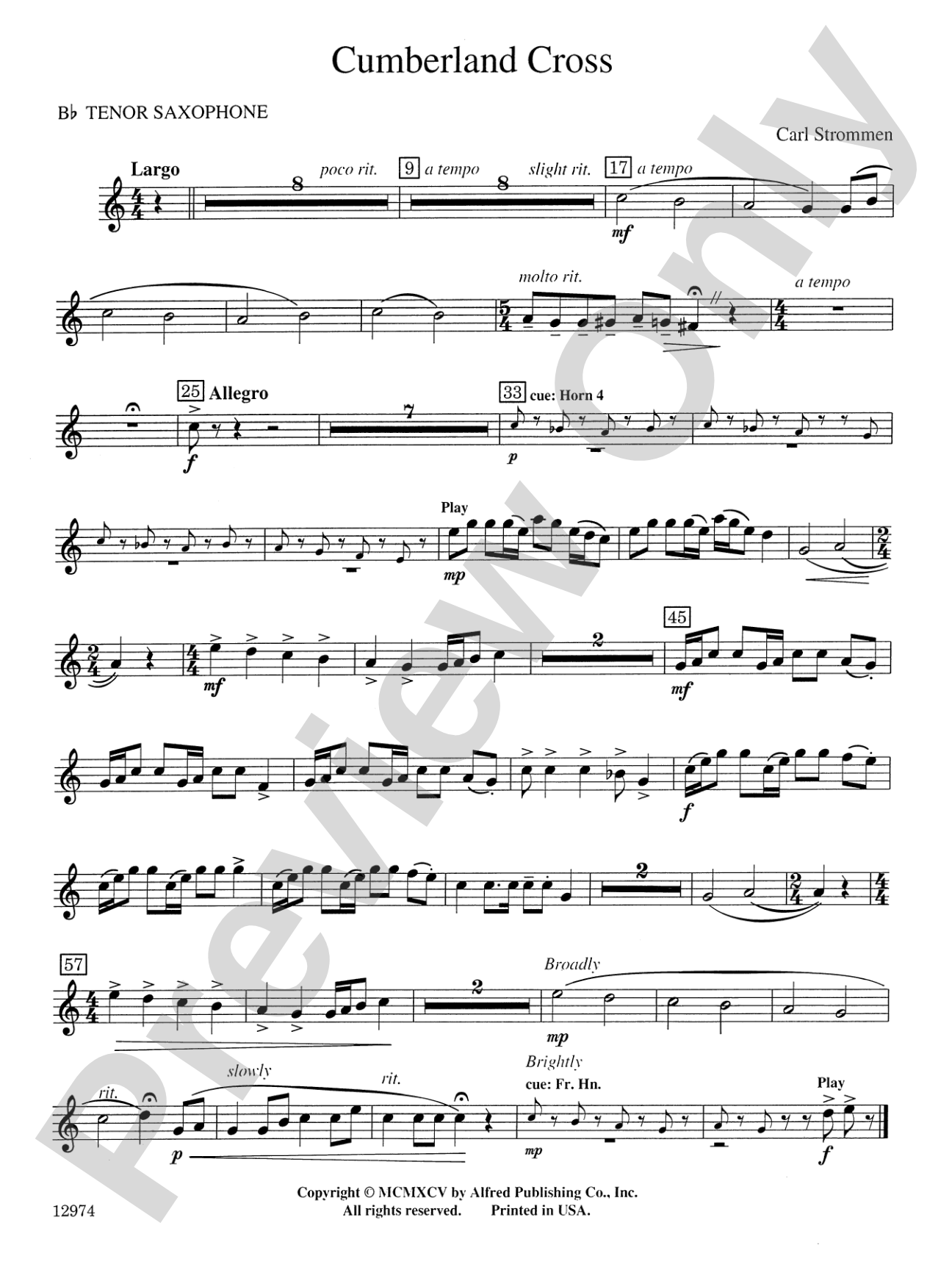

Cumberland Cross: B-flat Tenor Saxophone
By Carl Strommen
Grade: 4 (Medium Difficult)
Item: 00-PC-0000134_TX1
$5.99
Pickup currently not available
Description
You'll really get a nice sound with this one! Carl's original work explores the rich American folk style in two sections. The first has broad, moving harmonies under a Shenandoah-like melody, and the second a lively dance reminiscent of Copland. "Cumberland Cross" is not too difficult, yet very impressive! This title is available in MakeMusic Cloud. (3:30)


Don't just read it, hear it, play along with it, and watch your students grow with it. In MakeMusic Cloud, Cumberland Cross: B-flat Tenor Saxophone comes alive with professional accompaniment, adjustable tempo, and built-in practice tools that turn solo practice into real progress.
Open in the Player
Jump straight in and assign it today.
Start Your Free Trial
Open this title and explore the full library in minutes.
Sample Audio
1
Audio File
--:--
0:00
0:00
Sample Video
Additional Details
Series:
Alfred Concert Band
Publisher:
Alfred Music
Page Count:
136
SKU:
00-PC-0000134_TX1
More about this title
About the Composer: Carl Strommen

Carl Strommen stands among the most frequently performed composer/arrangers working today, with his work spanning concert band, orchestra, jazz ensemble, and vocal literature across North America and beyond. His compositions appear regularly in concert halls, on screen, and in broadcast media, while his reputation as a clinician and commissioned composer keeps him actively engaged with ensembles at all levels.
Strommen holds a degree from City College of New York and maintains his connection to music education as an adjunct professor of orchestration and composition at Long Island University's C.W. Post Campus. His consistent output has earned him the annual ASCAP Standard Writers Award throughout his career. He divides his time between Long Island and Colorado, where he spends significant time with family in the Denver and Boulder area.
Why we love this
Cumberland Cross captures the expansiveness of American pastoral music without demanding virtuosity from your ensemble. The two-part structure gives you a complete emotional arc in just over three minutes, making it ideal for contests and concerts where impact matters more than length. The writing sits comfortably for Grade 4 bands while sounding thoroughly professional and moving.
What to expect
Cumberland Cross unfolds like a journey through American landscape and spirit. The opening moves with the quiet dignity of Appalachian song, then bursts into the rhythmic vitality of country dance, recalling the orchestral Americana of mid-twentieth century concert music. The piece balances reflection and celebration, leaving audiences with the warmth of folk tradition rendered through modern concert band color.
Who it's for
Directors programming Grade 4 concert bands who want substantial musical content without excessive technical demands. This work serves ensembles preparing for festival play or concert programs where Americana-inspired writing adds both accessibility and sophistication.
How to get the most out of it
- Shape the opening section's broad harmonies with long phrases and careful dynamic control. The Shenandoah-like melody needs space to breathe, so resist the urge to rush the slower material.
- Bring the dance section to life through articulation and rhythmic precision. The Copland-inspired energy relies on crisp attacks and confident ensemble lock.
- Balance the folk melody against supporting harmonies so the tune emerges naturally without isolated soloists drowning out the rest of the band.
- Use the dynamic range marked in the score to create contrast between the two sections. The shift from broad to lively should feel like a genuine narrative turn, not an abrupt tempo change.
How to use it
Program this as an opener on a concert featuring American repertoire, where its shorter duration and approachable character serve as an effective bridge to longer works. It also stands alone beautifully in festival settings or as the centerpiece of a program exploring folk song arrangements for band.
Skills your students will build
- Phrasing across long melodic lines with sustained dynamics
- Balancing melody and harmonic accompaniment within the full ensemble
- Contrasting articulation and style between lyrical and rhythmic sections
- Reading and executing folk-inspired melodic material with authentic character