
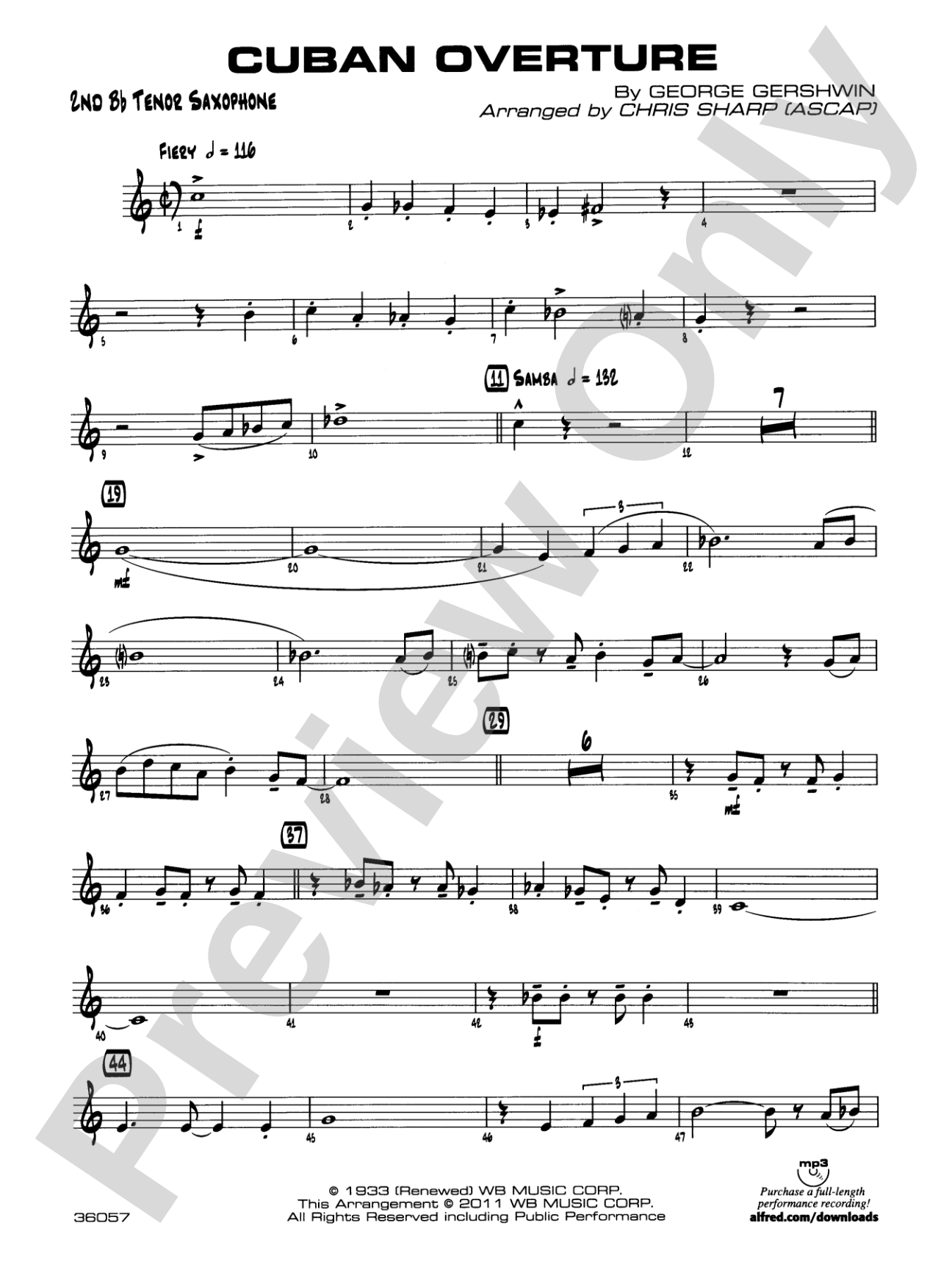

Cuban Overture: 2nd B-flat Tenor Saxophone
By George Gershwin / arr. Chris Sharp
Grade: 4 (Medium Advanced / Difficult)
Item: 00-PC-0017199_TX2
$3.00
Pickup currently not available
Description
Gershwin at his best! Primarily a bright and fiery samba with a slow middle section. Solo space (written) is for alto 1 and trumpet 2, and lead trumpet range is to D above the staff. A percussion part is also included.


Don't just read it, hear it, play along with it, and watch your students grow with it. In MakeMusic Cloud, Cuban Overture: 2nd B-flat Tenor Saxophone comes alive with professional accompaniment, adjustable tempo, and built-in practice tools that turn solo practice into real progress.
Open in the Player
Jump straight in and assign it today.
Start Your Free Trial
Open this title and explore the full library in minutes.
Sample Audio
1
Audio File
--:--
0:00
0:00
Sample Video
No sample videos found.
Additional Details
Series:
Premier Jazz Series
Publisher:
Alfred Music
Page Count:
78
SKU:
00-PC-0017199_TX2
More about this title
About the Composer: George Gershwin
George Gershwin (1898-1937) bridged the concert hall and Broadway stage with compositions that synthesized jazz idioms, popular song, and classical form. His output spanned orchestral works, operas, and film scores, all marked by infectious rhythmic energy and harmonic sophistication. For music educators, Gershwin's works remain essential windows into how vernacular American music shaped twentieth-century composition.
The Cuban Overture stands as one of Gershwin's most direct engagements with jazz and Latin rhythms. Composed in 1932 following a trip to Havana, the piece channels authentic Cuban dance traditions through Gershwin's sophisticated harmonic and orchestral lens. Its accessibility and vitality make it a cornerstone of the jazz ensemble and concert band repertoires.
Why we love this
This arrangement captures Gershwin's unmistakable voice while serving the instrumentation and energy that jazz ensembles demand. The samba-driven main theme feels fresh every time you conduct it, and the written solos give your alto 1 and trumpet 2 a moment to shine within a clearly defined harmonic structure. At Grade 4, the orchestration sits right at the level where students can execute the rhythmic precision the style requires without drowning in technical overload.
What to expect
The opening explodes with samba swagger, full of rhythmic drive and brass color. The middle section pulls inward, trading the extroversion for introspection and close harmony writing. When the piece returns to its main material, the energy feels earned and the joy contagious.
Who it's for
Jazz ensemble directors leading Grade 4 ensembles with solid rhythmic foundation and players capable of navigating Latin feel convincingly. This score works equally well for programs balancing repertoire focused on American jazz history with those seeking showpiece material that audiences recognize and celebrate.
How to get the most out of it
- Lock the clave rhythm between the percussion section and rhythm section; the samba pulse collapses if that foundation shifts, even slightly.
- Bring the alto 1 and trumpet 2 solos into clear relief by slightly pulling back the supporting harmonies behind them. These written solos need air to breathe.
- Shape the slow middle section with the same care you'd give a ballad. After the fiery opening, let this moment settle and give the ensemble a chance to demonstrate lyricism.
- Bring the lead trumpet's high D above the staff into the arrangement's final moments; it should cut through without sounding strained, so work on breath support and embouchure stability well before performance.
How to use it
Program this as a centerpiece for a concert celebrating American composition or as a substantial opener that sets an energetic tone. It pairs naturally with other Latin-inflected jazz pieces or with concert band arrangements of Gershwin's other works. The piece also works as a competition selection where judges expect both technical execution and stylistic understanding.
Skills your students will build
- Maintaining steady samba and clave rhythms under ensemble textures
- Playing Latin jazz idioms with authentic rhythmic feel, not just correct pitches
- Reading and executing written solos with appropriate phrasing and style
- Balancing bright ensemble voicings while leaving solo voices exposed and audible
- Managing register shifts and high tessituras in lead trumpet and upper woodwinds