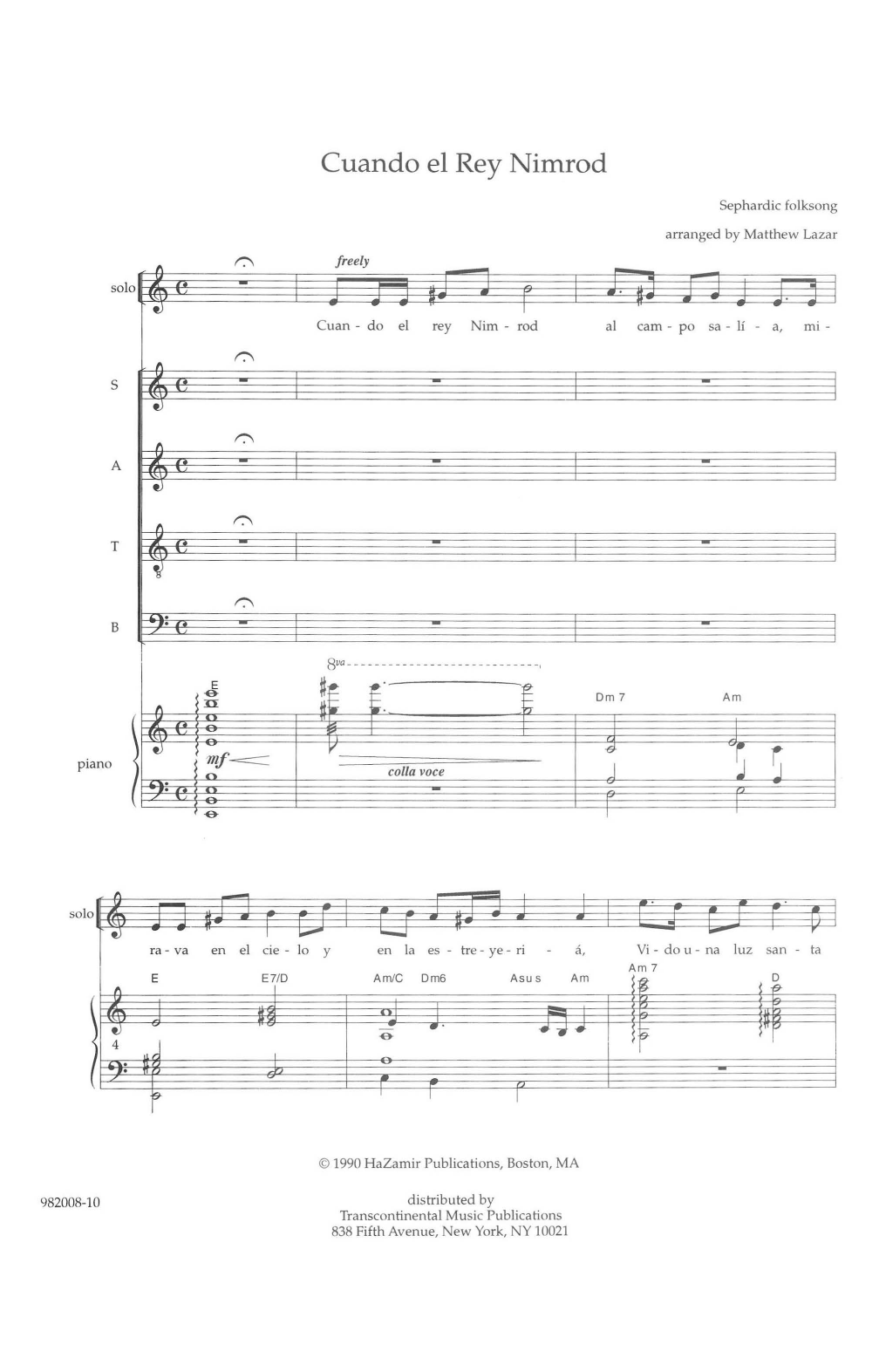
Cuando el Rey Nimrod Sheet Music Preview

Cuando el Rey Nimrod: SATB Choral Octavo

By Sephardic Folksong / Arranged by Matthew Lazar

Item: 35-DS00373248

Digital Download
$2.99
Description

Cuando el Rey Nimrod: SATB Choral Octavo isn't in MakeMusic Cloud just yet...but it could be. Let us know you'd like to see it, and you'll help shape what comes next. In the meantime, start a free trial and dive into thousands of interactive titles your students can play along with today.

Sample Audio
No sample audio found.
Sample Video
Additional Details
Publisher: Hal Leonard
Page Count: 12
SKU: 35-DS00373248

More about this title

About the Author: Sephardic Folksong

Sephardic folksongs represent centuries of musical tradition carried by Jewish communities across the Mediterranean and Ottoman Empire. These songs emerged from the lived experience of Sephardic Jews, blending Spanish, Hebrew, Greek, Turkish, and Arabic influences into a distinctive musical language that traveled wherever diaspora communities settled.

Cuando el Rey Nimrod is one of the most recognizable pieces in the Sephardic repertoire, passed down through oral tradition and documented in various arrangements. The song's narrative quality and accessible melodic contour have made it a staple in choral programs seeking to introduce singers to this rich cultural heritage.

Why we love this

Matthew Lazar's arrangement makes this classic accessible to standard SATB ensembles without sacrificing the character that makes Sephardic music so compelling. The 12-page setting suggests enough harmonic interest and voiced complexity to engage singers while remaining performable by high school and community choirs.

What to expect

The piece carries an unhurried, narrative quality characteristic of folksong. There's warmth in the harmonization and a sense of continuity that comes from music shaped by generations of singers, each adding their own touch before passing it forward.

Who it's for

Choirs seeking repertoire that honors cultural traditions while offering genuine artistic value. This arrangement works equally well for high school honors choirs, college ensembles, and community groups looking to expand beyond standard European art song.

How to get the most out of it

  • Emphasize clarity of text and diction, particularly on longer note values where the lyrics' narrative power can resonate most effectively with listeners.
  • Balance the weight of the arrangement across all four voices; this repertoire often benefits from forward, engaged singing rather than reserved or distant production.
  • Consider how the recorded accompaniment (if available) supports your tempo choices; folksong arrangements often contain rubato opportunities that a backing track may or may not accommodate.

How to use it

Program this alongside other Sephardic or Mediterranean repertoire to create a thematic set that educates audiences about diaspora musical traditions. It also pairs naturally on concerts exploring Jewish music history or international cultural expression. The 12-page length and standard voicing make it a practical choice for spring programming when many choirs are looking for shorter works that provide musical substance without overwhelming rehearsal schedules.

Skills your students will build

  • Singing in Hebrew and Spanish language texts with authentic phrasing
  • Sustaining legato lines across folksong melodies
  • Balancing harmonic color and choral blend in arranged traditional music
  • Understanding call-and-response or narrative structural conventions common in folksong

You May Also Like