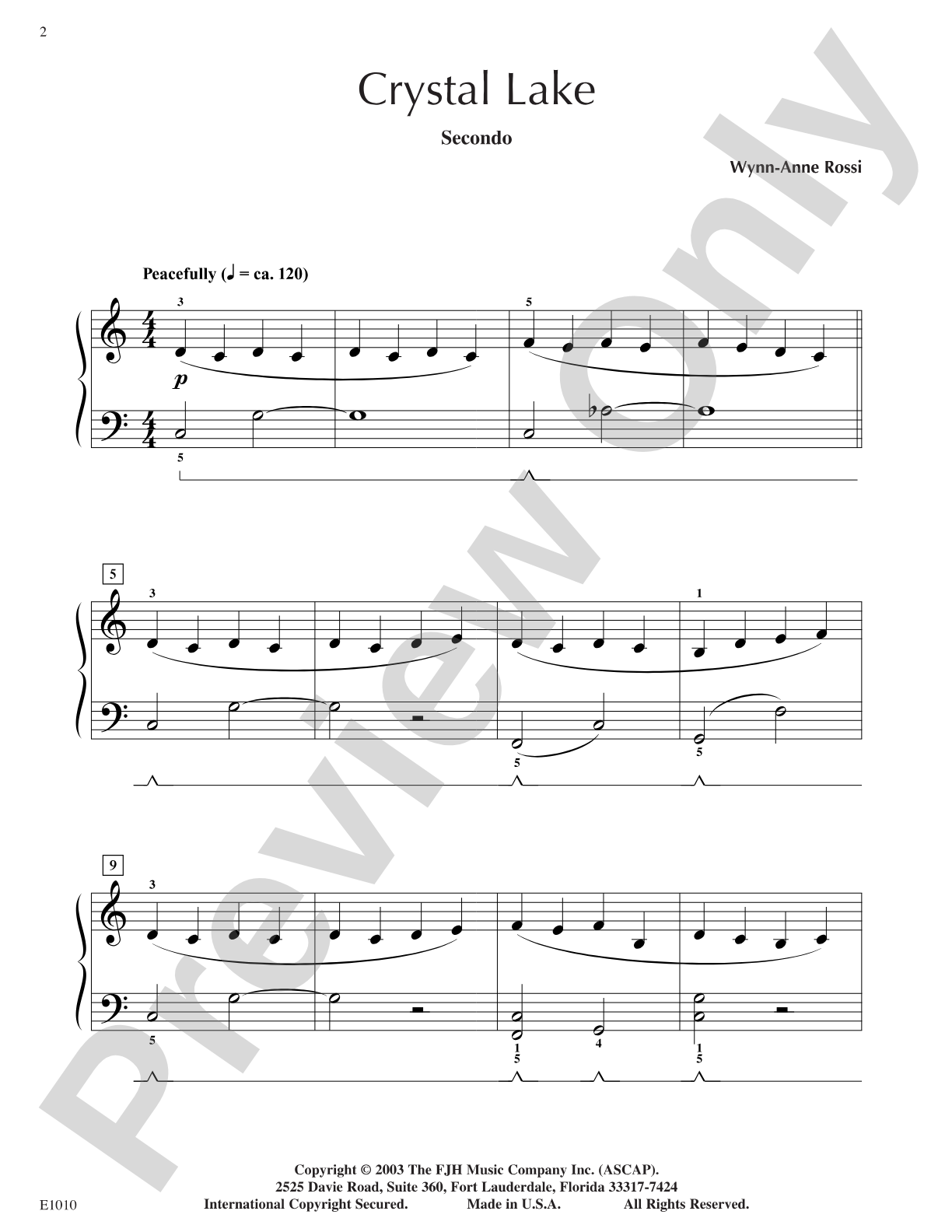
Crystal Lake Sheet Music Preview

Crystal Lake: Piano

By Wynn-Anne Rossi

Item: 98-DE1010

Digital Download
$6.50
Description
Peaceful and reflective, this enchanting piano duet is perfect for all performance settings. With its pensive, lilting melody set over a gently rocking harmony, Crystal Lake evokes imagery of a tranquil outdoor setting. Both performers will find this equal-part arrangement as accessible as it is beautiful.

Crystal Lake: Piano isn't in MakeMusic Cloud just yet...but it could be. Let us know you'd like to see it, and you'll help shape what comes next. In the meantime, start a free trial and dive into thousands of interactive titles your students can play along with today.

Sample Audio
No sample audio found.
Sample Video
Additional Details
Series: The FJH Piano Ensemble Series
Publisher: The FJH Music Company, Inc.
SKU: 98-DE1010

More about this title

About the Composer: Wynn-Anne Rossi

Wynn-Anne Rossi is a prolific composer whose repertoire spans early childhood through intermediate levels, with particular strength in writing for young pianists and ensemble settings. Her music emphasizes clear harmonic writing, singable melodies, and arrangements that respect the technical realities of developing musicians while refusing to compromise on musical integrity.

Why we love this

Rossi has crafted a duet where neither player feels secondary. The equal-part writing means both students experience genuine ensemble playing from the opening measure, and the nature imagery gives pianists something concrete to listen for and shape musically rather than simply reading notes.

What to expect

Crystal Lake breathes with the calm of still water and open sky. The gently rocking harmony creates a lullaby-like motion that grounds the melody's gentle rise and fall, evoking a moment of quiet observation rather than dramatic storytelling.

Who it's for

This duet suits late elementary pianists working toward ensemble skills and students ready for music that rewards musical sensitivity alongside technical simplicity. It works equally well for recital preparation, studio demonstrations, or group piano classes exploring early duet literature.

How to get the most out of it

  • Shape the melody with careful attention to phrase contours; even at this level, the pensive quality depends on slight rubato and dynamic shaping rather than metronomic accuracy.
  • Balance the parts so the melody sings over the rocking accompaniment without forcing; if the accompaniment partner plays too softly, the foundation becomes unclear.
  • Listen across the ensemble rather than into your own part; synchronized pedaling (if used) should support both players' sound equally.

How to use it

Include this on a solo recital as a palette-cleansing interlude or pair it with other nature-inspired works to build a thematic concert segment. In a group piano setting, it introduces students to the collaborative listening and rhythmic independence that duet playing demands.

Skills your students will build

  • Playing equal partnership roles in ensemble texture
  • Sustaining a steady rhythmic foundation while maintaining musicality
  • Listening and balancing between melody and accompaniment
  • Shaping phrases in minor-key or reflective harmonic contexts
  • Reading and executing duet coordination across two staves simultaneously

You May Also Like