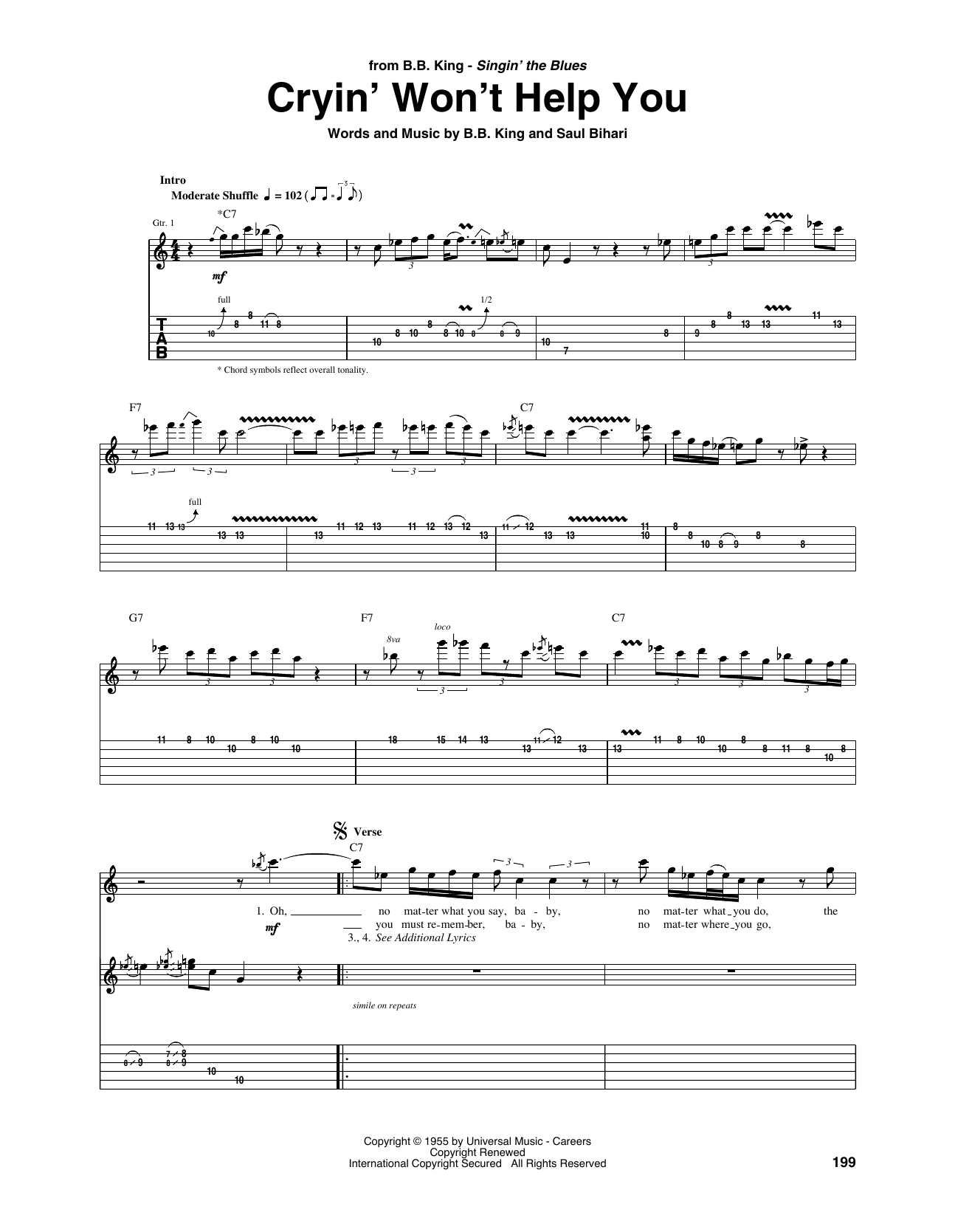
B.B. King shaped modern blues guitar from the 1950s onward, earning his place as one of the most influential musicians in American music history. His distinctive approach to the instrument combined single-note soloing with expressive string bending, vibrato, and call-and-response phrasing that became the foundation for generations of blues and rock guitarists.
Why we love this
This is essential repertoire for any guitarist serious about blues vocabulary. The piece gives students direct access to King's signature phrasing and bending techniques in a format they can learn line by line, and its moderate length makes it achievable without oversimplifying what makes it great.
What to expect
The tune carries the emotional directness that made King's music resonate across decades. Melancholic yet grounded, it builds through careful phrasing and expressive technique rather than flash, inviting the player to discover the power of saying something meaningful with fewer notes.
Who it's for
Intermediate guitarists with at least basic blues vocabulary who want to deepen their understanding of King's approach will find this direct and rewarding. It works equally well for jazz guitarists exploring blues roots and for students building a repertoire of essential solos.
How to get the most out of it
Listen to the original recording multiple times before diving into the tab. King's timing sits slightly behind the beat in ways that tab alone won't capture, and his microtonal bends demand ear training to execute authentically.
Practice the bend sequences separately from the rhythmic phrases. King's bends often cover a quarter step or more, and precision here directly affects whether the solo reads as blues or feels tentative.
Let the silence between phrases carry weight. Many guitarists rush to fill space; King built tension through restraint and space, so resist the urge to add extra notes.
How to use it
Assign this as a solo study in a blues guitar unit or feature it in a recital that highlights the blues idiom's place in contemporary music. It also serves as a bridge for jazz students transitioning from bebop studies into blues language.
Skills your students will build
Blues phrasing and call-and-response structure
String bending with intonation control
Vibrato techniques for expression
Laying back behind the beat
Solo construction within a 12-bar blues form
Transcription and ear training through tab study
You May Also Like
Scan to Complete Your Purchase
Use your phone's camera to scan the code below
You'll log in on your phone and the order will be added to your account