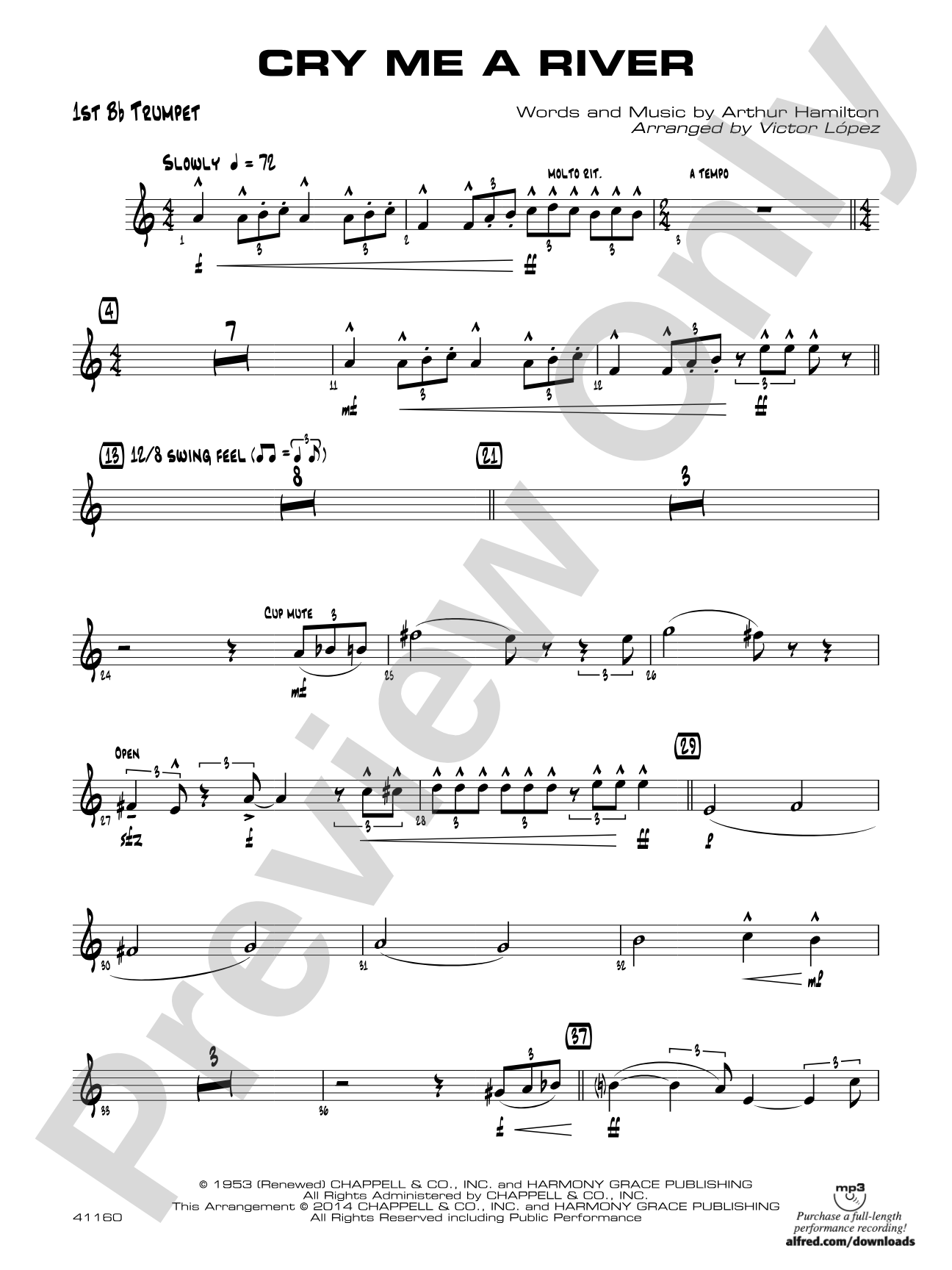
Cry Me a River: 1st B-flat Trumpet Sheet Music Preview

Cry Me a River: 1st B-flat Trumpet

Words and music by Arthur Hamilton / arr. Victor López

Grade: 3 (Medium)

Item: 00-PC-0016289_T1

Digital Download
$3.00
Description
Vocal with big band, this gorgeous ballad is played around 74 BPM. The vocal range is G below middle C to third space C. Lead trumpet range is to F-sharp top line. Includes optional lead parts for B-flat, E-flat, and bass clef instruments. An accessible chart for the band. (3:21)

Don't just read it, hear it, play along with it, and watch your students grow with it. In MakeMusic Cloud, Cry Me a River: 1st B-flat Trumpet comes alive with professional accompaniment, adjustable tempo, and built-in practice tools that turn solo practice into real progress.

Sample Audio
0:00
0:00
Sample Video
Additional Details
Series: Jazz Vocal Series
Publisher: Alfred Music
Page Count: 90
SKU: 00-PC-0016289_T1

More about this title

About the Composer: Arthur Hamilton

Arthur Hamilton composed "Cry Me a River" in 1953, creating one of the most enduring jazz standards in American vocal repertoire. His gift for melody and emotional directness shaped a song that has transcended its era, becoming essential material for vocalists and jazz ensembles across generations.

Why we love this

Victor López's arrangement respects the song's intimate character while giving your ensemble genuine work to do. The ballad tempo and accessible voicing make this playable for groups still developing their jazz language, yet the harmonic sophistication and solo space reward deeper musicianship.

What to expect

A conversation between vocalist and ensemble, unhurried and deeply human. The music unfolds with the quiet intensity of a late-night performance, where restraint and space carry as much weight as the notes themselves.

Who it's for

Jazz ensemble directors seeking a vocal feature that serves singers with solid range and musicality but doesn't demand virtuosic facility. This chart works equally well in a high school jazz band or a college group looking to strengthen their ballad repertoire.

How to get the most out of it

  • Balance the vocal line carefully against the ensemble; the band supports rather than overwhelms the story being told.
  • Establish the 74 BPM with confidence in rehearsal. This tempo requires patience and a steady pulse from both vocalist and rhythm section.
  • Encourage the lead trumpet soloist to explore the range up to F-sharp with tonal control and sensitivity to the ballad's mood.
  • Use the optional parts strategically. Including them enriches the texture without cluttering the arrangement; consider doubling based on your section strengths.

How to use it

Open a jazz concert with this as a powerful solo feature, or pair it with up-tempo numbers to showcase the full range of your vocalist's artistry. Its three-minute length and emotional presence make it memorable without overshadowing other repertoire.

Skills your students will build

  • Accompanying a vocalist with sensitivity and harmonic awareness
  • Playing ballad-tempo jazz with rhythmic accuracy and tonal control
  • Reading lead parts and comping figures in a big band setting
  • Balancing ensemble texture to support rather than obscure a solo voice

You May Also Like