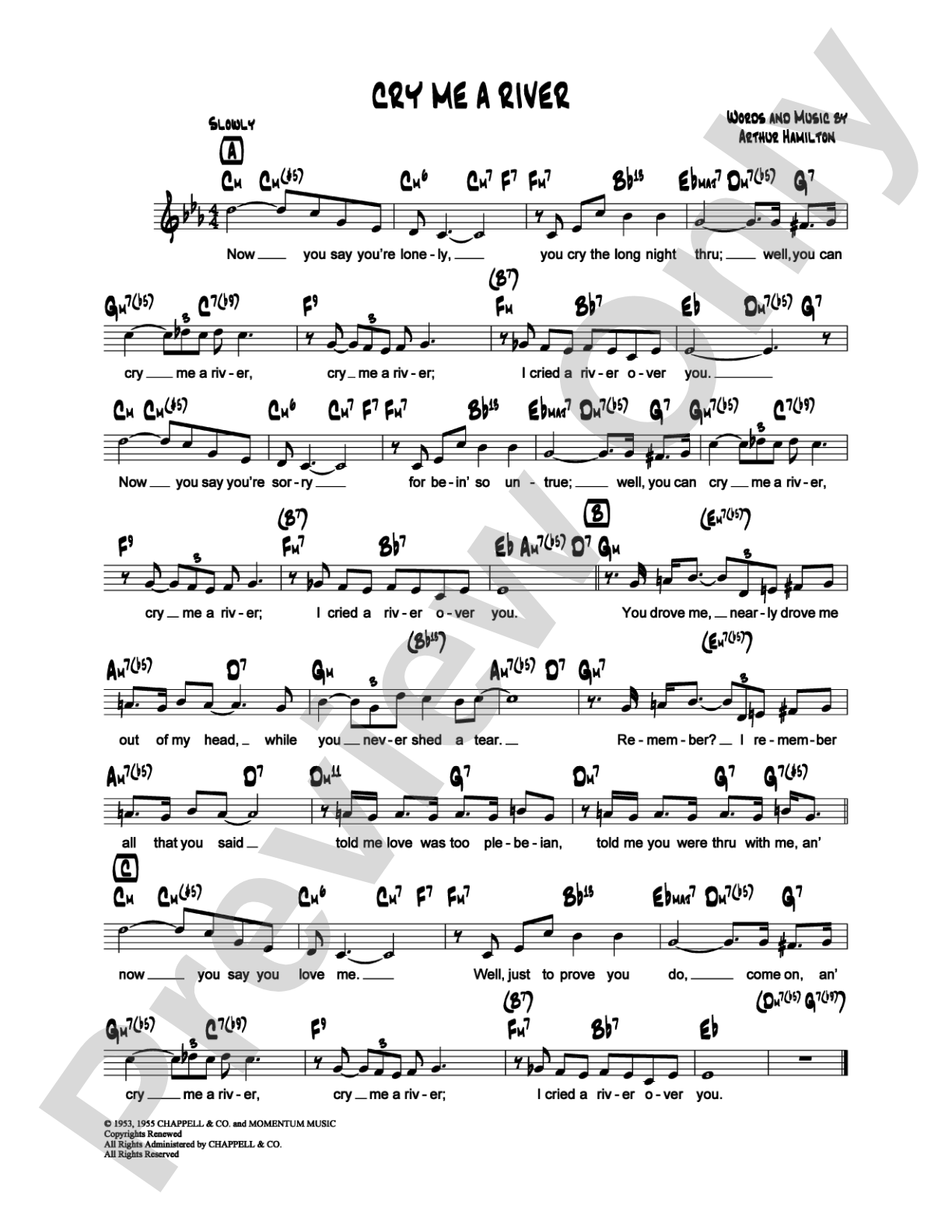
Cry Me a River: Lead Sheet Digital Sheet Music

Cry Me a River: Lead Sheet Digital Sheet Music

Arthur Hamilton, Julie London

Item: 00-PS-0001135

Digital Download
$1.99
Description

Cry Me a River: Lead Sheet Digital Sheet Music isn't in MakeMusic Cloud just yet...but it could be. Let us know you'd like to see it, and you'll help shape what comes next. In the meantime, start a free trial and dive into thousands of interactive titles your students can play along with today.

Sample Audio
No sample audio found.
Sample Video
Additional Details
SKU: 00-PS-0001135

More about this title

About the Artist: Julie London

Julie London was an American singer and actress whose smoky, intimate vocal style became iconic in the 1950s and 1960s. Her recording of 'Cry Me a River' (1955) remains one of the most recognizable interpretations of the standard, showcasing her gift for emotional restraint and phrasing that influenced generations of jazz and pop vocalists.

Why we love this

This lead sheet captures one of the most beautifully crafted pop standards, with a melody that rewards thoughtful phrasing and emotional nuance. The song's harmonic language offers enough sophistication to challenge intermediate musicians while remaining accessible, making it ideal for jazz ensembles, vocal jazz classes, or small combos exploring the American songbook.

What to expect

The song unfolds with quiet dignity and controlled heartbreak, walking the line between resignation and defiance. Its melody sits naturally for voice while the harmonic progression provides depth without sentimentality, creating space for genuine emotional expression rather than dramatic posturing.

Who it's for

This lead sheet works for vocalists in jazz ensembles, solo singers preparing a jazz standard, and musicians building a working knowledge of mid-century pop and jazz repertoire. Accompanists in piano, guitar, or combo settings will find it a straightforward but musically rewarding lead sheet to support their soloist.

How to get the most out of it

  • Shape the melody with dynamic restraint; let silence and space carry as much weight as the notes themselves, honoring the song's emotional core
  • Explore the harmonic possibilities in the changes by comping thoughtfully if you're accompanying this piece, avoiding busy voicings that compete with the lyrical line
  • Consider rubato in the opening phrases to build intimacy before settling into a steady groove in the B section
  • Study the original recording for phrasing ideas, but find your own interpretation of the lyrics to avoid imitation

How to use it

Program this alongside other standards from the 1950s in a jazz showcase or vocal recital to demonstrate how the American songbook translated across different eras and styles. It pairs well with similar introspective material and gives singers a chance to showcase interpretive skill over technical display.

Skills your students will build

  • Phrasing and emotional interpretation of a standard melody
  • Reading chord changes and understanding jazz harmony
  • Balancing vocal line with accompaniment in a lead sheet context
  • Interpreting rubato and tempo flexibility in a lyrical context

You May Also Like