Crusader: 1st Violin Sheet Music Preview

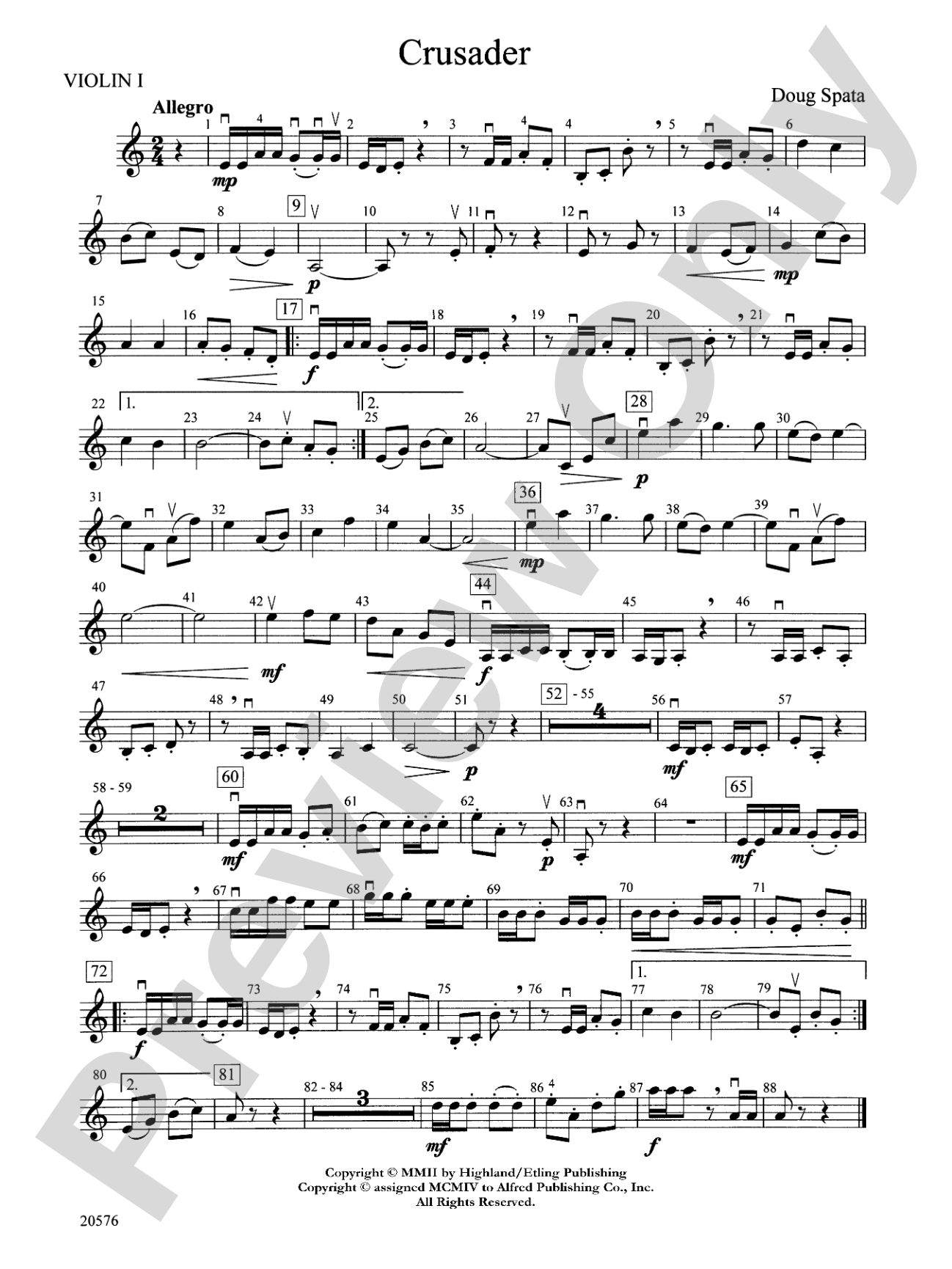
Crusader: 1st Violin

By Doug Spata

Grade: 2

Item: 00-PC-0000412_VN1

Digital Download
$5.99
Description
With a march tempo and dark harmonies, Crusader is sure to conjure images of a muddy, battle-weary soldier from an ancient time. The melody and ardent rhythms are passed around through all sections, ensuring an exciting and welcome challenge for every musician. This title is available in MakeMusic Cloud.

Don't just read it, hear it, play along with it, and watch your students grow with it. In MakeMusic Cloud, Crusader: 1st Violin comes alive with professional accompaniment, adjustable tempo, and built-in practice tools that turn solo practice into real progress.

Sample Audio
0:00
0:00
Sample Video
Additional Details
Series: Highland/Etling String Orchestra
Publisher: Alfred Music
Page Count: 62
SKU: 00-PC-0000412_VN1

More about this title

About the Composer: Doug Spata

Doug Spata

Doug Spata trained as a clarinetist but found his compositional voice through years of teaching orchestra students. His deep understanding of the string classroom shaped him into one of today's most performed composers for student ensembles, with works that balance accessibility and genuine musical substance.

Beyond the student orchestra repertoire that has earned him a national following, Spata has composed operas, ballets, symphonies, and chamber works for professional ensembles. His compositions have been performed across the United States and internationally, and many have won awards at competitions and festivals.

Why we love this

Crusader delivers real compositional craft at a level where Grade 2 orchestras can actually feel like they're playing something substantial. The distributed melody keeps every section engaged while the march rhythm and dark harmonic language create a dramatic character that students find genuinely compelling to perform.

What to expect

Crusader evokes the weary resolve of soldiers moving through mud and history, with march rhythms that feel grounded and purposeful rather than triumphant. The dark harmonies and shifting melody create an atmosphere of struggle and persistence, drawing listeners into a specific dramatic world without requiring any contextual explanation.

Who it's for

This score and parts work for Grade 2 string orchestras looking to program something with character and compositional depth. Directors preparing for contests or festivals will find a piece that challenges students musically without overwhelming their technical ability, and it appeals equally to school orchestras and community youth ensembles.

How to get the most out of it

  • Establish the march tempo with confidence in your first rehearsal; students will lock into the rhythmic momentum quickly and it becomes the piece's backbone.
  • Highlight the hand-offs of the main melody across sections during sectionals so each group owns their moment and understands how their line connects to the larger narrative.
  • Balance the darker harmonic language by keeping inner voices warm and present; avoid letting supporting players fall back dynamically just because they're not carrying the tune.
  • Use the contest/festival context to motivate careful attention to articulation consistency across all sections; uniformity in the march rhythm makes the ensemble sound polished and unified.

How to use it

This pairs well on a concert that explores narrative or programmatic music; it could anchor a thematic set alongside other character pieces or stand alone as a centerpiece that demonstrates what your orchestra can accomplish musically. The march tempo and strong rhythmic identity make it an effective closer for a concert, as it leaves audiences with a memorable, propulsive ending.

Skills your students will build

  • Passing and trading the main melody across sections while maintaining phrase cohesion
  • Executing march rhythms with precision and unity across the ensemble
  • Supporting darker harmonic sonorities and harmonic function at Grade 2 difficulty
  • Balancing programmatic character with technical accuracy in a contest context

You May Also Like