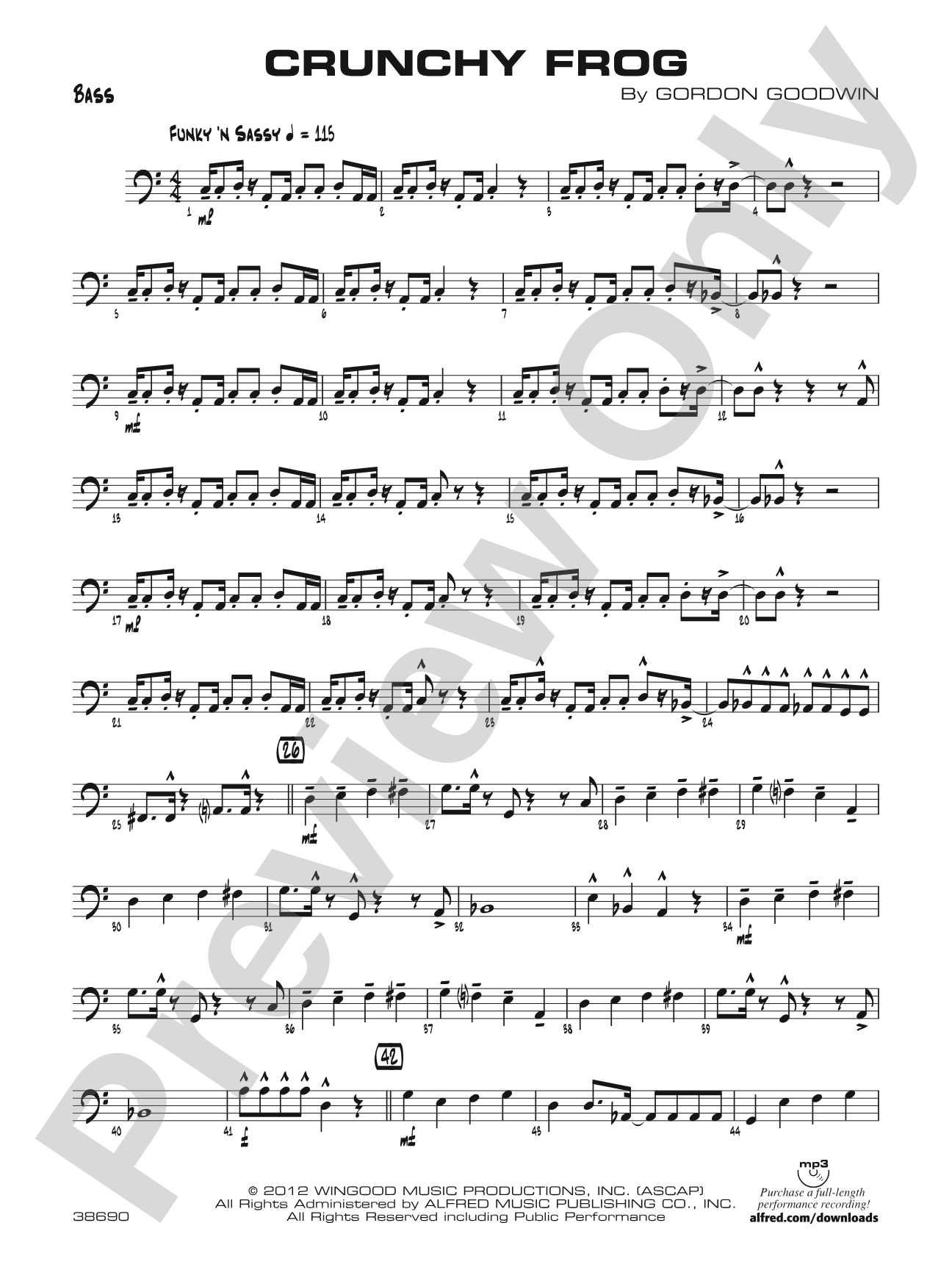
Crunchy Frog: Electric Bass
By Gordon Goodwin
Grade: 3 (Medium)
Item: 00-PC-0019377_EB
Pickup currently not available
Description
Don't just read it, hear it, play along with it, and watch your students grow with it. In MakeMusic Cloud, Crunchy Frog: Electric Bass comes alive with professional accompaniment, adjustable tempo, and built-in practice tools that turn solo practice into real progress.
Jump straight in and assign it today.
Open this title and explore the full library in minutes.
Sample Audio
Sample Video
Additional Details
More about this title
About the Composer: Gordon Goodwin

Gordon Goodwin heard complete compositions in his head before he could read music, writing them down at age five with the precision of a seasoned arranger. His first big band chart, Hang Loose, arrived when he was thirteen. This early gift for orchestration caught the attention of Hollywood's music supervisors, launching a career that would earn him three Emmy Awards and multiple Grammy nominations for work on films including Bad Boys II, Con Air, Remember the Titans, and Star Trek: Nemesis.
Beyond the film and television world, Goodwin has arranged for and performed alongside major artists including Christina Aguilera, Quincy Jones, Ray Charles, and Brian McKnight. He has conducted orchestras across North America and Europe while building Gordon Goodwin's Big Phat Band, the Los Angeles ensemble he founded in 2000. The band's first album made history as the first commercially released DVD audio title and earned two Grammy nominations; his second album, XXL, garnered three more Grammy nominations for Best Large Jazz Ensemble Album.
Why we love this
Goodwin writes jazz arrangements that sound effortless but demand real musicianship. The rhythm section groove here is so distinctive that students will remember this chart long after the concert season ends, and the solo space for every wind section means your entire band gets a moment to shine rather than cycling through the usual suspects.
What to expect
Propulsive and funky from the downbeat, driven by a bass and guitar pattern that locks the listener immediately into forward motion. The ensemble writing alternates between tightly voiced harmonies and driving unison phrases, creating moments of collective power punctuated by individual voices stepping into the spotlight.
Who it's for
Jazz ensembles at the Grade 3 level ready for sophisticated rhythmic writing and genuine solo opportunities across the section. Directors preparing for festivals and contests will find a chart that stands out through memorable grooves and professional-caliber orchestration rather than tricks or gimmicks.
How to get the most out of it
- Get the bass and guitar locked in first. That opening rhythmic pattern is the chart's heartbeat; everything else follows their placement. Run several sectional rehearsals focused only on their interaction before bringing in the full ensemble.
- Communicate the suggested solo interpretations to soloists early. Written-out solos serve as a starting point, not a ceiling. Encourage students to listen to multiple interpretations and develop their own phrasing while respecting the composed framework.
- Monitor the lead trumpet's range in the upper register. Written G-sharp requires secure high placement and breath control around 115 BPM. Make sure your lead player can access this comfortably and builds stamina during sectionals.
- Shape the unison and harmony sections as distinct textural moments. Goodwin uses both to create contrast; let the ensemble feel the difference between locked precision and blended harmonies rather than playing them with the same weight throughout.
How to use it
Plant this early in your jazz concert lineup as a setter; its infectious groove establishes energy and captures attention in the first minute. It also works beautifully as a centerpiece on a program mixing straight-ahead jazz with funk and contemporary styles, or as a contest selection where distinctive arranging and full-section solo space appeal to adjudicators.
Skills your students will build
- Locking rhythmic patterns in small groups (bass and guitar interdependence)
- Solo improvisation with composed frameworks as reference points
- Ensemble blend in tight harmony voicings
- Stylistic precision at medium tempos with syncopated rhythms
- Reading and executing unison passages with rhythmic precision
- Range management in the upper register (lead trumpet)