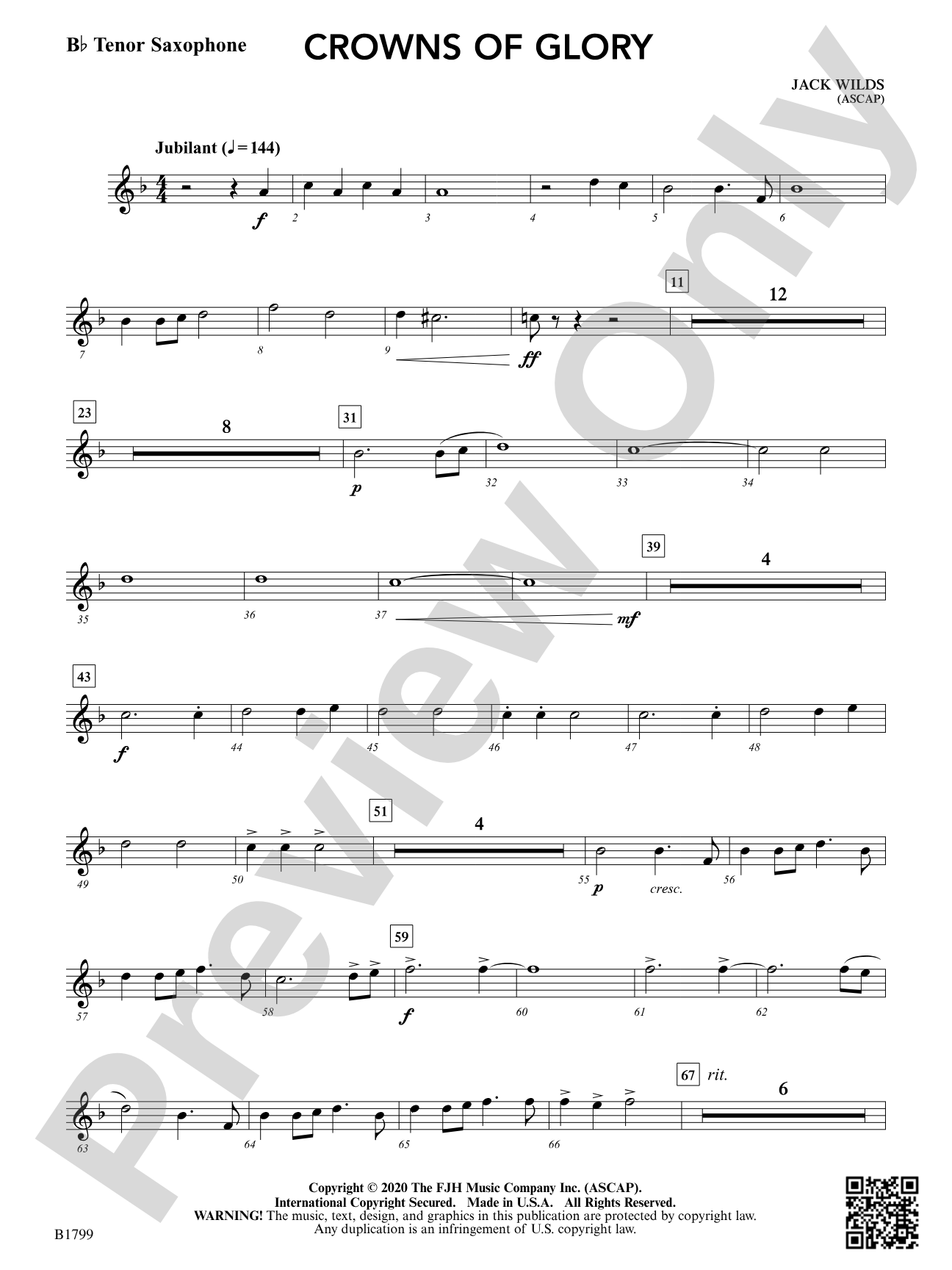
Crowns of Glory: B-flat Tenor Saxophone Sheet Music Preview

Crowns of Glory: B-flat Tenor Saxophone

By Jack Wilds

Grade: 2.5

Item: 98-PC-DB1799_TX1

Digital Download
$7.00
Description
This dynamic concert opener is built on an American shape-note melody. Rich percussion textures and modern harmonies breathe new life into a charming pentatonic tune. The result is a unique composition full of exceptional opportunities for music-making.

Crowns of Glory: B-flat Tenor Saxophone isn't in MakeMusic Cloud just yet...but it could be. Let us know you'd like to see it, and you'll help shape what comes next. In the meantime, start a free trial and dive into thousands of interactive titles your students can play along with today.

Sample Audio
0:00
0:00
Sample Video
Additional Details
Series: FJH Young Band
Publisher: The FJH Music Company, Inc.
SKU: 98-PC-DB1799_TX1

More about this title

About the Composer: Jack Wilds

Jack Wilds

Jack Wilds composes for ensembles spanning ages 5 to 95, drawing inspiration from visual art, philosophy, poetry, and musical tradition to create works that honor where performers are while challenging them artistically. His chamber music has been performed by the Attacca Quartet, members of the New York Philharmonic and Atlanta Symphony, and at festivals worldwide including the International Trombone Festival and the Wyoming Festival.

A former public school band director, Wilds has published over 40 works for developing wind and choral musicians. His compositions appear regularly on festival repertoire lists across multiple continents and have been heard at the Midwest Clinic and national educator conferences. He serves as a lecturer in composition, theory, ear training, and music technology at Texas State University and as Co-Director of Music at First Presbyterian Church in San Marcos, while maintaining an active schedule as a clinician and adjudicator.

Why we love this

Opening selections at this level rarely balance accessibility with genuine compositional craftsmanship, yet this one delivers both. The shape-note melody grounds the work in American musical tradition while modern harmonic treatment and sophisticated percussion writing keep it fresh and engaging for players and audiences alike.

What to expect

Bright and forward-moving, this piece captures the charm of American hymn traditions while speaking in a contemporary musical language. Rich percussion colors and unexpected harmonic turns give the familiar pentatonic melody a sophisticated shimmer, creating something both recognizable and fresh.

Who it's for

Concert bands at the Grade 2.5 level benefit most from this opener, whether preparing for festival competitions or building a balanced concert program. It works equally well for groups seeking an energetic, musically substantial opening that doesn't require advanced technical facility.

How to get the most out of it

  • Emphasize the clarity of the shape-note melody in its first statement; let the band hear the tune clearly before layering additional voices around it.
  • Balance the percussion textures carefully so they enhance rather than overshadow the ensemble sound. Younger percussionists often play louder than needed in contemporary writing.
  • Shape phrases through the harmonic changes Wilds adds to the original tune. These moments invite subtle dynamic and tonal adjustments that elevate the performance.
  • Allow time in rehearsal to explore how the pentatonic melody interacts with the modern harmonies; understanding that contrast helps students commit fully to the musical intent.

How to use it

Reserve this for the opening slot on a concert or festival performance. Its combination of immediate appeal and musical substance sets an excellent tone without demanding too much technical display from the ensemble, freeing rehearsal time for more complex works later in the program.

Skills your students will build

  • Balance and blend in multi-voiced textures
  • Awareness of shape-note melody and its role within modern harmonic context
  • Ensemble percussion coordination and dynamic control
  • Shaping long phrases through harmonic color changes
  • Understanding pentatonic melodic material

You May Also Like