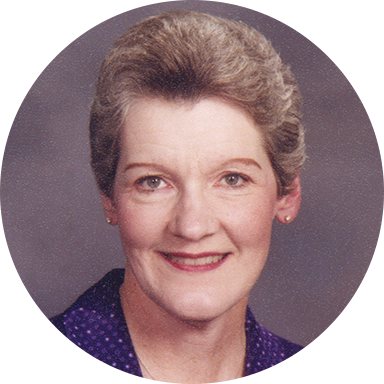
Cindy Berry brings deep roots in sacred music from her native Houston, Texas, where she studied at Houston Baptist University. As both composer and arranger, she has built a substantial catalog of anthem settings, children's musicals, and keyboard works that serve churches and schools across the country. Her work as a clinician extends her influence beyond the page; she leads composer workshops and conducts training sessions that help musicians engage more thoughtfully with new repertoire.
Berry's sustained recognition includes multiple ASCAP Special Awards and an ongoing role at First Baptist Church in Killeen, Texas, where she directs the children's choir and serves as church pianist alongside her husband Bruce, a Minister of Music. Her compositional philosophy centers on music as an act of worship, a commitment that shapes everything she writes.
Why we love this
Berry's arrangement captures the triumphant energy of Easter proclamation without requiring elaborate staging or complex harmonic language. The SATB texture sits comfortably for mixed choirs of varying experience levels, making it accessible for churches that sing together only seasonally. This is exactly the kind of straightforward, singable anthem that churches return to year after year because it works.
What to expect
This arrangement radiates affirmation and joy. The harmonies are warm and open rather than chromatic or angular, creating a sound that feels celebratory without becoming sentimental. You sense the conviction in every measure, whether the singers are expressing faith, building a communal moment, or simply marking the season.
Who it's for
Church choirs and community ensembles singing Easter services will find this arrangement both musically satisfying and practical for mixed-ability singers. Schools and colleges preparing spring concerts benefit from accessible sacred repertoire that maintains musical integrity. Community choruses seeking seasonal programming that doesn't demand extensive rehearsal time will appreciate the straightforward approach.
How to get the most out of it
Balance the voices so sopranos don't overshadow the narrative being sung through the text. The other parts carry equal weight in establishing the declaration.
Keep the tempo steady and confident. This is a proclamation, not a meditation, so resist the urge to ritardando every phrase.
Rehearse sections in pairs (soprano/alto, tenor/bass) if the group struggles with independent parts. This builds security without requiring extra rehearsal time.
Shape phrases through text emphasis rather than dynamic marking alone. Let the natural weight of words like 'King' and 'Lord' land without forcing it.
How to use it
Program this as the centerpiece of an Easter morning service or spring concert finale, where its proclamatory tone provides a natural closing statement. Pair it with quieter, more reflective texts earlier in the program to showcase the full emotional arc of the season. For churches with multiple services, this works equally well in traditional and contemporary settings because the arrangement itself carries the weight.
Skills your students will build
Singing in four-part harmony with maintained independence
Clarity of text delivery in a harmonic context
Sustaining confidence in sacred music performance
Balance and blend within mixed-voice ensembles
You May Also Like
Scan to Complete Your Purchase
Use your phone's camera to scan the code below
You'll log in on your phone and the order will be added to your account