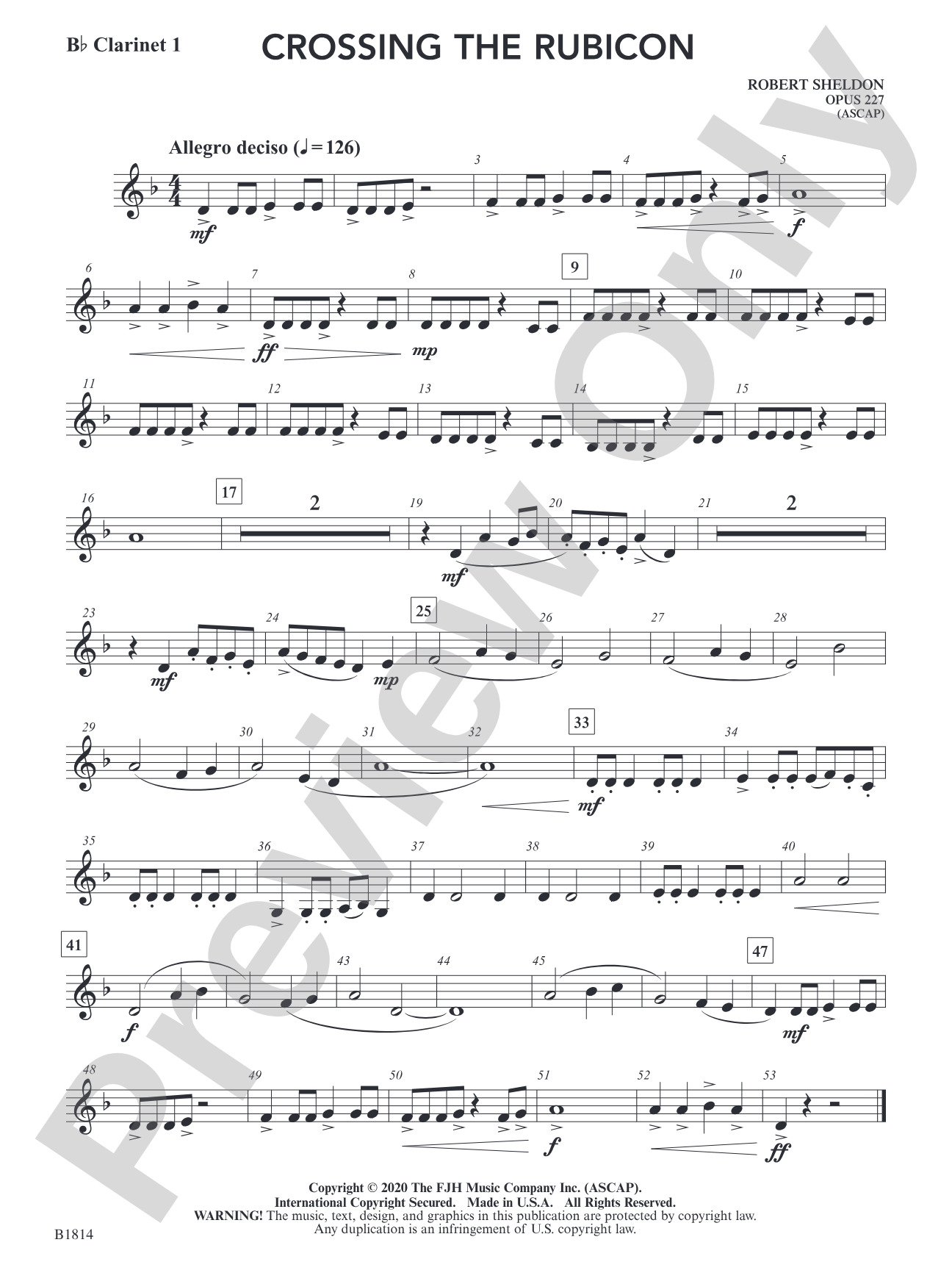
Crossing the Rubicon: B-flat Clarinet 1 Sheet Music Preview

Crossing the Rubicon: B-flat Clarinet 1

By Robert Sheldon

Grade: 1

Item: 98-PC-DB1814_C1

Digital Download
$7.00
Description
Exotic colors and driving rhythms portray a metaphor of taking action from which there is no turning back. Exploring a variety of timbres, a heartfelt, yet deliberate melody takes center stage as it is surrounded by a wealth of rhythmic and harmonic backdrops. Ultimately, all elements unite in a powerful statement.

Crossing the Rubicon: B-flat Clarinet 1 isn't in MakeMusic Cloud just yet...but it could be. Let us know you'd like to see it, and you'll help shape what comes next. In the meantime, start a free trial and dive into thousands of interactive titles your students can play along with today.

Sample Audio
0:00
0:00
Sample Video
Additional Details
Series: MOS Performance Series
Publisher: The FJH Music Company, Inc.
SKU: 98-PC-DB1814_C1

More about this title

About the Composer: Robert Sheldon

Robert Sheldon

Robert Sheldon stands among the most frequently performed composers of wind band repertoire in the world today. His works appear on contest and concert programs across continents, and ensembles from middle school through professional levels regularly commission and perform his music. He has guest conducted All-State and Regional Honor Bands throughout his career and brought his compositions to stages including Carnegie Hall, the Kennedy Center, and the Sydney Opera House.

Beyond composing, Sheldon has shaped music education as the lead author of Sound Innovations for Concert Band and as a clinician at universities and state music education conferences. His accolades include recognition from the American School Band Director's Association, Phi Beta Mu, and the American Society of Composers, Authors and Publishers. VanderCook College of Music awarded him an honorary doctorate in 2020, honoring decades of contribution to the field.

Why we love this

Sheldon's ability to craft music that sounds mature and polished at Grade 1 makes this an ideal choice for early-season programming or emerging ensembles. The writing showcases exotic sonorities and sophisticated rhythmic textures without overwhelming players, giving your band an opportunity to sound genuinely musical from the opening rehearsal. Contest judges and audience members alike will hear a composition with real substance.

What to expect

The music unfolds like a decision made with conviction. Exotic colors shimmer beneath a deliberate, earnest melody as driving rhythms propel the narrative forward with momentum that builds inevitably toward a unified, forceful climax. There is no uncertainty in this journey.

Who it's for

Grade 1 concert bands seeking repertoire that balances accessibility with musical substance. Directors programming contest festivals or concert series will find a piece that young ensembles can learn quickly while still delivering a polished, expressive performance.

How to get the most out of it

  • Balance the heartfelt melody against the surrounding rhythmic and harmonic layers so the main voice emerges clearly without drowning out the supportive textures that define the piece's character.
  • Explore the palette of timbres Sheldon employs by rehearsing each section in isolation first, then layering combinations to understand how different instrumental colors interact.
  • Shape the final statement with deliberate pacing and ensemble unity; resist rushing the conclusion, which is most powerful when all elements lock together with precision.

How to use it

Open a concert with this piece to establish a sense of musical purpose and energy from the start. Its contest-ready polish also makes it ideal for early-season festival appearances where you want your ensemble to make a strong impression without technical barriers.

Skills your students will build

  • Balancing a prominent melody against accompanying rhythmic and harmonic textures
  • Playing with deliberate pacing and dramatic intent at a young level
  • Responding to varied timbral colors and blending as the orchestration shifts
  • Building ensemble unity toward a powerful, unified conclusion

You May Also Like