
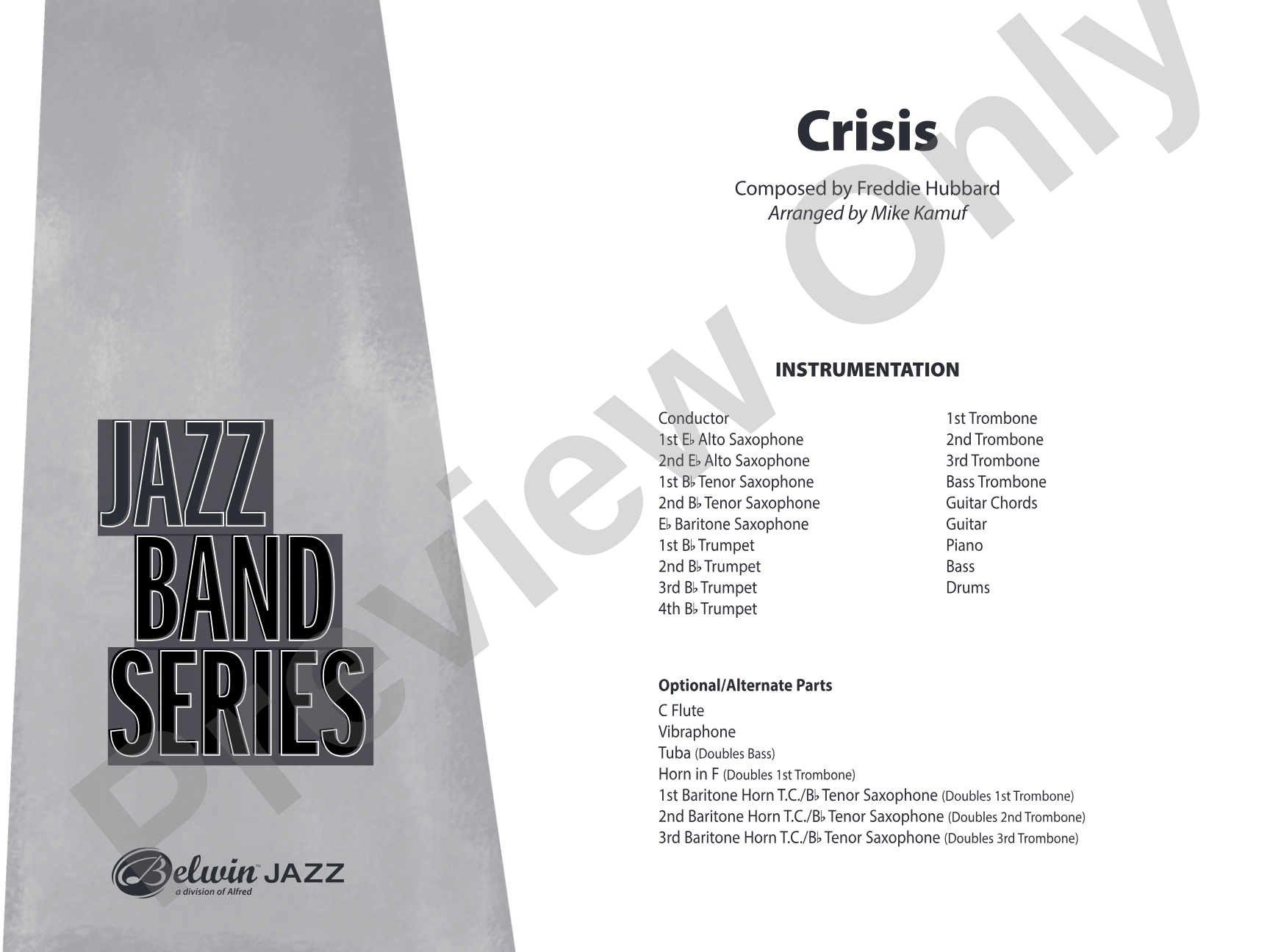
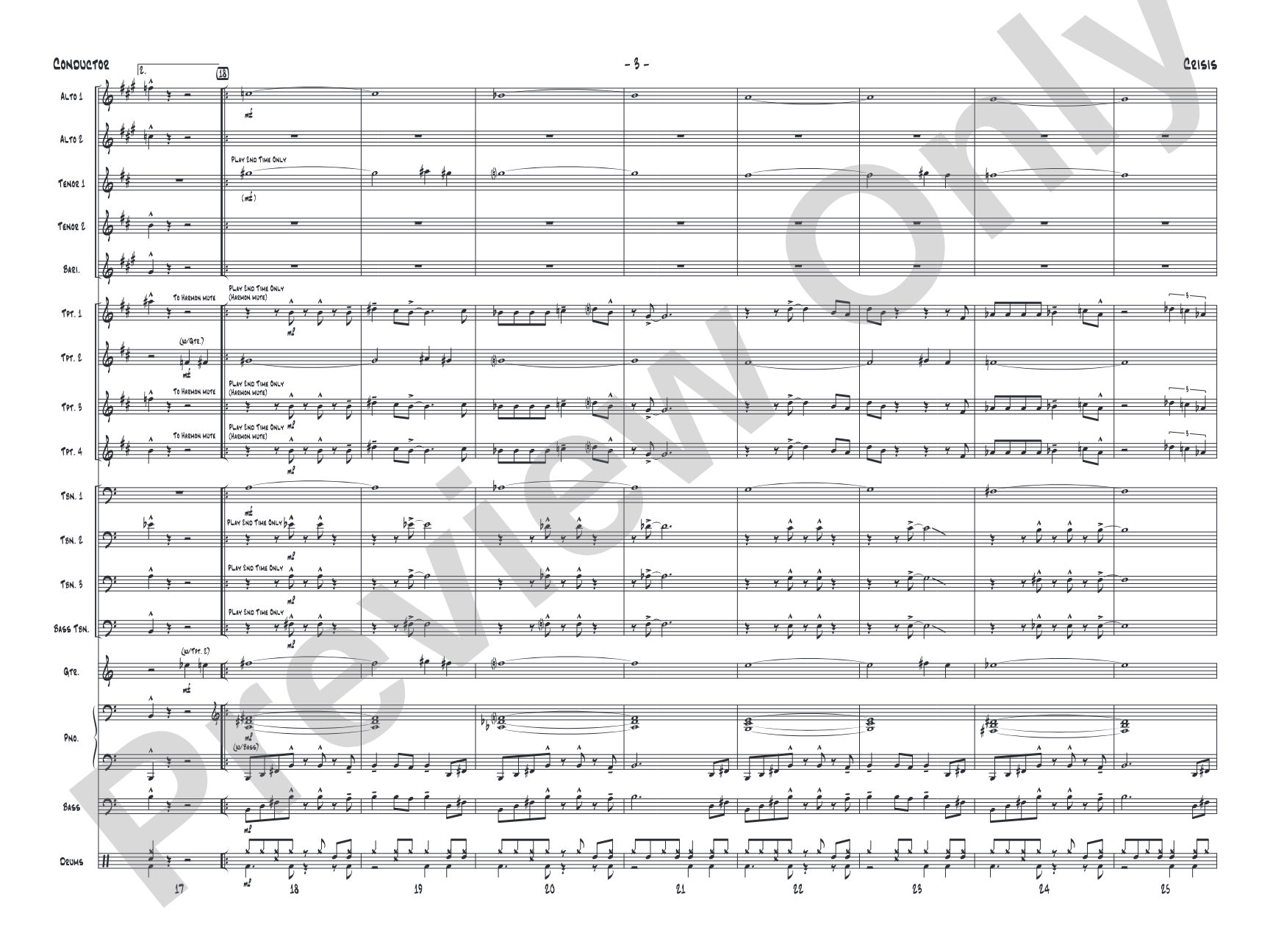
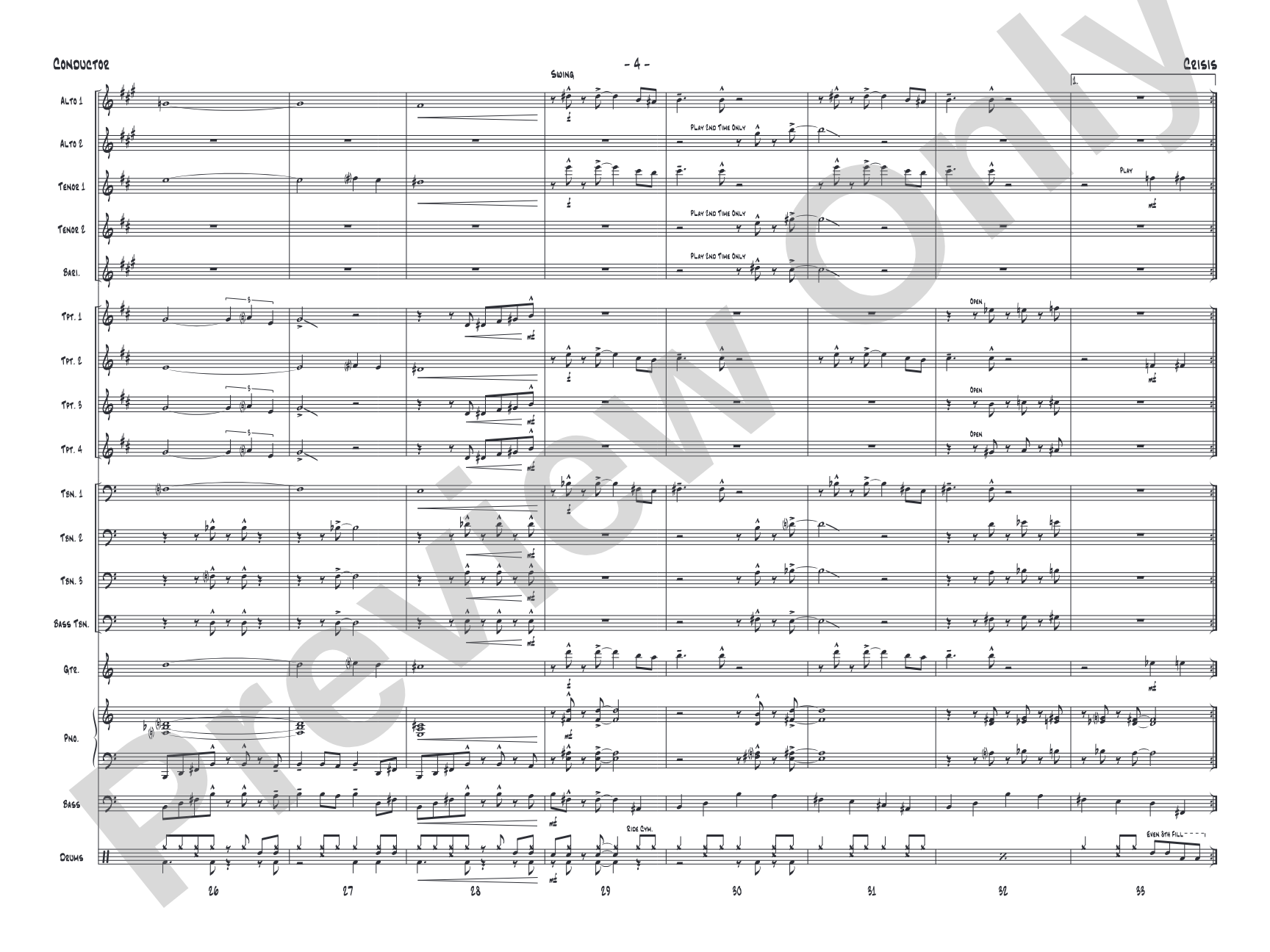
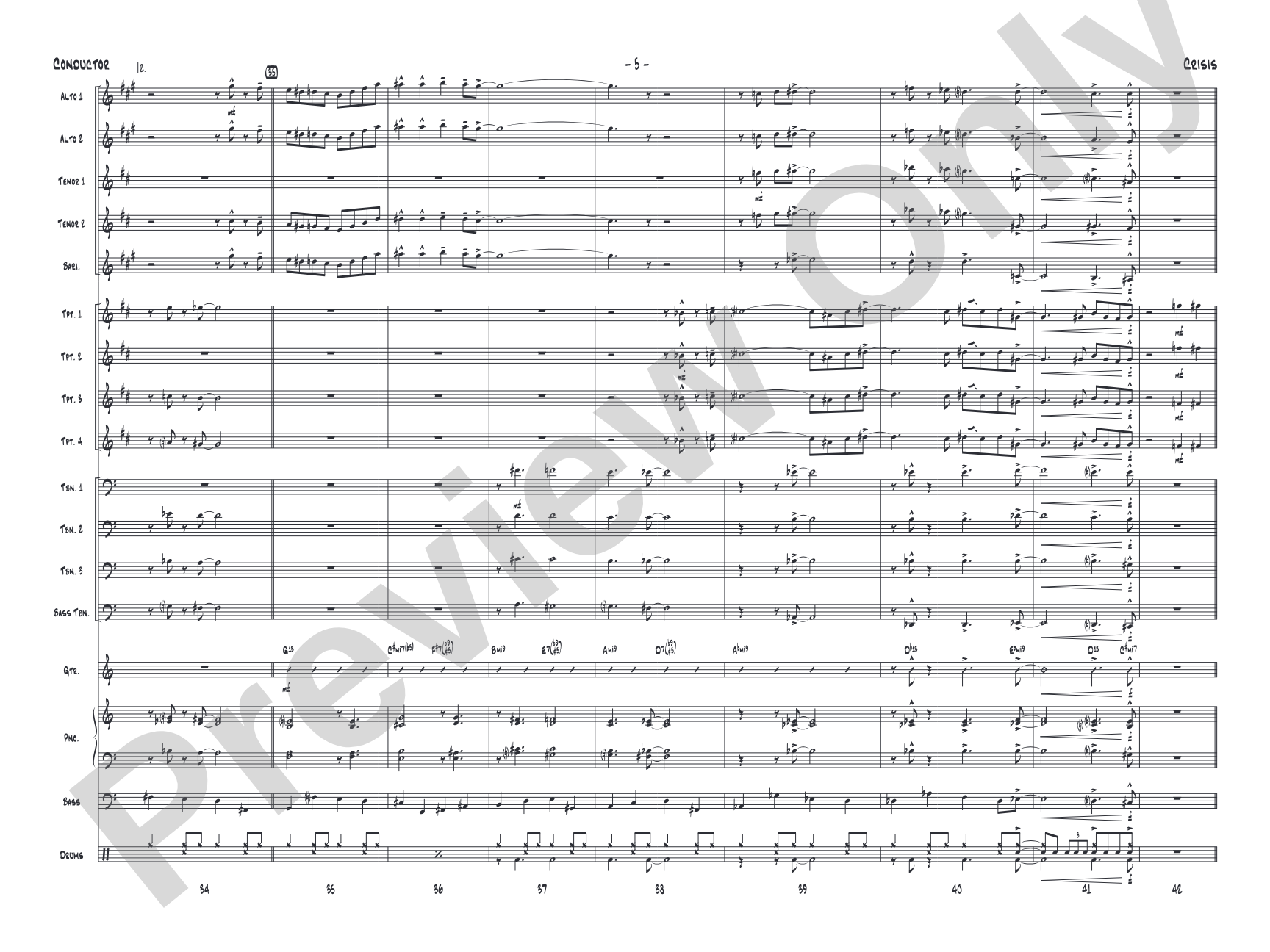
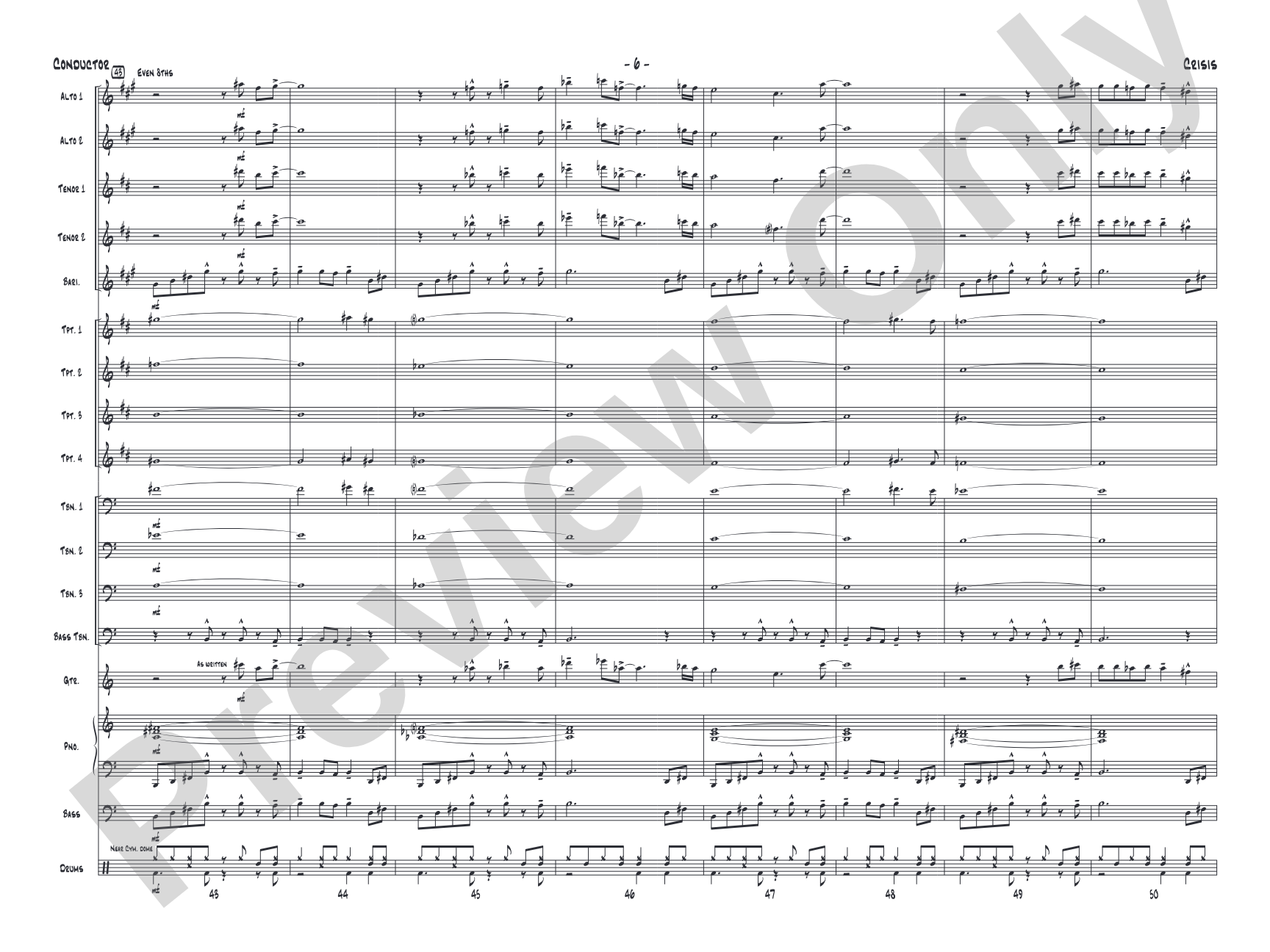
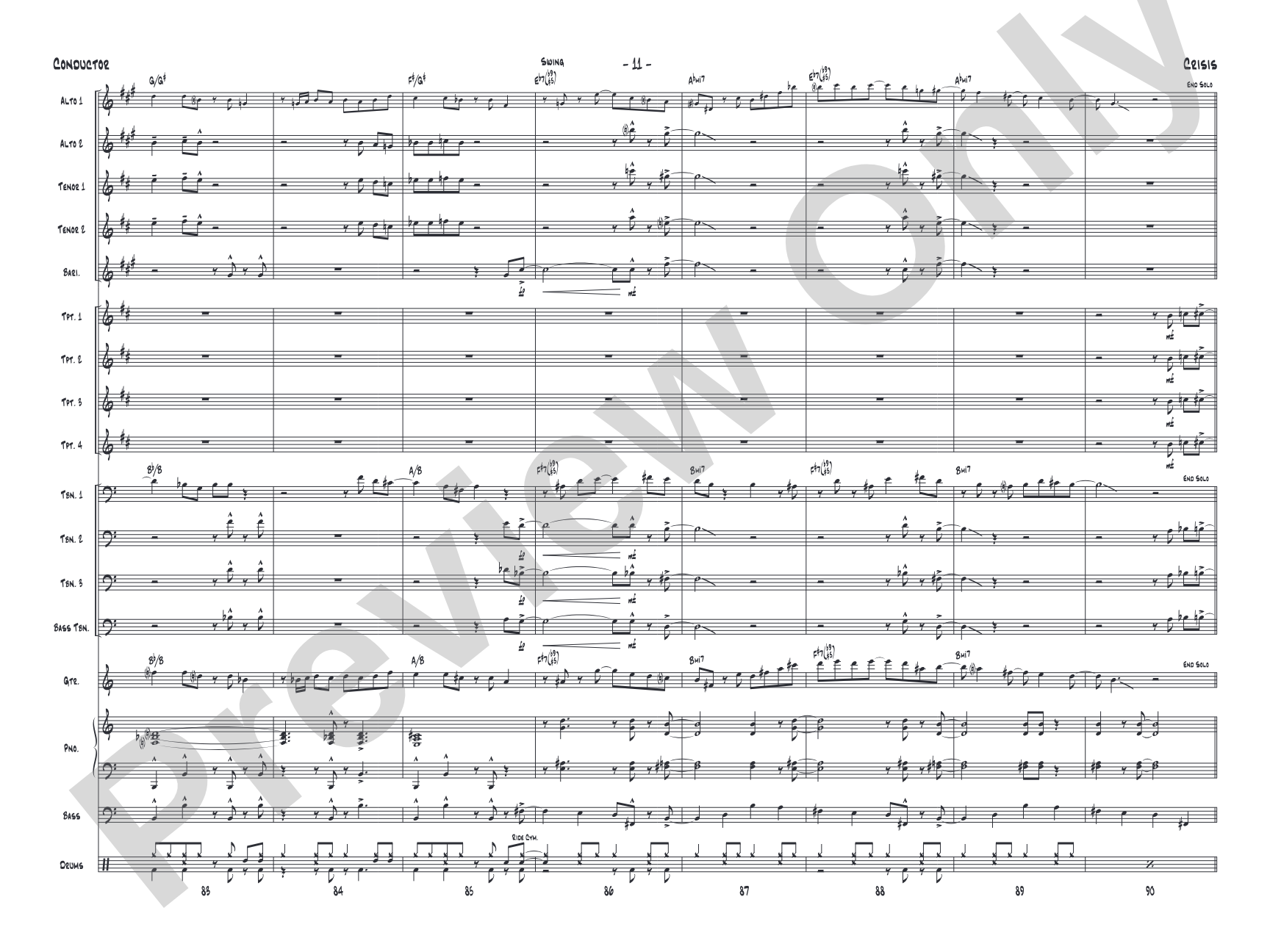
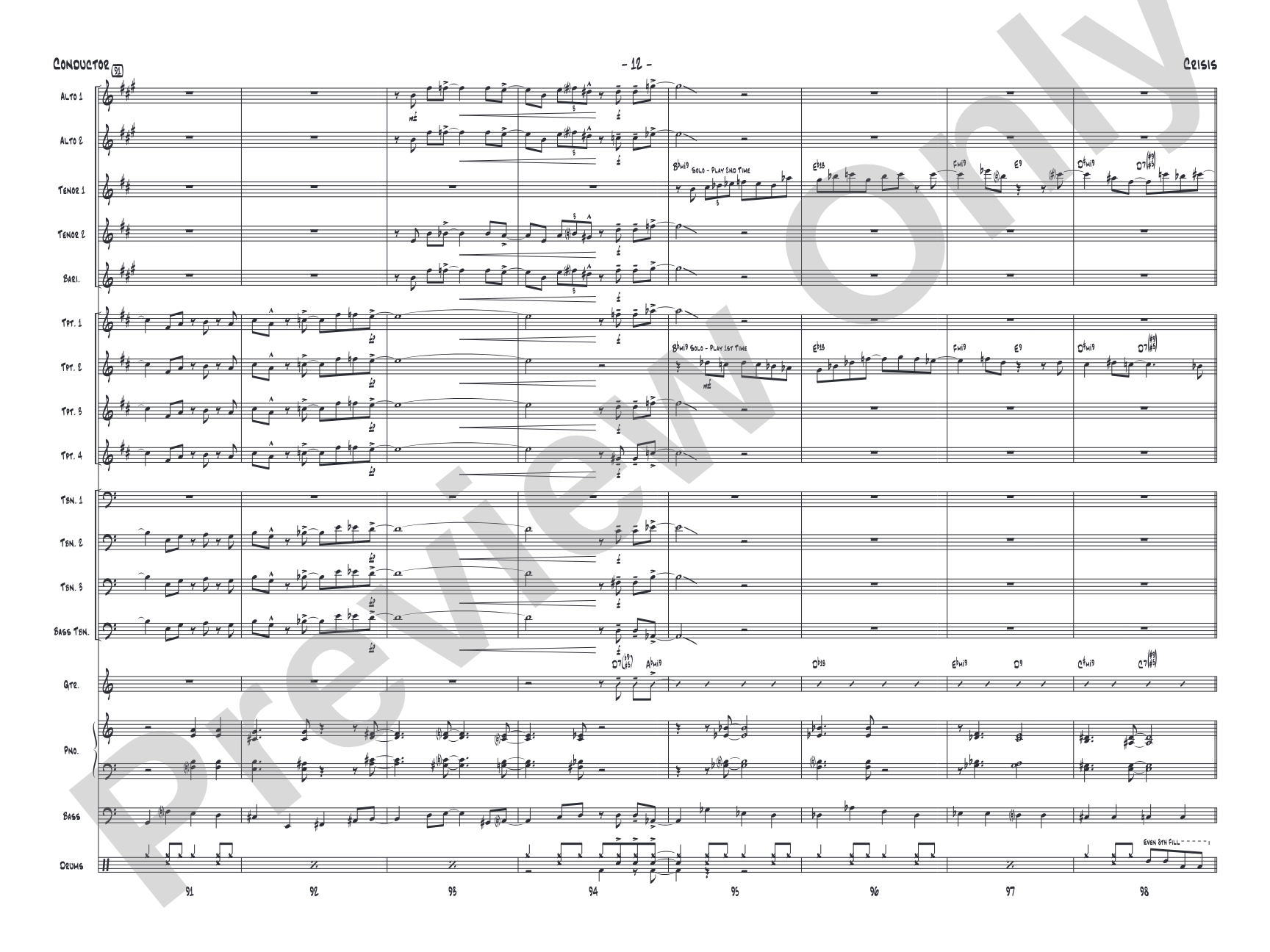
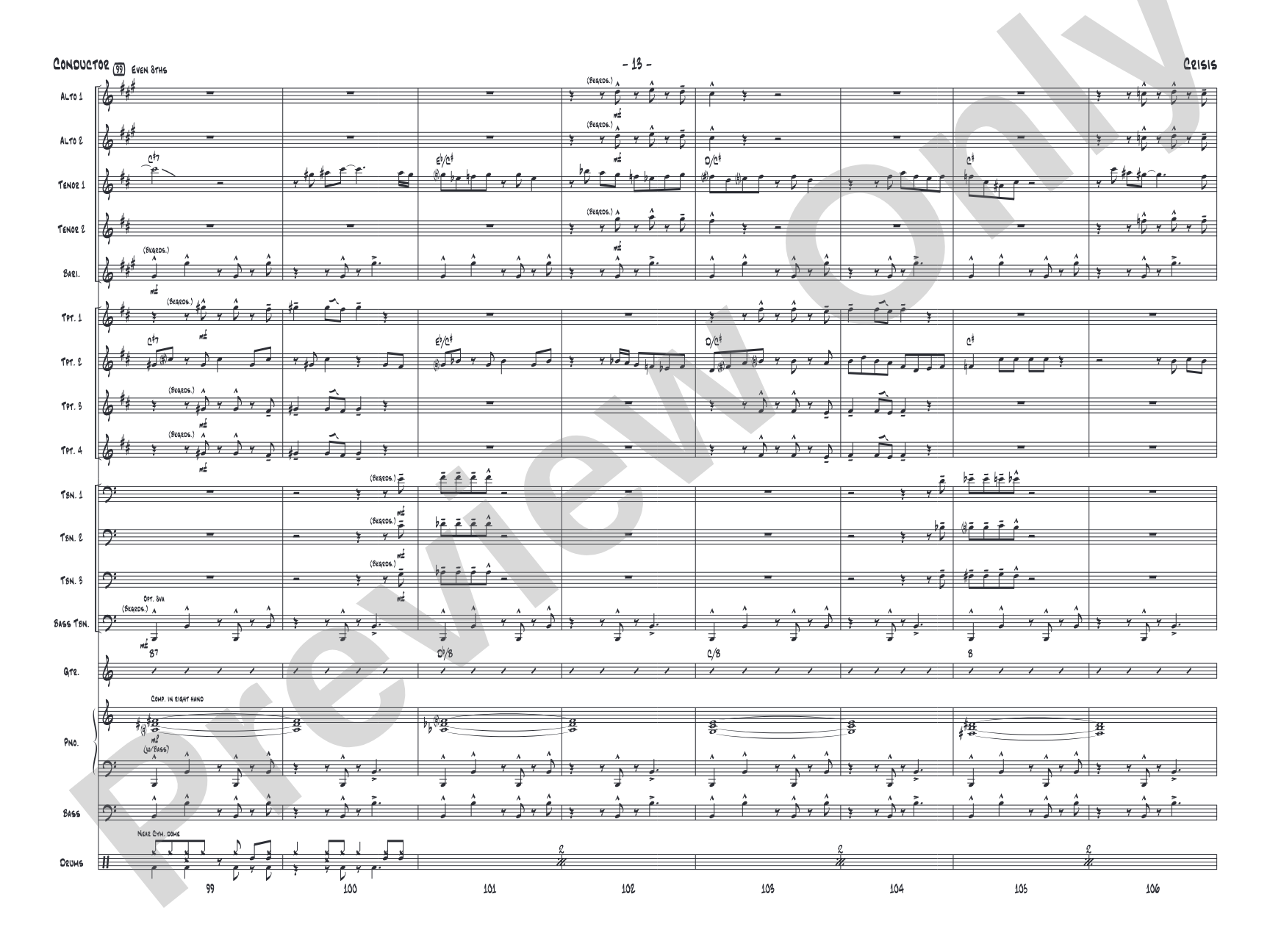
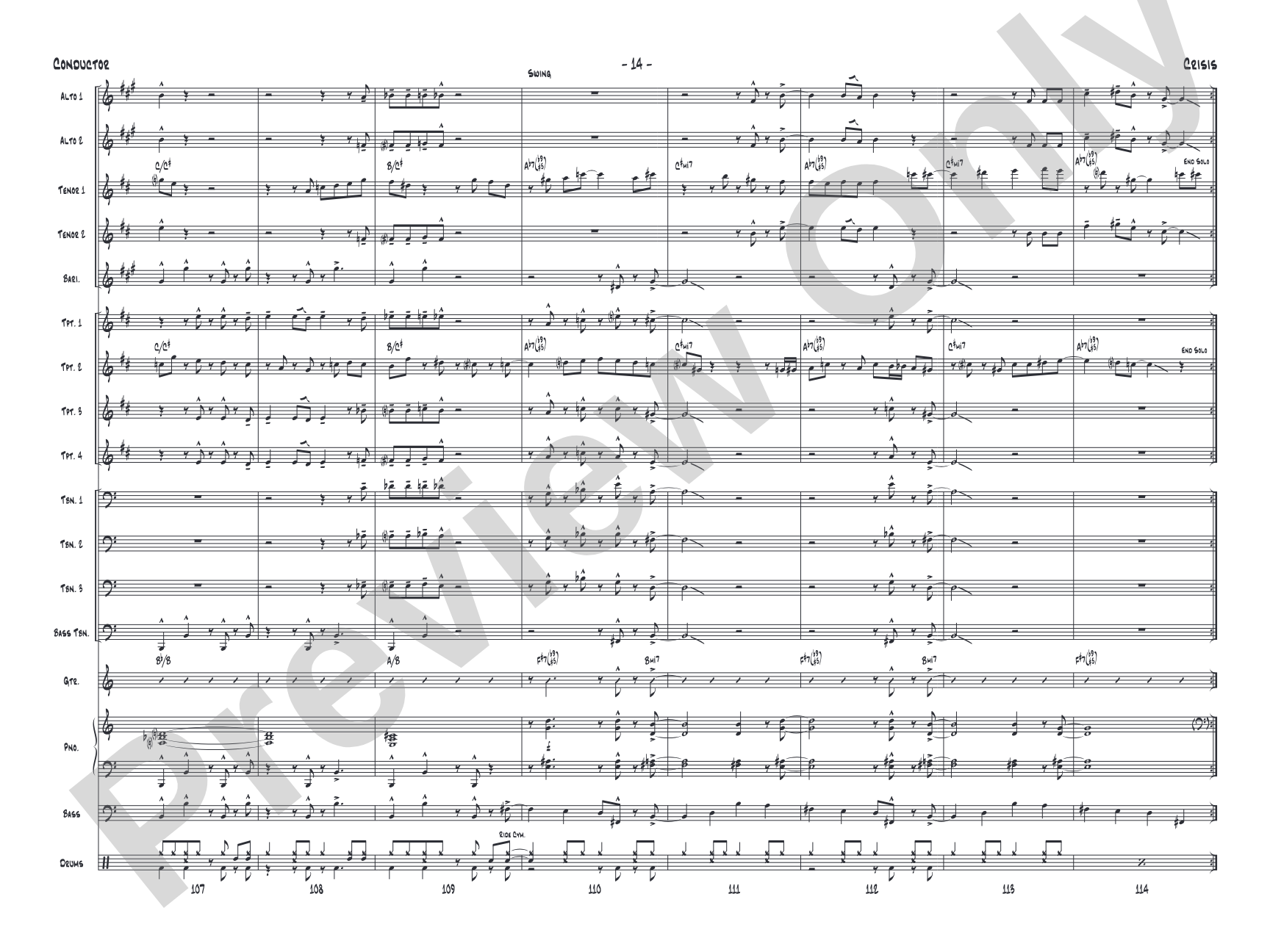

Crisis: Jazz Ensemble Conductor Score & Parts
By Freddie Hubbard / arr. Mike Kamuf
Grade: 3.5 (Medium)
Item: 00-PK-0008303

$54.00
One moment…
Description
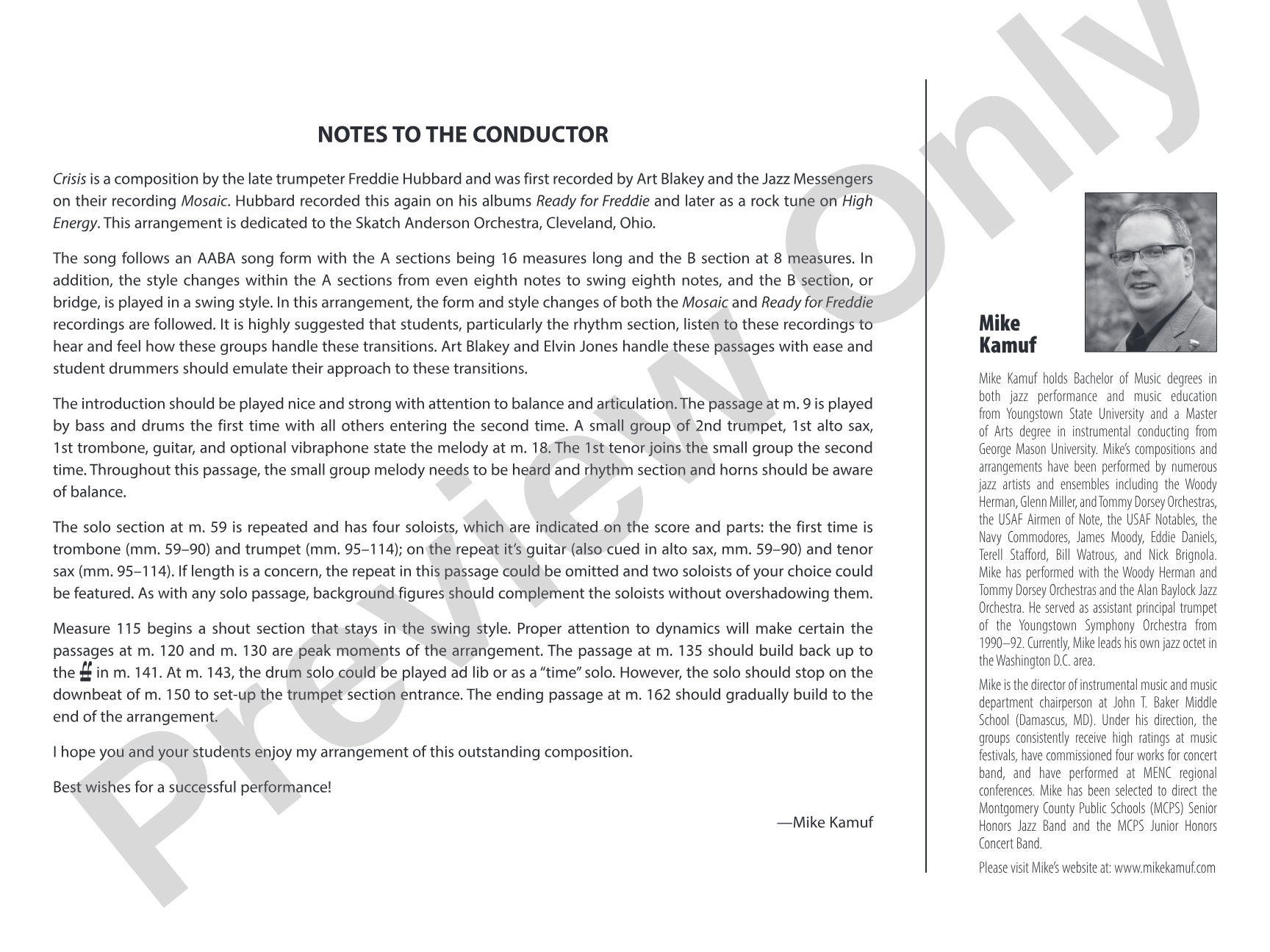
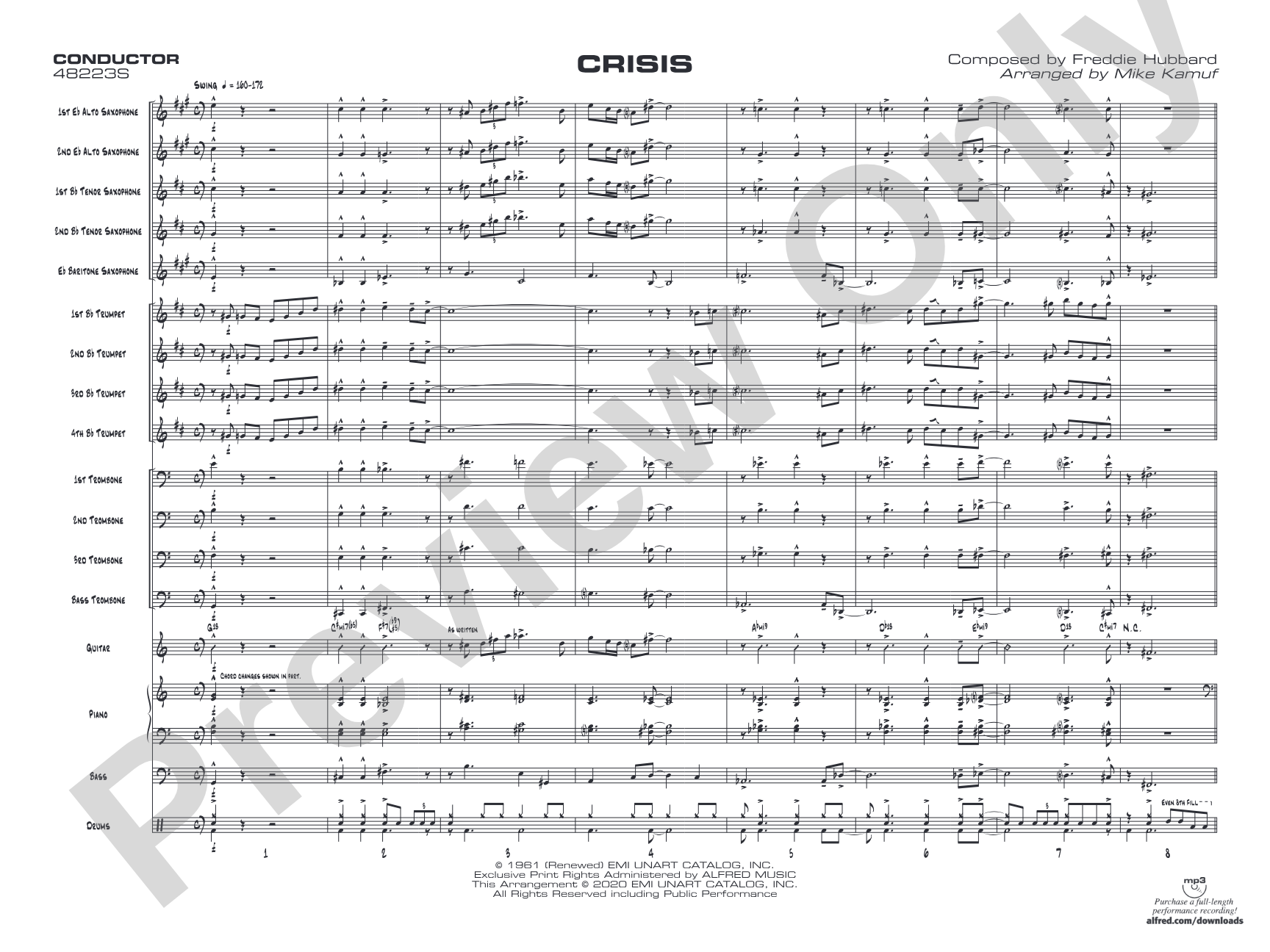
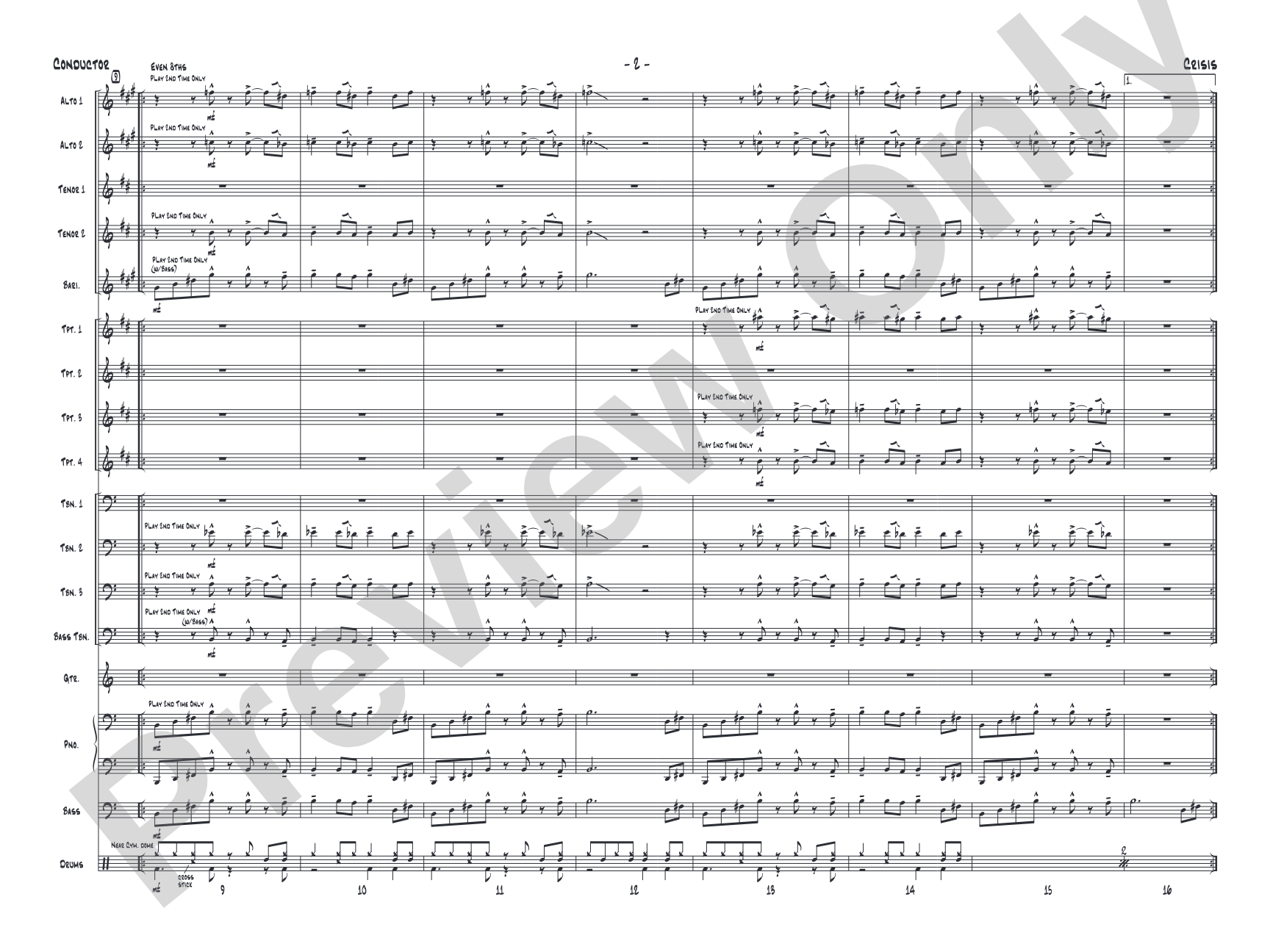
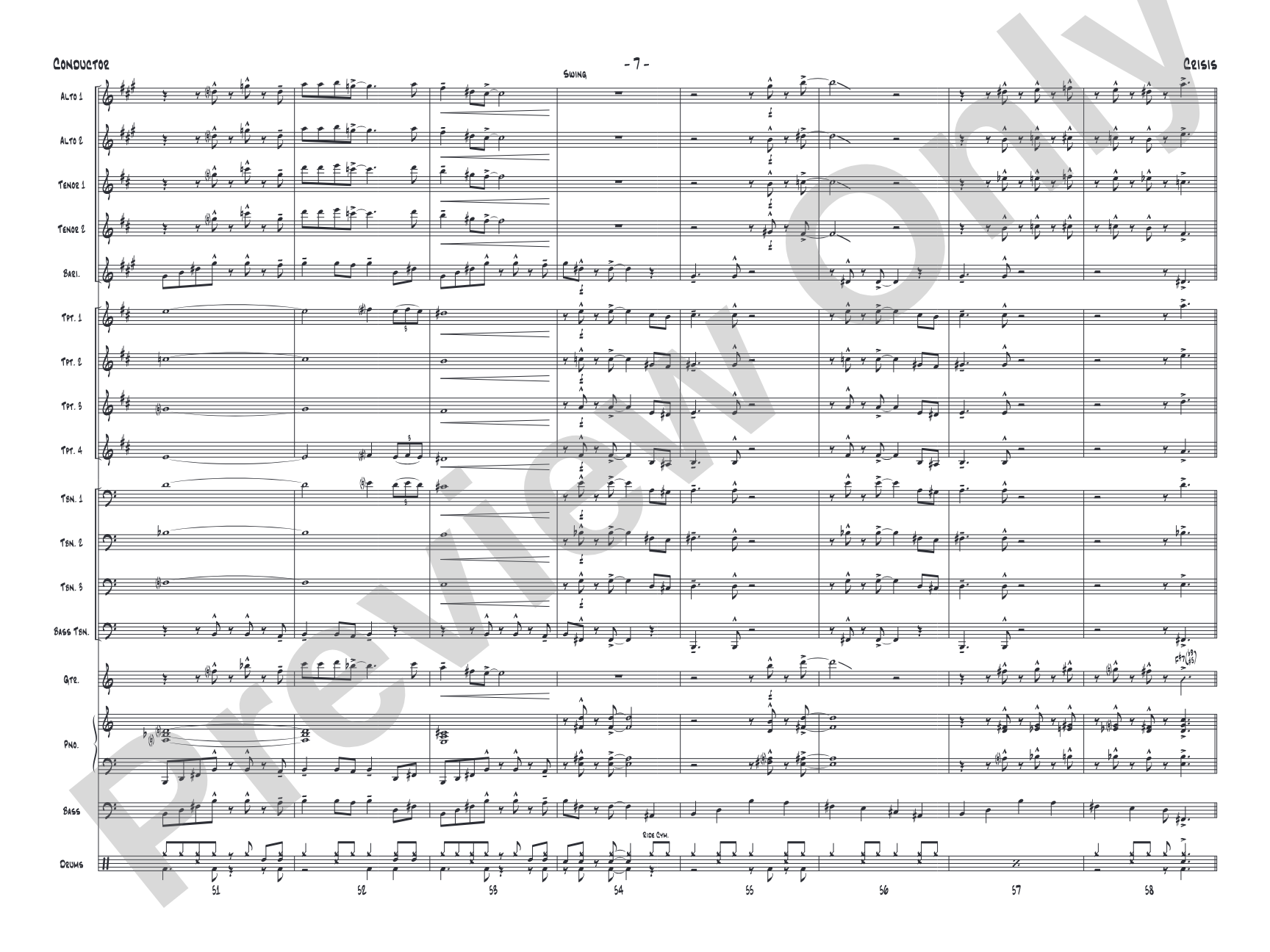
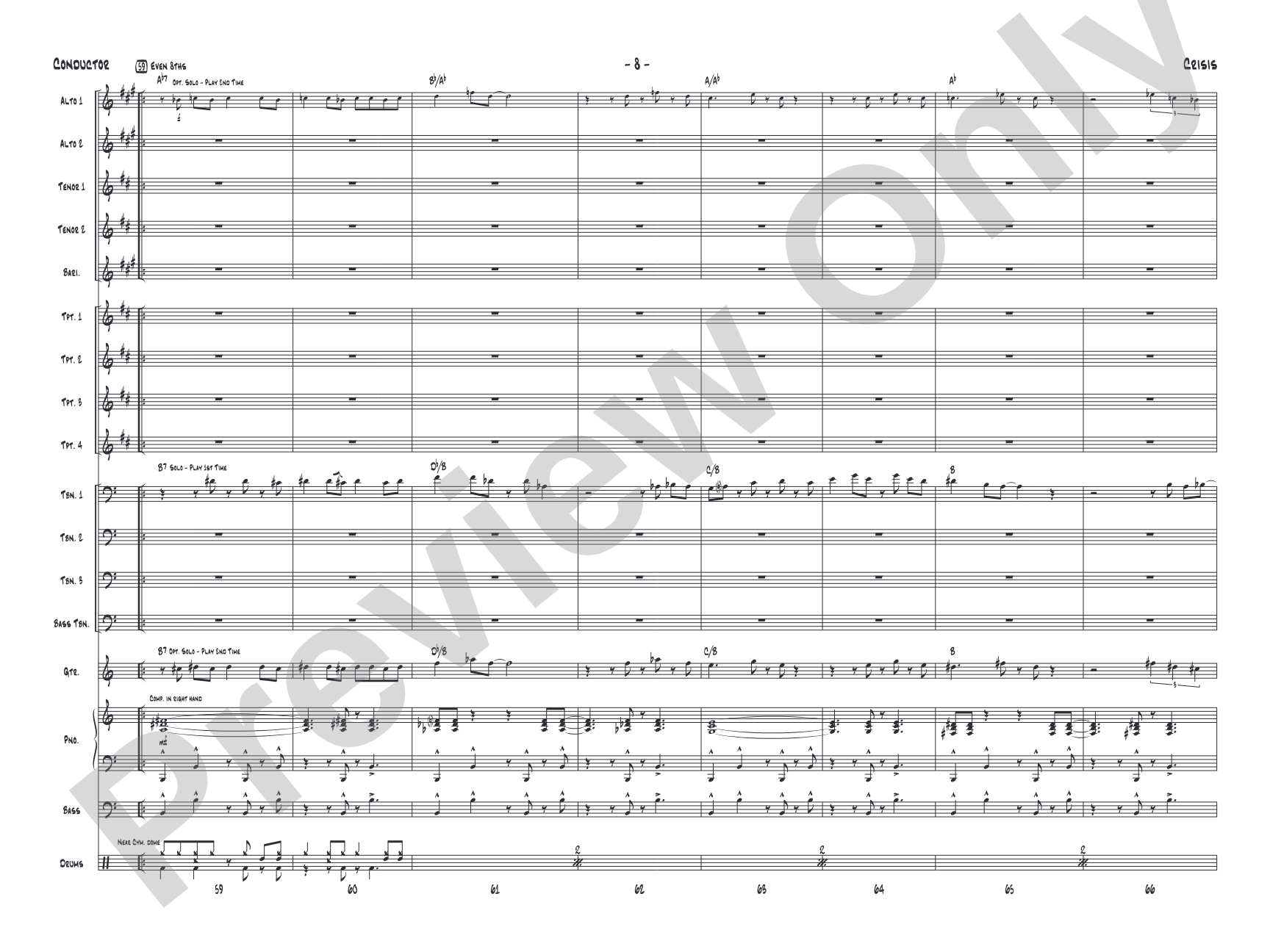
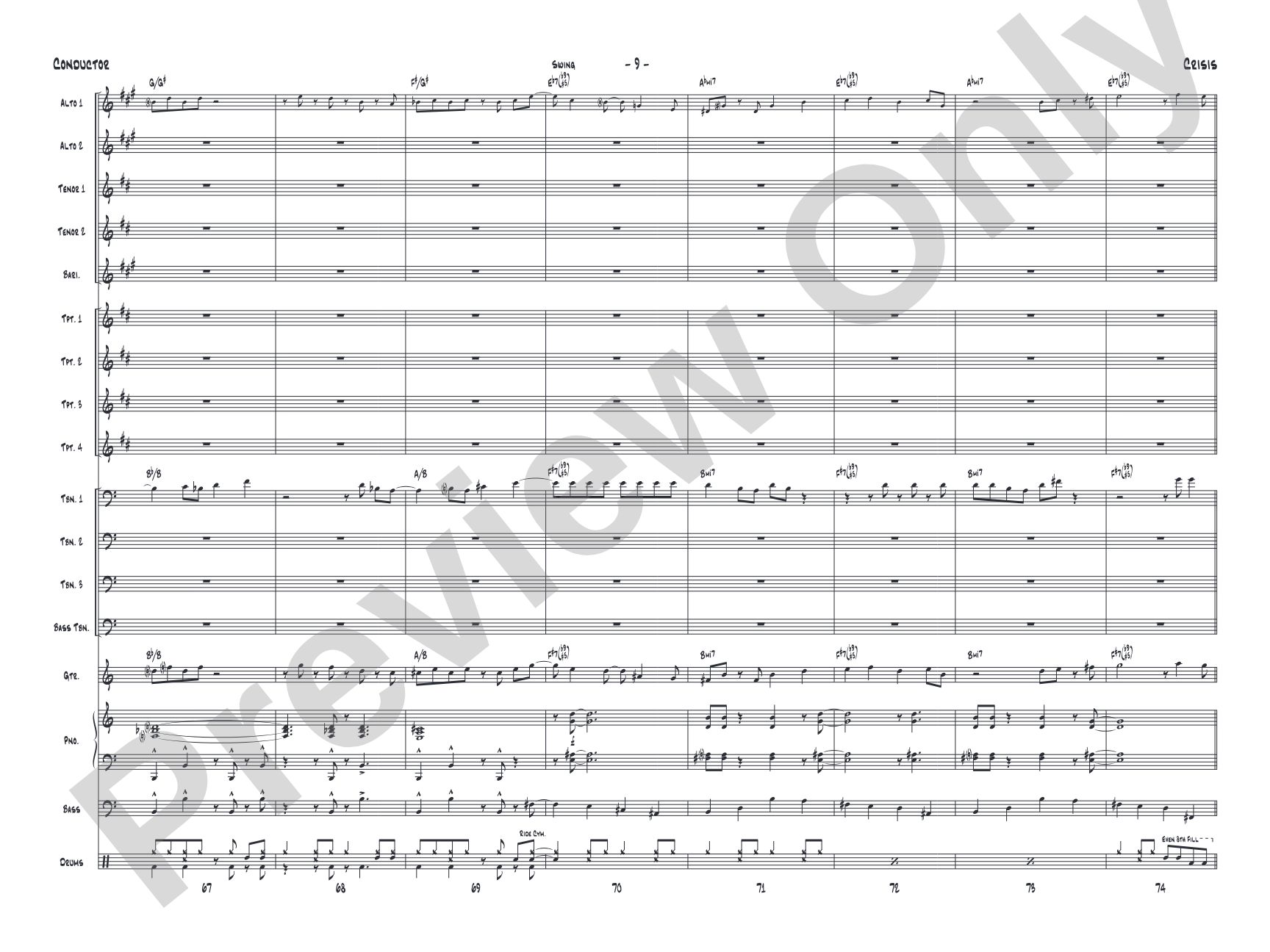
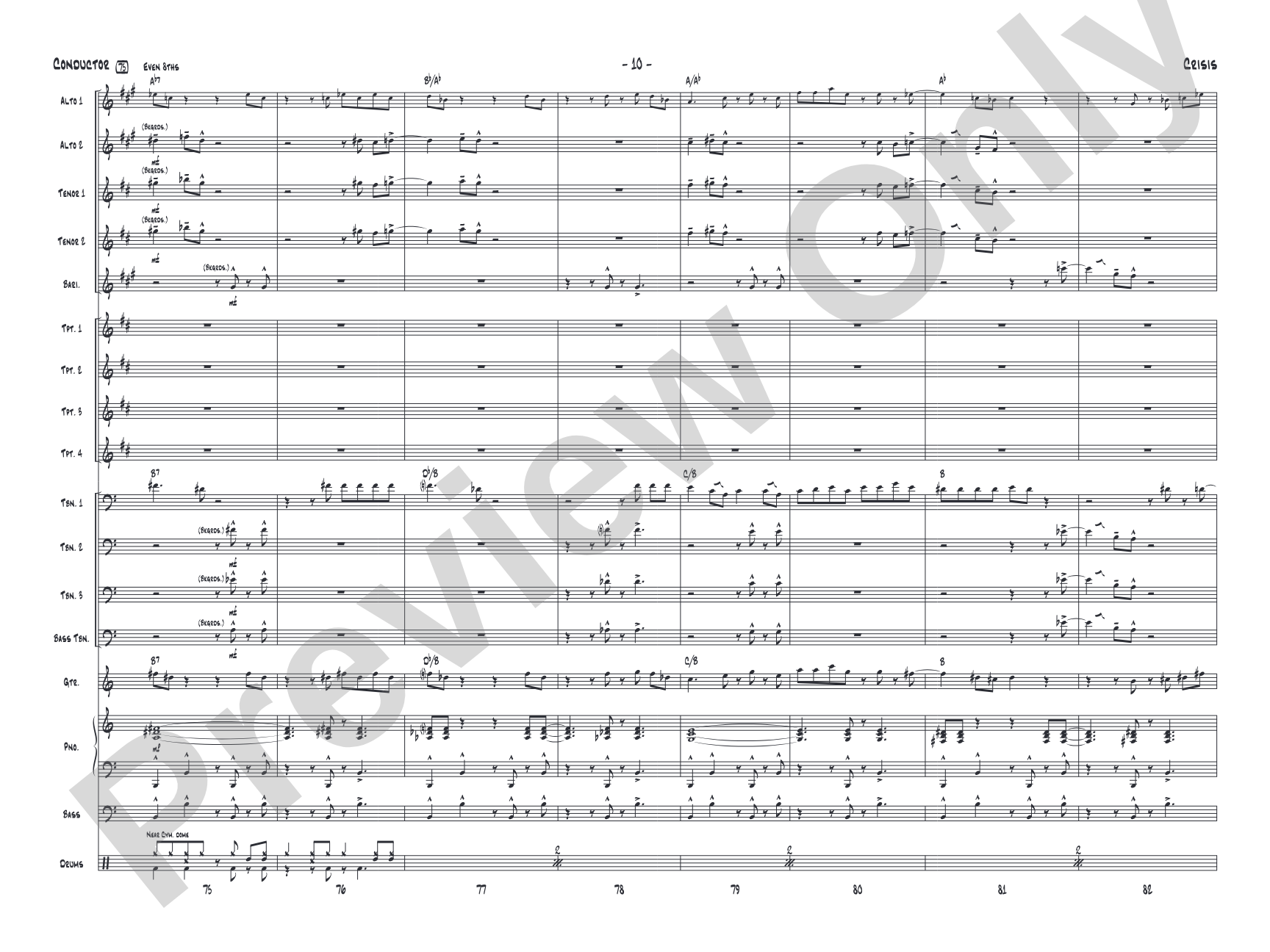
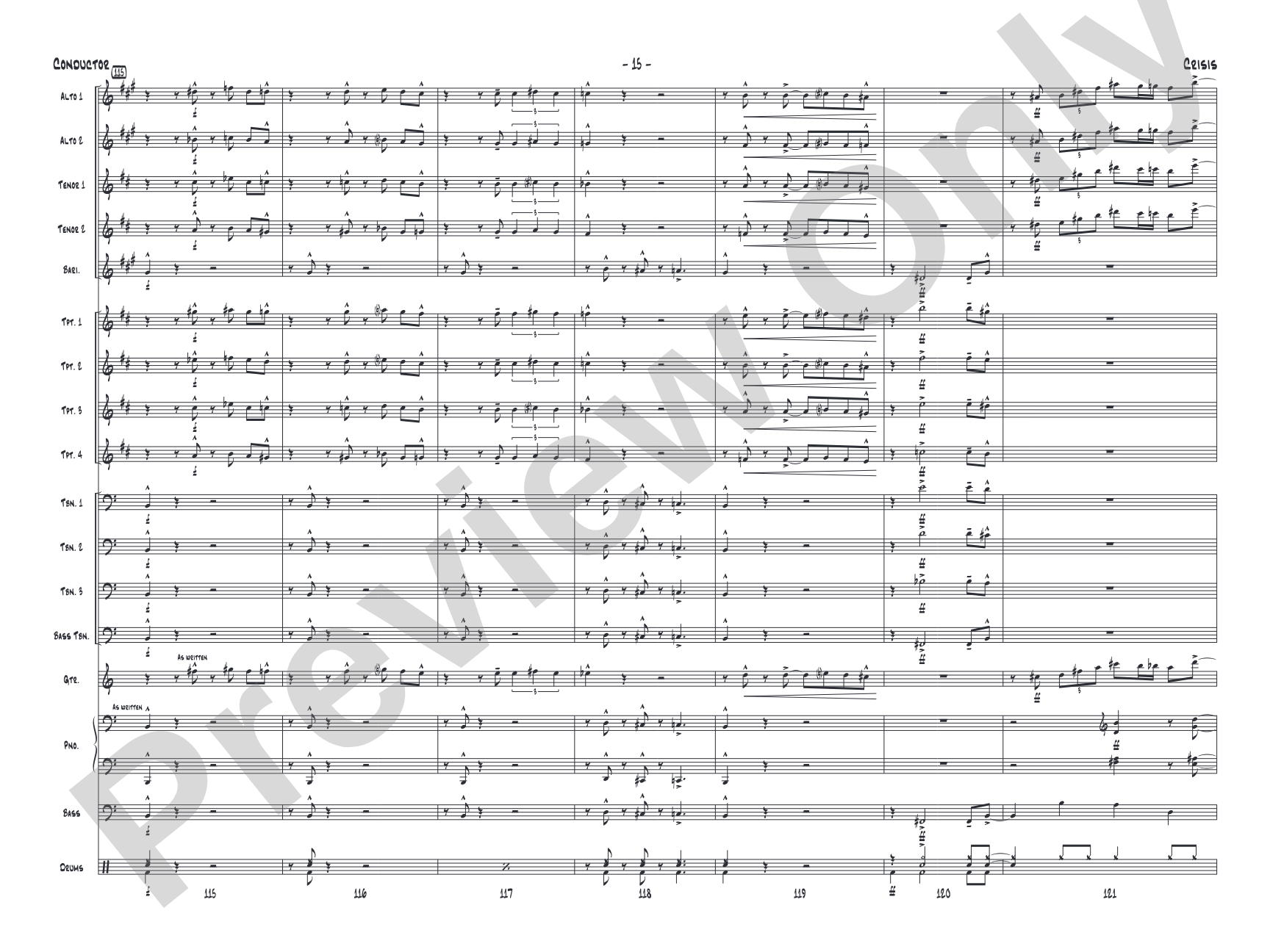
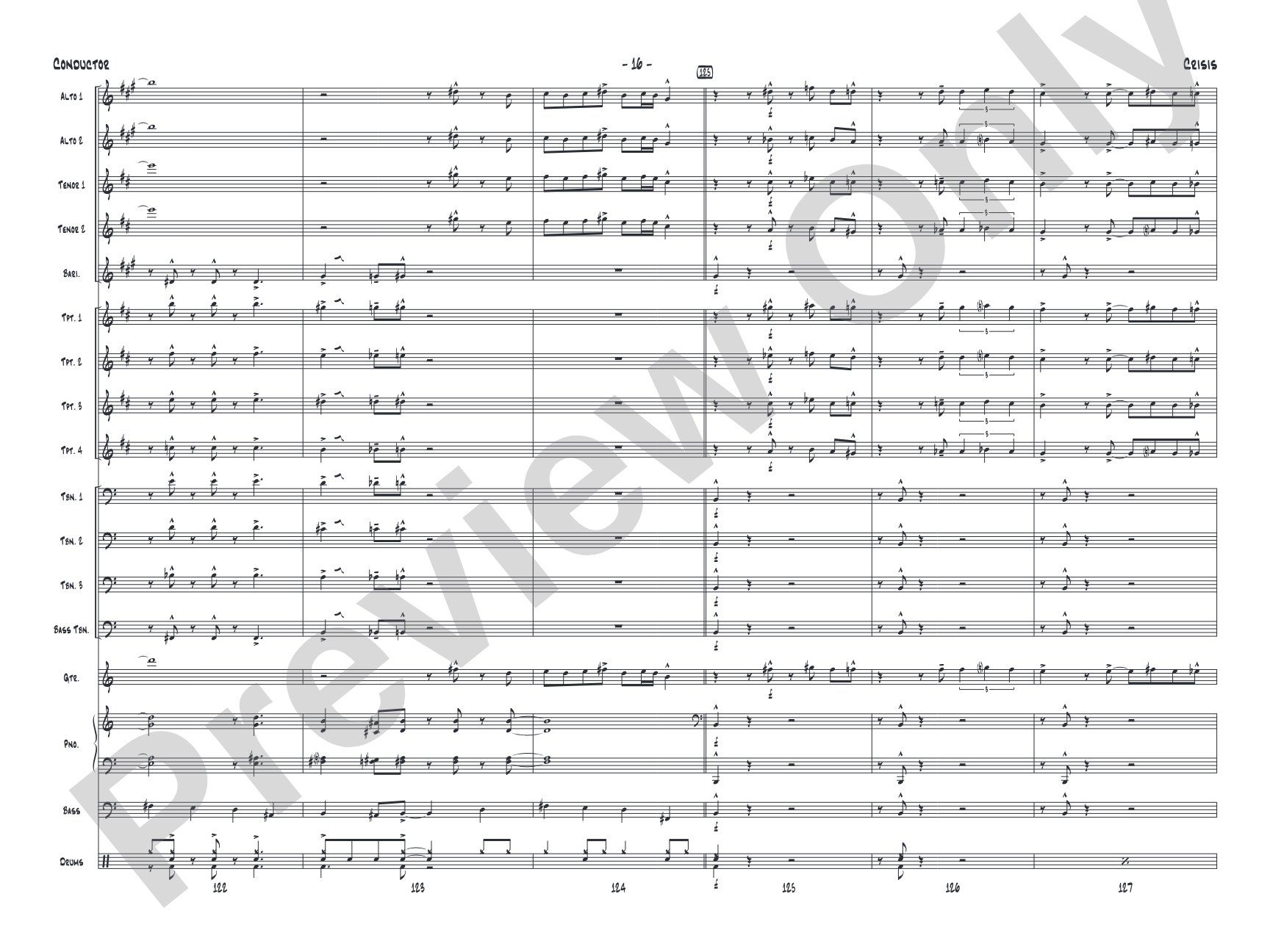
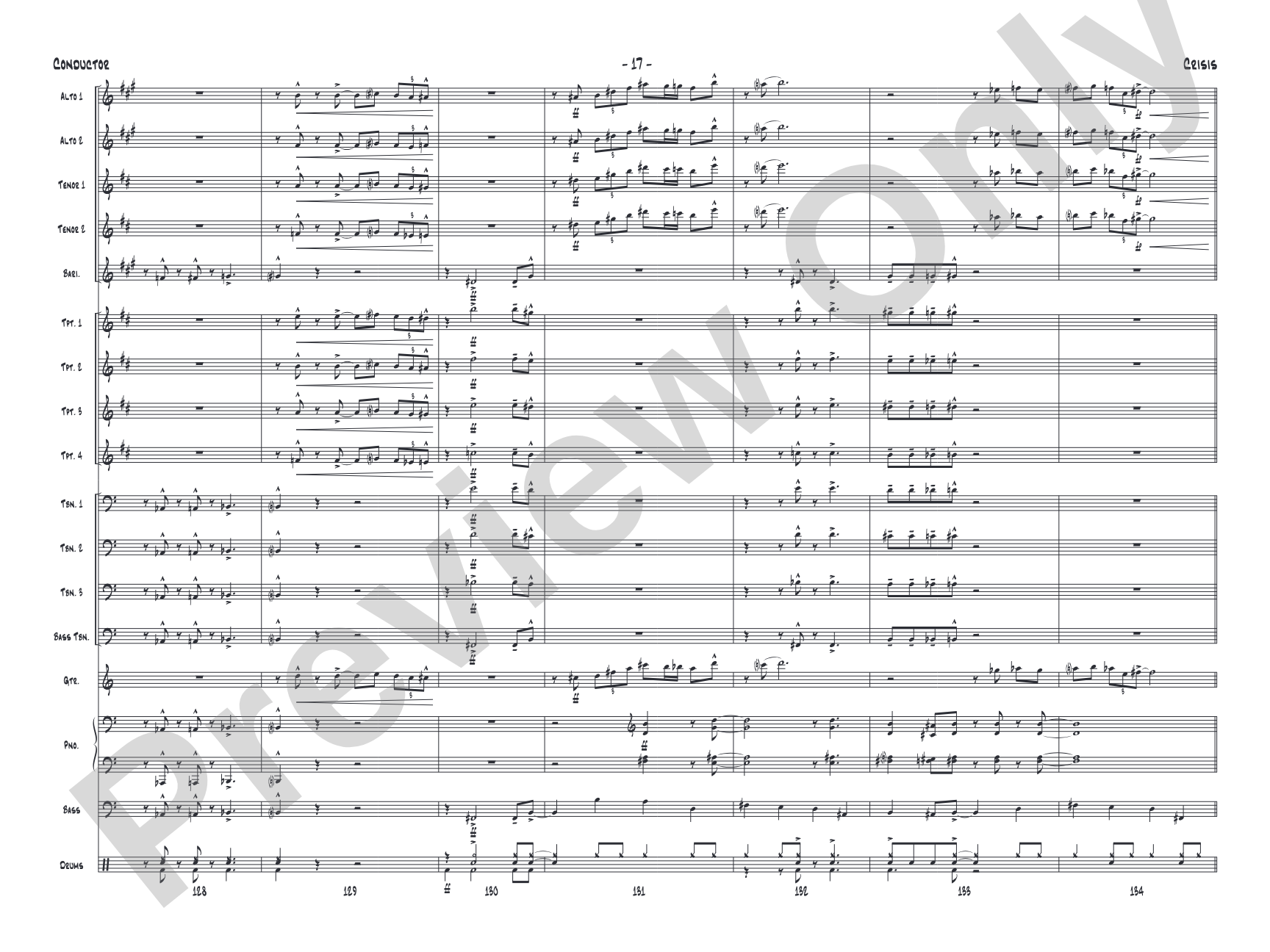
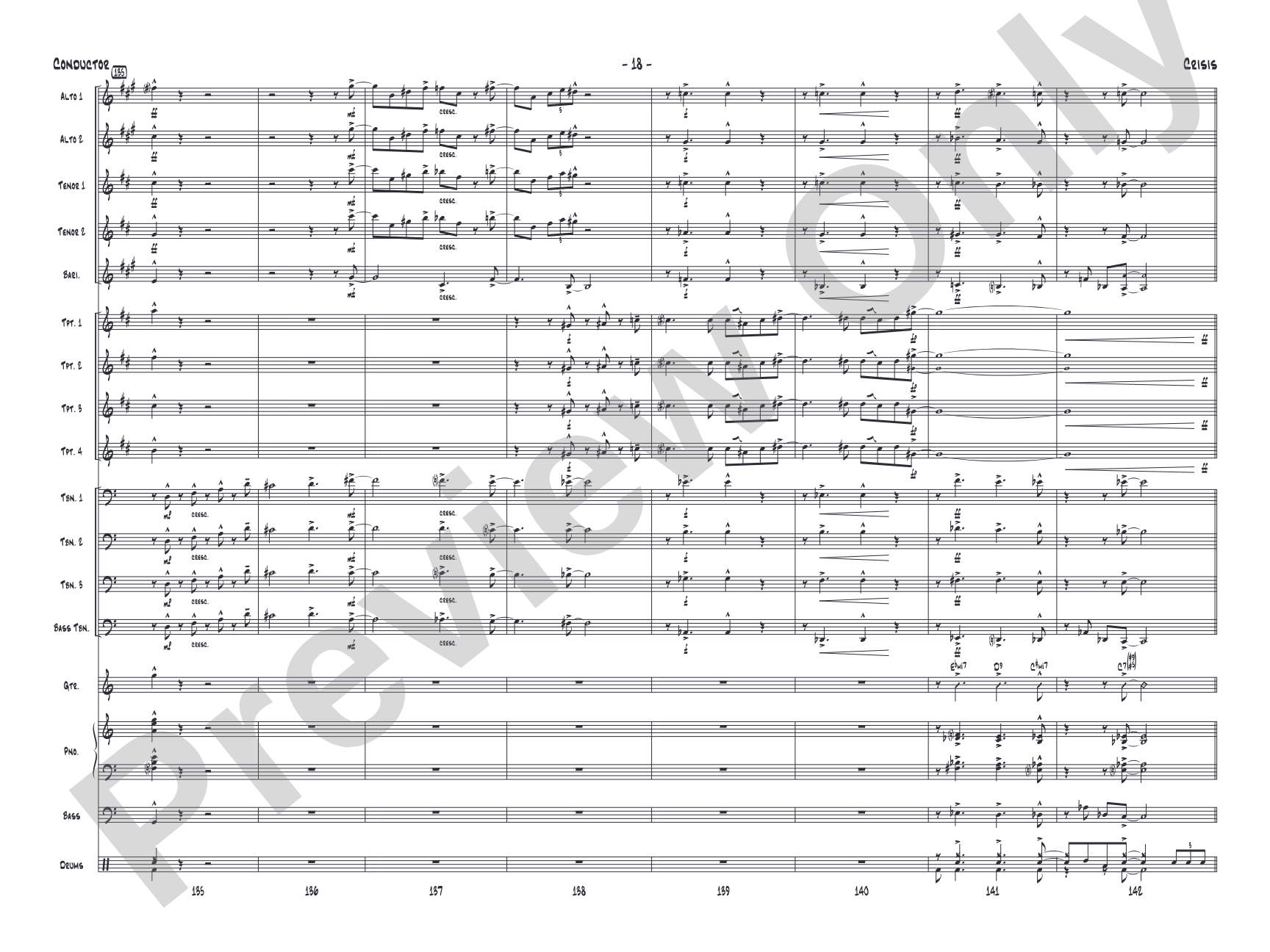
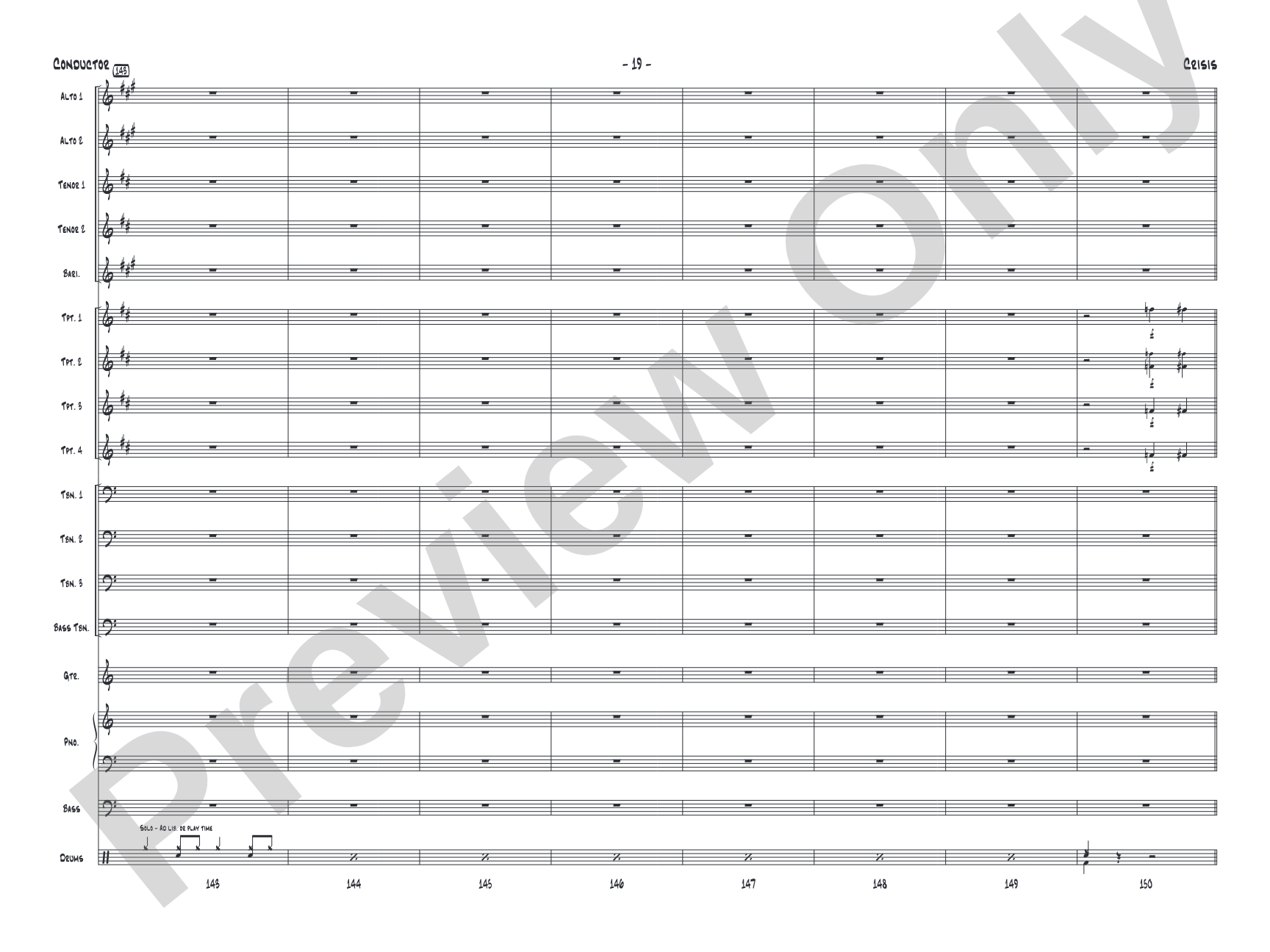
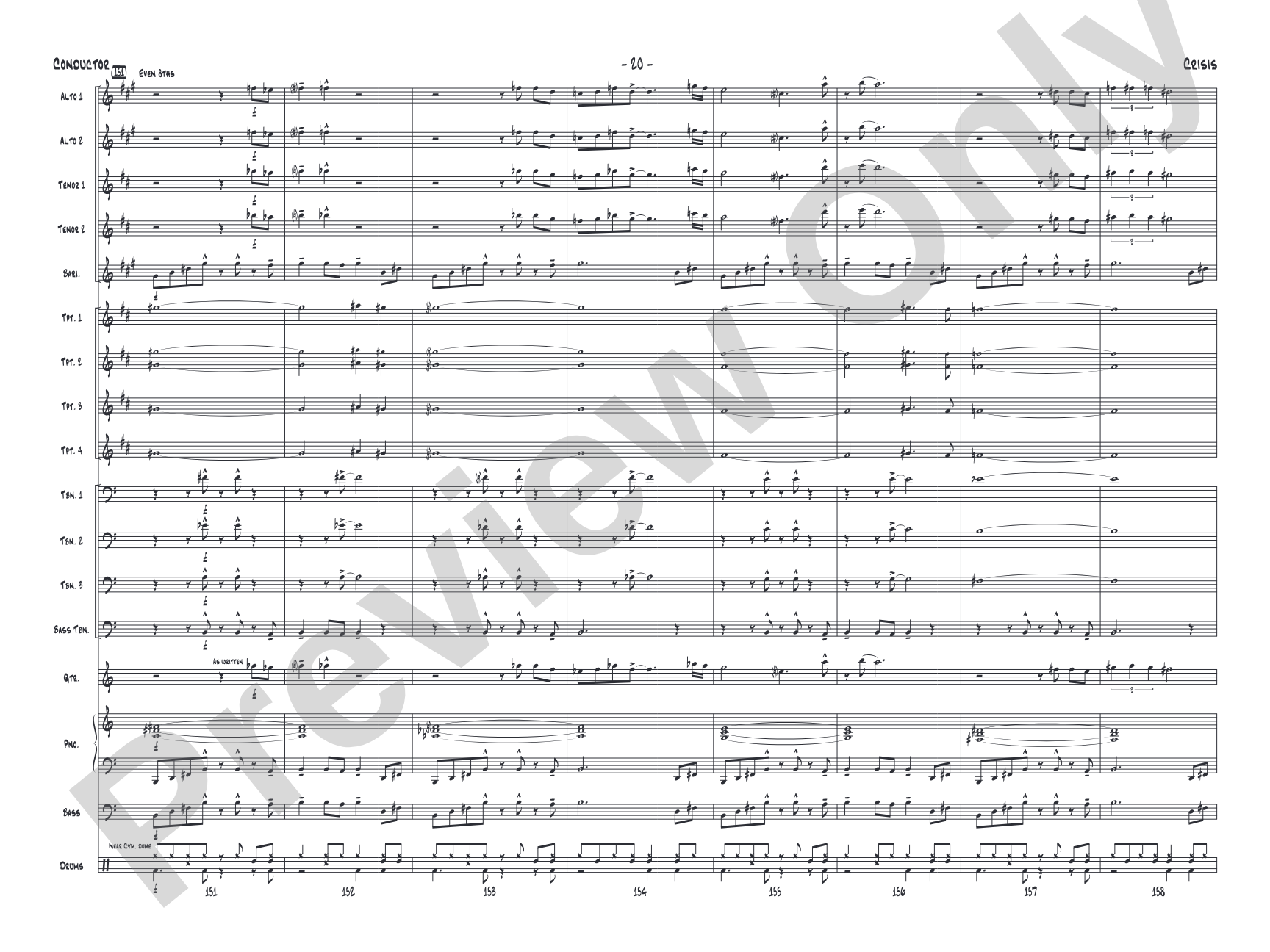
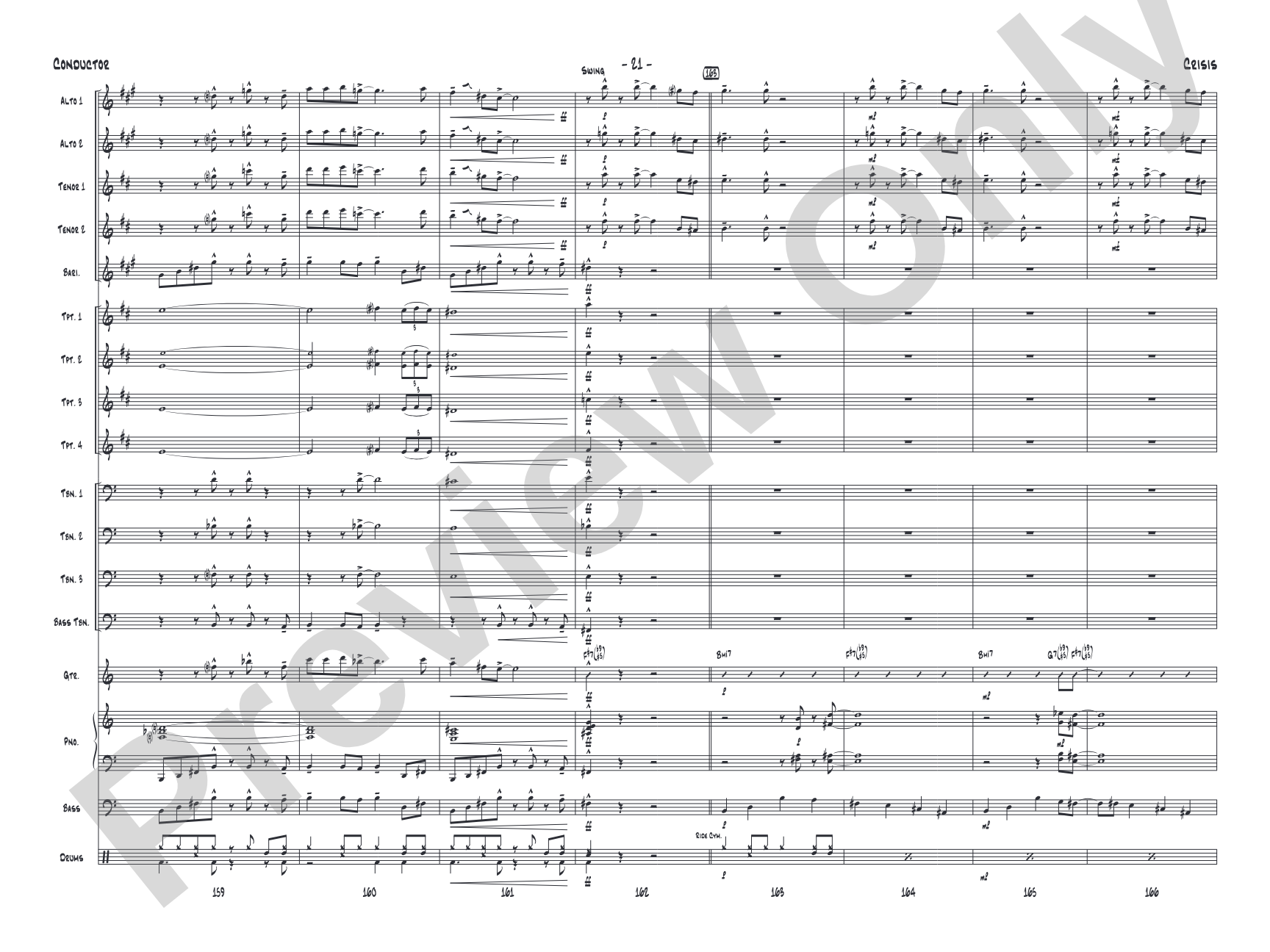
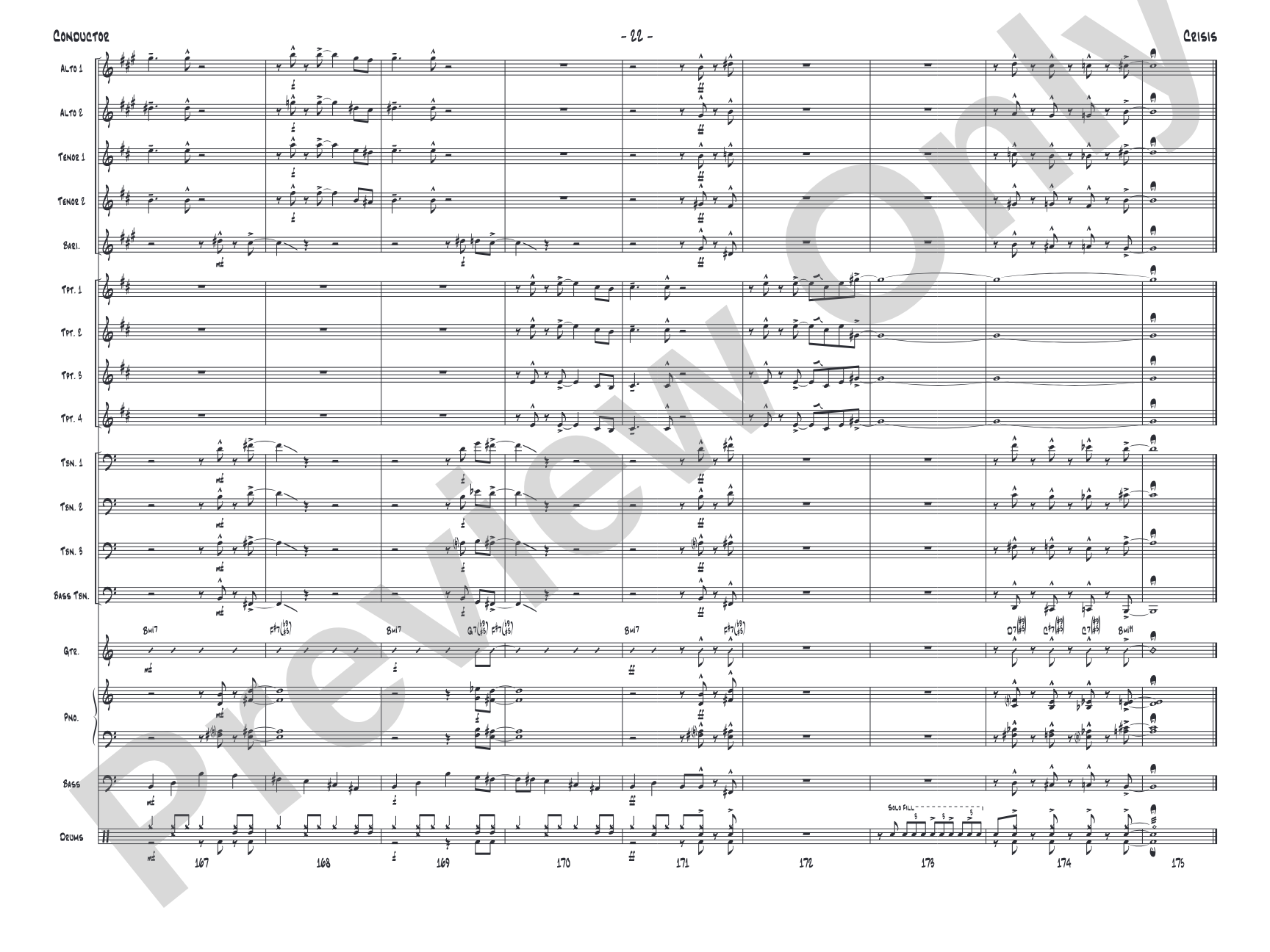
A driving swing chart on a classic jazz standard featuring suggested written-out solos for trombone, tenor, trumpet, and guitar (or optional alto) plus a drum solo. The tempo is 164--172 BPM and lead trumpet range is to written B above the staff. There's a roaring shout chorus and optional vibes and flute too. Crisis arranged by Mike Kamuf will be a highlight to any program! (6:16)


Don't just read it, hear it, play along with it, and watch your students grow with it. In MakeMusic Cloud, Crisis: Jazz Ensemble Conductor Score & Parts comes alive with professional accompaniment, adjustable tempo, and built-in practice tools that turn solo practice into real progress.
Open in the Player
Jump straight in and assign it today.
Start Your Free Trial
Open this title and explore the full library in minutes.
Sample Audio
1
Audio File
--:--
0:00
0:00
Sample Video
Additional Details
Series:
Jazz Band Series
Publisher:
Alfred Music
Page Count:
102
SKU:
00-PK-0008303
More about this title
About the Composer: Freddie Hubbard
Freddie Hubbard stands among the most recorded trumpet players in jazz history, commanding the instrument across bebop, hard bop, funk, and fusion contexts from the 1960s onward. His tone combined warmth with cutting power, and his compositional voice shaped standards that remain central to the jazz repertoire.
Why we love this
Mike Kamuf's arrangement captures the infectious groove and harmonic sophistication of Hubbard's original while building a chart that rewards both section precision and featured soloists. The written-out solos (trombone, tenor, trumpet, and guitar) give students a roadmap for improvisation without requiring them to generate lines from scratch, making it approachable for ensembles still developing their jazz vocabulary. That shout chorus hits hard and stays in the listener's memory long after the final note.
What to expect
Crisis swings hard from the first measure, propelled by a groove that feels effortless once the ensemble settles in. The energy builds steadily through the shout chorus, creating a sense of forward momentum and celebration that recalls the best moments of 1970s soul-jazz and hard bop.
Who it's for
Jazz ensembles at the intermediate level who have solid section reading skills and a few soloists ready to step into the spotlight. This is the kind of chart that teaches jazz vocabulary through performance, ideal for a group that knows basic swing feel but is ready to tackle something with real harmonic and rhythmic demands.
How to get the most out of it
- Lock the time feel between drums and bass before addressing anything else. The chart sits at 164–172 BPM with a driving swing, so rhythmic cohesion in the rhythm section becomes the foundation for everything the horns build on top.
- Balance the trumpet section carefully through the shout chorus. With lead trumpet written to B above the staff, the upper register demands control; resist the urge to push volume and instead focus on clarity and precision.
- Treat the written-out solos as teaching moments, not ceilings. Once students internalize these lines, encourage them to explore variations and eventually compose their own, using the provided solos as models for phrasing and harmonic targeting.
- Give the drum solo space to breathe. It's a moment for the ensemble to listen and lock in tightly when re-entering, so rehearse the tutti hits immediately following the solo with precision.
How to use it
Pair this as a closing number on a jazz concert or as the anchor to a set of Freddie Hubbard charts (if your library has them). The memorable melody and infectious groove make it accessible to audiences unfamiliar with jazz, while the solo sections keep musicians engaged throughout the evening.
Skills your students will build
- Reading and playing swing feel at medium-to-fast tempos (164–172 BPM)
- Navigating a jazz chart with multiple solo sections and ensemble hits
- Learning phrasing and articulation from written-out solo lines
- Balancing section blend while maintaining individual voice in the horn section
- Responding to rhythmic leadership from the rhythm section
- Understanding the architecture of head-solo-shout-head form in jazz