

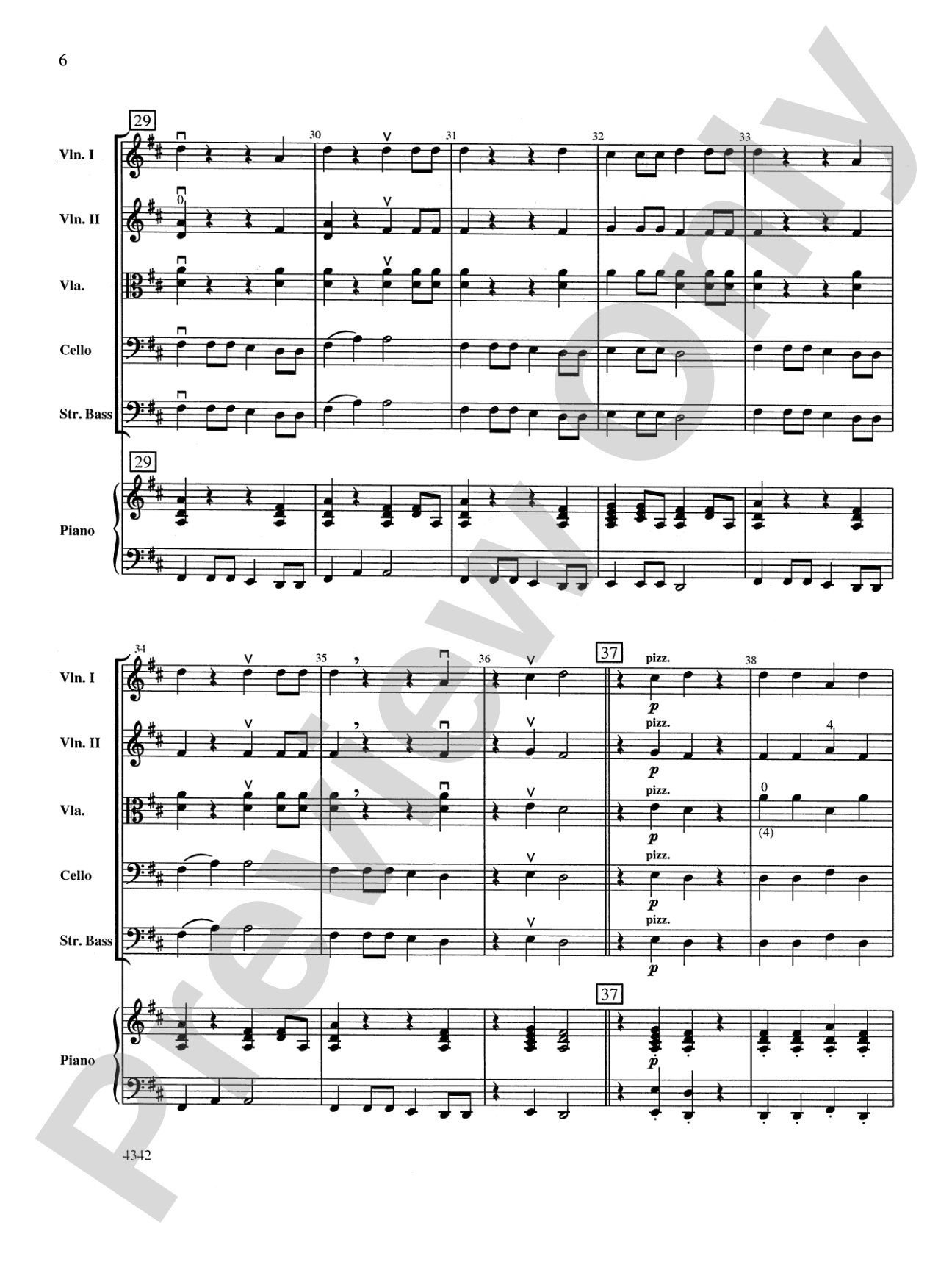
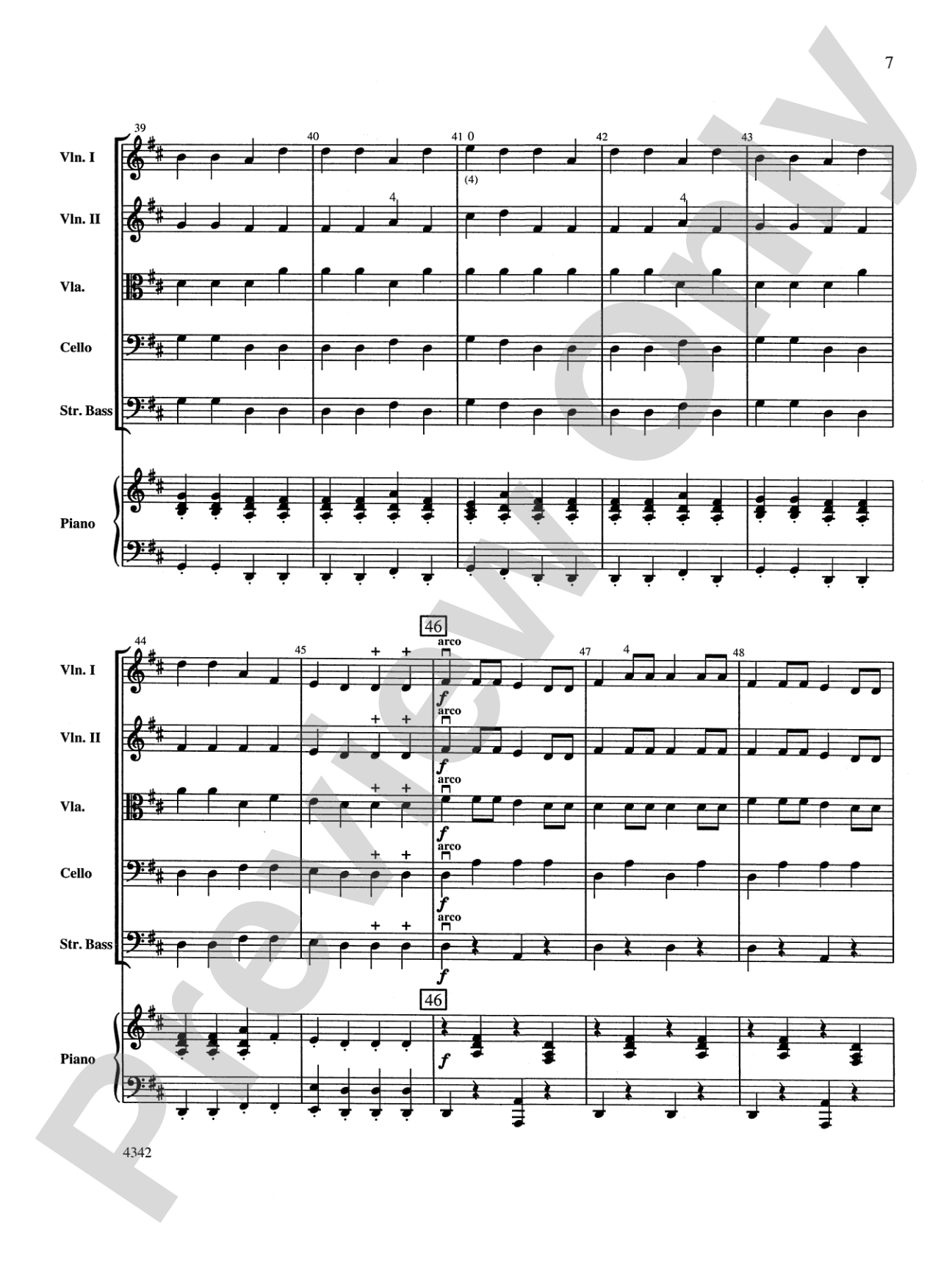
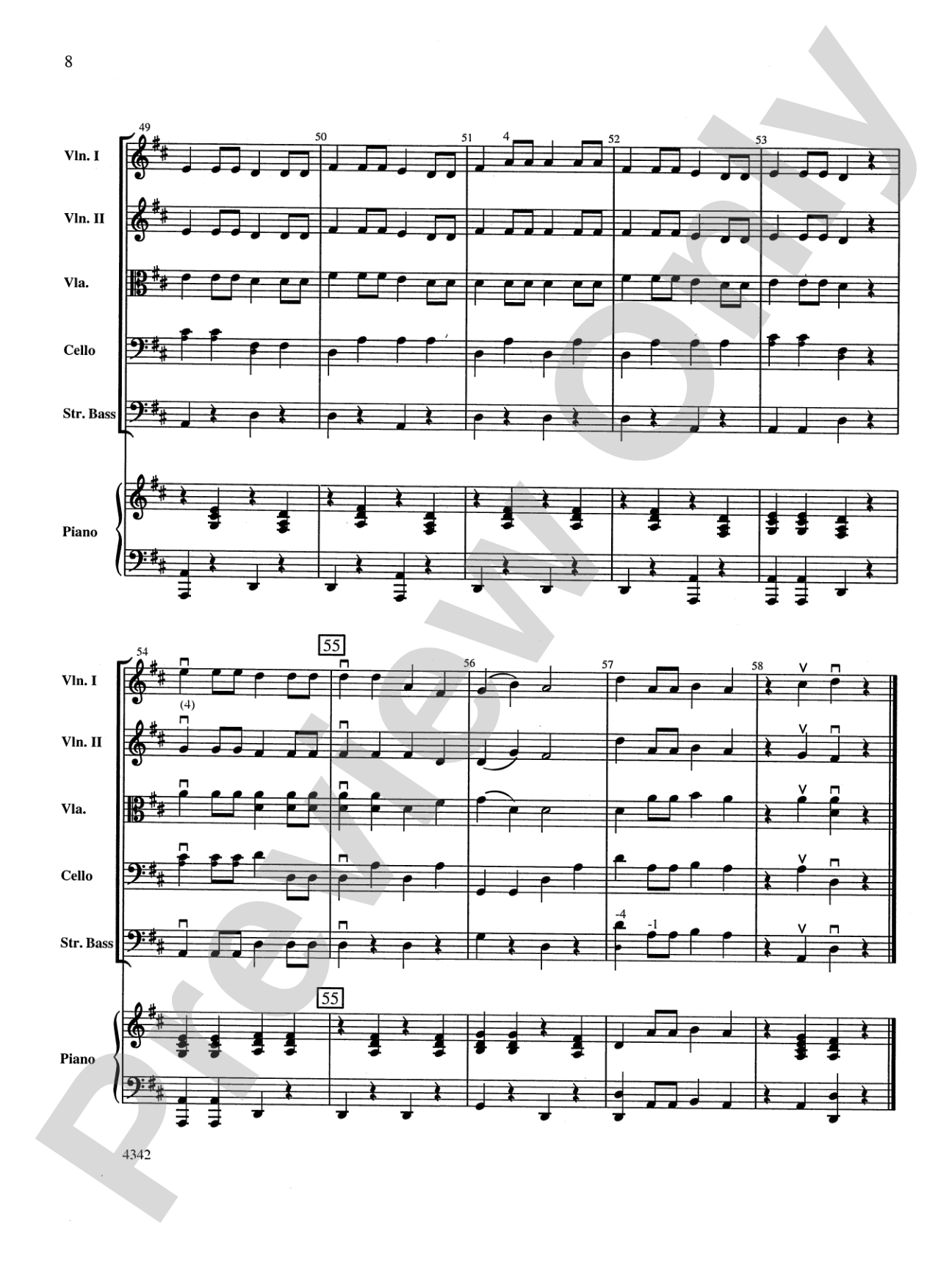

Cripple Creek: Score
Arr. Edmund J. Siennicki
Grade: 1
Item: 00-PR-0001834
$8.00
Pickup currently not available
Description
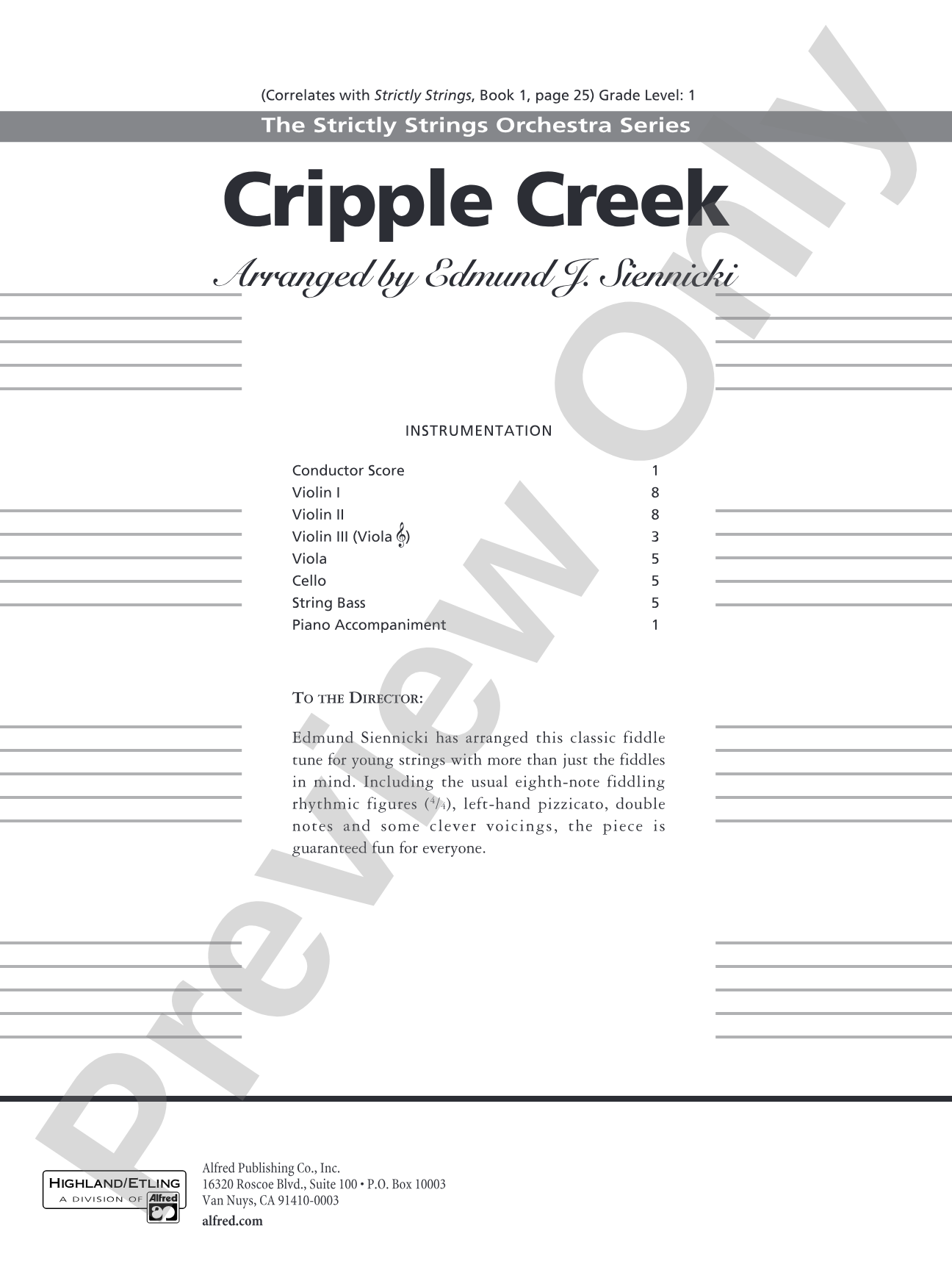
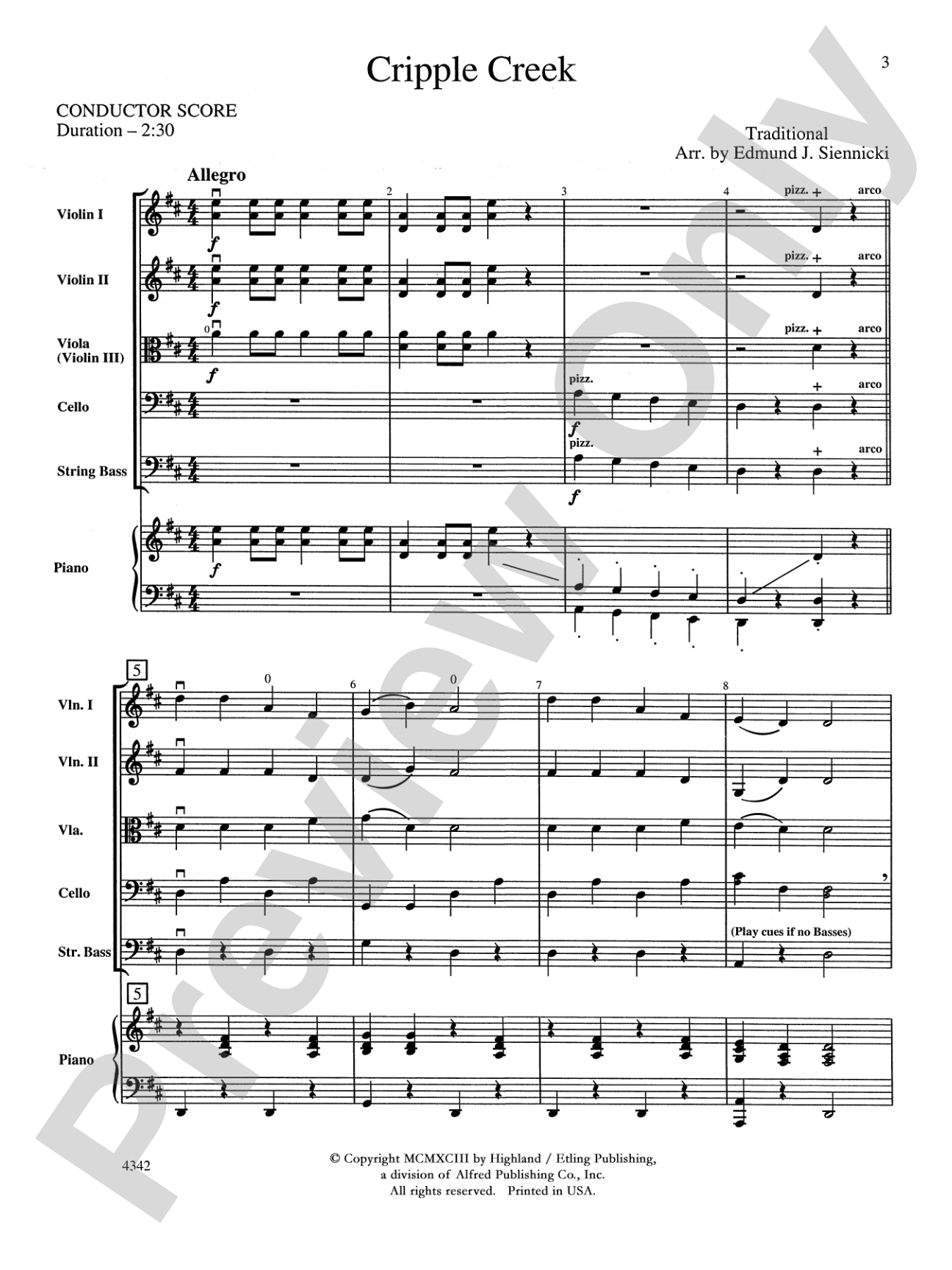
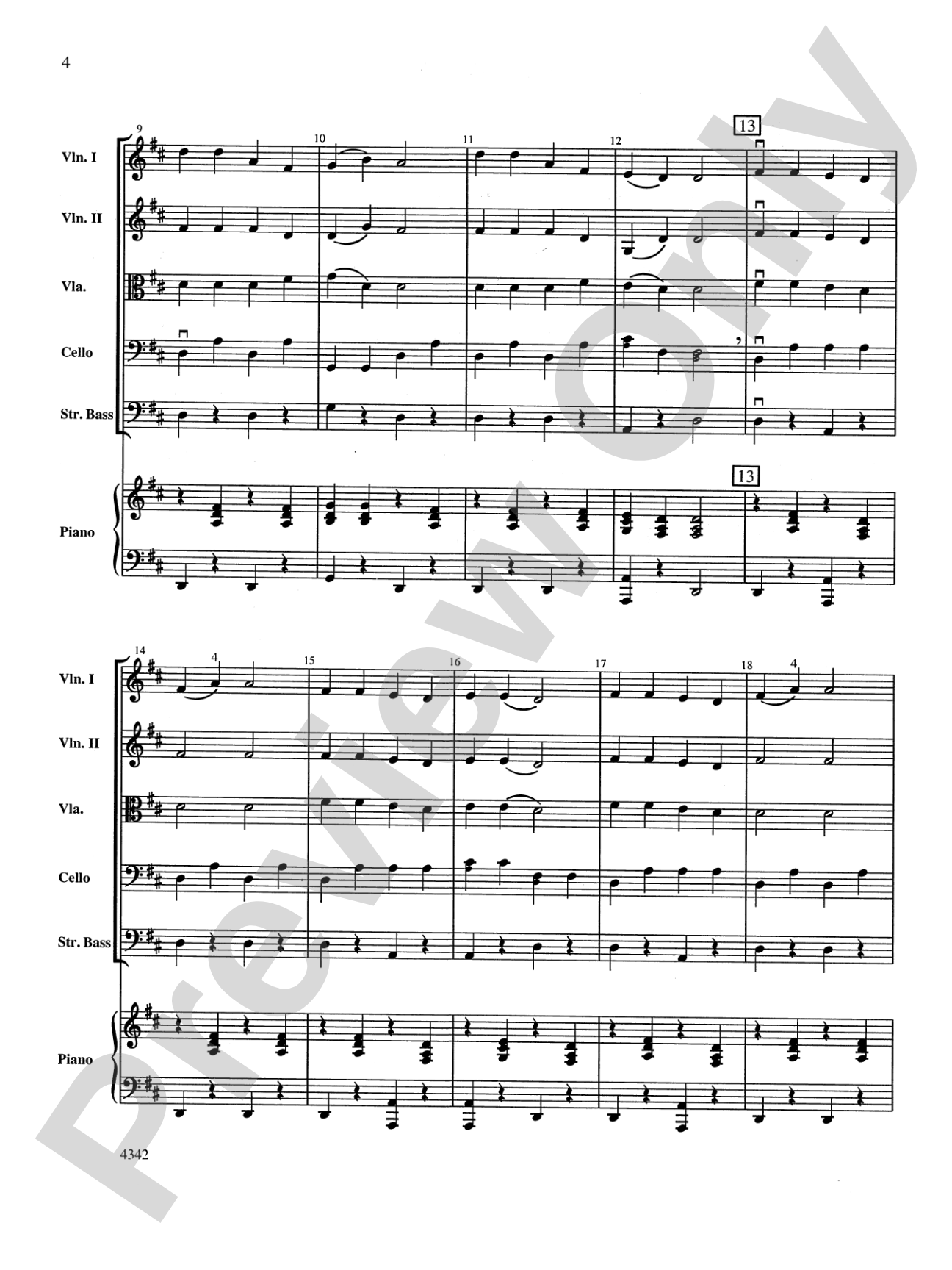
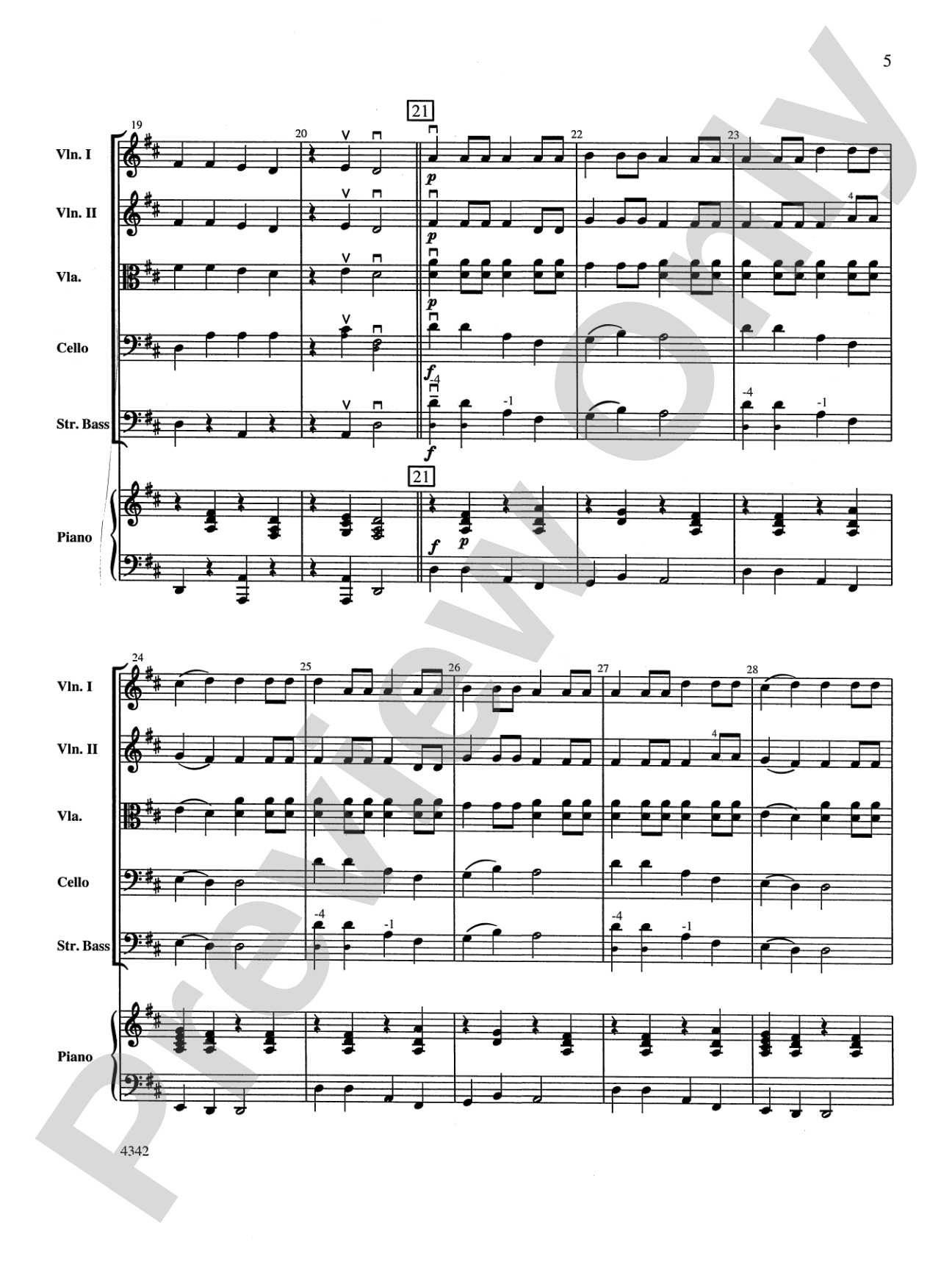
Edmund Siennicki has arranged this classic fiddle tune for young strings with more than just the fiddles in mind. Including the usual eight-note fiddling rhythmic figures (4/4), left-hand pizzicato, double notes and some clever voicings, the piece is guaranteed fun for everyone. This title is available in MakeMusic Cloud. A Federation Festivals 2020-2024 selection.


Don't just read it, hear it, play along with it, and watch your students grow with it. In MakeMusic Cloud, Cripple Creek: Score comes alive with professional accompaniment, adjustable tempo, and built-in practice tools that turn solo practice into real progress.
Open in the Player
Jump straight in and assign it today.
Start Your Free Trial
Open this title and explore the full library in minutes.
Sample Audio
1
Audio File
--:--
0:00
0:00
Sample Video
No sample videos found.
Additional Details
Series:
Highland/Etling Strictly Strings
Publisher:
Alfred Music
Page Count:
72
SKU:
00-PR-0001834
More about this title
About the Arranger: Edmund J. Siennicki
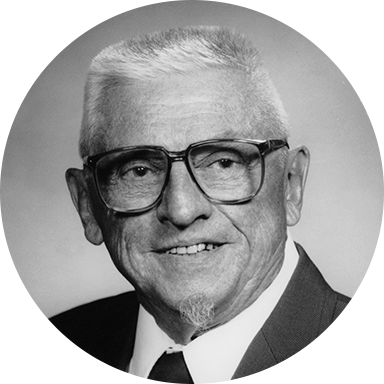
Edmund J. Siennicki grew up in Cleveland, Ohio, where a formative encounter with pianist Ignacy Jan Paderewski at age 12 shaped his artistic direction. He earned his Bachelor's degree from Kent State University, where he composed the school's fight song (still performed at football games), and later completed his MA at Teachers College, Columbia University under the mentorship of composers Herbert Elwell and Vincent Persichetti.
Siennicki built a distinguished career as both a performer and educator, working as a professional bassoonist and pianist while teaching in Cleveland's junior high schools and holding faculty positions at Michigan and Kent State. His compositional output spans roughly 200 published works, many of which have won recognition in national school orchestra competitions. He served as composer in residence at the MacDowell Colony on two occasions and has been honored with annual ASCAP awards for two decades. He continues to compose, visit schools, and lead clinics.
Why we love this
Siennicki respects the Grade 1 ensemble's capabilities without softening the fiddle tune's authentic character. The rhythmic figures, left-hand pizzicato, and double-note writing create genuine string playing challenges alongside parts that let younger players contribute meaningfully, making this a real crowd-pleaser for both musicians and audiences.
What to expect
A fiddle tune that swings with genuine character, never losing sight of its folk roots even as it passes between parts and adds layers. The piece bounces with infectious rhythm and good humor, inviting players to feel the dance in every measure.
Who it's for
Beginning string orchestras ready to step beyond unison playing into actual ensemble textures. Grade 1 players will find technically accessible material that doesn't talk down to them, with enough rhythmic and harmonic interest to keep experienced young musicians engaged.
How to get the most out of it
- Keep the eighth-note fiddling rhythms crisp and even; these figures drive the piece's energy, so establish a steady pulse during rehearsal by having students count aloud or tap the subdivision.
- Balance the left-hand pizzicato passages by asking players to pluck with clear definition without letting the tone wash out; this articulation detail separates a polished performance from a muddy one.
- Let the clever voicings breathe; resist the urge to push tempo for excitement. A relaxed, swinging feel serves the folk idiom better than rushing through the changes.
- Highlight the double-note sections by ensuring intonation is tight; tune these intervals carefully in sectionals, since young players often flatten when playing in fifths or thirds.
How to use it
Program this early in a concert to set an upbeat, accessible tone, or use it as a strategic placement between more serious classical works to give audiences (and your ensemble) a breather. Its Festival selection status makes it ideal for both community performances and competition settings where you want to showcase ensemble musicianship without extreme technical demands.
Skills your students will build
- Reading and executing even eighth-note rhythmic figures in 4/4 with precision
- Left-hand pizzicato technique and articulation control
- Double-note intonation and balance
- Part independence within a larger ensemble texture
- Stylistic awareness of folk idiom and swing rhythm