
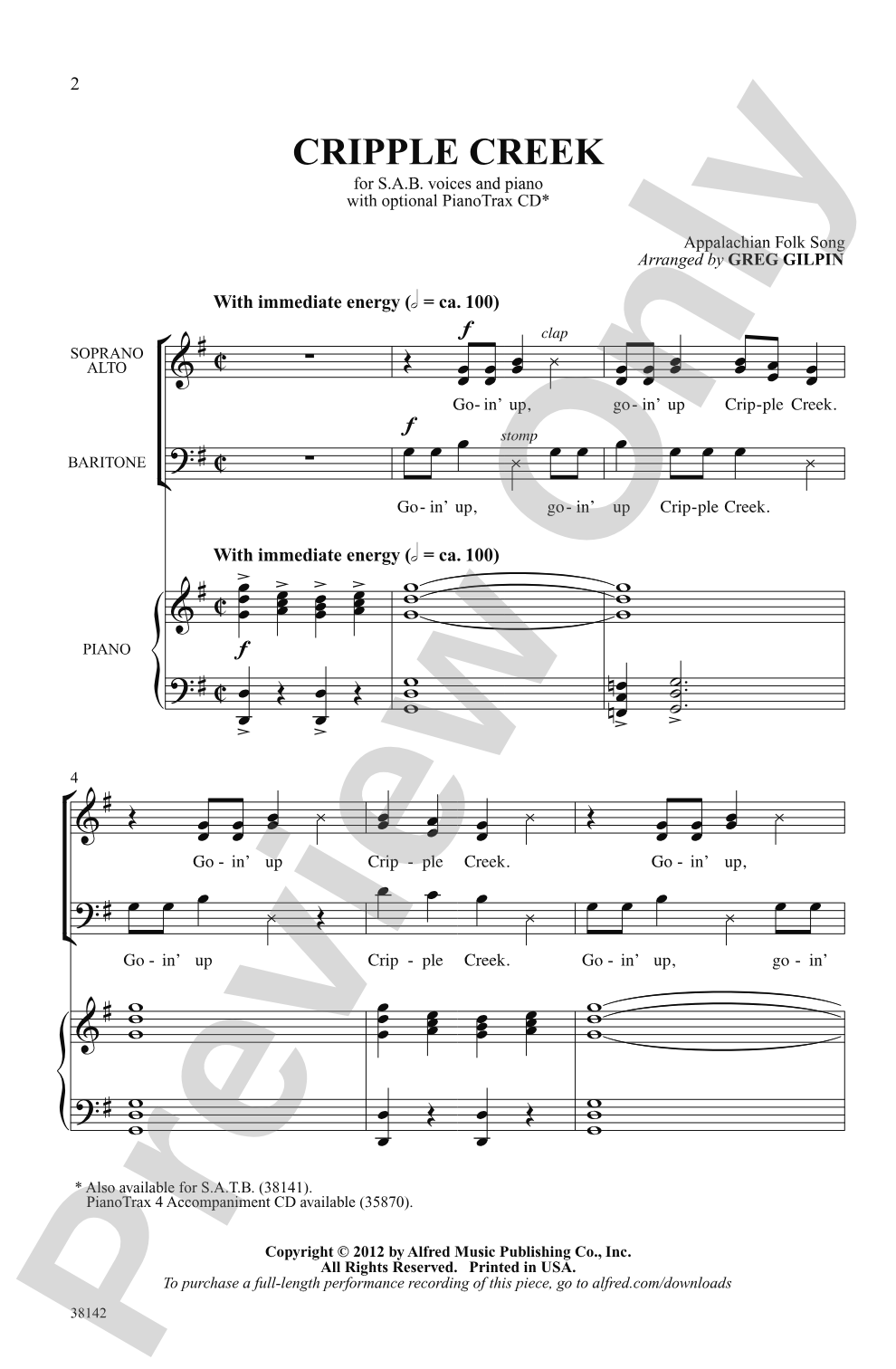
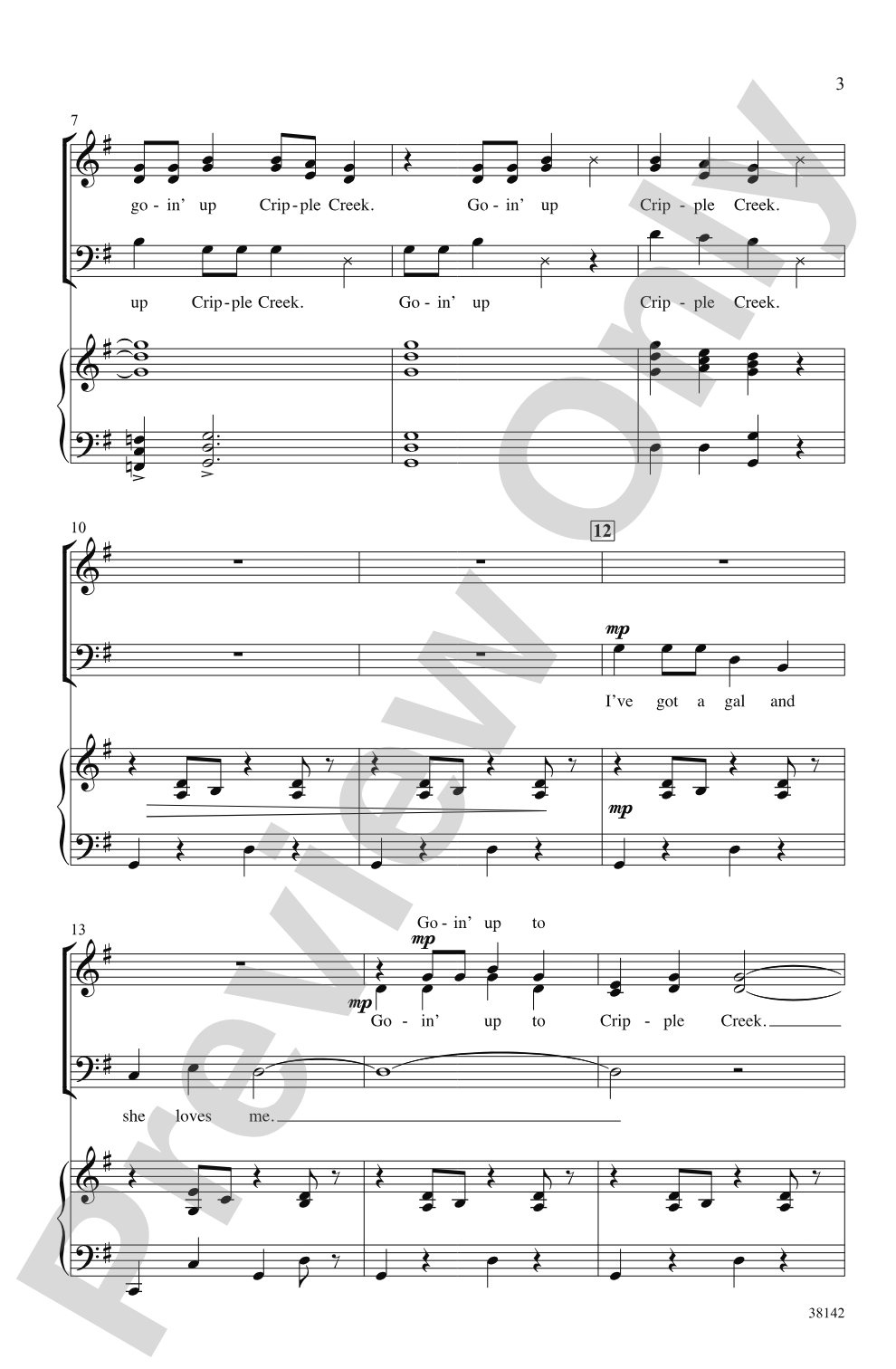
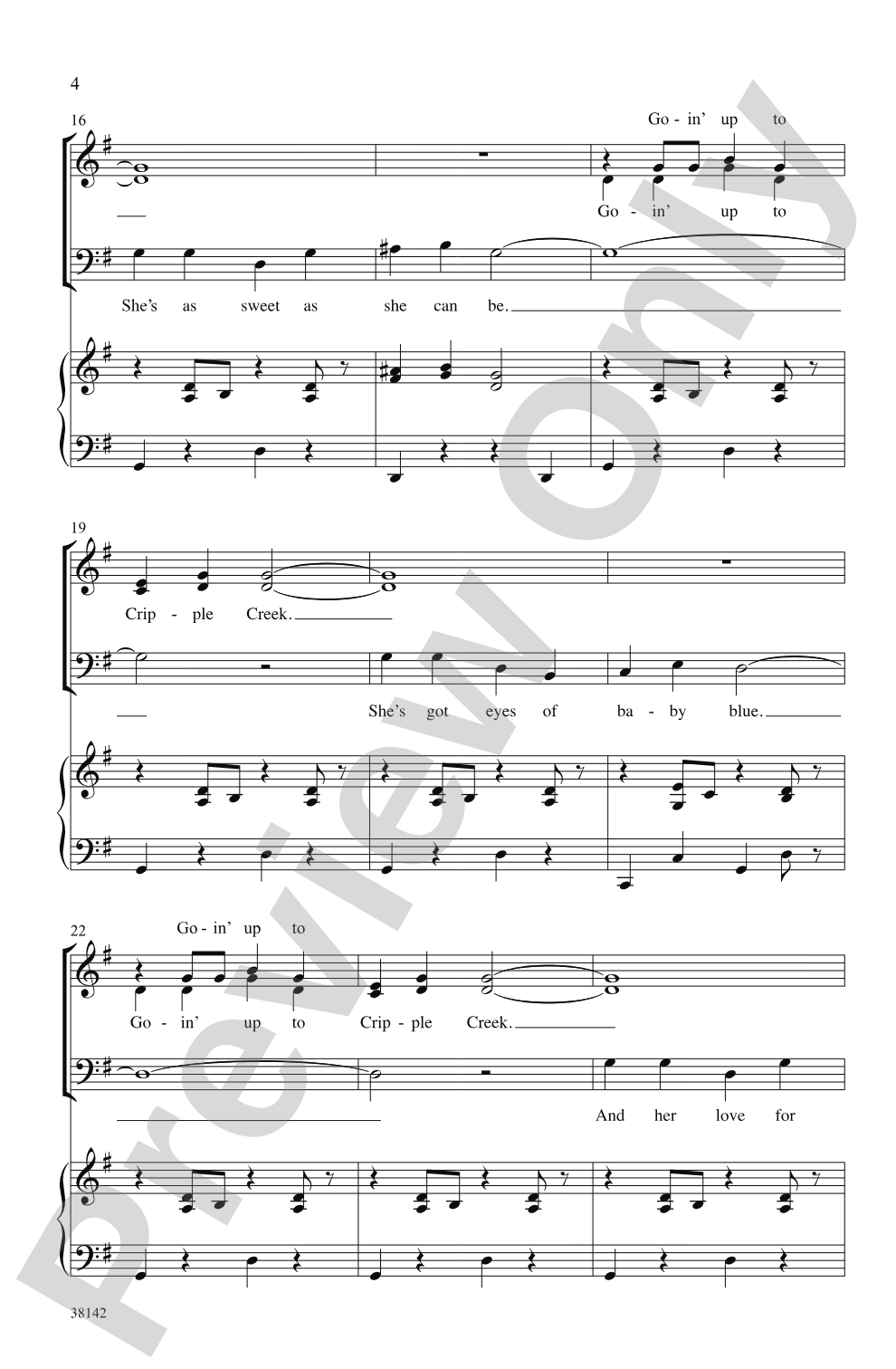

Cripple Creek: SAB Choral Octavo
Appalachian Folk Song / arr. Greg Gilpin
Item: 00-PO-0001415
$1.95
Minimum order quantity: 20 copies
Pickup currently not available
Description
"Have a little fun" singing this lively rendition of a great American fiddle tune that frequently alternates between the girls and the guys. A hand-clappin', foot-stompin' hootenanny, sure to last in your library! Accompaniment available on PianoTrax 4 CD (00-35870).


Cripple Creek: SAB Choral Octavo isn't in MakeMusic Cloud just yet...but it could be. Let us know you'd like to see it, and you'll help shape what comes next. In the meantime, start a free trial and dive into thousands of interactive titles your students can play along with today.
Request This Title
Tell us you want it.
Start Your Free Trial
Explore everything that's ready to play right now.
Sample Audio
1
Audio File
--:--
0:00
0:00
Sample Video
No sample videos found.
Additional Details
Series:
Alfred Choral Designs
Publisher:
Alfred Music
Page Count:
16
SKU:
00-PO-0001415
More about this title
About the Arranger: Greg Gilpin

Greg Gilpin is an ASCAP award-winning composer and arranger whose choral works appear in concert halls across North America and internationally. He has conducted performances at Carnegie Hall, Lincoln Center, Ryman Auditorium, Sydney Opera House, Royal Festival Hall in London, and Harpa Concert Hall in Reykjavik. Beyond the concert stage, Gilpin serves as Director of Educational Choral Publications for Shawnee Press and remains active as a recording industry producer and musician.
Gilpin's work extends beyond traditional music publishing. In 2021, he composed the score for the award-winning short film "Rosie's Rescue," earning "Best Score" recognition. He has also created innovative arrangements with established artists, including a world premiere performance of "What Child is This?" with opera singer Angela Brown and the Indianapolis Symphonic Choir. A member of ACDA, NAfME, SAG-AFTRA, and a Life Loyal Member of Phi Mu Alpha Sinfonia, Gilpin continues to teach, compose, and conduct in an evolving musical landscape.
Why we love this
Gilpin knows how to write a choral arrangement that feels genuine, not condescending. The alternating sections between treble and lower voices create natural opportunities for energy, humor, and spot-on voicing that works for mixed ensembles without requiring soloists. The straightforward, accessible writing means your singers can focus on capturing the infectious spirit of the tune rather than wrestling with complicated part writing.
What to expect
You're in the midst of a spirited hootenanny where everyone's tapping their feet and grinning through the verses. The tune has the comfortable, familiar quality of music that's been sung and played for generations, but Gilpin's arrangement adds shape and theatrical flair that keeps it fresh. This is a piece that breathes joy into a concert program.
Who it's for
This arrangement works well for high school choirs, community choruses, and church choirs looking for repertoire that brings genuine joy without requiring advanced vocal technique. The SAB voicing keeps it accessible for ensembles with developing musicianship while the arranging craft ensures the piece sounds polished and intentional.
How to get the most out of it
- Lean into the rhythmic drive of the piece. The foot-stomping energy lives in your ensemble's ability to lock the pulse together, so consider rehearsing this with a clear sense of where the natural stress falls in each phrase.
- Use the contrast between sections intentionally. When the girls and guys alternate, make those moments feel like a real conversation or playful exchange rather than a mechanical back-and-forth.
- Keep the accompaniment grounded and steady. The PianoTrax recording (00-35870) gives you a solid reference, but live piano or recorded accompaniment works best when your ensemble can sing confidently on top without waiting for the accompaniment to lead.
- Articulate the text crisply, especially on the rhythmically active passages. The folk idiom thrives on crisp consonants and clear vowels that help the tune bounce forward.
How to use it
Program this as an opener or closer to shift the concert's energy. The infectious folk quality makes it ideal for family concerts, pops programs, or any concert where you want to remind the audience that singing together can be plain fun. It pairs especially well with other American folk repertoire or seasonal programming where a lighter mood feels earned.
Skills your students will build
- Singing in three-part mixed voicing (SAB)
- Responding to rapid section-to-section cues and awareness of other voice parts
- Rhythmic precision in folk-idiom style with natural speech rhythm
- Blending with changing ensemble textures as treble and lower voices trade sections
- Maintaining ensemble cohesion and pulse through light, energetic material