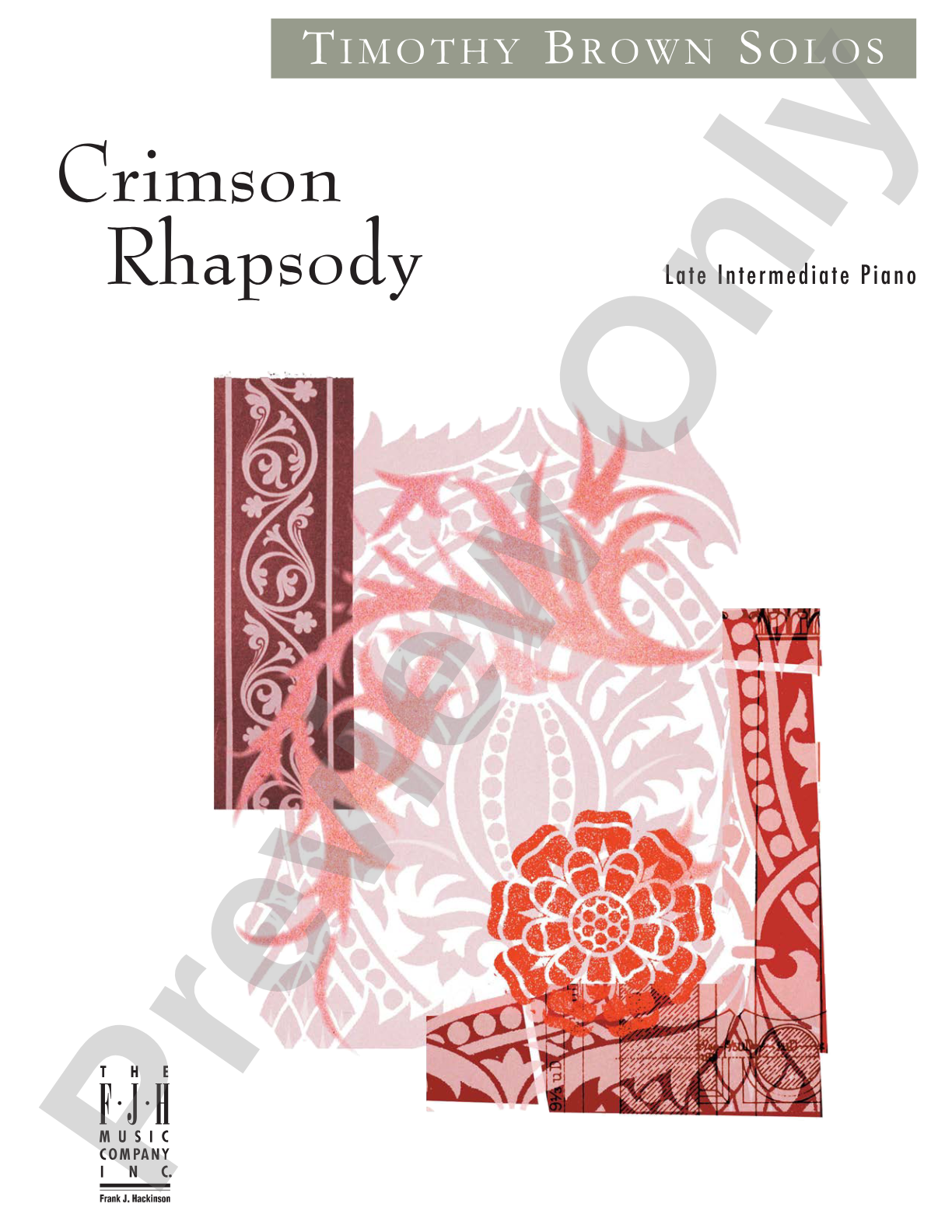
Crimson Rhapsody Sheet Music Preview

Crimson Rhapsody: Piano

By Timothy Brown

Item: 98-DW9046

Digital Download
$3.50
Description
A dramatic and emotionally-charged composition. Emphasizes balance between melody and accompaniment as well as voicing with one hand.

Crimson Rhapsody: Piano isn't in MakeMusic Cloud just yet...but it could be. Let us know you'd like to see it, and you'll help shape what comes next. In the meantime, start a free trial and dive into thousands of interactive titles your students can play along with today.

Sample Audio
No sample audio found.
Sample Video
Additional Details
Series: Written For You
Publisher: The FJH Music Company, Inc.
SKU: 98-DW9046

More about this title

Why we love this

Brown crafts a piece that teaches hand independence without feeling like a technical étude. The interplay between melody and accompaniment in a single hand forces students to think musically about texture and weight, not just finger patterns. It's the kind of writing that sounds impressive in recital while building real pianistic skills.

What to expect

Dramatic and richly colored, with emotional depth that builds from introspection to intensity. The piece breathes with urgency, asking the player to hold multiple musical ideas in focus simultaneously while maintaining expressive control.

Who it's for

Intermediate pianists ready to work on textural balance and hand independence. This suits students preparing recital material that showcases both technical growth and musical maturity.

How to get the most out of it

  • Shape the melody with careful voice leading in whichever hand carries it; the accompaniment figuration should recede slightly in dynamic weight to create clarity.
  • Practice hands separately until the accompanying voice feels automatic, then layer the melody on top so you can focus on its phrasing and direction.
  • Use the emotional arc of the piece to guide tempo choices; dramatic intensity often calls for subtle tempo flexibility rather than metronomic steadiness.
  • Balance intensity with control during the most climactic moments; raw power loses impact if the voicing becomes muddy.

How to use it

Program this as a solo recital centerpiece or as a bridge between lighter early-intermediate repertoire and more demanding classical or contemporary works. It works well alongside Romantic-era character pieces that similarly balance texture and emotion.

Skills your students will build

  • Voicing and texture control within a single hand
  • Melodic independence from accompaniment figuration
  • Dynamic balance between multiple musical lines
  • Emotional phrasing and expressive control in dramatic contexts

You May Also Like