Creepy Crawly Canon Cover Image

Creepy Crawly Canon: String Orchestra Conductor Score & Parts

$52.00 USD
Sale price  $52.00 USD Regular price 
Skip to product information
Creepy Crawly Canon Cover Image

Creepy Crawly Canon: String Orchestra Conductor Score & Parts

Music and lyrics by Loreta Fin

Grade: 1.5

Item: 76-52805

$52.00
Shipped

One moment…

Description
This piece was part of a project called Quintessentially Queensland. It was written to celebrate 50 years of the Australian String Teachers' Association (AUSTA). Loreta Fin's composition is a humorous look at some of the unique and often scary critters that can be found in this northeastern state of Australia. Some of the creatures that feature include crocodiles, snakes and spiders found at the Irwin's Australia Zoo, with amusing musical references to the song "Never Smile at a Crocodile" and the "Funeral March" for the demise of the invasive cane toads on Queensland roads.

Creepy Crawly Canon: String Orchestra Conductor Score & Parts isn't in MakeMusic Cloud just yet...but it could be. Let us know you'd like to see it, and you'll help shape what comes next. In the meantime, start a free trial and dive into thousands of interactive titles your students can play along with today.

Sample Pages

Sample Audio
0:00
0:00
Sample Video
Additional Details
Series: Wilfin String Orchestra: Young String Ensemble Series
Publisher: Wilfin Music
ISBN10: 1-4706-8601-5
ISBN13: 978-1-4706-8601-7
UPC: 038081619910
SKU: 76-52805

More about this title

About the Composer: Loreta Fin
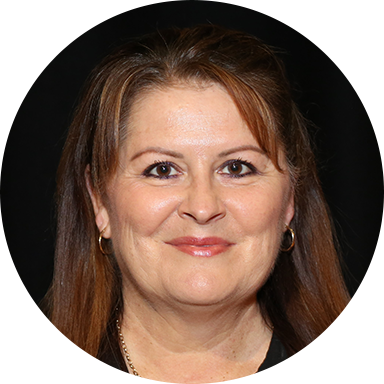
Loreta Fin

Loreta Fin AM trained at the Sydney Conservatorium of Music and built her career across multiple roles: first violinist with the Sydney Youth Orchestra, principal viola with the Queensland Pops Orchestra for over 25 years, and Director of Strings at Somerville House School in Brisbane since 1993. Her deep roots in Australian music education shaped her reputation as both performer and educator, leading to presentations at national conferences in Australia and the United States, along with extensive adjudication work across the country.

Fin's contributions to string teaching earned her a Queensland State Award in 2009 and, more recently, the National Award for Services to Music and String Teaching. She has composed over 100 works for string orchestra published internationally by Alfred Music, served as State and National President of the Australian Strings Association, and currently works as State Advisor for Strings and examiner with the Australian Music Examinations Board. Since 2015, she has conducted the State and National Honours Ensembles Programs in Brisbane.

Why we love this

Fin nails the comedic timing that makes this Grade 1.5 piece genuinely fun to teach and perform. Rather than treating humor as an afterthought, she embeds it into the musical structure itself, so students grasp the jokes through what they're playing rather than just what they're hearing. The clever references to "Never Smile at a Crocodile" and the "Funeral March" give even young orchestras material worth exploring.

What to expect

Playful and inventive, with moments of genuine musical wit. The piece captures the slightly unsettling appeal of Australian wildlife without ever losing its sense of fun, creating a performance that feels like a secret joke shared between the ensemble and the audience.

Who it's for

String orchestras in grades 5 through 8 who can handle a light Grade 1.5 score with rhythmic clarity and independent part-playing. This works especially well for orchestras seeking concert repertoire that engages audiences without sacrificing musical substance.

How to get the most out of it

  • Balance the canon entries so each voice remains audible. Young ensembles often blob together in canonic passages, so isolate the parts during rehearsal and let students hear how the independence actually creates the humor.
  • Let the personality of each creature come through in the articulation and character. The difference between how a spider scuttles and how a crocodile moves lives in the bow, not just the notes.
  • Anchor the intonation in the lower strings. Grade 1.5 orchestras sometimes drift when the texture gets playful, so have your cellos and basses lock in the harmonic framework early.

How to use it

Program this as a concert opener or a lighter middle piece that breaks up heavier repertoire and gives the audience permission to smile. It also serves schools celebrating Australian themes or animal conservation topics, and it works beautifully in educational outreach performances where younger audiences appreciate the storytelling.

Skills your students will build

  • Executing canonic entries with rhythmic precision
  • Maintaining independent melodic lines while listening to other voices
  • Shaping phrases to convey character and mood
  • Coordinating articulation across the ensemble for unified expression
  • Reading and responding to programmatic cues in the score

You May Also Like