Credo: Bells Sheet Music Preview

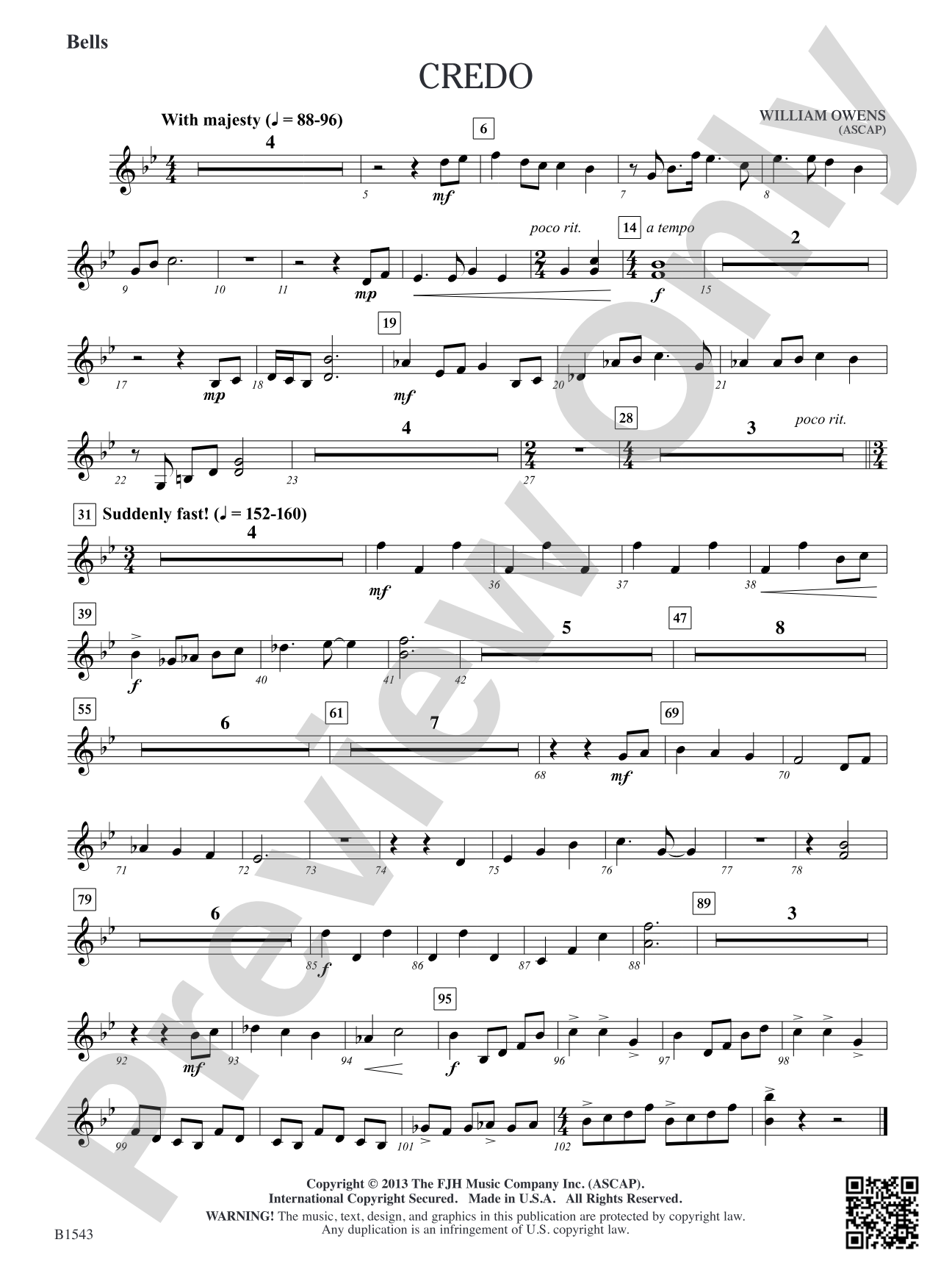
Credo: Bells

By William Owens

Grade: 2.5

Item: 98-PC-DB1543_B

Digital Download
$7.00
Description
Bold and declarative, this work is based on the Latin word for “I believe.” Lightly inspired by musical settings of ancient Nicene Creed, the music begins subdued, yet quickly blossoms into a bold harmonic statement as melodies subtly pass through a series of instrumental amalgam. The subsequent allegro, largely characterized by engaging harmonies and hemiolic rhythms, offers a grand array of sounds and tonal textures as the music drives toward the electrifying finish.

Don't just read it, hear it, play along with it, and watch your students grow with it. In MakeMusic Cloud, Credo: Bells comes alive with professional accompaniment, adjustable tempo, and built-in practice tools that turn solo practice into real progress.

Sample Audio
0:00
0:00
Sample Video
Additional Details
Series: FJH Young Band
Publisher: The FJH Music Company, Inc.
SKU: 98-PC-DB1543_B

More about this title

About the Composer: William Owens

William Owens

William Owens brings three decades of classroom experience to his prolific compositional output. A VanderCook College of Music graduate and former Texas band director, he has created over 300 works for concert band, string orchestra, and small ensemble since 1993. His music appears on contest lists nationally and internationally, and his compositions are frequently studied in music education texts as models of craft and accessibility.

Owens has earned recognition from major musical organizations including ASCAP, the American Bandmasters Association, and Phi Beta Mu International. He received commissions from South Plains College, the American Bandmasters Association, and Phi Beta Mu, among others. Now based in Fort Worth, Texas, Owens continues to influence young musicians through a body of work that balances musical substance with practical performance considerations.

Why we love this

Owens crafts band writing that respects young musicians' capabilities while refusing to condescend musically. The harmonic language here is genuinely sophisticated, moving beyond simple diatonic writing into the kind of tonal color that keeps audiences engaged and keeps your sections intellectually invested in their parts.

What to expect

The opening settles into quiet confidence, then unfolds into lush harmonic writing that pulls the listener forward. The allegro crackles with rhythmic energy and layered textures, building momentum toward a finish that delivers the dramatic payoff the title promises.

Who it's for

Grade 2.5 bands ready to tackle moderately complex harmonic language and rhythmic sophistication. This work suits ensembles that have solid fundamentals in place and directors looking to program something with real musical substance for contest or festival performance.

How to get the most out of it

  • Balance the opening subdued section by resisting the urge to pull back too much; let the natural acoustics of the venue carry the quiet passages so the transition to bold harmonic statement feels earned rather than sudden.
  • Isolate the hemiolic rhythms in sectional rehearsals before conducting them in tempo. Once your sections understand how the subdivisions relate to the basic beat, the allegro will lock together naturally.
  • Shape the melodies as they pass between instrumental families, treating each instrument handoff as a phrase continuation rather than isolated solo moments. This creates the sense of unified melodic journey the score intends.

How to use it

Program this as a centerpiece for a festival or contest performance where you want to showcase your band's harmonic awareness and rhythmic precision. The piece moves quickly enough to work well in a varied program, and its declarative character provides a strong statement whether you're opening a set or leading into a finale.

Skills your students will build

  • Sustaining soft dynamics while maintaining ensemble precision
  • Reading and performing hemiolic rhythms (rhythmic figures that subdivide the beat differently than the prevailing meter)
  • Following melodic lines as they migrate between instrumental families
  • Balancing independent harmonic progressions across the band while maintaining unified intonation
  • Executing clean releases and attacks during textural transitions

You May Also Like