

Creative Composition Toolbox, Book 6: A Step-by-Step Guide for Learning to Compose: Piano
A Step-by-Step Guide for Learning to Compose
By Wynn-Anne Rossi
Level: Late Intermediate
Item: 00-PB-0001839
$8.99
Pickup currently not available
Related Items
Creative Composition Toolbox, Book 6: Piano Book |
$8.99
|
View |
Description
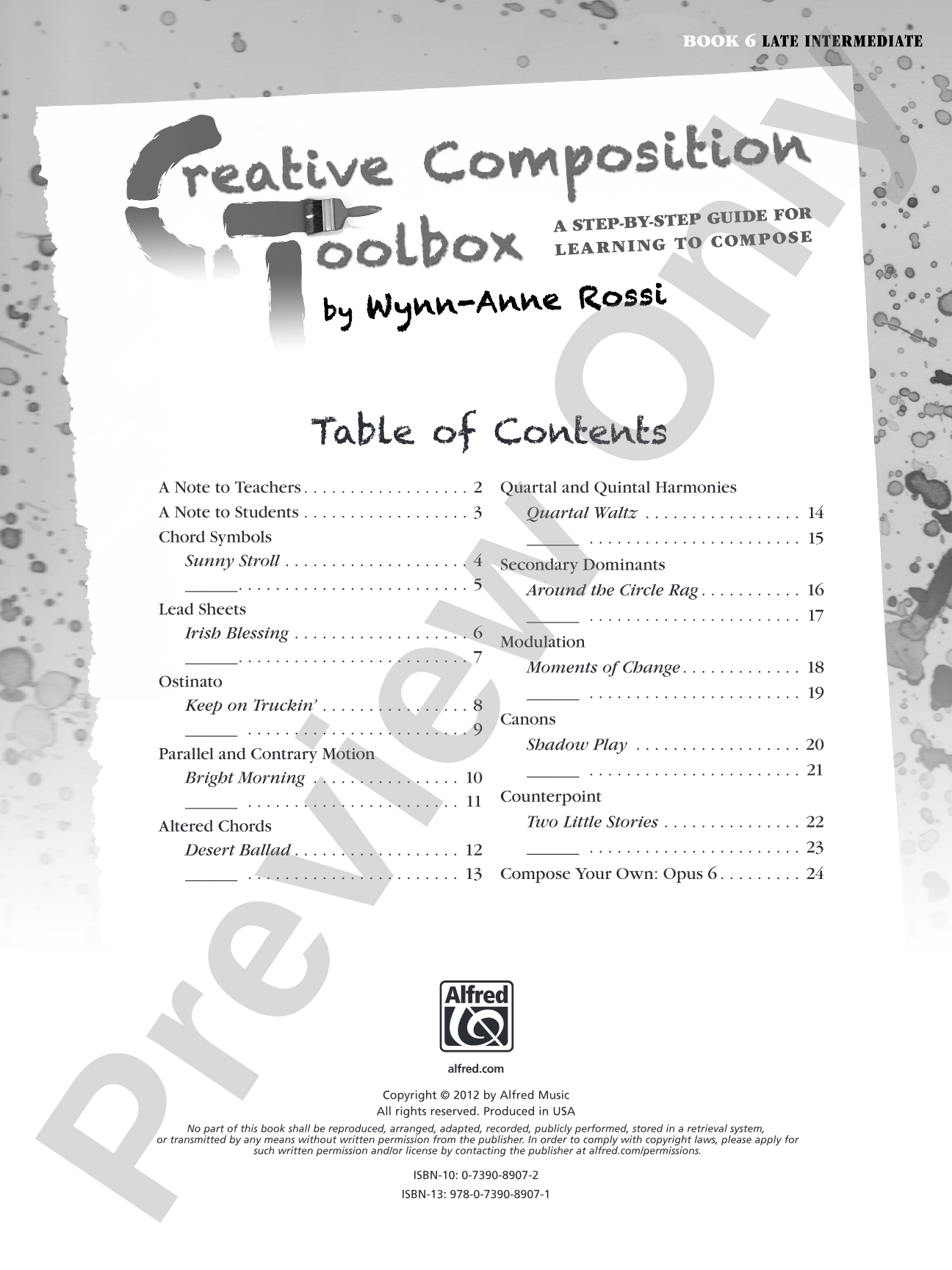
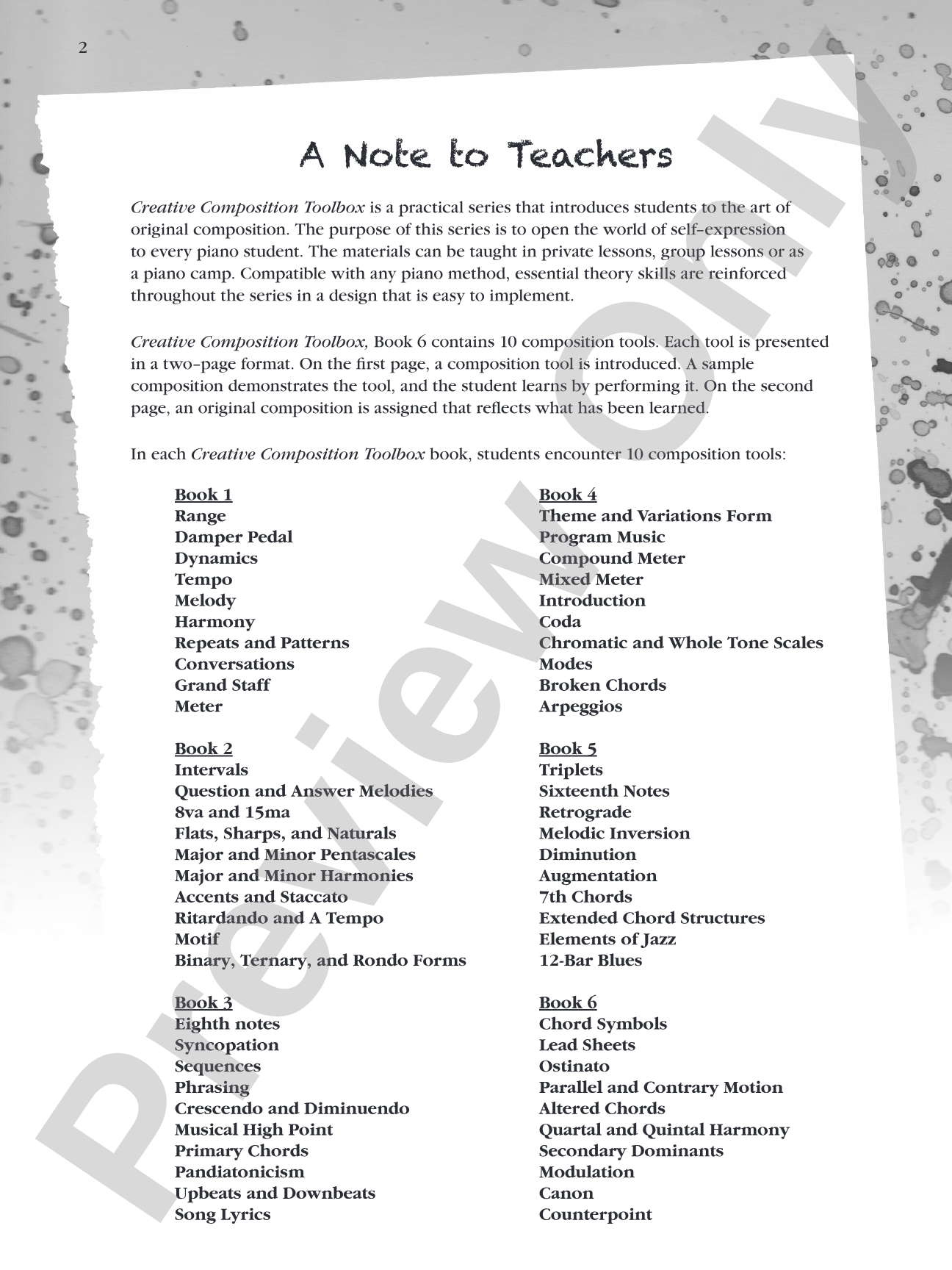
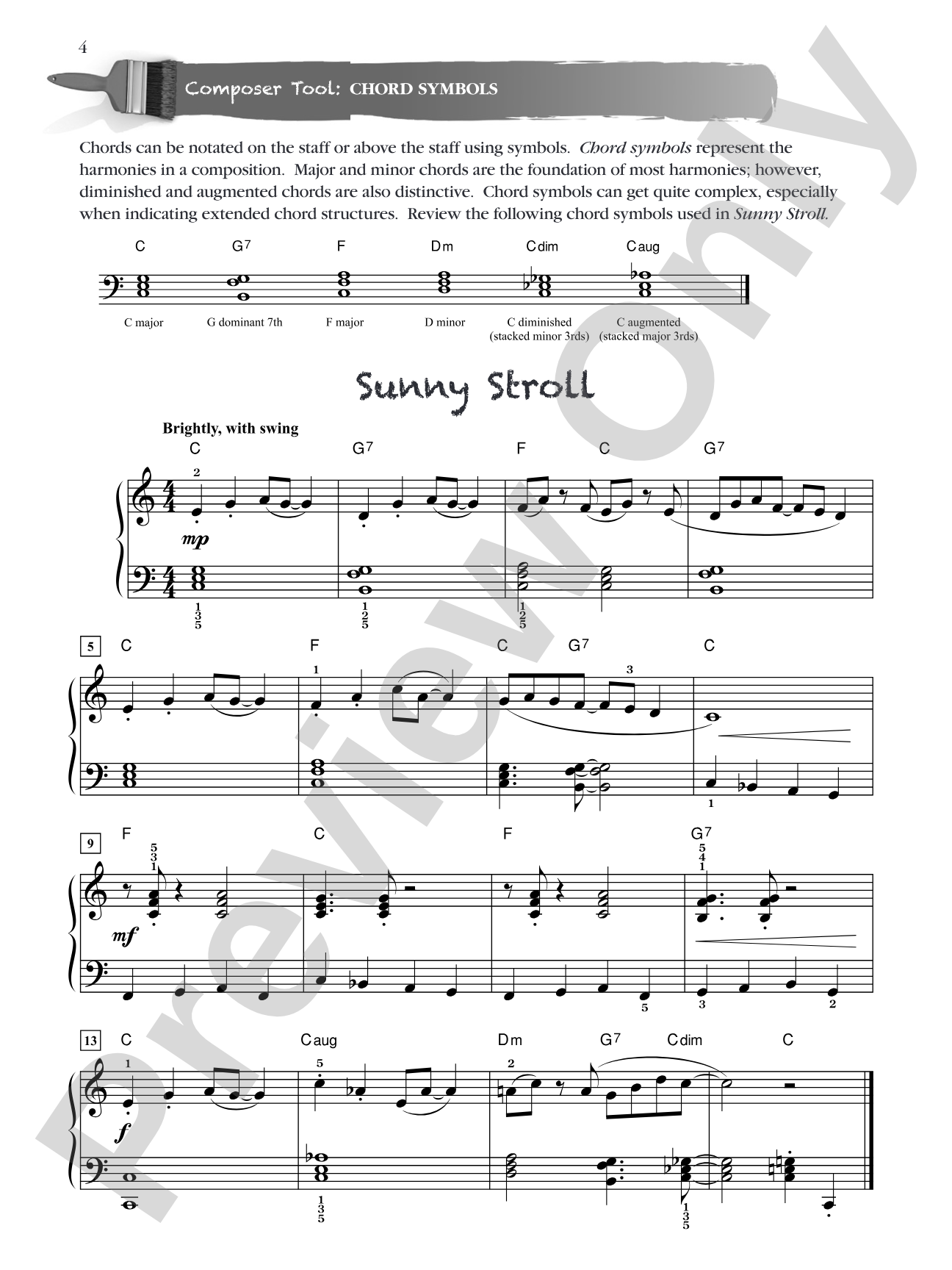
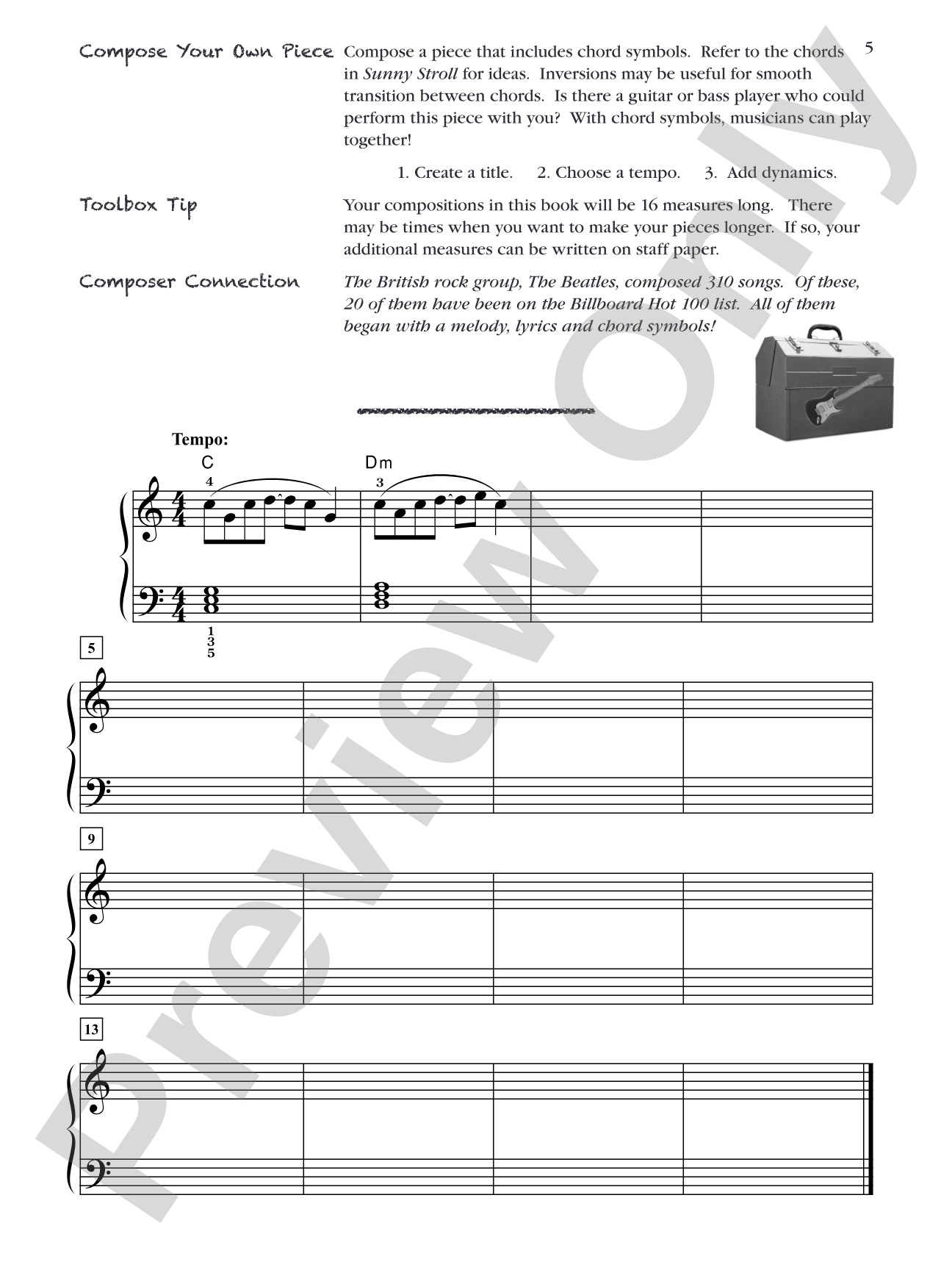
This late intermediate book introduces students to the art of original composition. It features the following composition tools: chord symbols, lead sheets, ostinato, parallel and contrary motion, altered chords, quartal and quintal harmony, secondary dominants, modulation, canon, and counterpoint.
"This is hands-down THE BEST step-by-step guide for teaching and learning to compose!"
-Yiyi Ku, MusicTeachersHelper.com


"This is hands-down THE BEST step-by-step guide for teaching and learning to compose!"
-Yiyi Ku, MusicTeachersHelper.com
Creative Composition Toolbox, Book 6: A Step-by-Step Guide for Learning to Compose: Piano isn't in MakeMusic Cloud just yet...but it could be. Let us know you'd like to see it, and you'll help shape what comes next. In the meantime, start a free trial and dive into thousands of interactive titles your students can play along with today.
Request This Title
Tell us you want it.
Start Your Free Trial
Explore everything that's ready to play right now.
Sample Audio
No sample audio found.
Sample Video
Additional Details
Series:
Creative Composition Toolbox
Publisher:
Alfred Music
Page Count:
24
SKU:
00-PB-0001839
More about this title
About the Composer: Wynn-Anne Rossi

Wynn-Anne Rossi has built an international reputation as both a composer and educator whose works span vocal music, instrumental repertoire, and large ensemble compositions. Her commissions from Minnesota Public Radio, the National Endowment for the Arts, the American Composers Forum, and the St. Paul Chamber Orchestra reflect her standing in the professional music world, with performances across the United States, Europe, Iceland, and Australia.
Rossi's catalog includes more than 100 piano publications, and she regularly conducts composition residencies sponsored by leading arts organizations. These residencies often feature collaborative projects where student musical ideas inspire original orchestral and band works. Her commitment to nurturing young composers is evident in her ongoing work with Alfred Music, including the Creative Composition Toolbox series and the educational video series Wednesdays with Wynn-Anne.
Why we love this
This book delivers exactly what intermediate students need to move from analysis into creation. Rossi sequences the concepts logically, building from accessible tools like ostinato and parallel motion toward sophisticated techniques like secondary dominants and modulation, so students experience real compositional growth rather than overwhelming theory.
What to expect
Collaborative and empowering. Each chapter introduces a new compositional tool through clear explanation and guided practice, then invites students to experiment and create. The progression feels natural and achievable; students see themselves as working composers, not just students completing assignments.
Who it's for
Late intermediate piano students ready to think like composers, as well as music teachers who want a structured, step-by-step framework for composition instruction. It works equally well in one-on-one lessons and classroom settings where students are preparing original work.
How to get the most out of it
- Work through each chapter's composition exercises before assigning them to students; this helps you anticipate where students will struggle and lets you model the decision-making process composing requires.
- Have students share finished compositions aloud or in small groups as they complete chapters. Hearing their own work performed reinforces that composition is a real, achievable skill.
- Return to earlier chapters as reference material. Once students master quartal harmony, they can flip back to understand how ostinato choices affect harmonic density in their new pieces.
- Ask students to identify the composition tools they hear in pieces they're already learning or performing. This connection between analysis and creation deepens their understanding of both.
How to use it
Integrate this into your curriculum for students pursuing music theory, composition, or college audition portfolios. The 24-page format fits easily into a semester of study, or assign chapters over a full year alongside performance repertoire. A capstone project where students write original pieces using multiple tools from the book makes a compelling final assessment.
Skills your students will build
- Writing with chord symbols and lead sheets
- Creating ostinato patterns and managing rhythmic texture
- Composing with parallel and contrary motion
- Using altered chords and extended harmony
- Building phrases with quartal and quintal harmony
- Modulating between keys using secondary dominants
- Developing canon and two-voice counterpoint
- Organizing multi-section compositions with structural coherence