

Creative Composition Toolbox, Book 5: A Step-by-Step Guide for Learning to Compose: Piano
A Step-by-Step Guide for Learning to Compose
By Wynn-Anne Rossi
Level: Intermediate
Item: 00-PB-0001838
$7.99
Pickup currently not available
Related Items
Creative Composition Toolbox, Book 5: Piano Book |
$7.99
|
View |
Description
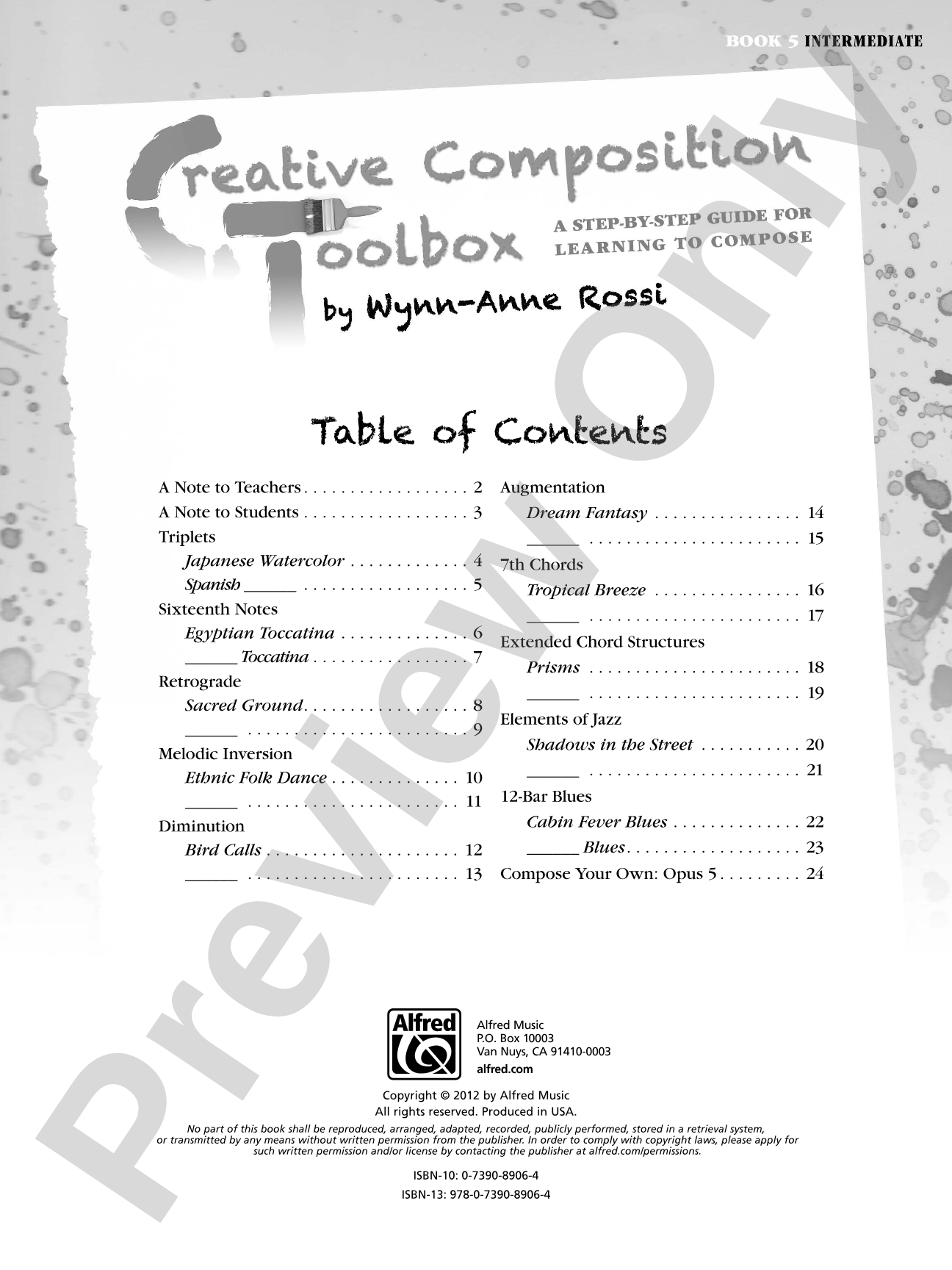
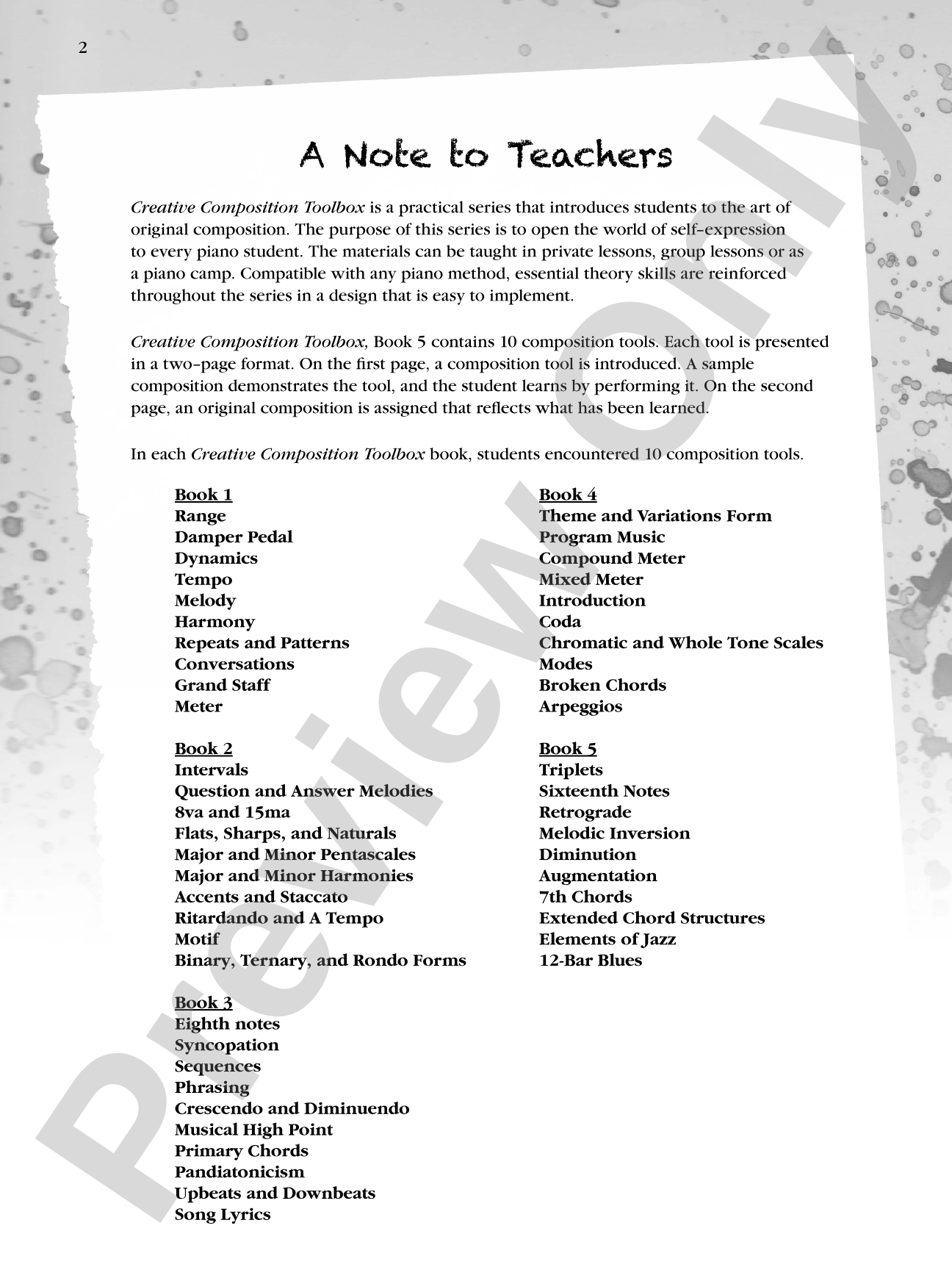
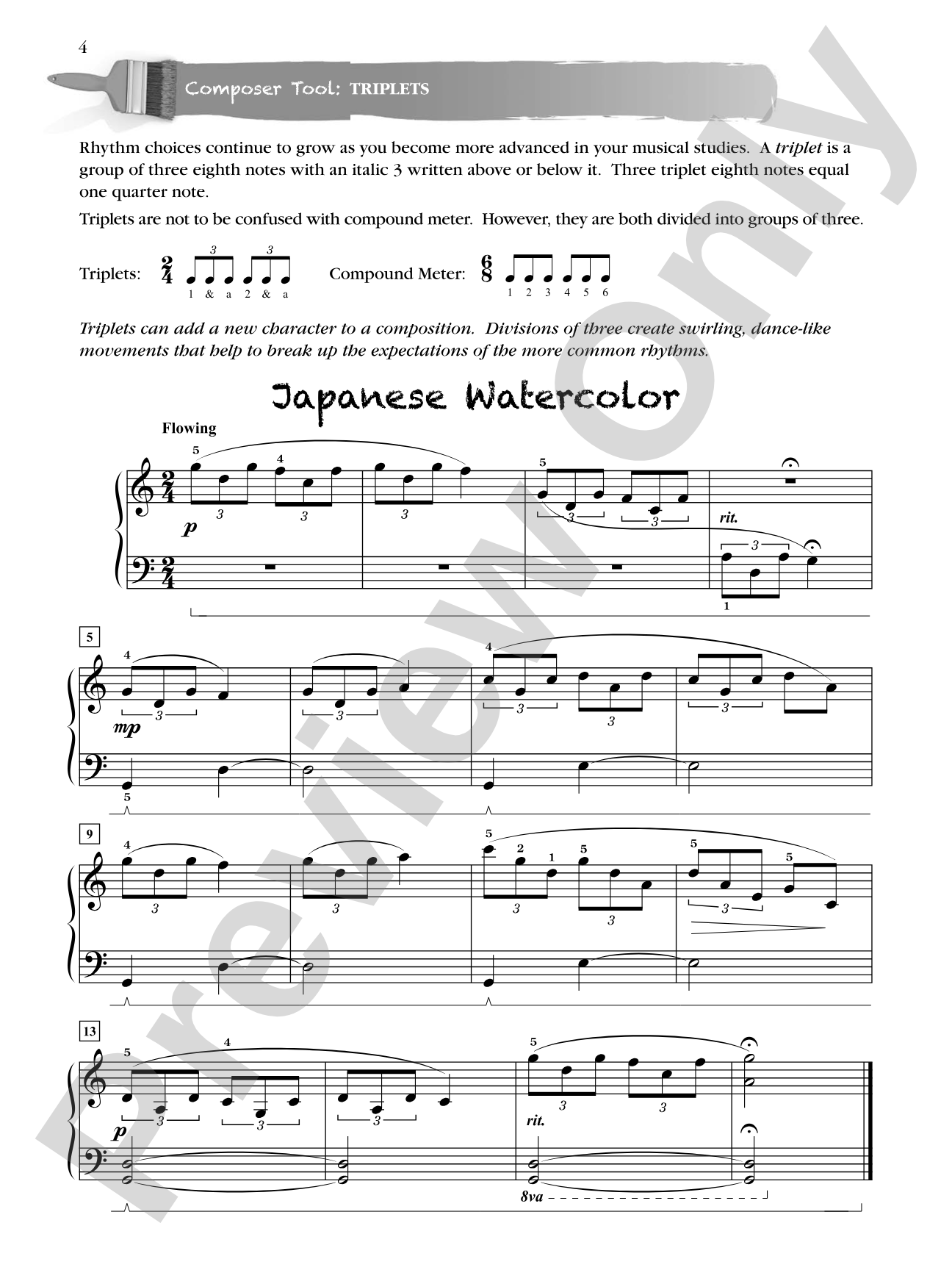
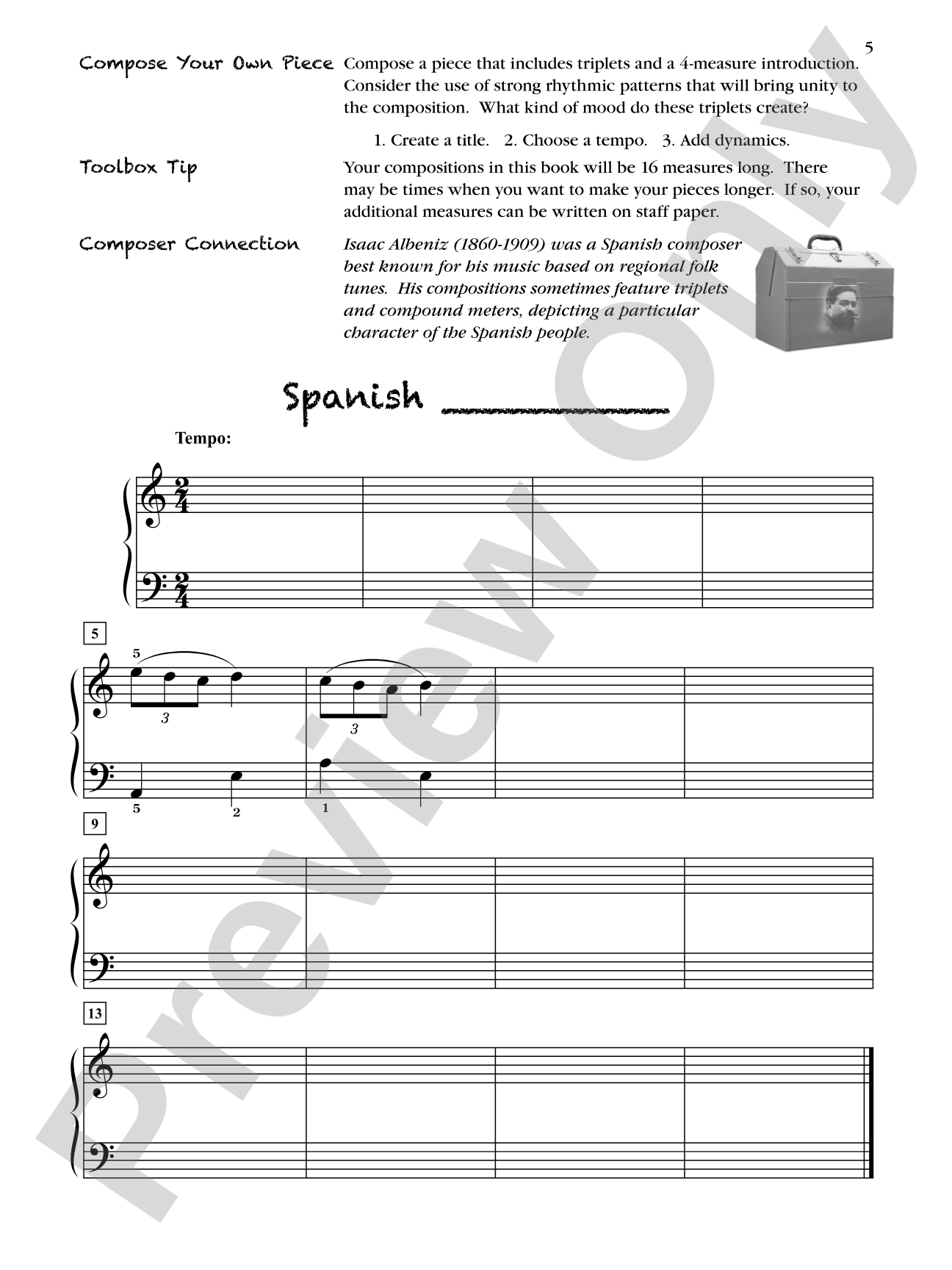
This intermediate book introduces students to the art of original composition. It features the following composition tools: triplets, sixteenth notes, retrograde, inversion, diminution, augmentation, 7th chords, extended chord structures, elements of jazz, and 12-bar blues.
"This is hands-down THE BEST step-by-step guide for teaching and learning to compose!"
-Yiyi Ku, MusicTeachersHelper.com


"This is hands-down THE BEST step-by-step guide for teaching and learning to compose!"
-Yiyi Ku, MusicTeachersHelper.com
Creative Composition Toolbox, Book 5: A Step-by-Step Guide for Learning to Compose: Piano isn't in MakeMusic Cloud just yet...but it could be. Let us know you'd like to see it, and you'll help shape what comes next. In the meantime, start a free trial and dive into thousands of interactive titles your students can play along with today.
Request This Title
Tell us you want it.
Start Your Free Trial
Explore everything that's ready to play right now.
Sample Audio
No sample audio found.
Sample Video
Additional Details
Series:
Creative Composition Toolbox
Publisher:
Alfred Music
Page Count:
24
SKU:
00-PB-0001838
More about this title
About the Composer: Wynn-Anne Rossi

Wynn-Anne Rossi stands among America's most prolific composers for young musicians, with over 100 piano works to her name alongside commissions from the National Endowment for the Arts, the St. Paul Chamber Orchestra, and Minnesota Public Radio. Her catalog spans vocal music, orchestral works, and band pieces, many inspired directly by student creativity during her composition residencies across the country and internationally.
Rossi's deepest commitment lies in unlocking compositional thinking in young people. Her residency work with orchestras and bands has yielded pieces built from student musical ideas, and her Creative Composition Toolbox series with Alfred Music reflects her conviction that every musician benefits from understanding how music is constructed. Through lectures, residencies, and digital content including her Wednesdays with Wynn-Anne video series, she continues shaping how composition is taught.
Why we love this
Book 5 respects student intelligence by introducing genuinely sophisticated compositional techniques without overwhelming the learner. The progression from rhythmic tools like triplets and sixteenth notes into motivic transformations (retrograde, inversion, diminution, augmentation) builds logical musical thinking, while the jazz and blues chapters anchor theory to living, accessible musical traditions.
What to expect
Exploration with guardrails. Each chapter builds confidence by introducing one new compositional tool with clear examples, then immediately inviting the student to apply it. The progression feels like learning a language where new vocabulary arrives just as you need it.
Who it's for
Intermediate pianists ready to move beyond interpretation into creation, typically around ages 12 and up or after several years of study. Works equally well for individual lesson students, small composition seminars, or motivated self-learners who want structure without heavy theoretical prerequisites.
How to get the most out of it
- Assign one composition tool per week and ask students to create eight-bar miniatures using that single technique before moving forward. This focused depth prevents the toolkit from becoming a shopping list.
- Have students notate their own compositions in real time during lessons rather than completing them at home unsupervised. You'll catch conceptual misunderstandings immediately and model revision as part of the process.
- Play completed student compositions aloud in class, even rough drafts. Hearing their work brings abstract notation into physical sound and motivates continued engagement with the material.
How to use it
Weave this into your curriculum between October and April, pairing completed student compositions with your concert programs as intermission pieces or preconcert demonstrations of student creativity. Alternatively, use it as enrichment for piano students who finish repertoire early or as a bridge for theory students wanting practical application beyond textbook exercises.
Skills your students will build
- Composing with rhythmic complexity (triplets, sixteenth notes, mixed rhythmic figures)
- Applying motivic transformation techniques (retrograde, inversion, diminution, augmentation)
- Using jazz harmony (7th chords, extended chord structures)
- Understanding blues form and stylistic conventions (12-bar blues structure)
- Translating musical ideas into notation
- Revising and refining original compositions