

Creative Composition Toolbox, Book 4: A Step-by-Step Guide for Learning to Compose: Piano
A Step-by-Step Guide for Learning to Compose
By Wynn-Anne Rossi
Level: Early Intermediate
Item: 00-PB-0001837
$6.99
Pickup currently not available
Related Items
Creative Composition Toolbox, Book 4: Piano Book |
$6.99
|
View |
Description
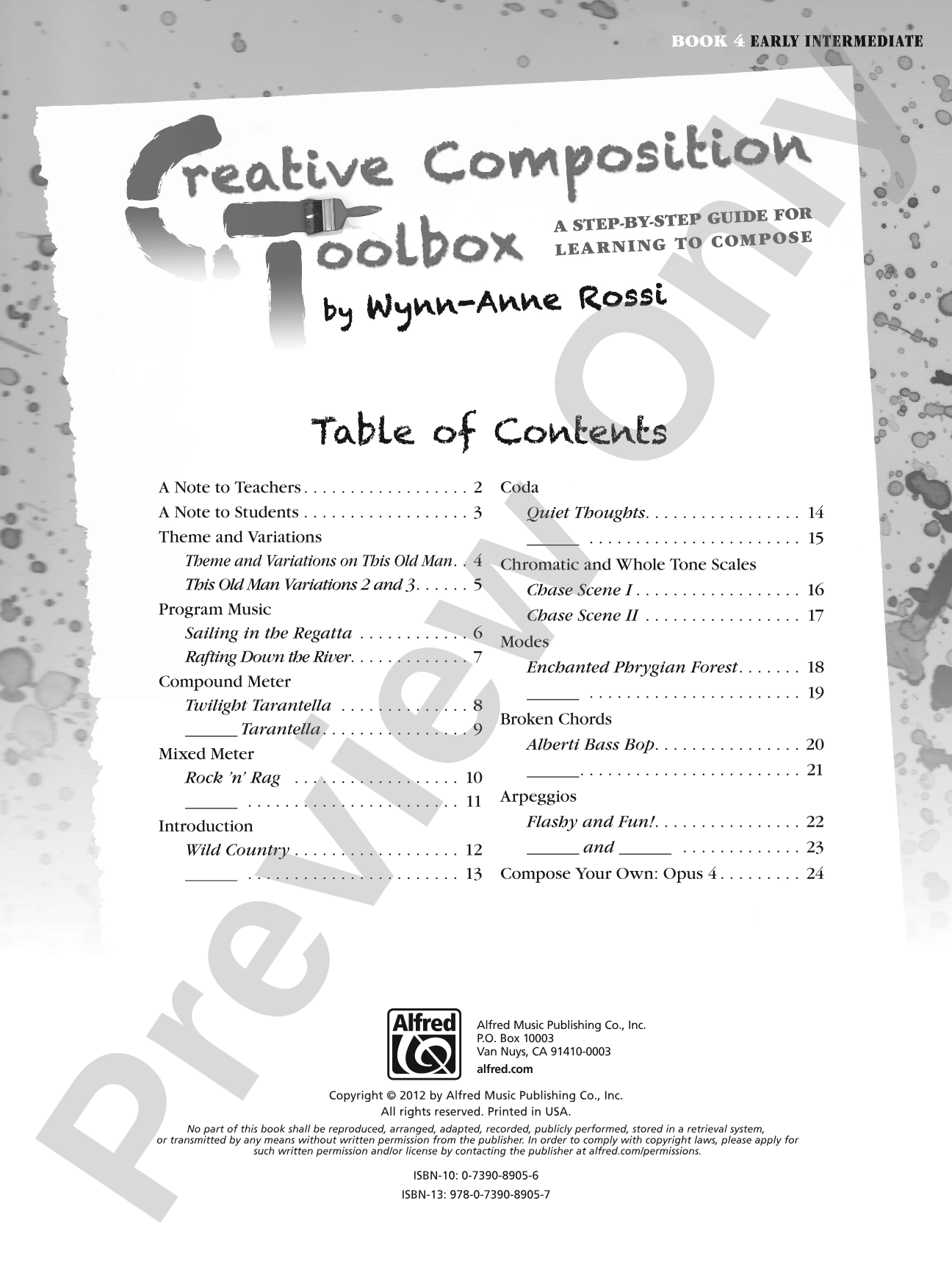
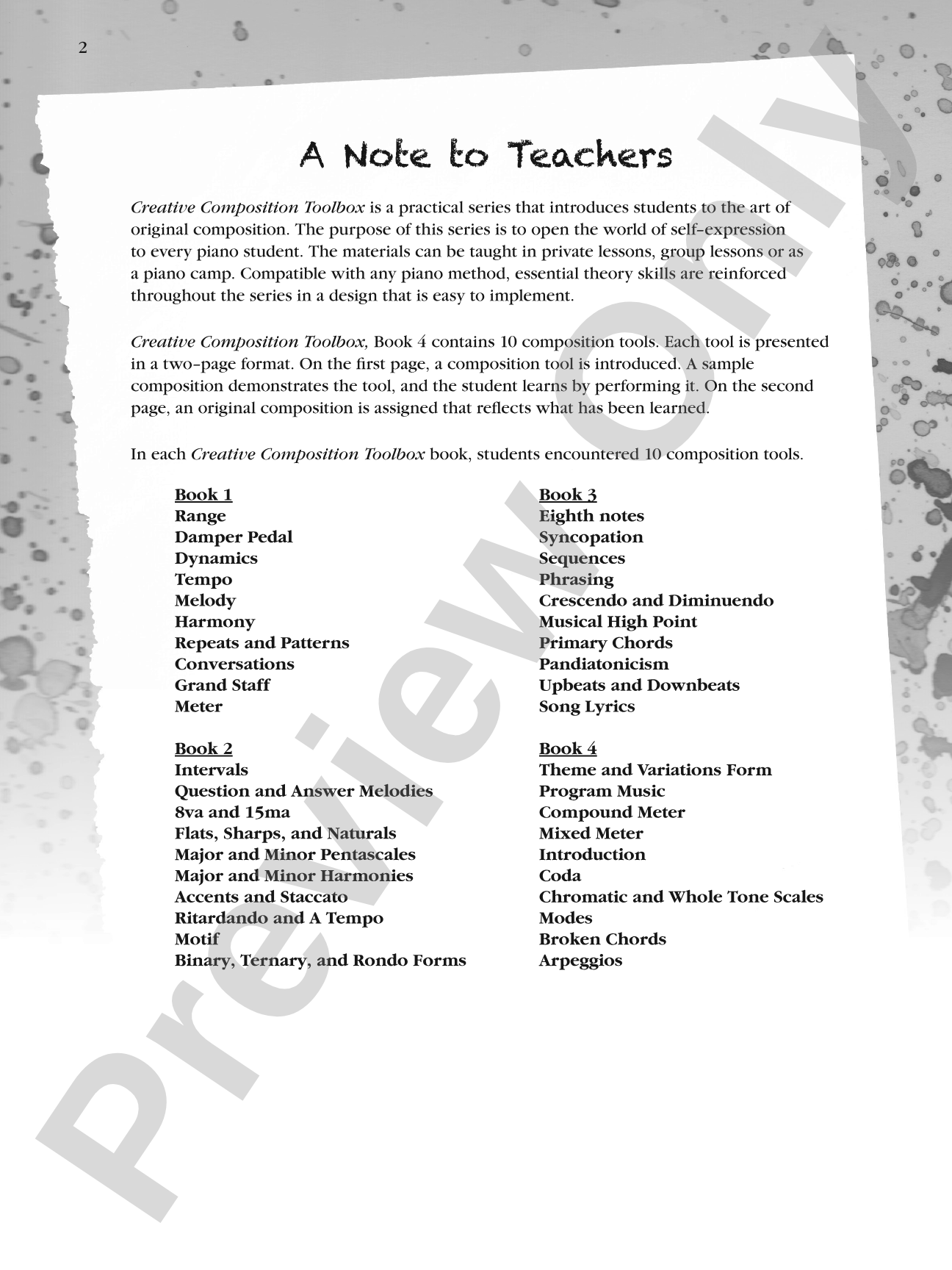
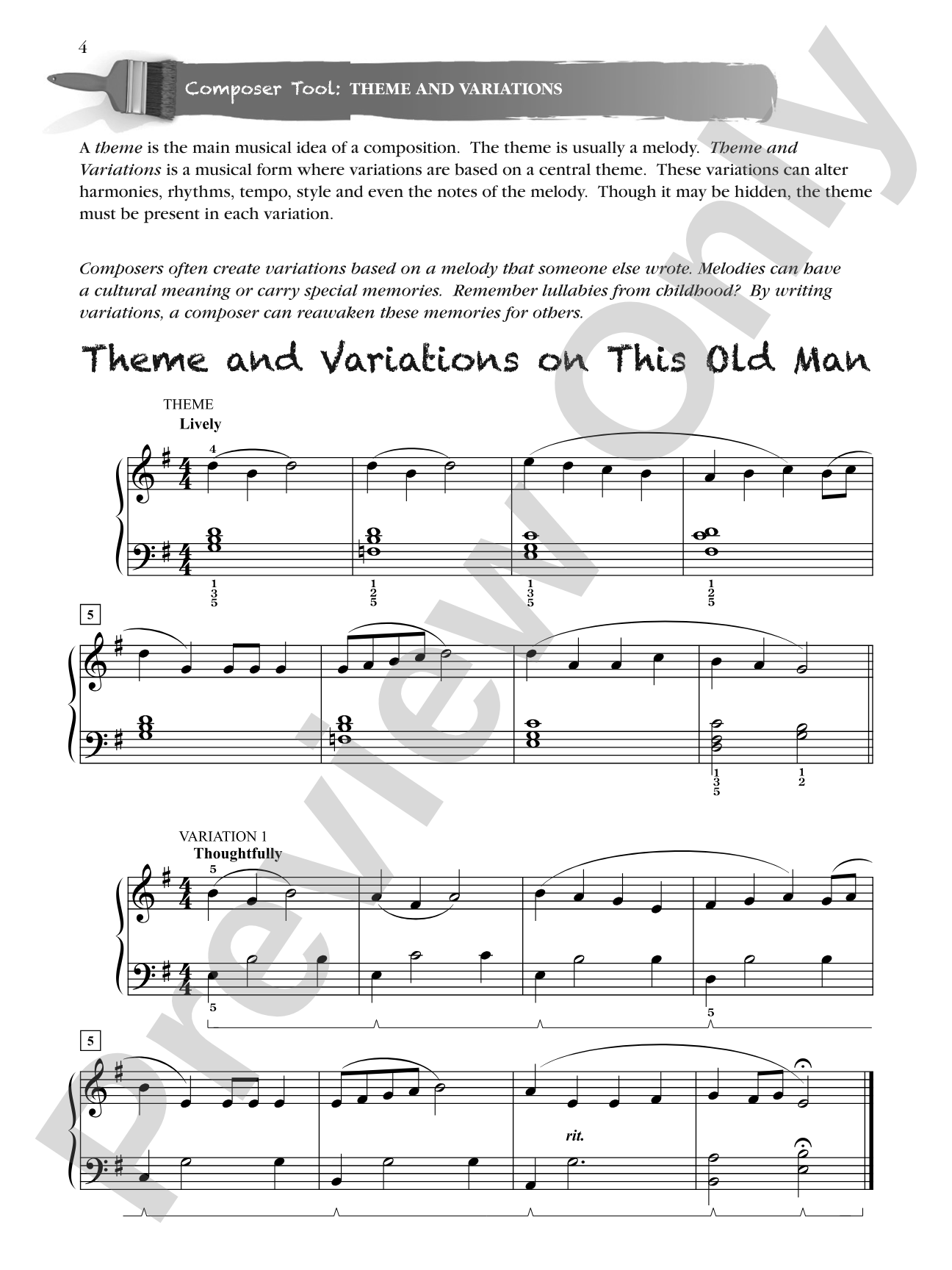
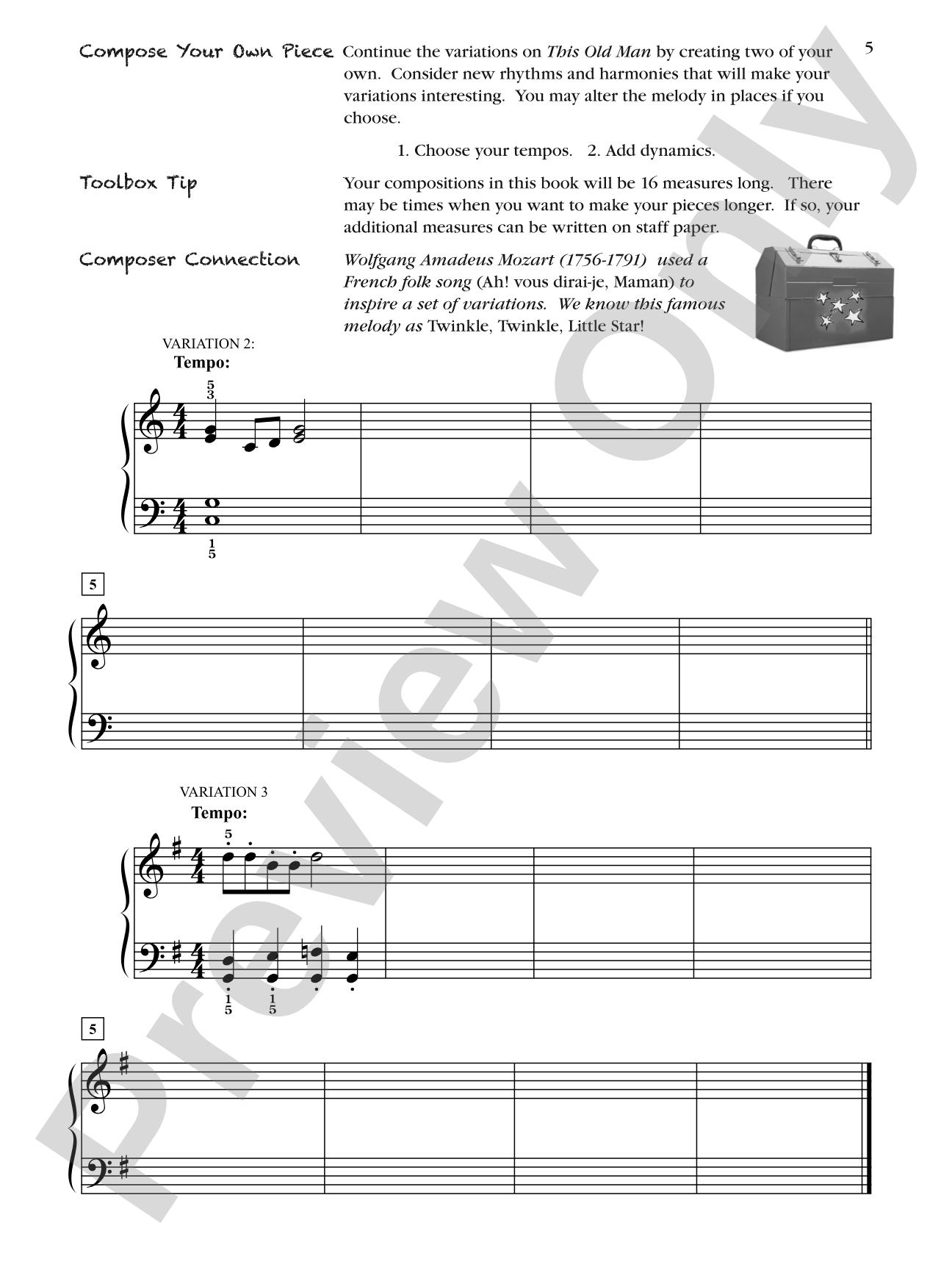
This early intermediate book introduces students to the art of original composition. It features the following composition tools: theme and variations form, program music, compound meter, mixed meter, introduction, coda, chromatic and whole tone scales, modes, broken chords, and arpeggios.
"This is hands-down THE BEST step-by-step guide for teaching and learning to compose!"
-Yiyi Ku, MusicTeachersHelper.com


"This is hands-down THE BEST step-by-step guide for teaching and learning to compose!"
-Yiyi Ku, MusicTeachersHelper.com
Creative Composition Toolbox, Book 4: A Step-by-Step Guide for Learning to Compose: Piano isn't in MakeMusic Cloud just yet...but it could be. Let us know you'd like to see it, and you'll help shape what comes next. In the meantime, start a free trial and dive into thousands of interactive titles your students can play along with today.
Request This Title
Tell us you want it.
Start Your Free Trial
Explore everything that's ready to play right now.
Sample Audio
No sample audio found.
Sample Video
Additional Details
Series:
Creative Composition Toolbox
Publisher:
Alfred Music
Page Count:
24
SKU:
00-PB-0001837
More about this title
About the Composer: Wynn-Anne Rossi

Wynn-Anne Rossi builds her international reputation on two pillars: compositional craft and an infectious commitment to unlocking creativity in young musicians. Her catalog spans over 100 piano works alongside vocal, chamber, and orchestral pieces that have earned commissions from Minnesota Public Radio, the National Endowment for the Arts, the American Composers Forum, and the St. Paul Chamber Orchestra, with performances across the United States, Europe, Iceland, and Australia.
Rossi's teaching philosophy shines through her residency work with professional arts organizations, where she mentors students in composition inspired by their own musical ideas. Her partnership with Alfred Music on projects like the Creative Composition Toolbox series and the Wednesdays with Wynn-Anne video series demonstrates her conviction that composition instruction belongs in every music classroom.
Why we love this
Book 4 builds on a proven scaffolding system that makes composition accessible without oversimplifying the craft. Each concept arrives with clear examples and guided exercises that students actually want to complete, which means you'll see real growth in their musical thinking rather than just completed worksheets.
What to expect
Structured without feeling rigid. Each chapter introduces one or two compositional tools and shows how they work in context before asking students to apply them. The progression feels natural because it respects how composers actually think about form, color, and expression.
Who it's for
Piano students at the early intermediate level who are ready to think like composers, not just performers. It works equally well as a supplement within a traditional lesson sequence or as the foundation for a dedicated composition class or elective.
How to get the most out of it
- Start with theme and variations early in your unit. Ask students to compose a simple eight-bar melody first, then work through three variations before tackling more complex forms. This builds confidence before introducing compound and mixed meters.
- Have students listen to recordings of program music (Debussy, Saint-Saëns) while they study that section. Hearing how composers use musical imagery makes the abstract concept concrete and sparks their own ideas.
- When introducing chromatic and whole tone scales, play them at the piano yourself before students attempt writing with them. The sound is unfamiliar enough that hearing it first prevents frustration.
- Encourage students to perform their own compositions aloud, even rough drafts. Hearing what they've written reveals voice-leading issues and rhythmic awkwardness that reading alone won't catch.
How to use it
Integrate this into regular piano instruction during the second semester when students have solid technique and music reading skills. You can also use it as a springboard for a spring recital feature where students premiere their own completed compositions alongside standard repertoire.
Skills your students will build
- Composing in theme and variations form
- Writing program music with descriptive intent
- Reading and writing in compound meter (6/8, 9/8, 12/8)
- Managing mixed meter (alternating 3/4 and 4/4)
- Structuring introductions and codas
- Using chromatic and whole tone scales for color and expression
- Applying modes in melodic writing
- Voicing broken chords and arpeggios with musical intent