

Creative Composition Toolbox, Book 3: A Step-by-Step Guide for Learning to Compose: Piano
A Step-by-Step Guide for Learning to Compose
By Wynn-Anne Rossi
Level: Late Elementary
Item: 00-PB-0001836
$6.99
Pickup currently not available
Related Items
Creative Composition Toolbox, Book 3: Piano Book |
$6.99
|
View |
Description
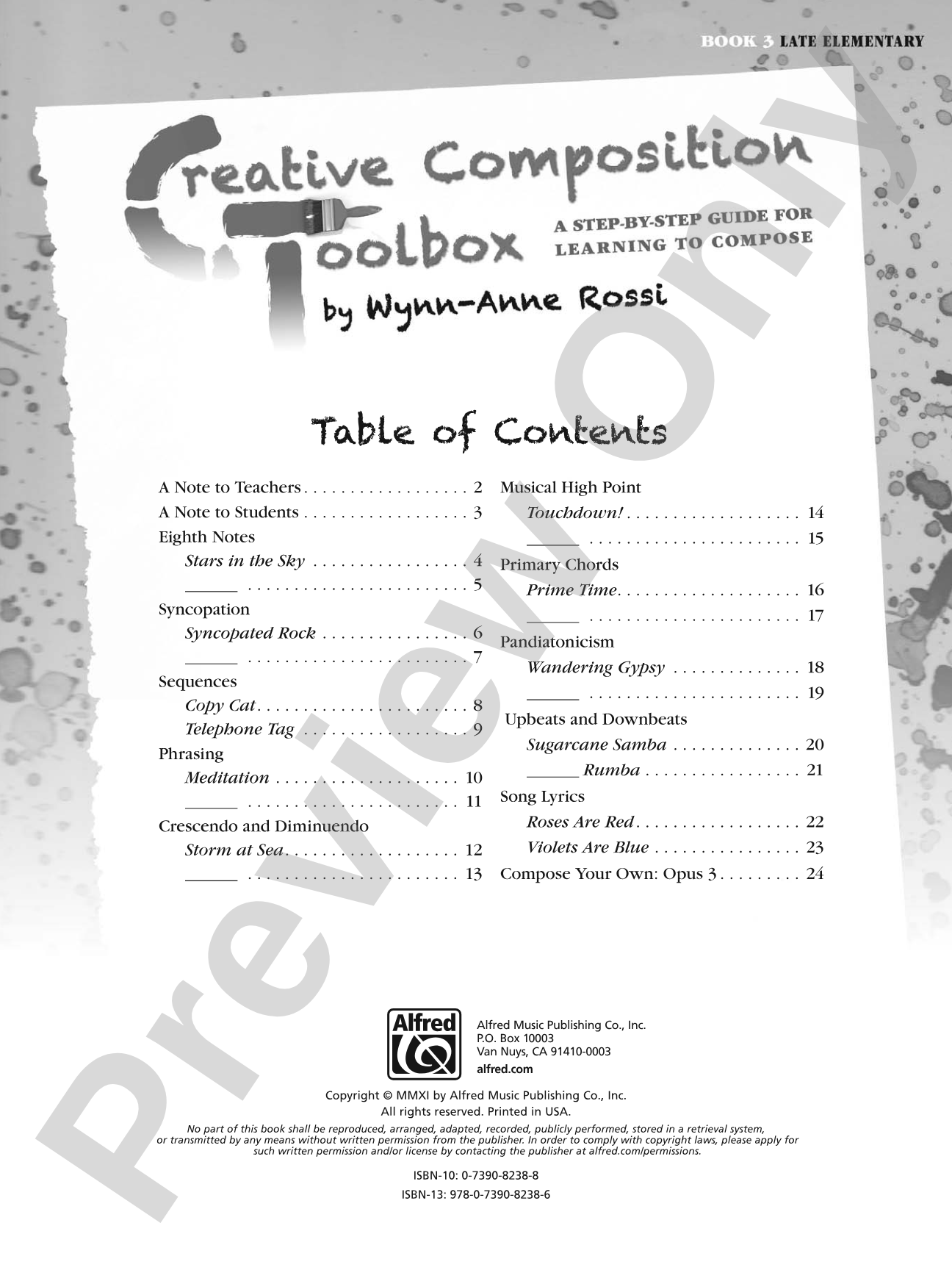
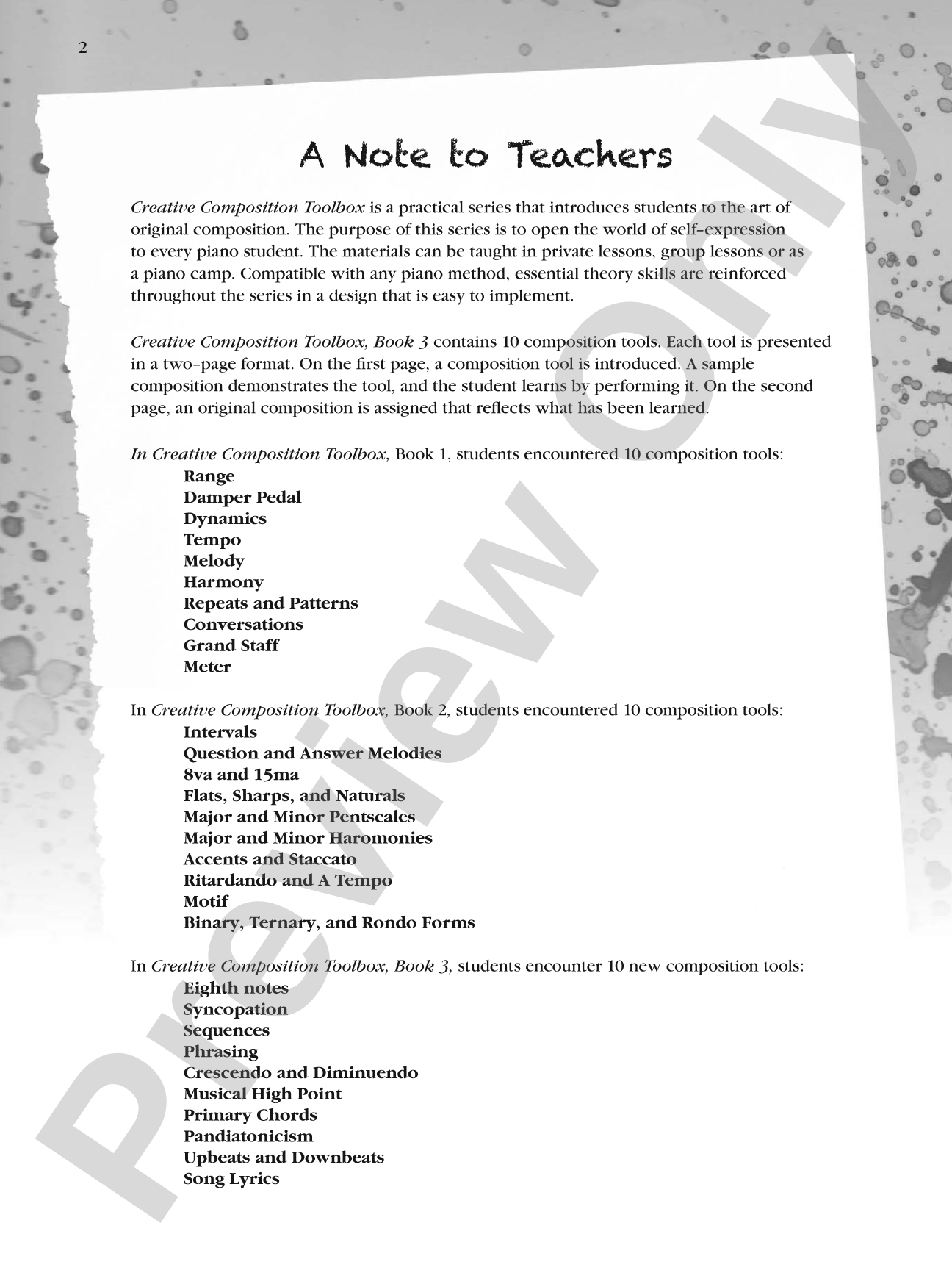
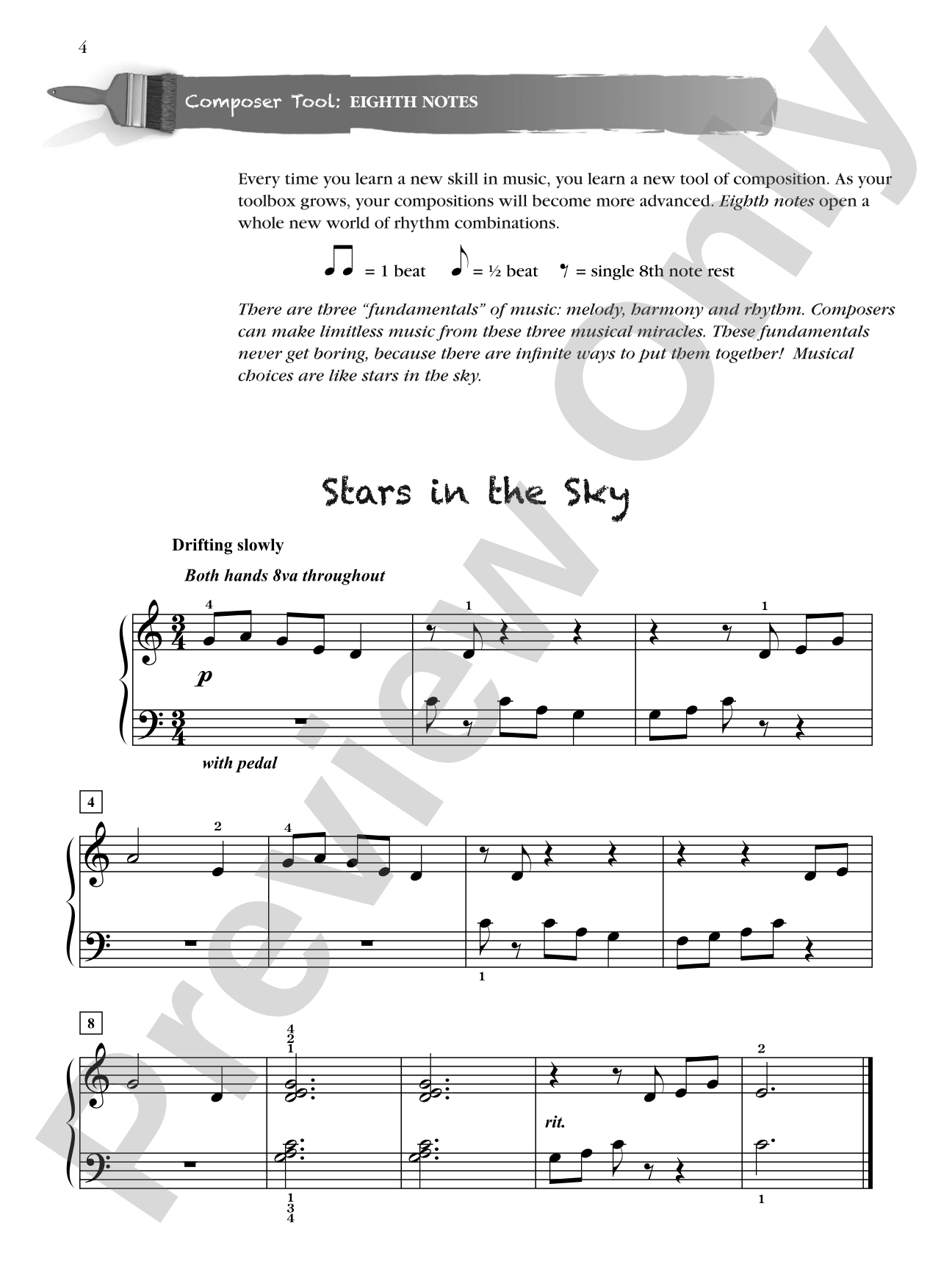
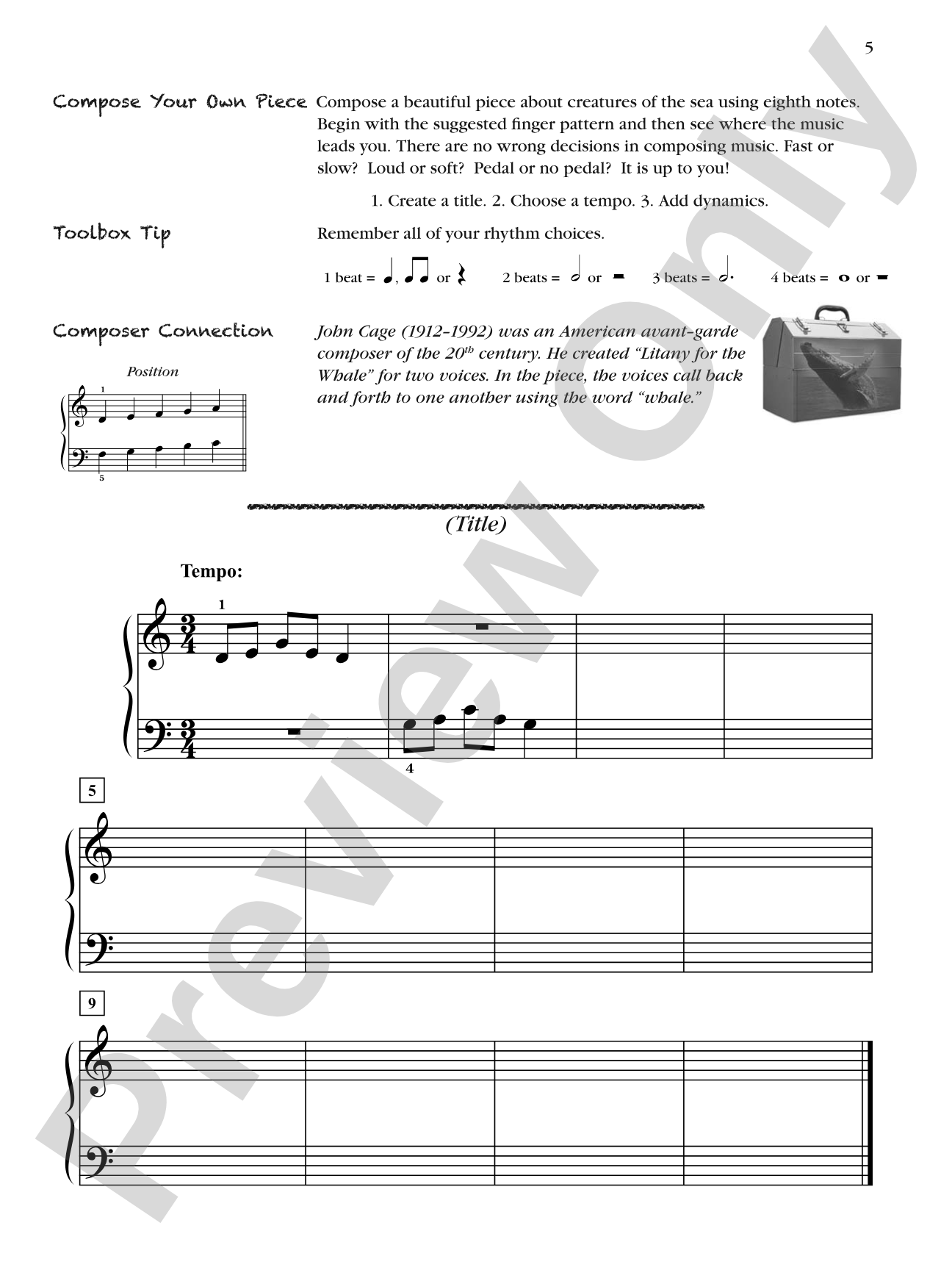
This late elementary book introduces students to the art of original composition. It features the following composition tools: eighth notes, syncopation, sequences, phrasing, crescendo and diminuendo, musical high point, primary chords, pandiatonicism, upbeats and downbeats, and song lyrics.
"This is hands-down THE BEST step-by-step guide for teaching and learning to compose!"
-Yiyi Ku, MusicTeachersHelper.com


"This is hands-down THE BEST step-by-step guide for teaching and learning to compose!"
-Yiyi Ku, MusicTeachersHelper.com
Creative Composition Toolbox, Book 3: A Step-by-Step Guide for Learning to Compose: Piano isn't in MakeMusic Cloud just yet...but it could be. Let us know you'd like to see it, and you'll help shape what comes next. In the meantime, start a free trial and dive into thousands of interactive titles your students can play along with today.
Request This Title
Tell us you want it.
Start Your Free Trial
Explore everything that's ready to play right now.
Sample Audio
No sample audio found.
Sample Video
Additional Details
Series:
Creative Composition Toolbox
Publisher:
Alfred Music
Page Count:
24
SKU:
00-PB-0001836
More about this title
About the Composer: Wynn-Anne Rossi

Wynn-Anne Rossi has built an international reputation as both a composer and educator, with commissions spanning major arts institutions including Minnesota Public Radio, the National Endowment for the Arts, the American Composers Forum, and the St. Paul Chamber Orchestra. Her catalog includes over 100 piano works alongside vocal pieces and orchestral writing, performed across the United States, Europe, Iceland, and Australia.
Rossi's teaching philosophy centers on unlocking student creativity through structured, accessible composition instruction. She leads residencies nationwide where young musicians transform their own musical ideas into finished orchestral and band works. Her partnership with Alfred Music on the Creative Composition Toolbox series and the Wednesdays with Wynn-Anne video content reflects her conviction that every student benefits from learning to compose.
Why we love this
Book 3 builds compositional vocabulary methodically without overwhelming students. Each tool builds logically on the last, and Rossi's choices of what to teach at this level reflect years of classroom experience. Your pianists will finish this book genuinely equipped to write their own pieces, not just follow templates.
What to expect
Purposeful and achievable. Students experience the satisfaction of each new compositional tool unlocking new expressive possibilities. The exercises feel like genuine musical problems to solve, not busywork.
Who it's for
Late elementary pianists ready to move beyond playing written music and start creating their own. This book works equally well in private lessons and group piano classes where you want structured composition instruction without relying on intuition or guesswork.
How to get the most out of it
- Start with the eighth note and syncopation tools before moving to phrasing concepts. Students need rhythmic fluency before they can shape a melodic line.
- Have students complete one composition tool thoroughly before introducing the next. Rushing through the book defeats the purpose of mastery-based learning.
- Play student compositions aloud in class, even rough drafts. Hearing their own work transforms how they hear the tools they're learning.
- Use the primary chord section as a bridge to improvisation. Once students grasp I, IV, and V progressions, they can generate their own chord progressions for melodies.
How to use it
Integrate this into a piano technique and theory curriculum across the year, introducing one new composition tool every week or two. The completed compositions students create make excellent additions to end-of-year student recitals or portfolio assessments. You might also use individual sections to reinforce concepts from your piano method book with hands-on creative application.
Skills your students will build
- Writing with eighth notes and syncopation
- Creating and recognizing musical sequences
- Shaping phrases with intentional beginnings, middles, and endings
- Using crescendo and diminuendo for expressive control
- Identifying and building musical climax
- Constructing chord progressions with primary triads
- Understanding upbeats and downbeats in composition
- Setting text to original melody