

Creative Composition Toolbox, Book 2: A Step-by-Step Guide for Learning to Compose: Piano
A Step-by-Step Guide for Learning to Compose
By Wynn-Anne Rossi
Level: Elementary
Item: 00-PB-0001835
$6.99
Pickup currently not available
Related Items
Creative Composition Toolbox, Book 2: Piano Book |
$6.99
|
View |
Description
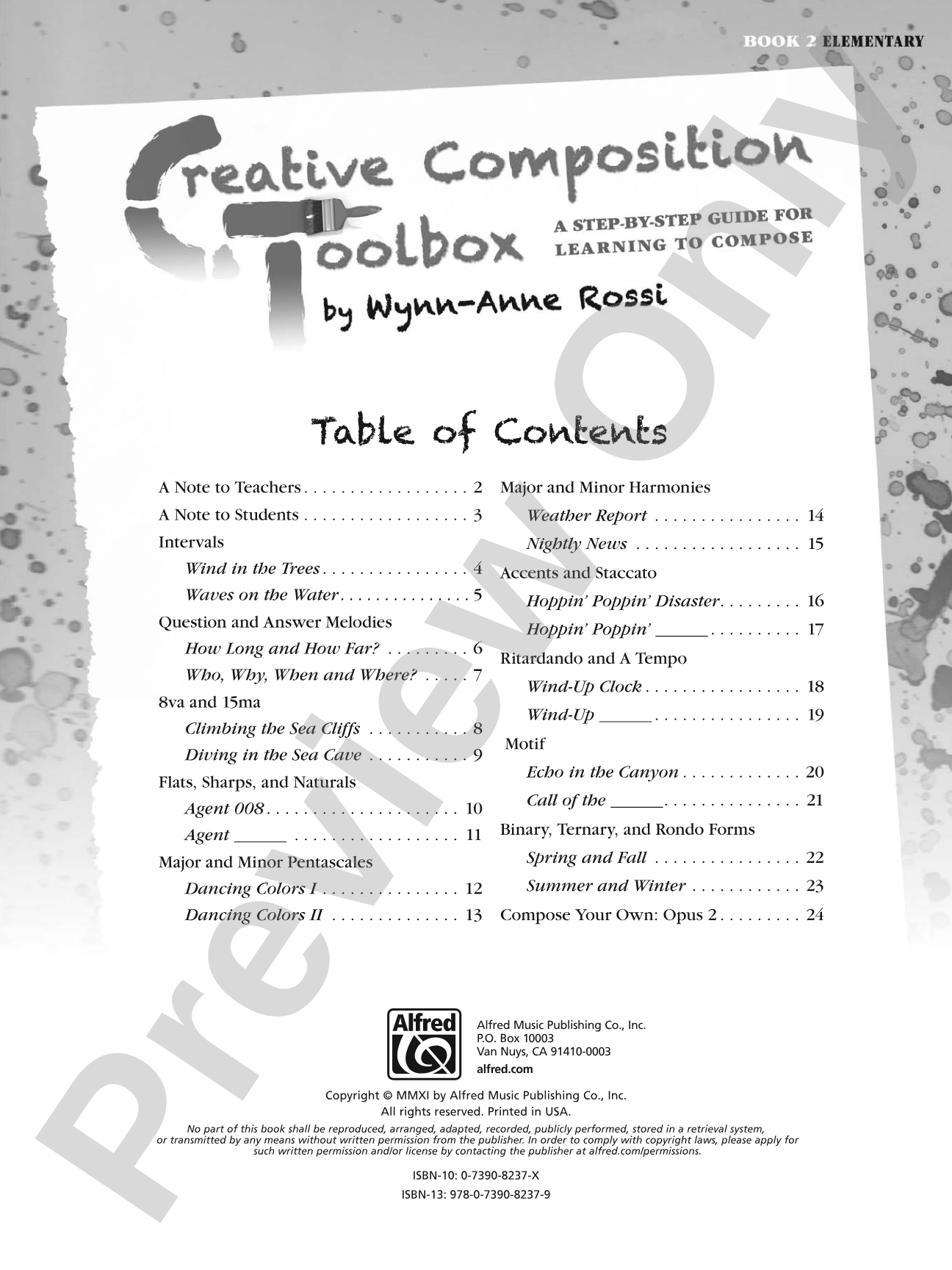
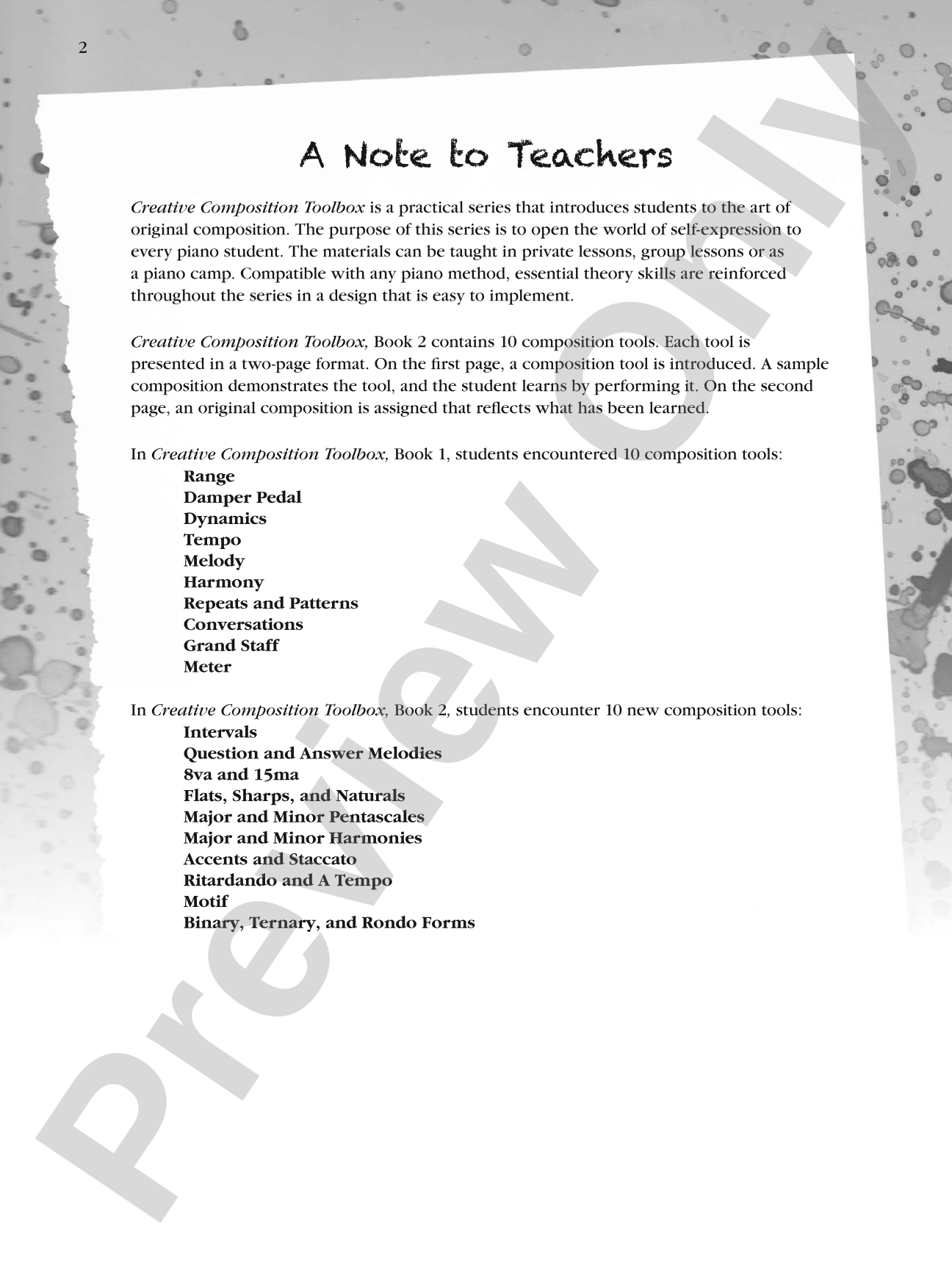
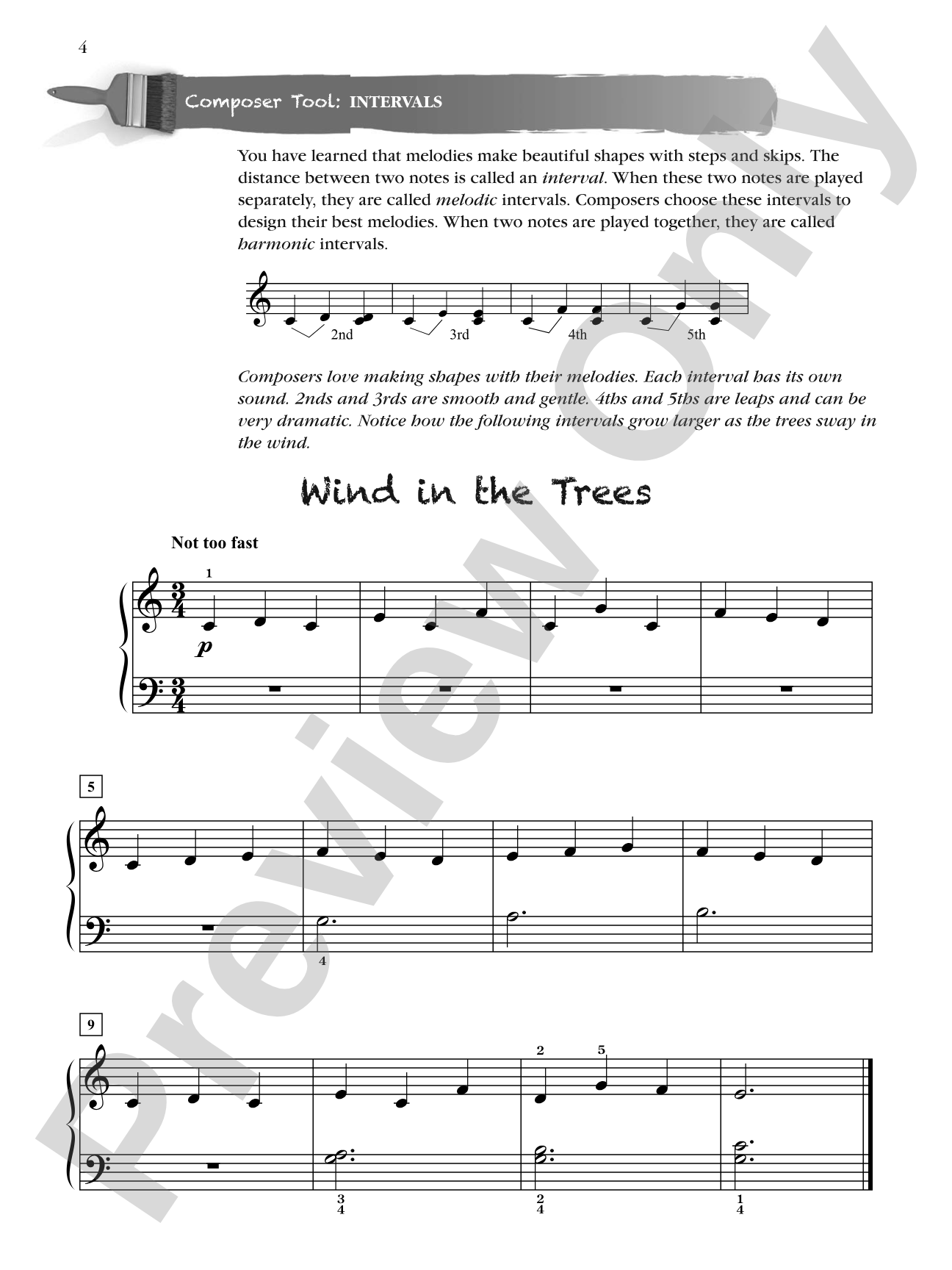
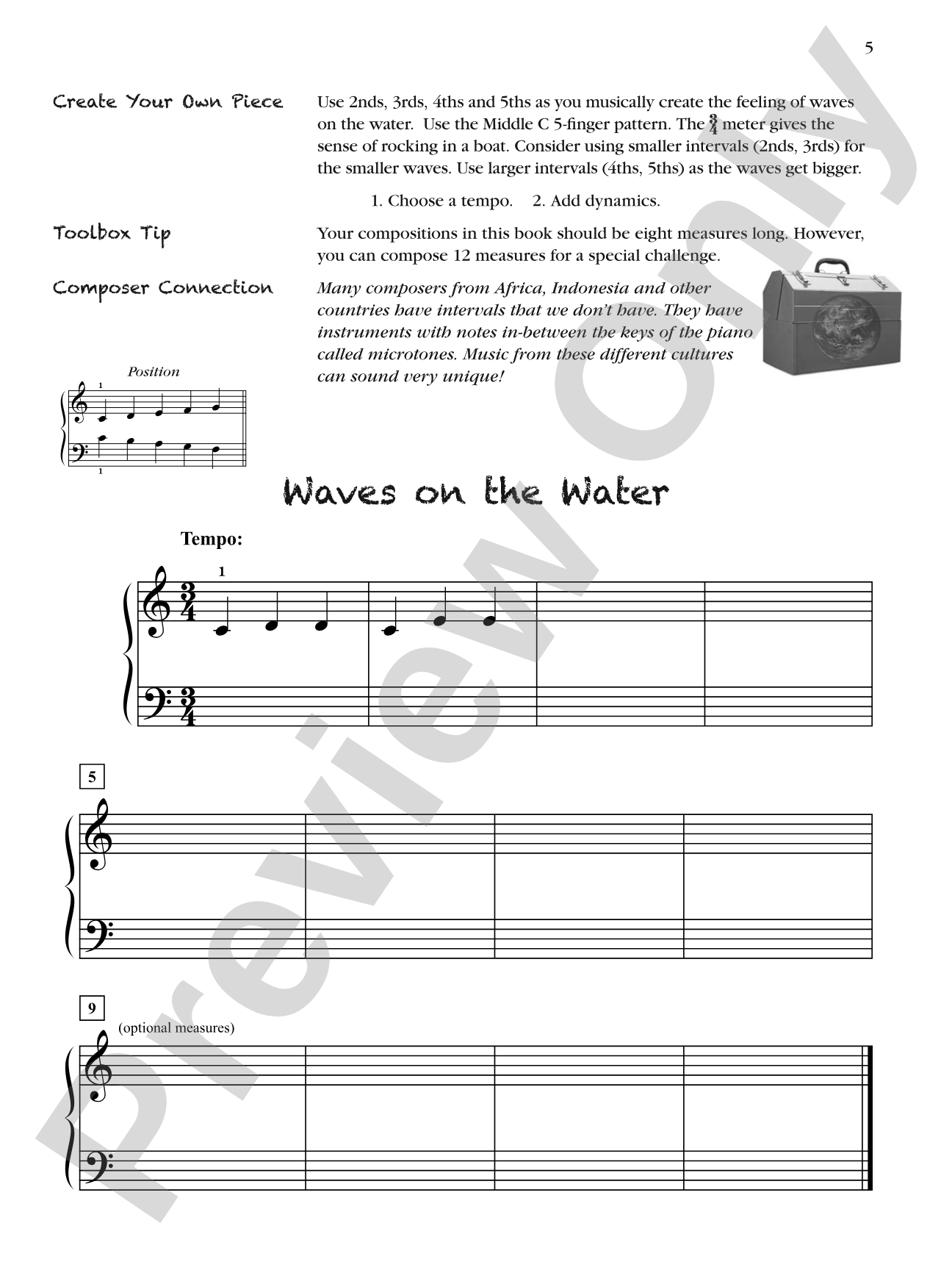
This elementary book introduces students to the art of original composition. It features the following composition tools: melodic shaping, phrasing, octave displacement, accidentals, major chords, minor chords, articulation, tempo changes, motif, and form.
"This is hands-down THE BEST step-by-step guide for teaching and learning to compose!"
-Yiyi Ku, MusicTeachersHelper.com


"This is hands-down THE BEST step-by-step guide for teaching and learning to compose!"
-Yiyi Ku, MusicTeachersHelper.com
Creative Composition Toolbox, Book 2: A Step-by-Step Guide for Learning to Compose: Piano isn't in MakeMusic Cloud just yet...but it could be. Let us know you'd like to see it, and you'll help shape what comes next. In the meantime, start a free trial and dive into thousands of interactive titles your students can play along with today.
Request This Title
Tell us you want it.
Start Your Free Trial
Explore everything that's ready to play right now.
Sample Audio
No sample audio found.
Sample Video
Additional Details
Series:
Creative Composition Toolbox
Publisher:
Alfred Music
Page Count:
24
SKU:
00-PB-0001835
More about this title
About the Composer: Wynn-Anne Rossi

Wynn-Anne Rossi has built a reputation as a composer whose work circulates nationally and internationally, with performances across the United States, Europe, Iceland, and Australia. Her catalog includes over 100 piano works alongside vocal and orchestral pieces, many supported by prestigious commissions from Minnesota Public Radio, the National Endowment for the Arts, the American Composers Forum, and the St. Paul Chamber Orchestra.
Rossi's teaching philosophy centers on unlocking compositional thinking in young musicians. She leads residencies sponsored by major arts organizations, often creating orchestral and band works rooted in student ideas. Her collaboration with Alfred Music on the Creative Composition Toolbox series and the Wednesdays with Wynn-Anne video series demonstrates her sustained commitment to making composition accessible and exciting for emerging composers.
Why we love this
Rossi presents composition not as an intimidating leap into advanced music theory but as a series of discoverable tools that students can immediately apply at the keyboard. Each concept unfolds systematically, giving young pianists concrete strategies for crafting original ideas rather than abstract principles to memorize. The result is a workbook that transforms composition from something teachers assign to something students actually want to do.
What to expect
Working through this toolbox feels like learning to paint with an expanding palette. Each chapter adds a new brush and technique, and students quickly discover that simple tools combine to create music with personality and shape. The process invites playfulness alongside focused skill building.
Who it's for
This book serves elementary pianists ready to move beyond repertoire and explore original songwriting. It works equally well in one-on-one lessons, group classes, or classroom settings where teachers want to plant compositional seeds early.
How to get the most out of it
- Have students play their completed compositions aloud, even simple ones. Hearing their own work builds ownership and reveals which ideas sound the way they imagined.
- Pair composition work with listening to how professional composers handle the same tools. Play a recorded example that uses motif or octave displacement, then listen to student compositions using the same technique.
- Create a display wall or digital gallery where students post their compositions. Peer review and performance opportunities motivate revision and refinement.
How to use it
Integrate these lessons into piano curricula between or alongside repertoire units, giving students a counterbalance to interpretation work. Consider assigning one composition tool per month, then featuring student compositions in a spring recital or informal showcase where the focus is on creative thinking rather than technical perfection.
Skills your students will build
- Melodic shaping and phrasing at the keyboard
- Understanding major and minor chord construction and function
- Using octave displacement to create interest within a limited range
- Notating and applying articulation and tempo markings for expression
- Developing and varying a musical motif
- Recognizing and working within formal structures
- Applying accidentals thoughtfully in original composition