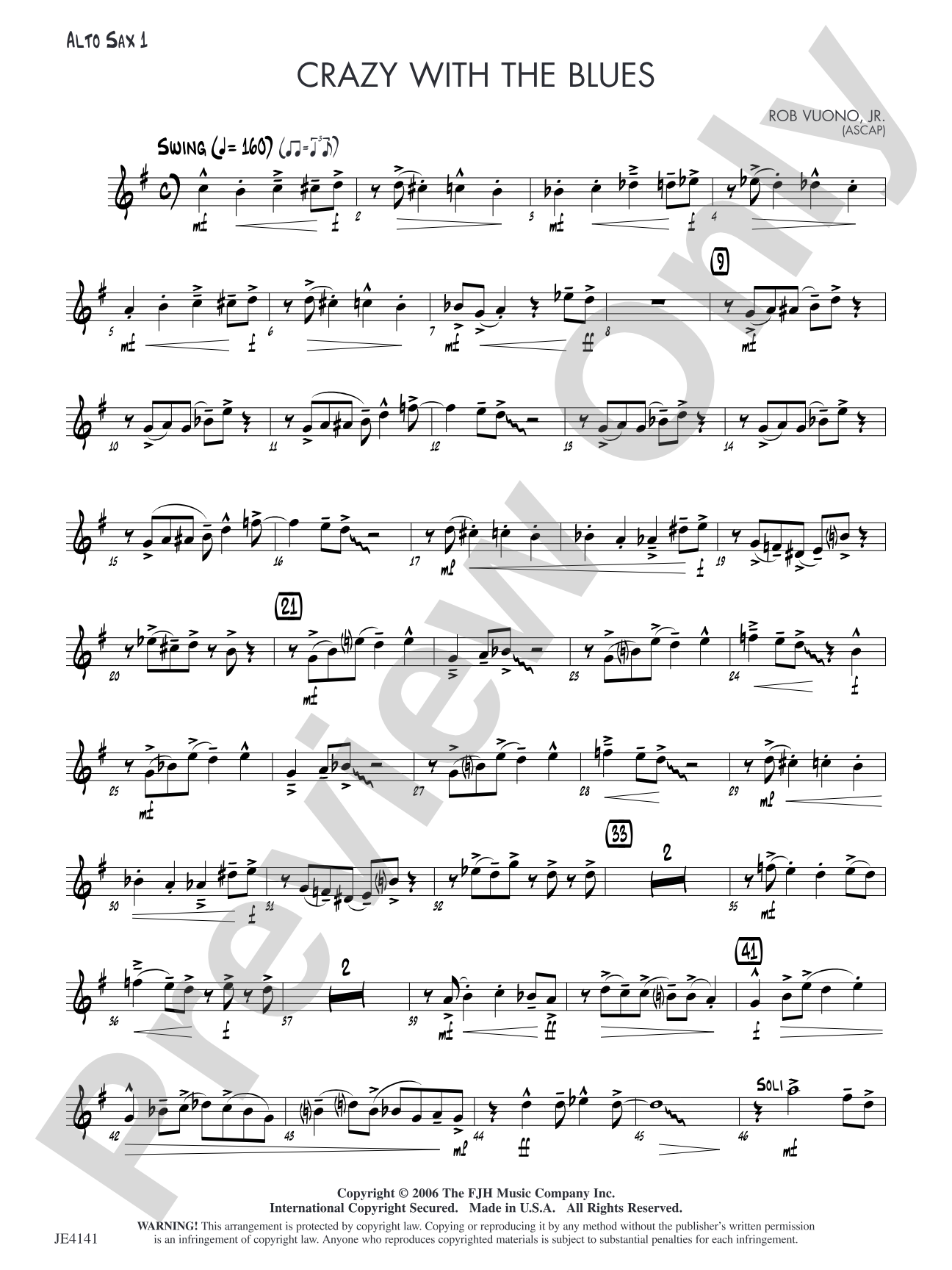
This straight-ahead swinger has no solos-just solid ensemble writing-and is ideal for teaching basic concepts of swing in the classic big band tradition. Based on a 12-bar blues with a few alterations, your rhythm section will quickly pick up on changes (which are also written in parts). An easy chart with a mature sound!
Discover MakeMusic Cloud: thousands of interactive titles your students can play along with today.
Rob Vuono Jr. is an accomplished composer and educator with deep roots in jazz pedagogy. His work for beginning and intermediate jazz ensembles focuses on clarity of voice leading and rhythmic precision without sacrificing the authentic feel that makes jazz rewarding to play.
Why we love this
Vuono strips away the complexity that often intimidates young jazz ensembles. By anchoring the arrangement in a straightforward 12-bar blues with no featured solos, he lets the band focus entirely on locking into swing feel and sectional balance. The result sounds sophisticated without overwhelming first-year players.
What to expect
A confident, easy-swinging blues that grooves from the first downbeat. The straightforward ensemble writing lets the band breathe together, creating the kind of mature, relaxed sound that makes young players feel like real jazz musicians.
Who it's for
Beginning jazz ensembles in Grades 1-2 who are just discovering what swing feels like. Directors introducing foundational big band concepts will appreciate how accessible this arrangement is without sacrificing musicality or authentic style.
How to get the most out of it
Lock the rhythm section into the swing pulse first. Once the piano, bass, and drums establish a relaxed, groovy feel, the horns will settle into the pocket naturally.
Emphasize the written chord changes in the parts so players understand how the blues progression moves beneath the ensemble lines.
Keep articulation light and bouncy in the horns to match the swinging character; heavy tonguing will kill the groove.
Let the band listen to classic big band recordings to absorb what authentic swing phrasing sounds like before rehearsals begin.
How to use it
Pair this with another blues-based arrangement to create a mini-unit on the genre's harmonic foundation. It works equally well as a concert opener that hooks the audience or as a mid-set palate cleanser after more complex charts.
Skills your students will build
Swing articulation and phrasing in ensemble context
12-bar blues form and harmonic changes
Reading chord symbols and jazz notation
Locking into a groove with the rhythm section
Sectional balance and blend in homophonic writing
You May Also Like
Scan to Complete Your Purchase
Use your phone's camera to scan the code below
You'll log in on your phone and the order will be added to your account