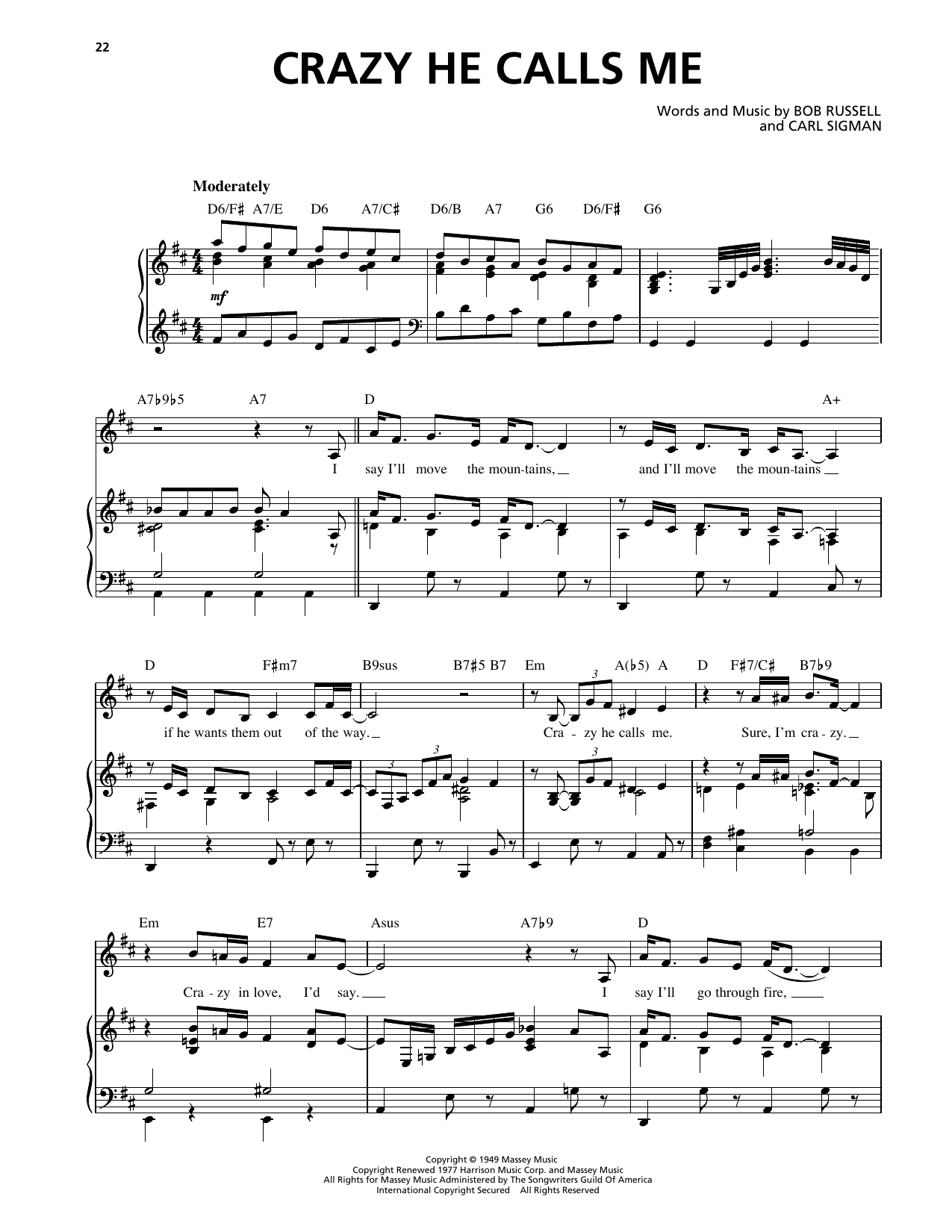
Crazy She Calls Me: Piano Vocal

As performed by Billie Holiday

Item: 35-DS01944609

Digital Download
$5.99
Description

Crazy She Calls Me: Piano Vocal isn't in MakeMusic Cloud just yet...but it could be. Let us know you'd like to see it, and you'll help shape what comes next. In the meantime, start a free trial and dive into thousands of interactive titles your students can play along with today.

Sample Audio
No sample audio found.
Sample Video
Additional Details
Publisher: Hal Leonard
Page Count: 3
SKU: 35-DS01944609

More about this title

About the Artist: Billie Holiday

Billie Holiday transformed American vocal music through her phrasing, timing, and emotional directness. Her approach to melody treated the voice as an instrument capable of bending, delaying, and shaping notes in ways that defied traditional rules, making her a master class in interpretive singing for any student willing to listen closely.

Why we love this

Holiday's vocal authority in this standard demands genuine musicianship from both singer and pianist. The piece rewards singers who understand how to sit behind the beat, shape dynamics with intention, and let silence speak as loudly as sound, making it an excellent teaching tool for moving beyond surface-level performance.

What to expect

The music carries a conversational intimacy, as though Holiday is confiding in the listener about matters of the heart. The piano's support creates a sophisticated, slightly melancholic backdrop that frames the vocal narrative with elegance and restraint.

Who it's for

Singers developing their jazz vocabulary and understanding of vocal jazz standards will find this accessible yet sophisticated. It suits advanced high school vocalists, college jazz singers, and adult students exploring American songbook repertoire with serious intent.

How to get the most out of it

  • Study Holiday's original recording to internalize her phrasing choices, particularly how she handles the melody line with strategic delays and syncopation that sit against the piano's harmonic foundation.
  • Balance the piano accompaniment so it supports rather than overwhelms the vocal line; the voice must always lead the conversation.
  • Shape longer phrases with subtle dynamic arcs rather than maintaining a flat dynamic level, allowing the lyrical content to guide your expressive choices.
  • Practice the rhythmic coordination between vocalist and pianist in passages where the melody diverges from straight accompaniment rhythms.

How to use it

Include this in a jazz standards concert alongside other American songbook selections, or feature it as a vocal jazz solo number in a mixed concert program. It also works as a study piece in jazz history units where students analyze how singers interpret melody and harmony.

Skills your students will build

  • Phrasing interpretation in jazz style (behind the beat, rhythmic flexibility)
  • Dynamic shaping of longer melodic lines
  • Lyric interpretation and emotional communication
  • Coordination with piano accompaniment in syncopated passages
  • Understanding jazz harmonic language and chord changes

You May Also Like